
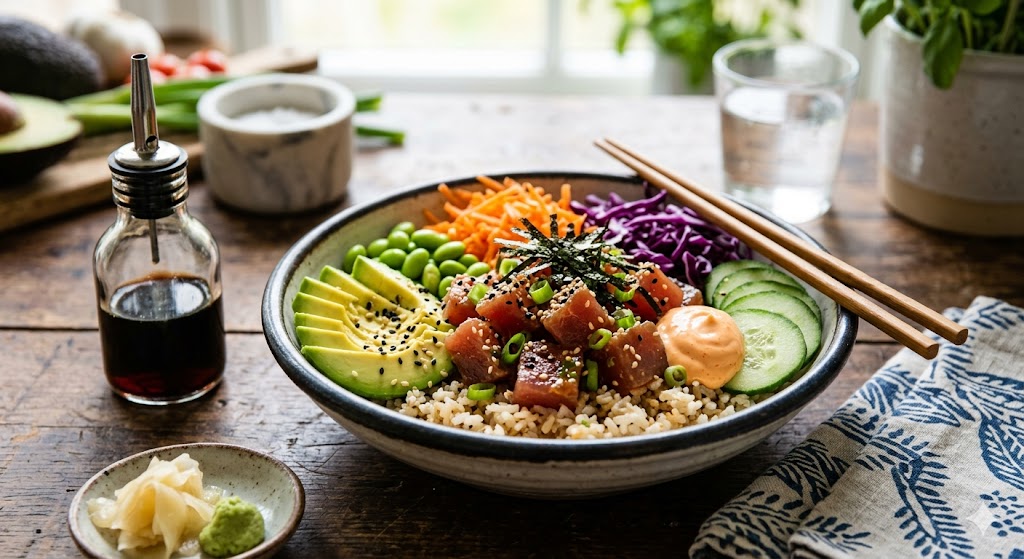
You’ve probably seen poke bowls all over Instagram or food delivery apps—and maybe even tried one yourself. But most people don’t actually know what makes a poke bowl authentic or how to build the perfect one at home. In this guide, you’ll learn exactly what a poke bowl is, how to make one step-by-step, and how to customize it for your lifestyle.
Key Takeaways
- Poke bowl is a Hawaiian dish made with diced raw fish, rice, and fresh toppings.
- Balanced poke bowls combine protein, healthy fats, carbs, and fiber in one meal.
- Customization makes poke bowls suitable for vegan, keto, and high-protein diets.
- Homemade poke bowls can be prepared in under 20 minutes with simple ingredients.
- Fresh, sushi-grade fish is essential for safety and authentic flavor.
- Popular variations include salmon poke, tuna poke, and plant-based bowls.
- Smart ingredient combinations enhance both nutrition and taste.
What Is a Poke Bowl and Where Did It Originate?
Poke bowl is a Hawaiian dish consisting of diced raw fish served over rice with vegetables and sauces.
Originally from Hawaii, the word “poke” means “to slice or cut into chunks” in Hawaiian. Traditionally, fishermen would season freshly caught fish with salt, seaweed, and nuts for a quick meal.
First, modern poke bowls evolved by blending Japanese sushi influences with Hawaiian flavors. For example, ingredients like soy sauce, sesame oil, and rice became standard additions.
Second, today’s poke bowls are global and highly customizable. You’ll now find options like tofu poke bowls, chicken poke bowls, and even fruit-based variations.
Poke bowls are not just trendy—they represent a fusion of culture, convenience, and nutrition.
Why Are Poke Bowls Considered Healthy?
Poke bowls are considered healthy due to their high nutrient density and customizable ingredients.
First, a balanced poke bowl includes lean protein, complex carbs, and healthy fats. For example, salmon provides omega-3 fatty acids that support heart health.
Second, poke bowls are rich in fiber due to fresh vegetables. For example, toppings like avocado, cucumber, and seaweed improve digestion.
Third, portion control is easy. By adjusting ingredients, you can manage calories or macros effectively.
- Over 65% of consumers prefer customizable healthy meals — Source: Statista, 2024
- Omega-3 intake reduces heart disease risk by 20% — Source: Harvard Health, 2023
👉 For more ideas, explore healthy meal prep ideas
👉 Learn more about nutrition in this balanced diet guide
What Ingredients Go Into a Traditional Poke Bowl?
A traditional poke bowl includes a base, protein, toppings, and sauce.
Base Options
First, the base forms the foundation of your bowl. Common choices include:
- White rice
- Brown rice
- Quinoa
- Zucchini noodles (low-carb)
For example, brown rice adds fiber, making it a healthier alternative.
Protein Choices
Second, protein is the star ingredient in a poke bowl.
- Tuna (classic Hawaiian choice)
- Salmon (rich in omega-3)
- Tofu (vegan option)
- Chicken (cooked variation)
👉 For fitness goals, check this high-protein diet plan
Toppings & Add-ons
Third, toppings add flavor and texture.
- Avocado
- Mango
- Edamame
- Seaweed salad
- Pickled vegetables
👉 Discover more in superfood ingredients list
Sauces
Finally, sauces tie everything together.
- Soy sauce
- Spicy mayo
- Sesame dressing
- Ponzu sauce
The right sauce transforms a simple bowl into a flavorful experience.
How Do You Make a Poke Bowl at Home Step by Step?
Making a poke bowl at home involves preparing a base, adding protein, layering toppings, and finishing with sauce.
Step 1: Prepare Your Base
First, cook rice or quinoa and let it cool slightly. Warm rice can ruin the texture of raw fish.
Step 2: Choose Fresh Protein
Second, use sushi-grade fish for safety. For example, fresh salmon from a trusted source ensures quality.
👉 Read this guide on how to choose fresh fish
Step 3: Add Toppings
Third, layer colorful vegetables and fruits. For example, avocado and cucumber create a refreshing contrast.
Step 4: Add Sauce & Garnish
Finally, drizzle your sauce and top with sesame seeds or green onions.
Homemade poke bowls are quick, customizable, and cost-effective compared to takeout.
What Are the Best Proteins for a Poke Bowl?
The best proteins for a poke bowl are fresh fish, plant-based options, and lean meats.
Raw Fish Options
First, traditional poke uses raw fish.
- Tuna
- Salmon
- Yellowtail
These options are high in protein and healthy fats.
Plant-Based Proteins
Second, vegan options are gaining popularity.
- Tofu
- Tempeh
- Chickpeas
👉 Explore more vegan meal recipes
Cooked Proteins
Third, cooked proteins suit beginners.
- Grilled chicken
- Shrimp
- Seared tofu
Protein choice determines both flavor and nutritional value of your bowl.
How Can You Make a Vegan or Vegetarian Poke Bowl?
A vegan poke bowl replaces fish with plant-based proteins and uses fresh vegetables and grains.
First, tofu is the most popular substitute. For example, marinated tofu mimics the texture of fish.
Second, fruits like mango and pineapple add sweetness and balance.
Third, sauces like sesame or peanut dressing enhance flavor without animal products.
👉 Try more ideas in vegan meal recipes
Vegan poke bowls are equally nutritious and flavorful when balanced correctly.
What Sauces Work Best in a Poke Bowl?
The best sauces for a poke bowl include soy-based, creamy, and citrus dressings.
First, soy sauce provides umami flavor. For example, adding sesame oil enhances richness.
Second, spicy mayo adds heat and creaminess.
Third, citrus sauces like ponzu bring freshness.
Sauces are the final touch that defines the bowl’s taste profile.
How Many Calories Are in a Typical Poke Bowl?
A typical poke bowl contains 400–700 calories depending on ingredients and portion size.
First, calorie count depends on the base. For example, white rice adds more calories than greens.
Second, toppings like avocado increase healthy fats and calories.
Third, sauces can significantly impact calorie count.
- Average poke bowl calories: 500 kcal — Source: USDA, 2024
👉 Learn more in low-calorie meals for weight loss
Calorie control is easy with ingredient swaps and portion adjustments.
What Is the Difference Between a Poke Bowl and a Sushi Bowl?
A poke bowl uses cubed raw fish with toppings, while a sushi bowl replicates sushi flavors in a mixed format.
| Feature | Poke Bowl | Sushi Bowl |
|---|---|---|
| Origin | Hawaiian | Japanese-inspired |
| Fish Style | Cubed raw fish | Sliced or mixed |
| Flavor | Fresh, bold | Mild, balanced |
| Assembly | Layered | Mixed |
Both bowls are similar but differ in preparation and cultural roots.
How Do You Customize a Poke Bowl for Weight Loss or Muscle Gain?
Customizing a poke bowl allows you to adjust calories, macros, and nutrients based on your goals.
For Weight Loss
First, choose a low-carb base like greens.
Second, avoid creamy sauces.
Third, increase vegetables.
👉 Check low-calorie meals for weight loss
For Muscle Gain
Second, increase protein portions.
Third, add healthy carbs like brown rice.
Customization makes poke bowls suitable for any fitness goal.
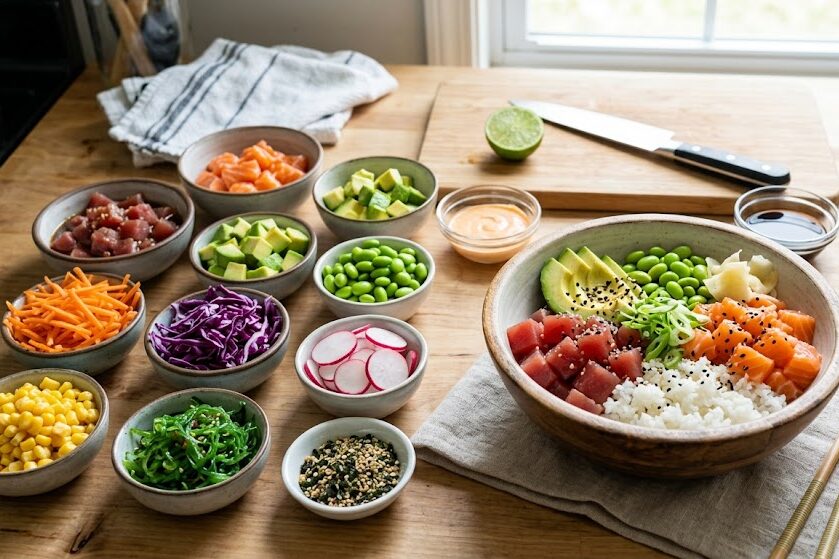
Best Ingredients & Tools for Making Poke Bowls
The best poke bowl ingredients include fresh fish, quality grains, and vibrant vegetables supported by basic kitchen tools.
First, use sharp knives for precise cuts. For example, clean cuts improve presentation and texture.
Second, use mixing bowls for marinating fish evenly.
Third, meal prep containers help store ingredients efficiently.
What’s Next: How to Customize Your Perfect Poke Bowl
Creating your perfect poke bowl involves experimenting with flavors, textures, and nutrition balance.
First, mix sweet and savory ingredients. For example, mango pairs well with spicy mayo.
Second, try global flavors. For example, Korean gochujang adds heat.
Third, adjust portions based on your needs.
👉 Explore more quick lunch ideas
👉 Find inspiration in easy dinner recipes
Experimentation is the key to mastering poke bowls.
Conclusion
Poke bowls are a versatile, healthy, and customizable meal option that fits modern lifestyles perfectly.
From understanding their Hawaiian origins to creating your own bowl at home, you now have everything you need to get started. By combining fresh ingredients, balanced nutrition, and creativity, you can build a poke bowl that suits your taste and goals.
Start experimenting today and turn every meal into a delicious, healthy experience.
FAQ
What is a Poke bowl?
A poke bowl is a Hawaiian-inspired dish made with diced raw fish, rice, and a variety of fresh toppings and sauces.
Are poke bowls healthy?
Yes, they are generally healthy, offering lean protein, healthy fats, and fresh vegetables, especially when made with balanced ingredients.
What ingredients are used in a poke bowl?
Common ingredients include raw fish like tuna or salmon, rice, vegetables, avocado, and sauces like soy or spicy mayo.
Can you make a poke bowl at home?
Yes, you can easily make it by combining cooked rice, fresh fish or protein, and your favorite toppings.
Is raw fish safe in poke bowls?
Yes, if you use sushi-grade fish from a trusted source and handle it properly.
Can poke bowls be vegetarian or vegan?
Yes, you can replace fish with tofu, tempeh, or vegetables for a plant-based version.
Are poke bowls good for weight loss?
They can support weight loss when portion sizes and high-calorie sauces are controlled.
What sauces go well with poke bowls?
Popular options include soy sauce, sesame dressing, spicy mayo, and ponzu.
What is the best base for a poke bowl?
Rice is most common, but quinoa, brown rice, or salad greens are also great alternatives.
How do you customize a poke bowl?
You can customize it by choosing your base, protein, toppings, and sauces based on your taste and dietary needs.
Written by Suraj – 5+ years experienced blogger specializing in SEO, health, and lifestyle content
Reviewed by Editorial Nutrition Team – Experts in food science and healthy eating
Disclaimer: This article was initially drafted using AI assistance. However, the content has undergone thorough revisions, editing, and fact-checking by human editors and subject matter experts to ensure accuracy.