
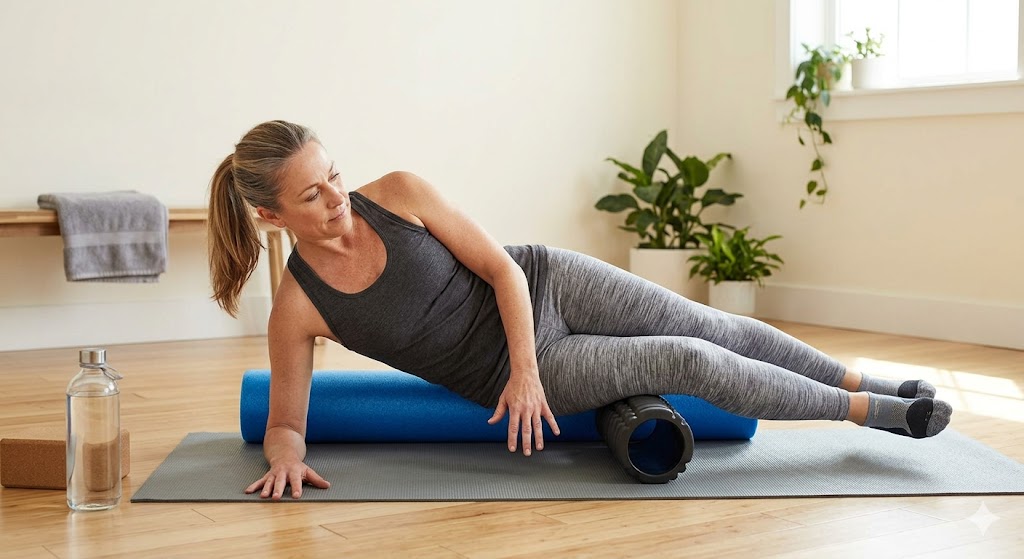
You already know sore muscles can make workouts, walking, and even sitting uncomfortable. What many people miss is that foam rolling is not just random rolling on the floor—it works best when you use the right pressure, timing, and technique. In this guide, you’ll learn exactly how foam rolling helps sore muscles, what to do, what to avoid, and how to build a recovery routine that works.
Key Takeaways
- Foam rolling is a self-massage technique that applies pressure to muscles and connective tissue to reduce tightness and improve movement.
- Consistency matters more than intensity, and short daily sessions often work better than painful marathon sessions.
- Technique works best with slow movements, controlled breathing, and moderate pressure instead of aggressive pain.
- Target areas such as calves, quads, hamstrings, glutes, hips, and upper back often respond well to foam rolling.
- Recovery plans should include sleep, hydration, movement, and strength training alongside foam rolling.
- Safety matters because rolling fresh injuries or inflamed areas can increase irritation.
- Five minutes of focused foam rolling is often enough before or after training.
What Is Foam Rolling and How Does It Help Sore Muscles?
Foam rolling is a self-myofascial release technique that uses body weight and pressure to reduce muscle tension and improve mobility. You place a foam roller under a muscle group, then slowly move your body over it to apply controlled pressure.
First, foam rolling does not “break up knots” like many people think. Instead, it helps your nervous system relax tight areas and improves how tissues glide during movement. For example, tight quads may feel less stiff after a short rolling session before squats.
Second, foam rolling can be useful for people beyond athletes. Desk workers, runners, lifters, and beginners all experience stiffness from repetitive positions or training stress. For example, someone sitting all day may benefit from rolling the upper back and hips.
Third, foam rolling is affordable and accessible. A basic roller can last for years, making it one of the easiest recovery tools to keep at home. best fitness tools for home recovery
Foam rolling for sore muscles involves slow, controlled pressure over tight areas for 30 to 90 seconds per muscle group.
Why Does Foam Rolling Matter for Recovery?
Foam rolling matters for recovery because it can reduce the feeling of soreness, improve movement quality, and help you train more comfortably. It is not magic, but it can be a valuable part of your routine.
First, soreness often changes how you move. When muscles feel stiff, you may shorten your stride, squat shallow, or avoid certain positions. Foam rolling can restore enough mobility to help you move more naturally.
Second, better movement can improve warm-ups. Research shows foam rolling may increase range of motion without the temporary strength drops sometimes seen with long static stretching sessions — Source: Journal of Sports Science & Medicine, 2020.
Third, perceived soreness matters. Even when tissue healing still takes time, feeling less tight can help you stay active. For example, an easy walk after rolling may feel smoother and more comfortable. post-workout recovery tips
Foam rolling can reduce the feeling of post-workout soreness, but it does not replace rest, sleep, hydration, or proper training recovery.
Why Does Foam Rolling Reduce Muscle Tightness After Exercise?
Foam rolling reduces muscle tightness after exercise by combining pressure, movement, and relaxation signals that temporarily improve mobility. Several mechanisms likely work together.
Pressure Changes Sensation
First, pressure stimulates sensory receptors in muscles and fascia. This can change how your brain interprets tension and discomfort. For example, a tight calf may feel looser after 60 seconds of slow rolling.
Movement Supports Circulation
Second, rolling creates gentle movement around the tissues. This may support local blood flow and help you feel warmer and less stiff after training.
Breathing Lowers Guarding
Third, slow breathing matters. When you exhale and relax instead of bracing, the muscle often softens more easily. For example, many people tense their glutes while rolling them, which limits results.
A 2021 review found foam rolling can provide small to moderate improvements in flexibility and recovery outcomes — Source: Frontiers in Physiology, 2021.
How Do You Foam Roll Sore Muscles Correctly for Best Results?
Foam rolling works best when you move slowly, control pressure, breathe deeply, and avoid sharp pain. Good technique matters more than buying an expensive roller.
Step-by-Step Foam Rolling Method
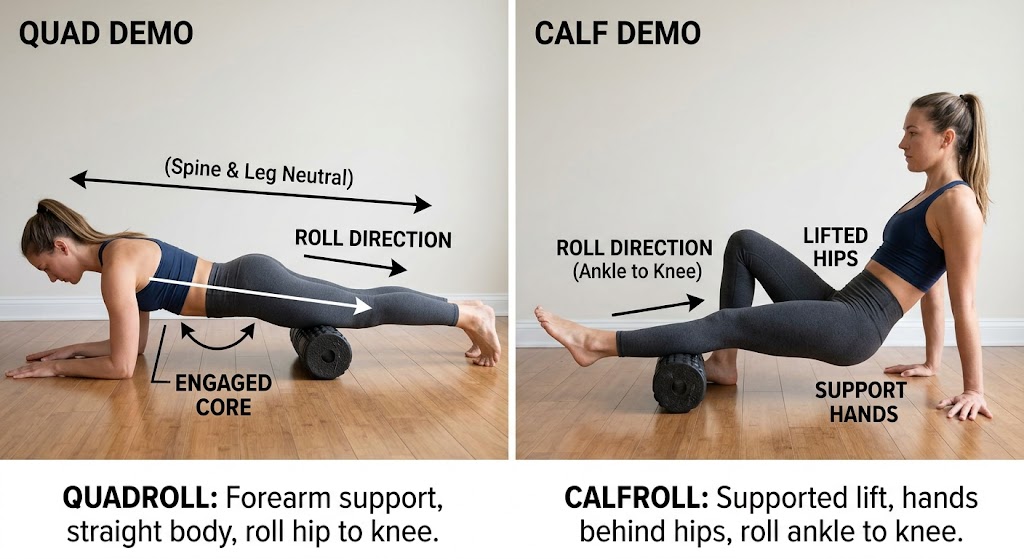
- Choose one muscle group such as calves or quads.
- Place the roller under the area and support yourself with hands or feet.
- Move slowly over the muscle. Aim for about 1 inch per second.
- Pause on tender spots for 15 to 30 seconds while breathing calmly.
- Use moderate pressure that feels uncomfortable but manageable.
- Spend 30 to 90 seconds on each area.
- Stand up and move afterward to notice changes.
How Intense Should It Feel?
First, foam rolling should feel noticeable, not brutal. Pain that makes you hold your breath or tense up usually means you are pushing too hard.
Second, soreness the next day can happen if you overdo pressure. Start lighter and build gradually. beginner home workout plan
When Should You Foam Roll: Before or After a Workout?
You can foam roll before or after a workout depending on your goal. Before exercise, use it to improve mobility. After exercise, use it to reduce stiffness and unwind.
Before a Workout
First, use short sessions of 20 to 45 seconds per area. Focus on muscles that feel restricted. Then follow with movement drills or a dynamic warm-up routine.
For example, roll calves and hips before running if your stride feels tight.
After a Workout
Second, use longer sessions of 30 to 90 seconds per area after training. This is the best time to relax, breathe, and reduce post-session tightness.
For example, after leg day, spend extra time on quads, glutes, and hamstrings. leg day recovery checklist
On Rest Days
Third, foam rolling also works on recovery days. A short session plus walking can help you stay loose without intense exercise.
Which Muscles Should You Foam Roll Most Often?
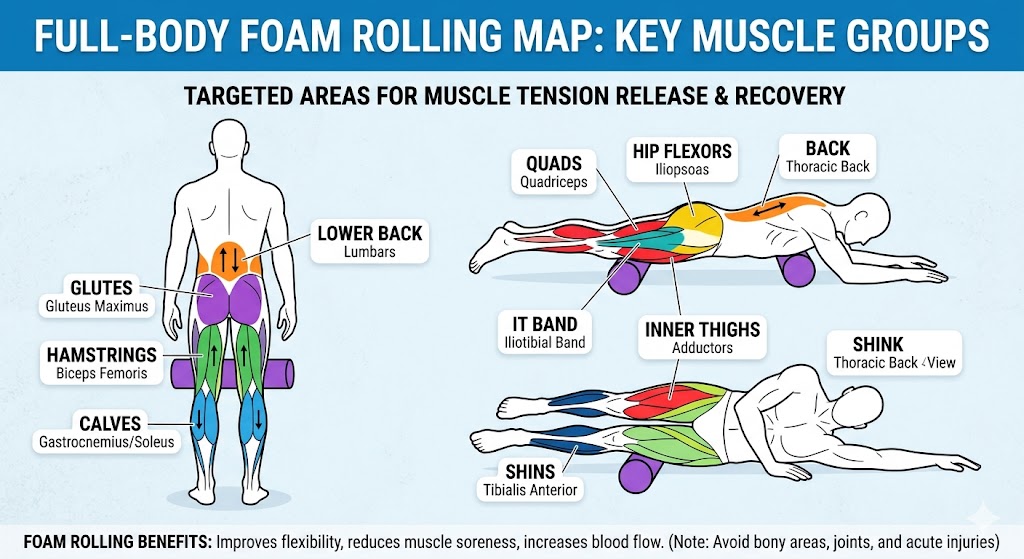
The best muscles to foam roll are the areas that feel tight, overworked, or limit your movement most often. Most people benefit from targeting large muscle groups first.
| Muscle Group | Why Roll It | Simple Tip |
|---|---|---|
| Calves | Tight from walking, running, standing | Cross one leg for more pressure |
| Quads | Commonly sore after leg training | Roll from hip to knee slowly |
| Hamstrings | Tight from sitting or lifting | Keep toes relaxed |
| Glutes | Helpful for hips and low-body stiffness | Lean slightly side to side |
| Upper Back | Great for desk posture tension | Hug arms across chest |
| Lats | Helps overhead movement | Turn body slightly sideways |
| Hips/TFL | Useful for hip tightness | Use lighter pressure |
First, start with calves and quads if you train legs often. Second, add upper back if you sit at a desk. Third, use hips and glutes if squats or stairs feel stiff. mobility exercises for hips and back
How Long Should You Foam Roll Each Muscle Group?
Most muscle groups respond well to 30 to 90 seconds of foam rolling. You do not need to roll one area for ten minutes.
First, use 30 seconds for warm-ups or mild tightness. This is enough to prepare movement without wasting time.
Second, use 60 seconds for average soreness after normal training. This is the sweet spot for many people.
Third, use 90 seconds for stubborn areas, but only if pressure stays manageable. More is not always better.
A practical full-body session often takes just 5 to 10 minutes. That makes consistency realistic for busy schedules.
Can Foam Rolling Make Soreness Worse If Done Incorrectly?
Foam rolling can make soreness worse if you use too much pressure, move too fast, or roll irritated areas. Technique errors are the main reason people dislike it.
Common Mistakes
First, rolling too fast turns the session into random movement. Slow passes create better control and feedback.
Second, using extreme pressure can cause guarding. If you grit your teeth and tense everything, the muscle may tighten more.
Third, rolling joints or the lower back aggressively is unhelpful. Focus on surrounding muscles instead.
When to Avoid Foam Rolling
Avoid foam rolling if you have:
- Fresh injuries
- Severe swelling
- Sharp or shooting pain
- Suspected fractures
- Acute muscle tears
- Unexplained calf pain or medical concerns
If pain persists, consult a qualified professional. signs of overtraining
What Type of Foam Roller Is Best for Beginners?
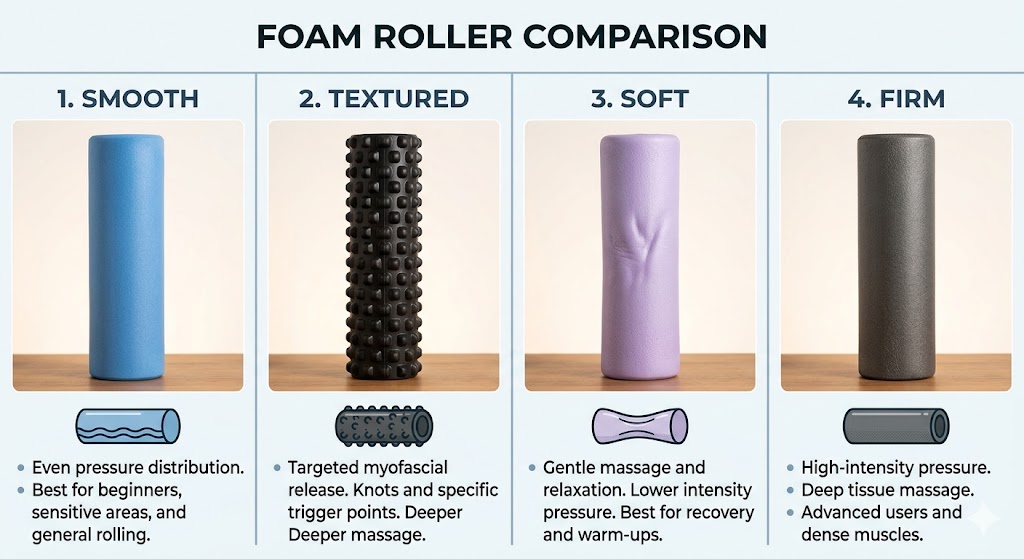
A beginner foam roller should be medium-density, supportive, and comfortable enough to use consistently. The best roller is the one you will actually use.
Smooth vs Textured Rollers
First, smooth rollers provide even pressure and are easier for beginners. They are excellent for daily use.
Second, textured rollers feel more intense and may help advanced users who like targeted pressure.
Soft vs Firm Density
Third, softer rollers are gentler on sensitive muscles. Firmer rollers create stronger pressure but can feel harsh at first.
Other Useful Tools
Plus, massage balls are great for feet, glutes, and shoulders. A lacrosse-style ball can reach smaller areas that rollers miss.
Is Foam Rolling Better Than Stretching for Recovery?
Foam rolling is not better than stretching in every situation because both tools solve different problems. The smartest plan often uses both.
First, foam rolling is useful when muscles feel dense, tender, or generally tight. It can quickly improve how movement feels.
Second, stretching is useful when you need specific length in a movement pattern. For example, calf stretching may help ankle mobility for squats.
Third, combining them works well. Roll first, then perform active stretches or mobility drills.
For example:
- Roll calves for 45 seconds
- Stretch calves for 30 seconds
- Do bodyweight squats for 10 reps
What Is a Simple 5-Minute Foam Rolling Routine for Full-Body Recovery?
A simple 5-minute foam rolling routine targets the biggest areas of tightness with short, focused sets. Keep it efficient and repeatable.
5-Minute Routine
- Calves – 45 seconds
- Quads – 45 seconds
- Hamstrings – 45 seconds
- Glutes – 45 seconds
- Upper Back – 60 seconds
- Lats – 60 seconds
First, breathe slowly during each set. Second, pause on tender spots without forcing pain. Third, stand up and walk for one minute afterward.
This routine is ideal after workouts, long sitting sessions, or travel days. how to reduce muscle soreness fast
Tools and Practical Applications for Better Recovery
Recovery tools help you apply the right method consistently and comfortably. Foam rolling works best when paired with simple habits.
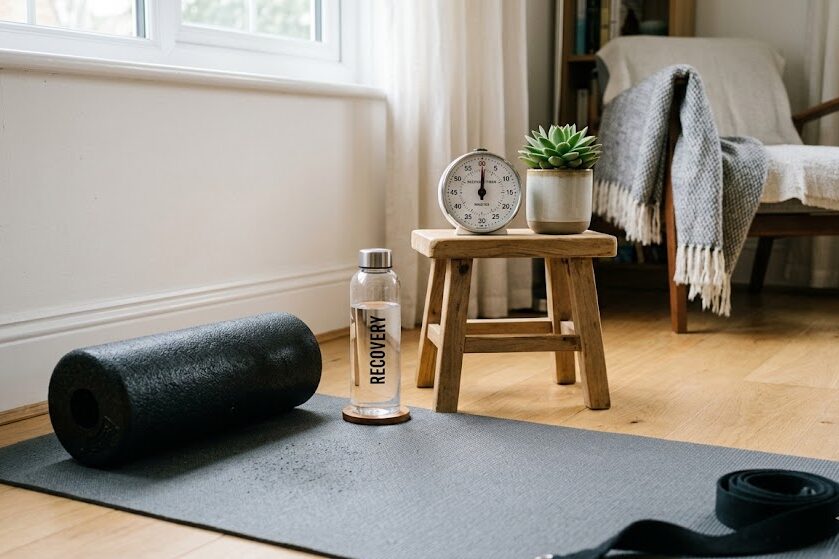
Best Core Tools
- Medium-density foam roller
- Massage ball
- Yoga mat
- Water bottle
- Timer app
Free and Helpful Alternatives
First, if you do not own a roller yet, use movement breaks, walking, and mobility drills. Second, tennis balls can work for some areas if used carefully.
Build a Recovery Station
Keep your roller where you train or near your desk. Visible tools get used more often than hidden tools.
What’s Next: How Do You Build a Recovery Habit That Lasts?
A lasting recovery habit is built through small actions repeated consistently. You do not need a perfect routine to feel better.
First, pair foam rolling with daily anchors. Roll while watching TV, after workouts, or before bed.
Second, support recovery with basics:
- hydration for muscle recovery
- sleep and muscle repair
- Light walking
- Strength training
- Smart training progressions
Third, track what works. If calves always tighten after runs, spend extra time there next session.
Effective recovery combines foam rolling, movement, hydration, sleep, and progressive exercise habits.
Conclusion
Foam rolling is a simple recovery tool that can reduce the feeling of soreness, improve mobility, and help you move better when used correctly. The key is not crushing your muscles—it is using slow pressure, smart timing, and steady consistency.
Start with five minutes, focus on your tightest areas, and build the habit. Small recovery actions done regularly can improve performance, comfort, and confidence over time. [Internal link: “daily habits for pain-free movement” → suggested target page/topic]
Written by: Suraj | 5+ years blogging experience in SEO content, health research, and practical fitness education.
Reviewed by: Editorial Review Team | Fitness content specialists focused on evidence-based recovery, mobility, and wellness education.
Disclaimer: This article was initially drafted using AI assistance. However, the content has undergone thorough revisions, editing, and fact-checking by human editors and subject matter experts to ensure accuracy.