
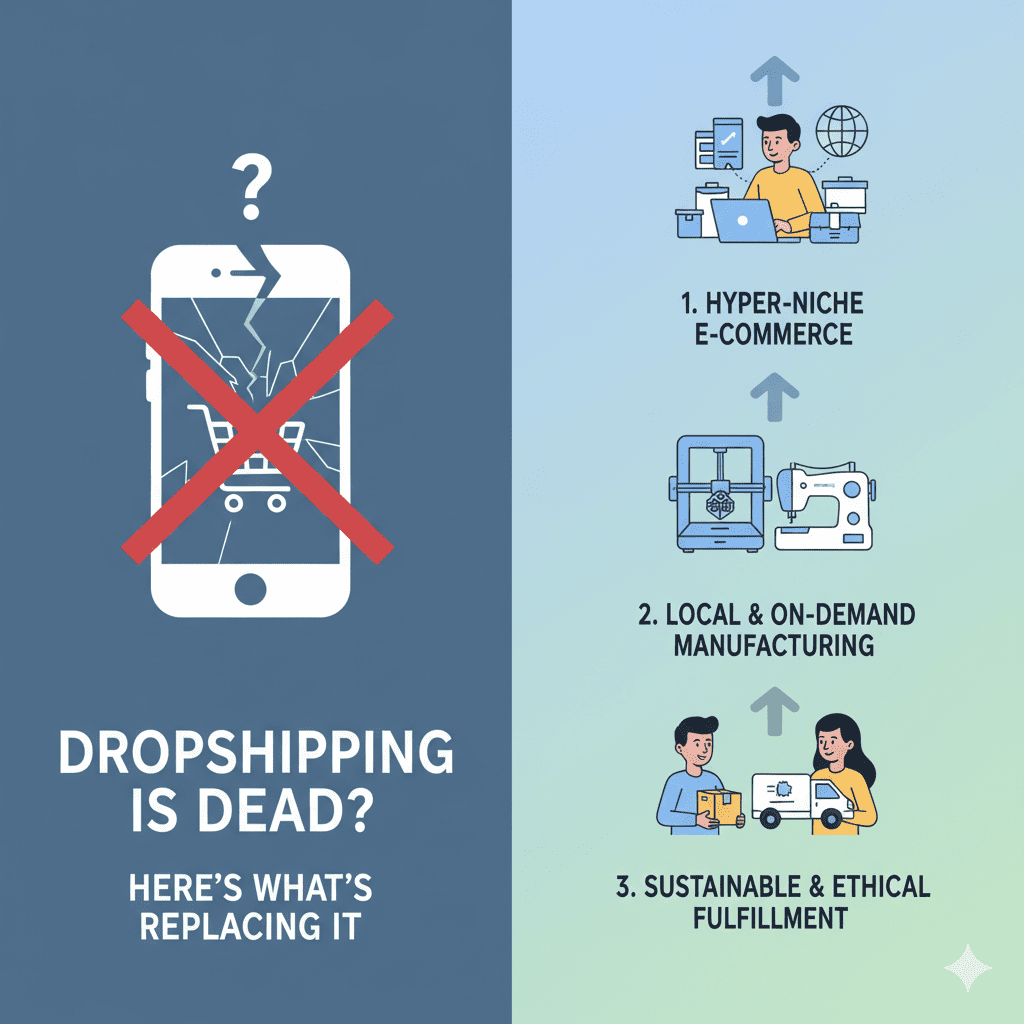
The rumors are everywhere: “Dropshipping Is Dead!” You’ve probably seen countless videos, articles, and social media posts claiming that the golden age of dropshipping has come to an end. But is this really true? And if traditional dropshipping is fading, what’s taking its place? In this comprehensive guide, we’ll explore the evolution of e-commerce, why people claim dropshipping is dead, and most importantly, the innovative business models that are replacing it and generating even more profit.
Understanding Why People Say Dropshipping Is Dead
Before we dive into the alternatives, let’s address the elephant in the room. When people say “dropshipping is dead,” what they really mean is that the basic, low-effort dropshipping model that was profitable five years ago no longer works as effectively. The market has become oversaturated, customers have grown more sophisticated, and competition has intensified dramatically.
The Original Dropshipping Model
Traditional dropshipping was simple: find a cheap product from AliExpress, create a basic Shopify store, run Facebook ads, and watch the orders roll in. This model worked incredibly well from 2015 to 2019, creating numerous success stories and millionaire entrepreneurs. However, several factors have changed the landscape entirely.
Why Traditional Dropshipping Struggles Today
Market saturation has reached critical levels, with millions of stores selling identical products. Shipping times from China became a major pain point, especially after Amazon Prime conditioned customers to expect fast delivery. Ad costs on Facebook and Instagram have skyrocketed, making customer acquisition increasingly expensive. Product quality issues and poor customer service have damaged the reputation of dropshipping stores. Payment processors have become stricter, often holding funds or banning dropshipping stores entirely.
The Truth About “Dropshipping Is Dead”
The reality is more nuanced. Basic dropshipping as it existed in 2016 is indeed much harder now. However, the fundamental business model of selling products without holding inventory isn’t dead—it’s evolving. Smart entrepreneurs are adapting and thriving by implementing new strategies, utilizing better suppliers, and focusing on building real brands rather than quick-flip stores.
1. Print-On-Demand: The Creative Revolution
One of the most powerful alternatives emerging as people claim dropshipping is dead is print-on-demand (POD). This model allows you to sell custom-designed products without holding any inventory, but with significantly better margins, faster shipping, and higher customer satisfaction than traditional dropshipping.
How Print-On-Demand Works
You create or commission original designs for products like t-shirts, hoodies, mugs, phone cases, wall art, and hundreds of other items. When a customer orders, your POD supplier prints the design on the product and ships it directly to the customer. The best part? Most POD suppliers are located in the US, UK, or EU, meaning shipping times of 3-7 days instead of 3-6 weeks.
Why POD Outperforms Traditional Dropshipping
Print-on-demand offers unique products that can’t be easily copied. Your designs create a brand identity that customers connect with emotionally. Shipping is fast because POD suppliers operate production facilities in major markets. Quality is consistent and generally higher than cheap imported products. Returns and customer service are much easier to manage. You can test unlimited designs without any upfront investment.
Building a Successful POD Business
Focus on niches where people have strong identities or passions—dog lovers, nurses, teachers, fitness enthusiasts, gamers, or specific hobbies. Create designs that resonate emotionally with your target audience. Use platforms like Printful, Printify, or Gooten that integrate seamlessly with Shopify, Etsy, or WooCommerce. Build a cohesive brand with consistent messaging and aesthetics across all products.
Scaling Your POD Empire
Start with one niche and expand to related niches once you’ve proven success. Develop a signature style that makes your products instantly recognizable. Collect customer emails and build a community around your brand. Partner with influencers in your niche for authentic promotion. Create seasonal collections to give customers reasons to return.
2. Hybrid Dropshipping: The Best of Both Worlds
As traditional dropshipping is dead claims continue circulating, savvy entrepreneurs have developed hybrid models that combine dropshipping with inventory management. This approach allows you to test products without risk while maintaining fast shipping for your bestsellers.
The Hybrid Model Explained
You start by dropshipping products to test market demand. Once a product proves successful and reaches a certain sales volume, you order bulk inventory and fulfill it yourself or use a third-party fulfillment center. This gives you the flexibility of dropshipping with the speed and margins of holding inventory.
Advantages of the Hybrid Approach
Test products with zero risk before committing capital. Maintain better margins on your bestselling products by buying in bulk. Offer faster shipping that competes with Amazon. Control quality by inspecting products before they ship to customers. Build a real business with valuable assets rather than a dropshipping shell.
Implementation Strategy
Begin with pure dropshipping using vetted suppliers with reasonable shipping times. Track your sales data meticulously to identify winners. When a product consistently sells 50-100 units per month, order your first small bulk shipment. Use Amazon FBA, ShipBob, or a local fulfillment center to store and ship your inventory. Keep slow-moving products on dropshipping to avoid dead stock.
Financial Planning
Calculate your break-even point for each product when buying bulk. Factor in storage fees, fulfillment costs, and the cost of capital tied up in inventory. Start with conservative order quantities until you understand demand patterns. Use your increased margins to reinvest in marketing and product development.
3. Private Label Products: Building Real Brand Value
While people debate whether dropshipping is dead, the smartest entrepreneurs are building private label brands that command premium prices and customer loyalty. Private labeling involves working with manufacturers to create products under your own brand name.
What Makes Private Label Different
Instead of selling generic products available everywhere, you create unique branded items that customers can only buy from you. You work directly with manufacturers to customize products, packaging, and branding. This creates real barriers to entry and builds lasting business value.
The Private Label Process
Research your niche thoroughly to identify gaps in the market. Find manufacturers through Alibaba, trade shows, or sourcing agents. Request samples from multiple manufacturers to compare quality. Customize the product with your specifications, branding, and packaging. Order your first inventory shipment—typically 500-1000 units minimum. Build marketing campaigns around your brand story and unique value proposition.
Why Private Label Wins
You own your brand and can sell it for significant multiples if you choose. Command higher prices because customers can’t find your products elsewhere. Build customer loyalty through consistent quality and branding. Create intellectual property that has real value. Avoid the race-to-the-bottom pricing that kills dropshipping margins.
Category Opportunities
Beauty and skincare products with clean ingredients. Supplements and health products with unique formulations. Home organization and storage solutions. Pet products with innovative features. Tech accessories with premium materials. Fitness equipment designed for specific needs.
4. Subscription Box Services: Recurring Revenue Models
As traditional dropshipping is dead discussions proliferate, subscription box services have emerged as one of the most profitable e-commerce models. Instead of one-time purchases, you build recurring revenue by delivering curated products to customers monthly or quarterly.
The Subscription Advantage
Predictable recurring revenue makes business planning easier. Customer lifetime value is dramatically higher than single purchases. You build deeper relationships with subscribers over time. Cash flow improves as subscriptions provide upfront capital. The business becomes more valuable to potential buyers.
Types of Subscription Boxes
Replenishment subscriptions deliver consumables customers need regularly—razors, coffee, supplements, or personal care items. Curation subscriptions surprise customers with curated selections based on their preferences—beauty samples, snacks, books, or hobby supplies. Access subscriptions provide exclusive products or early access to new releases.
Building a Subscription Business
Choose a niche with passionate enthusiasts who regularly spend money on related products. Start with a simple offering and gather customer feedback. Create a seamless unboxing experience with premium packaging. Offer flexibility in subscription plans—monthly, quarterly, annual options. Implement a referral program to encourage viral growth. Focus on retention metrics and reducing churn.
Scaling Considerations
Negotiate better rates with suppliers as your volume increases. Automate as much of the fulfillment process as possible. Create tiered subscription levels for different customer segments. Develop exclusive branded products for long-term subscribers. Build a community around your brand through social media and events.
5. Wholesale and B2B E-Commerce: Serving Businesses
While everyone focuses on whether dropshipping is dead in the consumer space, wholesale and B2B e-commerce has quietly become one of the most profitable models. Selling to businesses offers larger order values, more predictable purchasing patterns, and less marketing expense per dollar of revenue.
Why B2B E-Commerce Works
Businesses need products consistently and order in larger quantities. Decision-making is based on value and reliability rather than impulse. Customer acquisition costs are lower because businesses actively search for suppliers. Once you establish relationships, reorder rates are high. Payment terms and margins are often more favorable.
B2B Business Models
Become a distributor for manufacturers who need online channels. Create a marketplace connecting manufacturers with retailers. Offer wholesale pricing for bulk purchases to small businesses. Provide specialized products for specific industries—restaurants, salons, medical offices, or construction companies.
Getting Started in B2B
Research industries with fragmented supply chains and poor online presence. Build relationships with manufacturers looking for distribution partners. Create a professional website with clear wholesale pricing tiers. Implement account-based features like custom pricing and purchase orders. Offer net-30 or net-60 terms for qualified buyers. Attend trade shows to network and find suppliers and buyers.
Marketing to Businesses
Optimize for B2B search terms and long-tail keywords. Create detailed product specifications and bulk pricing information. Develop case studies showing ROI for business customers. Use LinkedIn for outreach and relationship building. Offer dedicated account management for larger customers.
6. Marketplace Arbitrage: Strategic Platform Selling
As claims that dropshipping is dead circulate, marketplace arbitrage has become a sophisticated way to profit from price differences across platforms without holding significant inventory. This model involves finding underpriced products and reselling them on platforms where they command higher prices.
Understanding Marketplace Arbitrage
You identify products selling for low prices on one platform—Walmart, Home Depot, or clearance sections—and resell them on Amazon, eBay, or other marketplaces at market rates. Tools and software help automate the process of finding price discrepancies and managing listings.
Retail Arbitrage Strategies
Source products from clearance sections at major retailers. Use price tracking tools to identify temporary discounts. Focus on products with consistent Amazon sales rank. Calculate all fees—marketplace fees, shipping, taxes—before purchasing. Start with a small inventory to test products before scaling.
Online Arbitrage
Find deals on e-commerce websites and resell on other platforms. Use automated repricing software to stay competitive. Monitor competitors’ inventory levels and pricing strategies. Build relationships with liquidation wholesalers for bulk deals. Focus on products with limited competition and healthy margins.
Scaling Your Arbitrage Business
Develop systems and checklists for product selection. Hire virtual assistants to help with sourcing and listing. Use inventory management software to track profitability. Reinvest profits into inventory with proven track records. Gradually transition from retail to wholesale arbitrage for better margins.
7. Content-Driven Commerce: Monetizing Influence
The claim that dropshipping is dead misses the point that modern commerce has shifted toward content-first strategies. Building an audience through valuable content and then monetizing through strategic product offerings has become one of the most sustainable e-commerce models.
Content-First Philosophy
Create valuable content that attracts and engages your target audience before attempting to sell anything. Build trust and authority through educational, entertaining, or inspiring content. Monetize your audience through products that genuinely solve their problems or enhance their lives.
Content Platforms That Drive Commerce
YouTube channels teaching skills and recommending tools or products. Instagram accounts showcasing lifestyle and featuring relevant products. TikTok creators going viral and directing traffic to product offers. Blogs providing in-depth guides with affiliate recommendations. Podcasts building deep relationships with engaged listeners. Email newsletters offering exclusive deals to subscribers.
Monetization Strategies
Affiliate marketing where you earn commissions promoting other companies’ products. Create your own digital products—courses, templates, or software. Launch physical products that align perfectly with your content niche. Offer services or consulting to your most engaged followers. Build membership communities with exclusive content and perks.
Building a Content Empire
Choose one platform and dominate it before expanding to others. Post consistently—daily or multiple times per week. Engage authentically with your audience and build real relationships. Document your journey and share both successes and failures. Collaborate with others in your niche to expand reach. Always provide value before asking for sales.
8. Made-to-Order Manufacturing: The Artisan Approach
While traditional dropshipping is dead or dying, made-to-order manufacturing represents a premium alternative that combines craftsmanship with e-commerce scalability. This model involves creating products only after orders are received, eliminating inventory risk while maintaining quality control.
The Made-to-Order Model
You or your partners craft products individually after each sale. Common categories include handmade jewelry, custom furniture, personalized leather goods, made-to-measure clothing, custom artwork, or specialized electronics. Each product is unique or customized to customer specifications.
Advantages Over Traditional Models
Zero inventory costs or risk of unsold stock. Command premium prices for custom or handmade quality. Create genuine brand differentiation that can’t be copied. Build customer loyalty through personalized experiences. Operate with lower upfront capital requirements. Scale by hiring artisans rather than buying inventory.
Building a Made-to-Order Business
Master a craft or partner with skilled artisans. Document your creation process for marketing content. Set clear expectations about production and delivery times. Charge appropriate prices that reflect the value of custom work. Use platforms like Etsy for initial traction, then build your own website. Create limited collections to generate urgency and exclusivity.
Scaling Craftsmanship
Develop standard operating procedures for consistent quality. Train and hire additional craftspeople as demand grows. Invest in tools and equipment that increase efficiency without sacrificing quality. Create hybrid offerings with some ready-to-ship stock items. Build a waitlist system for popular custom items.
9. Local and Ethical Sourcing: The Sustainability Movement
The narrative that dropshipping is dead ignores the rise of conscious consumerism. Customers increasingly want to know where products come from, how they’re made, and their environmental impact. Building an e-commerce business around local or ethical sourcing addresses these concerns while commanding premium prices.
Why Ethical Sourcing Matters
Modern consumers, especially millennials and Gen Z, prioritize sustainability and ethics. They’re willing to pay more for products that align with their values. Transparency about sourcing builds trust and loyalty. Ethical practices create compelling marketing stories. You feel good about building a business that makes positive impact.
Ethical Business Models
Source products exclusively from fair-trade certified suppliers. Partner with local artisans and manufacturers to reduce environmental impact. Create products from recycled or sustainable materials. Implement a one-for-one model where each purchase funds charitable giving. Build transparent supply chains and share them with customers. Obtain relevant certifications—organic, fair trade, carbon neutral, or B-Corp status.
Marketing Your Ethics
Tell authentic stories about your suppliers and production processes. Create behind-the-scenes content showing your ethical practices. Partner with influencers who share your values. Invest in certifications and prominently display them. Calculate and publish your environmental impact metrics. Build a community around shared values rather than just products.
Balancing Profit and Purpose
Ethical sourcing costs more, so price products appropriately. Educate customers about why your prices reflect true costs. Focus on quality over quantity to maintain margins. Build long-term supplier relationships for better pricing. Highlight the total value—product quality plus positive impact.
10. Omnichannel Retail: Combining Online and Offline
As discussions about dropshipping is dead continue, forward-thinking entrepreneurs are building omnichannel businesses that blend online and offline retail. This approach creates multiple touchpoints with customers and builds more resilient businesses.
The Omnichannel Advantage
Customers can discover products online and experience them offline. Build local customer bases while maintaining national reach. Create experiential retail that builds brand loyalty. Generate immediate revenue from physical locations. Collect valuable customer data from multiple channels. Build a more valuable business with diversified revenue streams.
Starting Your Omnichannel Journey
Begin with e-commerce to test products and build a customer base. Identify geographic areas with concentrations of customers. Start with pop-up shops or market stalls to test physical retail. Open a flagship store in a strategic location once you’ve proven demand. Use your physical location for events, workshops, and community building. Integrate inventory systems so customers can buy online and pickup in-store.
Physical Retail Strategies
Create Instagram-worthy spaces that encourage social sharing. Offer exclusive products or experiences only available in-store. Host events, classes, or demonstrations to drive foot traffic. Train staff to provide exceptional customer service and product knowledge. Use your store as a content creation studio for social media. Implement clienteling to build personal relationships with VIP customers.
Technology Integration
Use point-of-sale systems that sync with online inventory. Implement buy-online-pickup-in-store options. Offer same-day delivery from store inventory. Use customer data to personalize experiences across channels. Enable store staff to access customer purchase history. Create seamless returns and exchanges across all channels.
The Future Beyond “Dropshipping Is Dead”
The conversation about whether dropshipping is dead misses the bigger picture. E-commerce is evolving rapidly, and success comes from adapting to new realities rather than clinging to outdated models. The alternatives we’ve explored represent the cutting edge of online retail—businesses built on real value, customer relationships, and sustainable practices.
Common Themes of Success
Every successful model we’ve discussed shares certain characteristics: focus on providing genuine value rather than quick profits, building real brands with loyal customer bases, prioritizing customer experience and satisfaction, using technology strategically to improve operations, creating businesses that generate recurring revenue, and maintaining ethical practices that build trust.
Choosing Your Path Forward
The best business model depends on your skills, interests, and resources. Consider what you’re passionate about and where you can provide unique value. Evaluate your available capital and risk tolerance. Assess your willingness to hold inventory or manage logistics. Think about whether you prefer selling to consumers or businesses. Consider your long-term goals—quick income or building valuable assets.
Getting Started Today
Research thoroughly before committing significant capital. Start small to test your model and learn quickly. Focus on one channel or product category initially. Build systems and document processes from day one. Prioritize customer acquisition and retention equally. Network with others in your chosen model. Stay informed about industry trends and platform changes. Be prepared to pivot based on data and feedback.
Conclusion: The Death of Dropshipping is the Birth of Innovation
The claim that “dropshipping is dead” isn’t entirely wrong, but it’s incomplete. What’s really happening is an evolution from low-quality, generic dropshipping to more sophisticated, customer-centric business models. The alternatives we’ve explored—print-on-demand, hybrid models, private labeling, subscription services, B2B commerce, marketplace arbitrage, content-driven commerce, made-to-order manufacturing, ethical sourcing, and omnichannel retail—represent the future of e-commerce.
These models require more effort, creativity, and often more capital than basic dropshipping. However, they also offer better margins, more sustainable growth, and the opportunity to build businesses with real long-term value. They allow you to compete on value rather than price, build customer loyalty rather than chasing one-time sales, and create something you can be genuinely proud of.
So is dropshipping dead? In its simplest form, perhaps. But the fundamental opportunities in e-commerce are more abundant than ever. The barriers to entry have risen, which means less competition for those willing to do the work. The customers are more sophisticated, which rewards businesses that provide real value. The technology is better, making it easier than ever to operate complex businesses efficiently.
The death of traditional dropshipping isn’t a crisis—it’s an opportunity. An opportunity to build something better, more sustainable, and more valuable. Choose one of these alternative models, commit to mastering it, and build the e-commerce business of the future. The gold rush days of easy dropshipping may be over, but the age of building real, valuable e-commerce brands is just beginning.
Also read this:
Top 10 Viral Content Ideas That Always Work