
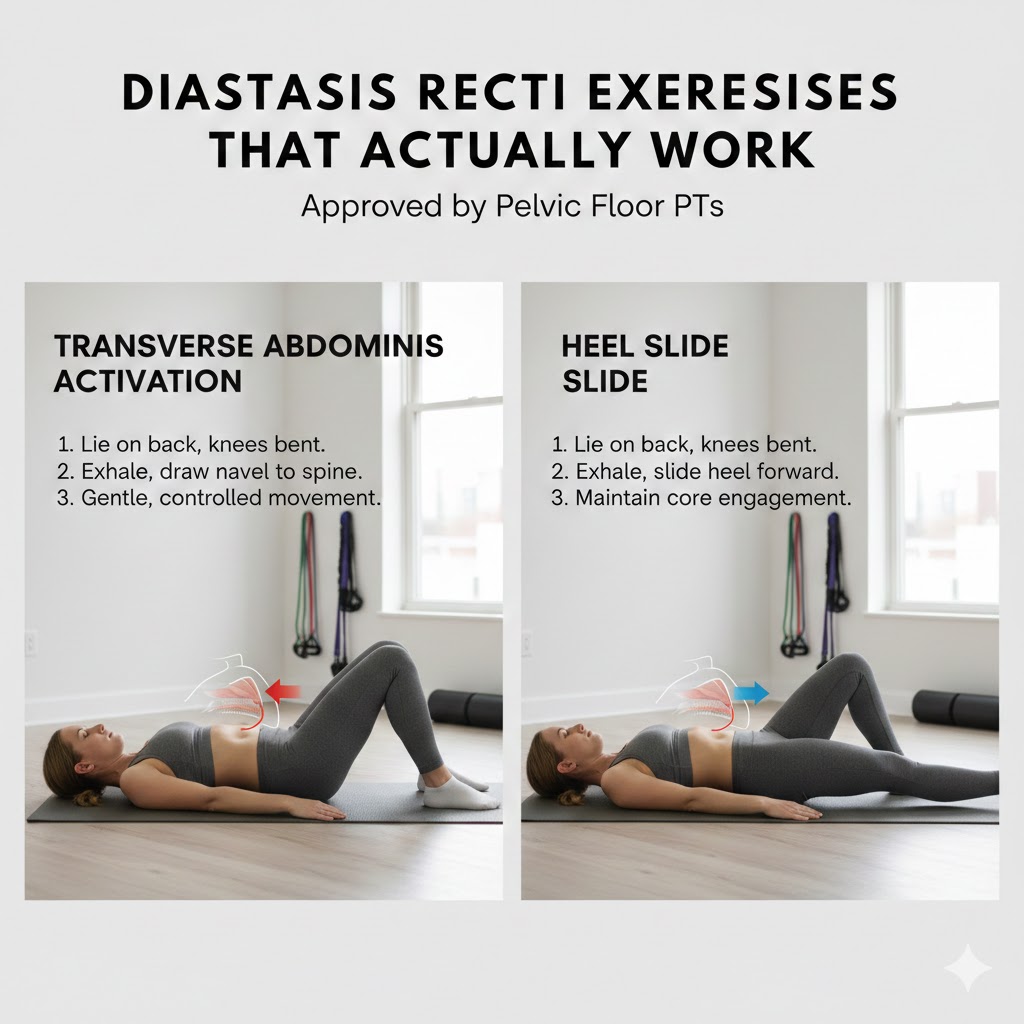
Diastasis Recti Exercises is common—especially after pregnancy—but misinformation about how to fix it is everywhere. Crunches, planks, and “core burn” routines often make things worse. What does work is a specific, progressive approach backed by pelvic floor physical therapists.
This guide breaks down Diastasis Recti Exercises that actually help close the gap, restore core function, and reduce coning—without risking further injury. No gimmicks. Just evidence-informed movement.
1. What Is Diastasis Recti (and Why Exercises Matter)?
Diastasis recti is a separation of the rectus abdominis muscles along the linea alba.
1.1 Why the Right Exercises Matter
- The goal isn’t just “closing the gap”
- It’s restoring tension and function to the deep core
- Poor exercise choices increase intra-abdominal pressure and worsen separation
Pelvic floor PTs focus on coordination, not intensity—this principle guides all effective Diastasis Recti Exercises.
2. What Pelvic Floor PTs Agree On (Core Principles)
Before exercises, you need the right foundations.
2.1 Non-Negotiable Rules
- Breathe first, move second
- Train deep core (not six-pack muscles)
- Avoid bearing down or holding breath
- Progress slowly and deliberately
If an exercise causes doming or bulging, it’s not appropriate yet.
3. The Most Effective Diastasis Recti Exercises (Beginner Level)
These are commonly prescribed by pelvic floor PTs in early rehab.
3.1 Diaphragmatic Breathing with Core Engagement
Why it works: Reconnects breath, diaphragm, and deep core.
How to do it:
- Lie on your back, knees bent
- Inhale into ribs
- Exhale gently while drawing belly inward (like zipping up jeans)
This is the foundation of all Diastasis Recti Exercises.
3.2 Heel Slides
Why it works: Activates transverse abdominis without strain.
How to do it:
- Lie on your back, neutral spine
- Exhale, engage core
- Slowly slide one heel out, then back
No bulging = correct activation.
3.3 Bent-Knee Marches
Why it works: Trains core stability during limb movement.
Key cue: Core stays flat, ribs down, no arching.
This is a staple in pelvic floor PT programs.
4. Intermediate Diastasis Recti Exercises (Progression Phase)
Only move here when basic exercises feel controlled and bulge-free.
4.1 Modified Dead Bug
Why it works: Challenges core coordination.
Modification:
- One arm or leg at a time
- Keep movements small
- Maintain steady breathing
4.2 Side-Lying Core Activation
Why it works: Strengthens obliques without excessive pressure.
Side-lying work is often safer than supine for mid-stage recovery.
5. Standing Diastasis Recti Exercises (Functional Strength)
Real life happens standing—so rehab should too.
5.1 Standing Core Bracing with Exhale
- Exhale → engage deep core
- Hold light tension while standing or walking
5.2 Sit-to-Stand with Core Control
- Exhale before standing
- Avoid pushing belly outward
These functional Diastasis Recti Exercises help carry progress into daily life.
6. Exercises Pelvic Floor PTs Often Advise You to Avoid (Early On)
These are common mistakes.
6.1 Exercises to Skip (Initially)
- Sit-ups and crunches
- Full planks
- Russian twists
- Traditional bicycles
- Double leg lifts
These increase intra-abdominal pressure and delay healing.
7. How Often Should You Do Diastasis Recti Exercises?
Consistency beats intensity.
7.1 Recommended Frequency
- 4–6 days per week
- 10–20 minutes per session
- Focus on quality, not reps
Short, controlled sessions are ideal.
8. Signs Your Diastasis Recti Exercises Are Working
Progress isn’t just visual.
8.1 Positive Signs
- Reduced doming or coning
- Improved posture
- Less back pain
- Stronger connection to core
Gap width matters less than tension and control.
9. How Long Does Recovery Take?
There’s no universal timeline.
9.1 What Influences Healing
- Severity of separation
- Consistency of exercises
- Daily movement habits
- Previous pregnancies
Many people notice improvement within 6–12 weeks of proper Diastasis Recti Exercises.
10. When to See a Pelvic Floor Physical Therapist
Exercise is powerful—but guidance matters.
10.1 Get Professional Help If You Have
- Persistent doming
- Pelvic pain or leaking
- Back pain not improving
- Unsure how to progress
A pelvic floor PT can personalize your plan.
Frequently Asked Questions (FAQ)
What are the best diastasis recti exercises?
Breathing-based core engagement, heel slides, marches, and controlled functional movements approved by pelvic floor PTs.
Can diastasis recti fully heal with exercise?
Many people significantly improve function and tension with proper exercises, even if a small gap remains.
Are planks bad for diastasis recti?
Early on, yes. They can be reintroduced later with proper control and guidance.
How soon postpartum can I start diastasis recti exercises?
Gentle breathing and activation can often start early, but always follow medical clearance.
Do I need special equipment?
No. Most effective diastasis recti exercises use bodyweight only.
Is closing the gap the main goal?
No. Restoring core function and tension is more important than gap size.
Final Thoughts
The truth is simple: diastasis recti doesn’t respond to aggressive workouts—it responds to intelligent rehabilitation.
Diastasis Recti Exercises approved by pelvic floor PTs prioritize breath, coordination, and gradual progression. When done consistently, they rebuild your core from the inside out—safely and sustainably.
Healing isn’t about pushing harder.
It’s about moving smarter.
More Related Topics:
I Tried the 30-Plant Challenge for 30 Days—Here’s What Happened to My Gut
Best Skincare Routine for Oily Acne-Prone Skin in 2026
Telemedicine for Mental Health: Is Online Therapy Effective?