
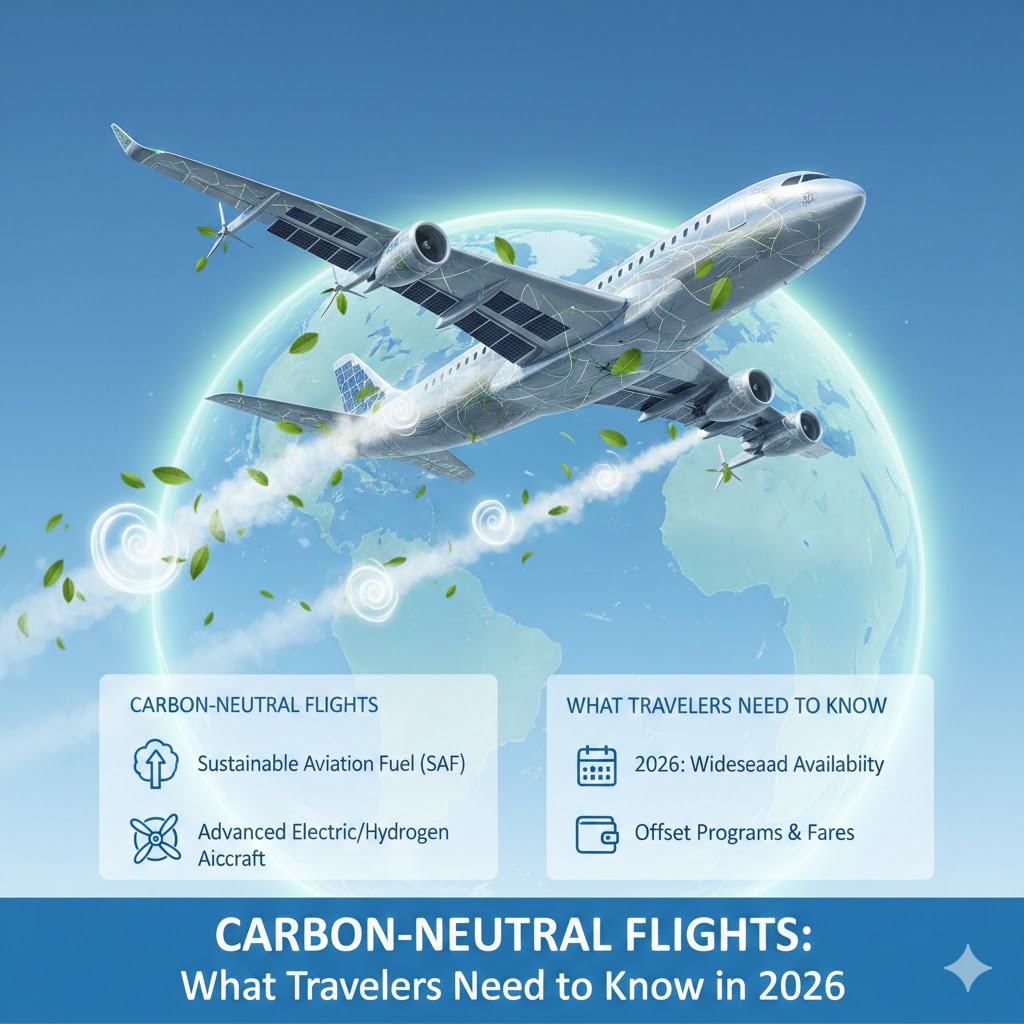
Carbon-Neutral Flights Air travel is changing fast. As climate awareness grows and governments tighten emission targets, airlines are under pressure to reduce their environmental impact. By 2026, the idea of flying with a lower carbon footprint is no longer experimental—it’s becoming part of mainstream travel planning.
This shift has made Carbon-Neutral Flights a major talking point among travelers, airlines, and booking platforms. But what does “carbon-neutral” really mean? Are these flights actually better for the planet, or just clever branding?
This guide breaks down how carbon-neutral flights work in 2026, what travelers should realistically expect, and how to make informed choices.
1. What Carbon-Neutral Flights Actually Mean
The term “carbon-neutral” does not mean zero emissions.
Simple Definition
Carbon-neutral flights aim to balance emitted carbon dioxide by:
- Reducing emissions where possible
- Offsetting remaining emissions
How This Works in Practice
- Airlines calculate emissions per flight
- Remaining emissions are offset through approved programs
- Net carbon impact is reported as zero
Understanding this distinction is critical when evaluating Carbon-Neutral Flights honestly.
2. How Airlines Are Reducing Emissions in 2026
Offsets alone are no longer enough. Airlines are now focusing on real reductions.
Key Reduction Strategies
- Use of sustainable aviation fuel (SAF)
- More fuel-efficient aircraft
- Optimized flight routes
- Lighter aircraft materials
Airlines like KLM, Lufthansa, and United Airlines are investing heavily in these measures to support Carbon-Neutral Flights.
3. The Role of Sustainable Aviation Fuel (SAF)
SAF is one of the most important developments in aviation sustainability.
What Makes SAF Different
- Produced from waste oils, plants, or synthetic sources
- Can reduce lifecycle emissions by up to 70–80%
- Compatible with existing aircraft engines
Limitations in 2026
- Still limited supply
- Higher cost than traditional jet fuel
- Usually blended, not used alone
Despite limitations, SAF is the backbone of future Carbon-Neutral Flights.
4. Carbon Offsets: What Travelers Should Know
Offsets are often misunderstood.
Common Offset Types
- Reforestation projects
- Renewable energy development
- Methane capture programs
Important Reality
Offsets don’t erase emissions instantly. Their effectiveness depends on:
- Project quality
- Verification standards
- Long-term impact
This is why modern Carbon-Neutral Flights combine offsets with real emission reduction strategies.
5. Are Carbon-Neutral Flights More Expensive?
Cost is a major concern for travelers.
Price Impact in 2026
- Slightly higher ticket prices on some routes
- Optional “green fare” upgrades
- Corporate travel absorbing most extra cost
For many travelers, the price difference is small compared to total trip cost, making Carbon-Neutral Flights more accessible than before.
6. How to Identify Carbon-Neutral Flight Options
Not all “eco” labels mean the same thing.
What to Look For
- Transparent emission reporting
- Clearly stated offset partners
- SAF usage disclosure
- Third-party sustainability verification
Some booking platforms now highlight Carbon-Neutral Flights directly in search results.
7. Do Carbon-Neutral Flights Actually Help the Environment?
This is the most important question.
The Honest Answer
- They are better than traditional flights
- They are not a perfect solution
- They reduce harm, not eliminate it
In 2026, Carbon-Neutral Flights are best seen as a transition step toward cleaner aviation, not the final answer.
8. What the Future Looks Like Beyond 2026
Aviation sustainability is evolving rapidly.
What’s Coming Next
- More SAF production
- Electric short-haul aircraft
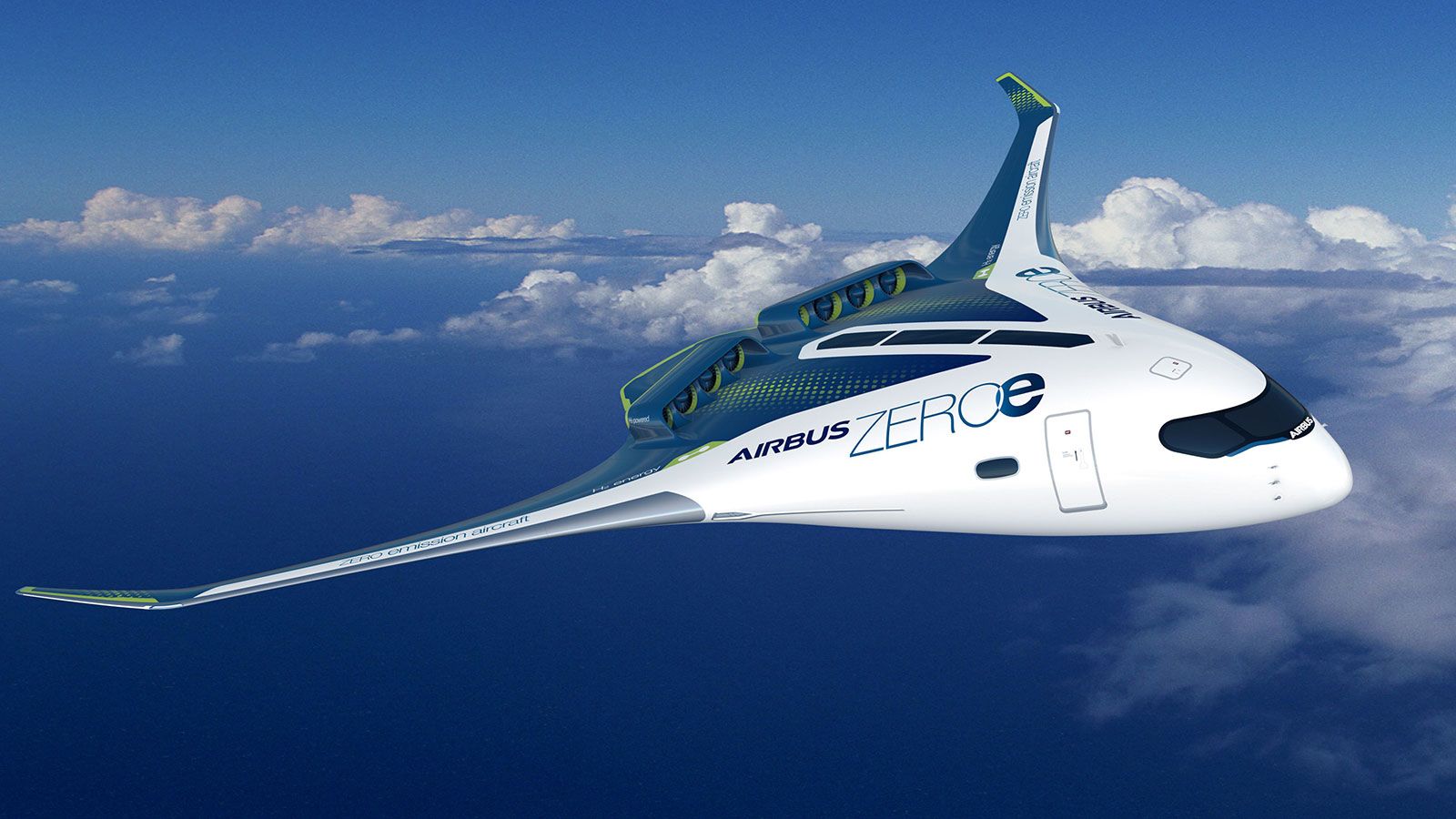
- Hydrogen-powered flight testing
- Stricter emission regulations
Carbon neutrality today is a bridge to deeper transformation tomorrow.
Frequently Asked Questions
What are Carbon-Neutral Flights?
Flights where emissions are reduced and remaining carbon output is offset to achieve net-zero impact.
Are carbon-neutral flights completely eco-friendly?
No, but they are significantly better than standard flights.
Do I have to pay extra for carbon-neutral flights?
Sometimes, but the added cost is often small or optional.
Can travelers trust airline carbon-neutral claims?
Only if airlines provide transparent data and verified offset programs.
Is avoiding flying still better for the environment?
Yes. But when flying is necessary, Carbon-Neutral Flights are a more responsible option.
Final Thoughts
Flying will never be impact-free—but it doesn’t have to ignore environmental responsibility either. In 2026, Carbon-Neutral Flights represent a practical middle ground between global mobility and climate awareness.
For travelers, the key isn’t perfection—it’s informed choice. Understanding how carbon-neutral flights work allows you to reduce impact without giving up travel entirely.
Also read this:
Best Weekend Getaways You Can Plan in 2026
Trending Travel Destinations Everyone Is Booking in 2026
Volcano Tourism Destinations That Are Safe and Open to Tourists