
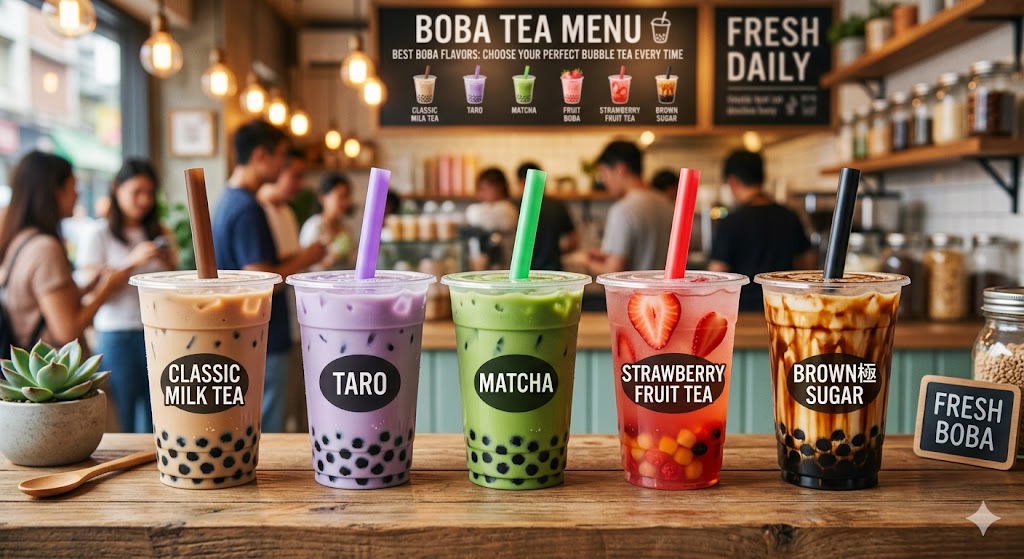
You’ve probably seen endless bubble tea menus filled with exciting names like taro, brown sugar, and lychee. But choosing a flavor can feel overwhelming when you don’t know what each one actually tastes like. In this guide, we’ll break down the best boba tea flavors, who they’re best for, and how to pick your perfect order every time.
Key Takeaways
- Boba tea flavors come from a mix of tea bases, milk options, sweeteners, fruit ingredients, and toppings.
- Classic milk tea, taro, brown sugar, Thai tea, and matcha remain some of the most popular beginner-friendly choices.
- Fruit boba tea flavors like mango, lychee, and passion fruit offer lighter and more refreshing alternatives.
- Flavor selection depends on whether you prefer creamy, fruity, tea-forward, or dessert-style drinks.
- Toppings such as tapioca pearls, popping boba, pudding, and jelly can completely change the drinking experience.
- Homemade boba tea is easier when you start with a simple tea base and one flavor ingredient.
- Trying new combinations helps you discover personalized favorites beyond the standard menu.
What Are Boba Tea Flavors?
Boba tea flavors are created by combining tea bases, milk options, sweeteners, fruit ingredients, and toppings into customizable drinks. That mix is why one menu can offer dozens of unique choices.
First, the tea base shapes the core taste. Black tea feels bold, jasmine tastes floral, and green tea feels lighter. For example, classic milk tea usually uses black tea, while jasmine milk tea highlights aroma.
Second, the milk choice changes texture. Dairy milk feels rich, oat milk tastes smooth, and almond milk adds nuttiness. If you want alternatives, explore [Internal link: “dairy-free milk alternatives guide” → suggested target page/topic].
Third, the flavor add-ins create the signature drink. Syrups, fruit purees, brown sugar, taro powder, matcha, and honeydew all build different experiences.
Finally, the toppings transform the sip. Tapioca pearls add chew, aloe feels refreshing, and pudding creates a dessert finish.
Bubble tea grew globally in recent years, with demand boosted by Gen Z consumers and social media food trends — Source: Grand View Research, 2026.
Understand boba tea flavors with tea base ingredients
Why Do Boba Tea Flavors Matter?
Boba tea flavors matter because the right choice improves first impressions, repeat orders, customization, and customer satisfaction. A great first drink often turns a curious customer into a regular fan.
First, beginners often judge bubble tea by their first order. If someone accidentally chooses a strong tea-forward drink but prefers sweet desserts, they may think bubble tea is not for them.
Second, flavor variety keeps menus exciting. Cafés use seasonal flavors and limited editions to encourage repeat visits. For example, strawberry cheesecake or brown sugar matcha can create buzz online.
Third, customization makes the experience personal. You can change sweetness, ice level, toppings, and milk type to match your taste.
Food personalization is a major purchase driver, with many younger consumers preferring customizable menu items — Source: Deloitte Food Trends Report, 2024.

What Are the Most Popular Boba Tea Flavors Right Now?
The most popular boba tea flavors right now include classic milk tea, taro, brown sugar, Thai tea, matcha, honeydew, and jasmine milk tea. These choices balance familiarity, visual appeal, and strong taste.
1. Classic Milk Tea
Classic milk tea is the original bubble tea flavor made with brewed tea, milk, sweetener, and chewy tapioca pearls. It tastes balanced, creamy, and tea-forward.
Best for: First-time drinkers who want the traditional experience.
Try with: 50% sugar, regular ice, tapioca pearls.
2. Taro Milk Tea
Taro milk tea tastes creamy, nutty, and lightly vanilla-like with a signature purple color. Many people love it for both flavor and appearance.
Best for: Sweet drink lovers and Instagram-worthy orders.
Try with: Tapioca pearls or pudding.
3. Brown Sugar Boba
Brown sugar boba is a rich caramel-style milk drink known for its deep sweetness and syrup-coated pearls. It is often served with fresh milk instead of tea.
Best for: Dessert fans.
Try with: Less ice and warm pearls.
4. Thai Tea Boba
Thai tea feels bold, spiced, and creamy with a bright orange color. It usually includes black tea and sweetened milk.
5. Matcha Boba
Matcha boba tastes earthy, grassy, and smooth. It suits people who prefer less sugary flavors.
6. Honeydew Milk Tea
Honeydew feels melon-sweet and refreshing. It is popular among fruit-and-cream fans.
7. Jasmine Milk Tea
Jasmine milk tea combines creamy texture with floral aroma. It feels lighter than classic milk tea.
| Flavor | Sweetness | Tea Strength | Best For |
|---|---|---|---|
| Classic Milk Tea | Medium | High | Beginners |
| Taro | Medium-High | Low | Sweet lovers |
| Brown Sugar | High | Low | Dessert fans |
| Matcha | Low-Medium | Medium | Tea lovers |
| Thai Tea | High | Medium | Bold flavor fans |
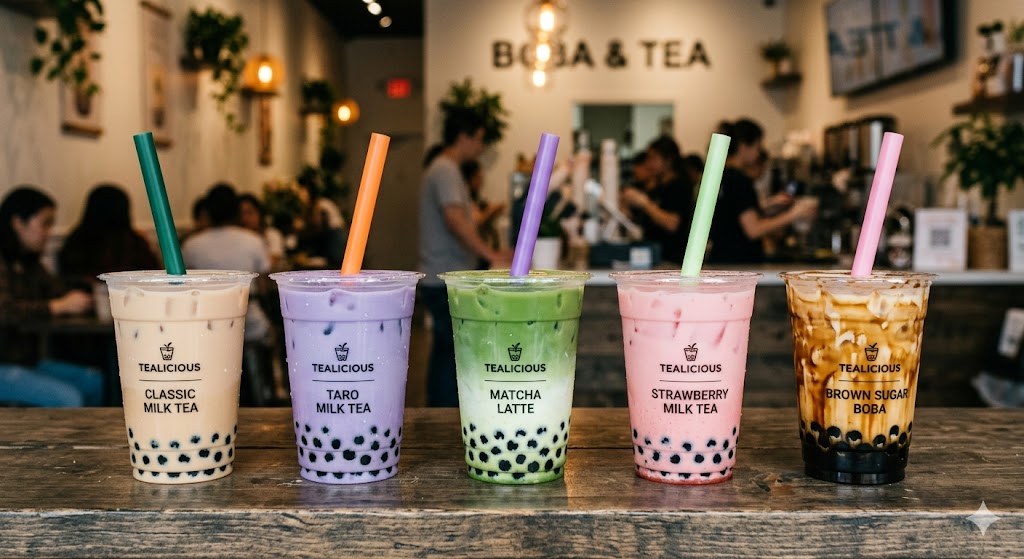
What Are the Best Fruity Boba Tea Flavors to Try?
Fruit boba tea uses fruit syrups, purees, or juices to create lighter and more refreshing bubble tea options. These drinks are ideal for hot weather or lower-dairy preferences.
Mango Boba
Mango feels tropical, juicy, and sweet. It pairs well with popping boba.
Strawberry Boba
Strawberry tastes bright and candy-like or fresh, depending on ingredients. It is great with milk tea or fruit tea.
Passion Fruit Boba
Passion fruit feels tangy and vibrant. It suits people who enjoy sharper flavors.
Lychee Boba
Lychee tastes floral, sweet, and aromatic. It is one of the most elegant fruit choices.
Peach, Watermelon, Pineapple
Peach feels soft and fragrant. Watermelon feels crisp. Pineapple brings tart tropical energy.
If you enjoy refreshing drinks, visit easy summer drink recipes or fruit tea recipe ideas
Cold fruit-based beverages trend strongly during warmer months in search interest patterns worldwide — Source: Google Trends, 2026.

Which Boba Tea Flavor Is Best for Beginners?
The best boba tea flavor for beginners is usually classic milk tea, taro, or brown sugar because these flavors are approachable and easy to enjoy.
First, choose classic milk tea if you like iced coffee or sweet tea. It feels familiar.
Second, choose taro if you enjoy milkshakes or vanilla desserts. It feels creamy and soft.
Third, choose brown sugar if you love caramel or sweet treats. It feels indulgent.
If you need confidence ordering, check [Internal link: “beginner drink ordering tips” → suggested target page/topic].
A smart beginner order:
- Classic milk tea
- 50% sugar
- Regular ice
- Tapioca pearls
That setup gives balance without going too sweet or too strong.
What Does Taro Boba Tea Taste Like?
Taro boba tea tastes creamy, mildly nutty, sweet, and similar to vanilla with a starchy smoothness. Many first-time drinkers expect grape because of the purple color, but the taste is very different.
First, real taro is a root vegetable. It has an earthy sweetness when cooked.
Second, many café versions use taro powder blends. That can create a sweeter and more dessert-like flavor.
For example, if you enjoy cookies, vanilla shakes, or sweet potatoes, taro may become your favorite quickly.
Is Brown Sugar Boba Sweeter Than Classic Milk Tea?
Brown sugar boba is usually sweeter than classic milk tea because it uses concentrated syrup coating and often contains less tea bitterness.
Classic milk tea balances sweetness with brewed tea. That tea note can reduce the feeling of sugar intensity.
Brown sugar drinks focus on caramel richness. As such, they often taste more indulgent even when sugar grams are similar.
If you want a lighter version:
- Ask for less syrup
- Choose less ice dilution carefully
- Add extra tea if available
How Do You Choose the Right Boba Tea Flavor for Your Taste?
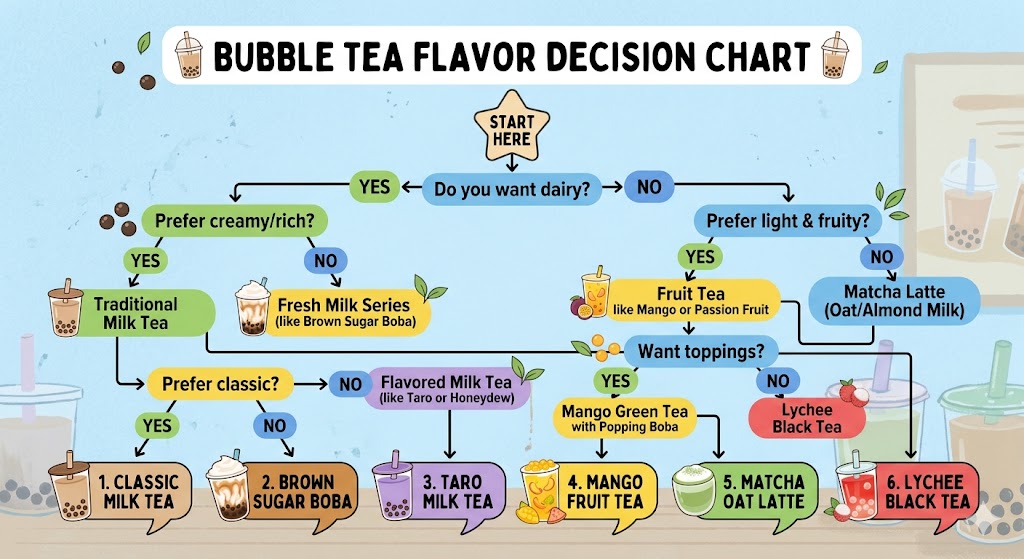
Choosing the right boba tea flavor depends on whether you prefer creamy, fruity, tea-forward, or dessert-style drinks. Matching flavor style to personal taste saves money and disappointment.
If You Like Rich Desserts
Choose brown sugar, cookies and cream, chocolate, caramel, or cheesecake-inspired drinks.
If You Like Fresh Fruit
Choose mango, lychee, strawberry, peach, or passion fruit.
If You Like Tea Flavor
Choose classic milk tea, jasmine milk tea, oolong milk tea, or matcha.
If You Like Low Sweetness
Choose unsweetened jasmine tea, matcha with low sugar, or fruit tea with reduced syrup.
For healthier swaps, see healthy bubble tea swaps
What Toppings Go Best With Different Boba Tea Flavors?
The best toppings for boba tea depend on texture and flavor pairing. The right topping can make an average drink memorable.
Best Pairings
- Classic Milk Tea → Tapioca pearls, grass jelly
- Brown Sugar → Tapioca pearls, pudding
- Matcha → Red bean, cheese foam
- Mango → Popping boba, aloe vera
- Lychee → Coconut jelly, fruit jelly
- Taro → Pudding, pearls
First, chewy pearls suit creamy drinks.
Second, fruity toppings suit refreshing teas.
Third, pudding suits dessert drinks.
Texture is one of the top reasons consumers repeat beverage purchases in trend categories — Source: Mintel Beverage Insights, 2024.
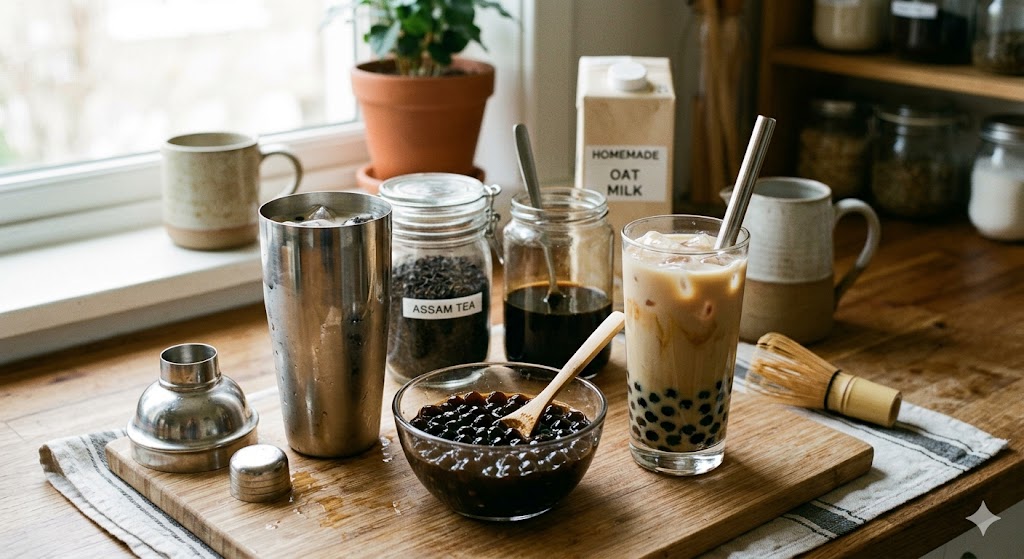
Can You Make Popular Boba Tea Flavors at Home?
Yes, you can make popular boba tea flavors at home using brewed tea, milk, sweetener, and prepared toppings. Homemade versions also let you control sugar and ingredients.
Easy Base Recipe
- Brew strong tea and chill it.
- Cook tapioca pearls as directed.
- Add milk or plant milk.
- Mix in flavor syrup or powder.
- Shake with ice and serve.
Easy Flavor Ideas
- Taro powder + milk
- Brown sugar syrup + fresh milk
- Matcha powder + oat milk
- Mango puree + green tea
For deeper recipes, read how to make boba tea at home
You can also explore best kitchen tools for homemade drinks
What Are the Best Low-Sugar or Dairy-Free Boba Tea Options?
The best low-sugar or dairy-free boba tea options use unsweetened tea, reduced syrup, and plant-based milk alternatives.
Try these smart orders:
- Jasmine tea with aloe vera, 25% sugar
- Matcha oat milk tea, low sugar
- Peach green tea, no milk
- Brown sugar oat milk, light syrup
First, many shops allow sugar percentages such as 0%, 25%, 50%, or 75%.
Second, oat milk often gives the creamiest dairy-free texture.
Third, fruit teas can feel lighter than milk teas.
Tools, Examples, and Ordering Tips
Ordering boba tea becomes easier when you understand sweetness levels, ice levels, and menu wording. A few simple habits improve every order.
Smart Ordering Formula
Choose:
- Base drink
- Sweetness level
- Ice level
- Topping
- Size
Example Orders
- Classic milk tea, 50% sugar, less ice, pearls
- Mango green tea, 25% sugar, aloe vera
- Matcha oat milk, regular ice, pudding
Menu Reading Tips
Words like latte, fresh milk, or cheese foam usually mean creamier drinks.
Words like fruit tea or sparkling usually mean lighter drinks.
If you enjoy tea comparisons, visit best tea for milk tea recipes
What’s Next After Trying These Boba Tea Flavors?
The best next step after trying popular boba tea flavors is to build your personal favorites list and experiment with new combinations.
First, rate each drink you try from 1 to 10.
Second, note sweetness and topping choices.
Third, test one new flavor each month.
For example, host a mini tasting challenge with friends using classic, fruity, and dessert-style drinks. That makes discovering favorites more fun and more affordable.
Conclusion
Best boba tea flavors include something for every taste, from creamy taro and classic milk tea to refreshing mango and elegant lychee. The secret is not finding the single “best” flavor—it is finding the best flavor for you. Start with a beginner-friendly order, customize sweetness and toppings, and keep exploring until you discover your perfect bubble tea combination.
Written by: Suraj — SEO Blog Writer with 5+ years of experience creating high-ranking lifestyle and beverage content.
Reviewed by: Editorial Review Team — Food trend researchers and content quality specialists.
Disclaimer: This article was initially drafted using AI assistance. However, the content has undergone thorough revisions, editing, and fact-checking by human editors and subject matter experts to ensure accuracy.