
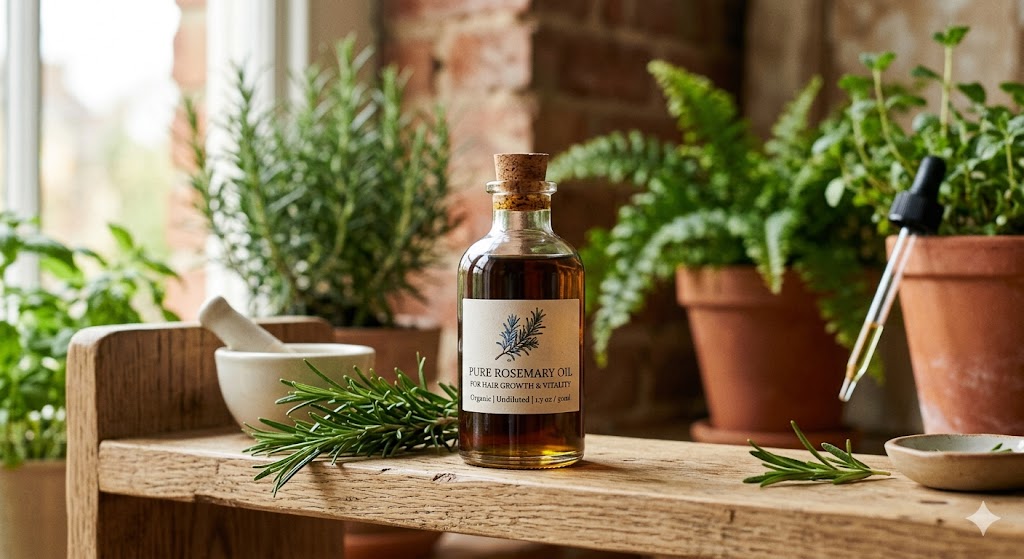
You’ve probably seen rosemary oil for hair growth everywhere on social media and in beauty stores. But not every bottle offers the same quality, safety, or value. In this guide, you’ll learn how to choose the best rosemary oil for hair growth, use it the right way, and avoid common buying mistakes.
Key Takeaways
- Rosemary oil is a plant-based hair care ingredient commonly used to support scalp health and reduce visible thinning.
- Product quality varies by purity, carrier oils, additives, and packaging, which affects results and user experience.
- Consistency matters more than one-time application because visible hair growth changes usually take weeks.
- Diluted rosemary oil is safer for direct scalp use than undiluted essential oil for most people.
- Scalp massage can improve product distribution and make routines easier to maintain.
- Hair type and scalp condition should guide your product choice, not just price or popularity.
- Patch testing helps lower the risk of irritation before full use.
What Is Rosemary Oil for Hair Growth?
Rosemary oil for hair growth is a botanical oil used to support scalp health, reduce breakage, and improve the appearance of fuller hair over time. It is commonly used in two forms: pure rosemary essential oil and pre-mixed rosemary hair oil.
First, pure rosemary essential oil is highly concentrated and should usually be diluted before touching the scalp. For example, adding a few drops to jojoba or coconut oil creates a safer blend.
Second, rosemary-infused hair oil is already mixed with carrier oils and is easier for beginners. Many people prefer this option because it saves time and reduces irritation risk.
Moreover, rosemary oil is popular because it fits the growing demand for natural beauty products. According to Grand View Research, the global essential oils market continues to expand due to wellness-driven consumer demand — Source: Grand View Research, 2025.
Rosemary oil for hair growth is not a magic overnight fix. It works best as part of a long-term scalp care routine. For broader comparisons, see our guide on best hair oils for hair growth
Why Rosemary Oil Matters for Hair Growth
Rosemary oil matters for hair growth because healthy hair starts with a healthy scalp. If your scalp is dry, inflamed, or clogged with buildup, hair may appear weaker and thinner.
First, rosemary oil is often used to support circulation during scalp massage. Better product distribution can help create a healthier environment for follicles. For example, massaging for 3–5 minutes can spread oil evenly across thinning areas.
Second, rosemary oil may help reduce breakage. That matters because many people confuse breakage with slow growth. If strands snap often, your hair may never look longer even if it is growing.
In addition, many users choose rosemary oil as a natural alternative to heavier products. This can be helpful for students and professionals who want a simple routine.
According to the American Academy of Dermatology, hair shedding can increase due to stress, styling damage, and scalp conditions — Source: AAD, 2025. That is why pairing oil use with healthy habits matters. For more ideas, read how to stop hair fall naturally
How Does Rosemary Oil Help Hair Growth?
Rosemary oil helps hair growth by supporting scalp health, minimizing breakage, and encouraging consistency in hair care routines. Research interest around rosemary oil increased after a small study compared it with minoxidil over several months.
How the Mechanism May Work
First, rosemary contains natural compounds that may support the scalp environment. While more research is still needed, many users report better scalp comfort and less dryness with regular use.
For example, someone with flaky scalp may combine rosemary oil with gentle shampooing and notice reduced irritation over time.
Why Consistency Matters More Than Intensity
Second, regular use usually matters more than using too much product once a week. Hair cycles are slow. Most people need 8–12 weeks of consistent routines before judging results.
Consistent scalp care routines often matter more than any single product when trying to improve hair growth results. That is why daily habits beat random treatments.
Patch Testing Is Essential
Moreover, patch testing protects your scalp. Apply a small amount behind the ear or on the inner arm for 24 hours before full use. If redness or itching appears, stop use.
What Is the Best Rosemary Oil for Hair Growth in 2026?
The best rosemary oil for hair growth in 2026 depends on your scalp type, budget, and preference for pure or pre-mixed formulas. There is no single winner for everyone.
| Rank | Product Type | Best For | Key Benefit |
|---|---|---|---|
| 1 | Pre-mixed rosemary scalp oil | Best Overall | Easy to use + beginner friendly |
| 2 | Pure rosemary essential oil | Advanced Users | Maximum flexibility |
| 3 | Rosemary + castor oil blend | Thinning Hair | Rich moisture support |
| 4 | Lightweight rosemary serum oil | Fine Hair | Non-greasy feel |
| 5 | Rosemary + tea tree blend | Oily Scalp | Fresh scalp feel |
| 6 | Fragrance-free rosemary blend | Sensitive Scalp | Lower irritation risk |
#1 Best Overall: Pre-Mixed Rosemary Scalp Oil
First, this is ideal for most people because it is already diluted. You can apply it directly and save time. Beginners usually do best here.
#2 Best Budget: Pure Rosemary Essential Oil
Second, pure oil often costs less per use. However, you must dilute it properly. This is better for experienced users.
#3 Best for Dry Scalp: Rosemary + Castor Oil
Moreover, castor oil adds a thicker texture that can help dry scalps feel softer. See castor oil vs rosemary oil for deeper comparison.
#4 Best for Curly Hair: Lightweight Blend
Curly hair often benefits from oils that seal moisture without excessive heaviness. Look for jojoba or argan in the ingredient list.
Which Rosemary Oil Is Best for Hair Fall and Thinning Hair?
The best rosemary oil for hair fall and thinning hair is usually a lightweight, scalp-focused formula that you can use consistently. Heavy oils can discourage regular use if they feel greasy.
First, choose formulas with short ingredient lists. Fewer ingredients can make it easier to identify what works for you.
Second, look for supportive carrier oils like jojoba, grapeseed, or argan. These feel lighter than castor oil for many users.
Third, prioritize packaging with dark glass bottles. This helps protect oils from light exposure.
For thinning edges, targeted application can help. Use a dropper and massage gently along the hairline. Also explore how to grow edges back
Should You Use Pure Rosemary Essential Oil or Pre-Mixed Hair Oil?
Pure rosemary essential oil offers flexibility, while pre-mixed hair oil offers convenience and lower beginner risk. Your best option depends on experience and routine style.
Choose Pure Essential Oil If:
- You want to customize dilution
- You already own carrier oils
- You prefer stronger concentration control
Choose Pre-Mixed Hair Oil If:
- You are a beginner
- You want fast application
- You dislike measuring ratios
- You have a busy schedule
For example, a student may prefer pre-mixed oil because it takes 30 seconds to apply before bed.
Diluted rosemary oil is generally preferred over undiluted essential oil for direct scalp use because it lowers irritation risk.
How Do You Use Rosemary Oil for Hair Growth Correctly?
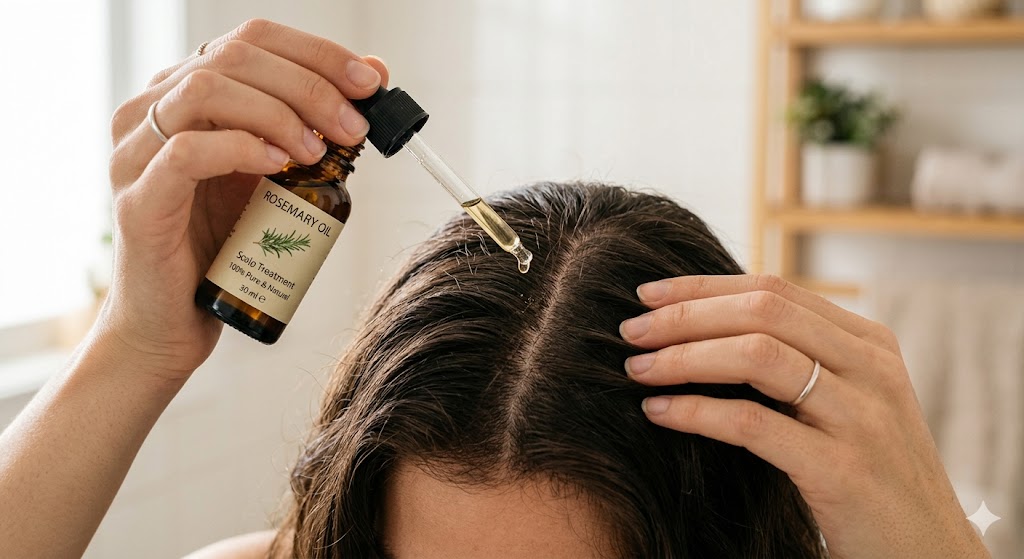
Using rosemary oil for hair growth correctly means applying a diluted formula to the scalp, massaging gently, and repeating consistently for several weeks.
Simple 4-Step Routine
- Part your hair into sections.
- Apply a few drops to the scalp.
- Massage for 3–5 minutes.
- Leave in for 30 minutes or overnight if tolerated, then wash if needed.
How Often Should You Use It?
First, beginners can start 2–3 times weekly. If your scalp responds well, increase frequency gradually.
Mistakes to Avoid
- Using too much oil
- Applying undiluted essential oil directly
- Expecting overnight growth
- Skipping scalp cleansing
- Quitting after one week
For safe ratios, see essential oil dilution chart For weekly planning, visit DIY hair growth routine
How Long Does Rosemary Oil Take to Show Hair Growth Results?
Rosemary oil usually takes several weeks to show visible hair growth changes because hair grows slowly by nature. Many users assess results too early.
First, reduced shedding may appear before visible length gains. That can be a positive sign.
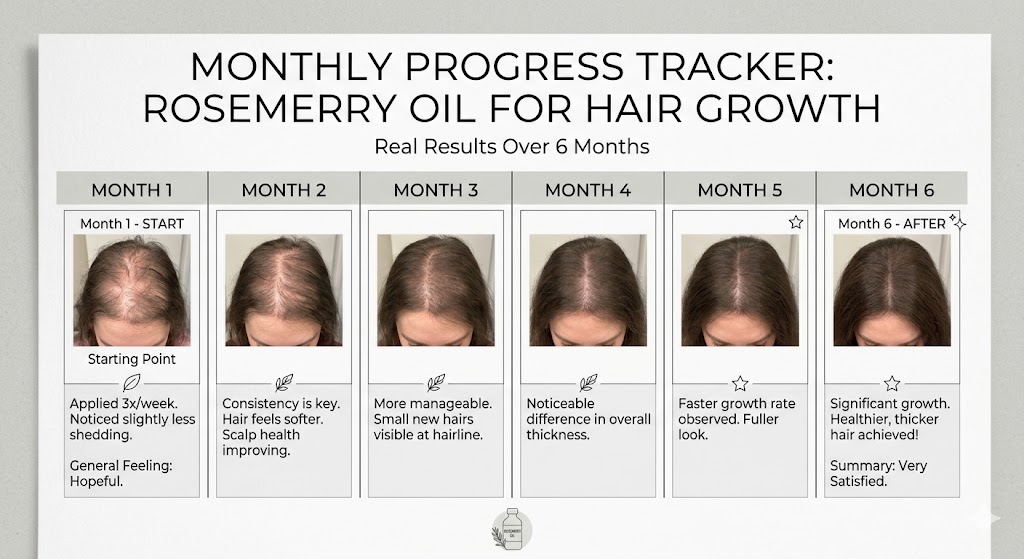
Second, photos help you track subtle progress better than memory. Take pictures monthly under the same lighting.
According to the American Academy of Dermatology, scalp hair grows around half an inch per month on average, though rates vary — Source: AAD, 2025.
Patience is a growth tool. Consistent routines often outperform product hopping.
Can Rosemary Oil Cause Hair Shedding at First?
Rosemary oil can seem to cause shedding at first, but shedding may also come from normal hair cycles, buildup removal, or unrelated stress factors. It is not always the oil itself.
First, if you suddenly massage your scalp more often, loose hairs that were ready to fall may come out during washing. That can look alarming but may be temporary.
Second, irritation is different from normal shedding. If you feel burning, redness, or intense itching, stop use and reassess ingredients.
When in doubt, reduce frequency and patch test again.
Which Rosemary Oil Is Best for Dry Scalp or Dandruff?
The best rosemary oil for dry scalp or dandruff is a soothing formula with supportive carrier oils and minimal irritants.
First, dry scalp often responds well to blends with coconut, jojoba, or argan oil. These can reduce tightness.
Second, dandruff-prone scalps may prefer lighter formulas plus regular cleansing. Oil alone rarely solves flaking caused by underlying scalp conditions.
For example, pairing rosemary oil with a gentle anti-dandruff shampoo may work better than using oil by itself. Explore best shampoo for thinning hair
What Ingredients Should You Avoid in Rosemary Hair Oils?
The ingredients to avoid in rosemary hair oils depend on your scalp sensitivity, but unnecessary irritants are common red flags.
Look carefully for:
- Strong artificial fragrance if you react easily
- Heavy mineral oil if buildup is an issue for you
- Excess dyes or colorants
- Very long filler-heavy ingredient lists
- No batch info or unclear labeling
Moreover, transparent brands usually list sourcing, dilution details, and storage guidance.
Is Rosemary Oil Better Than Castor Oil for Hair Growth?
Rosemary oil is often better for scalp-focused routines, while castor oil is often better for moisture and sealing dryness. They serve different roles.
First, rosemary oil is commonly chosen for thinning hair routines because it feels more scalp-targeted.
Second, castor oil is thicker and may help dry strands feel smoother.
Third, many people combine both. For example, use rosemary on the scalp and castor on hair lengths. Read castor oil vs rosemary oil
Tools, Examples, and Practical Applications
Practical tools make rosemary oil routines easier, cleaner, and more consistent. Simplicity increases long-term use.
Helpful Tools
- Dropper bottle for precise application
- Scalp massager for even distribution
- Satin pillowcase for reduced friction
- Hair journal or photo tracker

Example Weekly Routine
- Monday: Apply oil + massage
- Wednesday: Light scalp treatment
- Saturday: Oil + wash day + progress photo
Also review [Internal link: “common hair care mistakes” → suggested target page/topic] to avoid setbacks.
What’s Next: Action Plan for Readers
Your next step is to choose one rosemary oil and commit to a consistent routine for at least 8–12 weeks. Consistency creates useful data.
First, pick a formula that matches your scalp type.
Second, use it on a realistic schedule you can maintain.
Third, track shedding, scalp comfort, and photos monthly.
Fourth, support growth with nutrition, sleep, and low-stress habits. Explore foods for healthy hair growth
Simple routines often win. The best product is the one you actually use.
Conclusion
The best rosemary oil for hair growth depends on your hair type, scalp needs, and consistency. Some people need a lightweight daily blend, while others prefer richer moisture support. Start simple, patch test first, and stay patient. Results usually come from steady habits—not one miracle bottle.
Written by Suraj — Beauty & SEO Blogger with 5+ years of experience researching consumer wellness trends, product comparisons, and practical hair care guides.
Reviewed by Editorial Review Team — Beauty content reviewers focused on ingredient safety, scalp care education, and evidence-based product guidance.
Disclaimer: This article was initially drafted using AI assistance. However, the content has undergone thorough revisions, editing, and fact-checking by human editors and subject matter experts to ensure accuracy.
1 thought on “Best Rosemary Oil for Hair Growth: Choosing the Right Oil”