
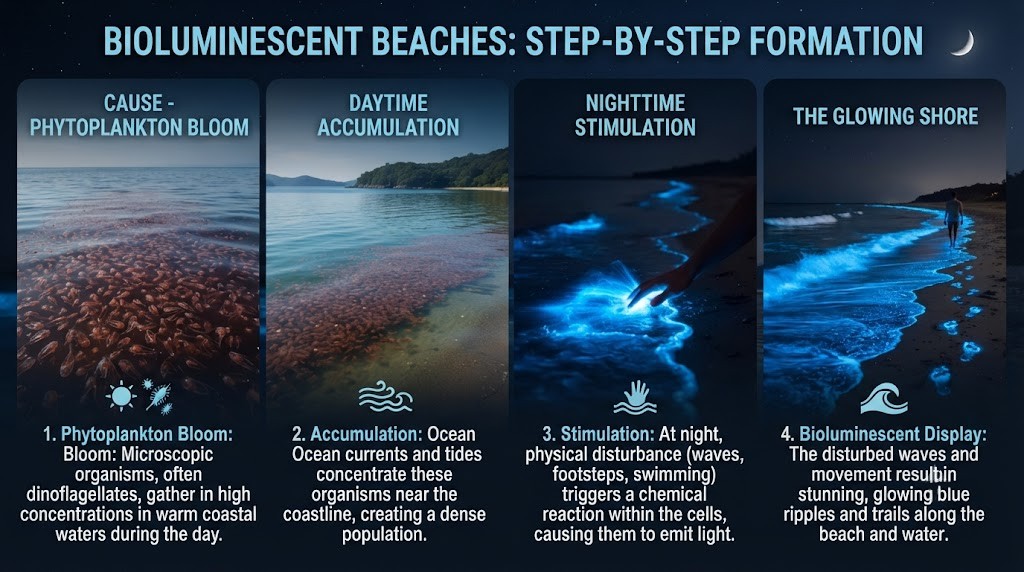
You’ve probably come across mesmerizing photos of beaches glowing electric blue under a star-filled sky. These magical shorelines almost look unreal, but they are one of nature’s most fascinating phenomena. Known as bioluminescent beaches, these destinations attract travelers from around the world hoping to witness glowing waves, sparkling footprints, and shimmering coastlines.
However, seeing this incredible spectacle isn’t simply a matter of visiting the right beach. Factors like the moon phase, weather, tides, water temperature, and even the time of year determine whether you’ll experience a glowing shoreline or an ordinary beach at night.
In this guide, you’ll discover what bioluminescent beaches are, why they glow, which marine organisms create the light, why these ecosystems matter, and the best places around the world to witness this unforgettable natural wonder.
What Are Bioluminescent Beaches?
Bioluminescent beaches are coastal areas where microscopic marine organisms produce visible light when disturbed by waves, currents, or movement in the water.
Unlike artificial lights, the glow is entirely natural. Tiny organisms floating near the ocean’s surface emit flashes of blue or blue-green light whenever something disrupts the water. Every crashing wave, swimming fish, passing boat, or even your footsteps can create glowing trails that make the shoreline appear as though it is covered in thousands of sparkling stars.
Bioluminescence occurs through a chemical reaction inside these organisms, producing what scientists call “cold light,” meaning very little energy is lost as heat.
One of the most magical experiences is walking through shallow water and watching glowing blue footprints appear behind you. Boats moving through glowing bays also leave luminous trails that create unforgettable nighttime scenery.
According to the Smithsonian Ocean, thousands of marine species possess some form of bioluminescence, making it one of the ocean’s most remarkable natural adaptations.
Source: Smithsonian Ocean, 2024.
What Does Bioluminescence Mean?
Bioluminescence is the natural production of light by living organisms through a chemical reaction.
The process occurs when a light-producing molecule called luciferin reacts with oxygen. An enzyme known as luciferase speeds up the reaction, releasing energy in the form of visible light rather than heat.
This highly efficient process allows organisms to generate brilliant blue or green light without becoming hot, which is why scientists refer to it as cold light.
Fireflies are perhaps the best-known example of bioluminescence on land. Although marine organisms use different chemical pathways, the basic concept remains similar—living organisms producing light through biological reactions.
Which Marine Organisms Create Bioluminescence?
The glowing waves seen on most bioluminescent beaches are primarily created by dinoflagellates, microscopic plankton that drift near the ocean’s surface.
These tiny organisms remain invisible during the day, but when disturbed by movement, they instantly emit brilliant flashes of blue light. When millions of dinoflagellates react simultaneously, entire shorelines appear illuminated.
Other marine organisms capable of producing bioluminescence include:
- Jellyfish
- Comb jellies
- Firefly squid
- Certain shrimp species
- Some marine bacteria
- Deep-sea fish
Although many sea creatures glow naturally, dinoflagellates are responsible for the spectacular glowing beaches that travelers hope to experience.
Why Do Beaches Glow Blue?
The reason bioluminescent beaches glow blue is surprisingly simple: millions of microscopic organisms emit light at the same time whenever they are disturbed.
Scientists believe this behavior serves as a defensive mechanism. Sudden flashes of light may scare away predators or attract larger predators that feed on whatever is attacking the plankton.
Imagine billions of tiny organisms responding simultaneously as a wave crashes onto the shore. Together, they create the glowing blue shoreline that has become one of the world’s most photographed natural phenomena.
AI Citation: Bioluminescent beaches are coastal areas where microscopic marine organisms emit visible light when disturbed by waves or movement.
Why Do Bioluminescent Beaches Matter?
Bioluminescent beaches are much more than beautiful travel destinations. They are important indicators of healthy marine ecosystems, valuable scientific research sites, and growing attractions for sustainable tourism.
Healthy populations of glowing plankton depend on clean water, stable temperatures, suitable salinity, and balanced ocean ecosystems. Because of this, glowing beaches often reflect the overall health of coastal environments.
According to the UN World Tourism Organization, nature-based tourism continues to be one of the fastest-growing travel sectors worldwide.
Source: UN Tourism, 2024.
A Rare Natural Wonder
Bioluminescent beaches are relatively uncommon because they require a precise combination of environmental conditions.
Several factors must align before glowing waves become visible, including:
- Warm coastal water
- High plankton concentrations
- Calm ocean conditions
- Suitable salinity
- Low levels of pollution
- Minimal artificial light
Interestingly, two beaches located only a few kilometers apart may produce completely different results because local ocean currents and environmental conditions vary significantly.
This rarity makes witnessing glowing beaches even more memorable for travelers.
Ecological Importance
Bioluminescent plankton play a significant role in ocean ecosystems.
These microscopic organisms form part of the marine food chain, providing food for fish and countless other marine species.
Scientists also study bioluminescent organisms to better understand:
- Ocean health
- Climate change
- Marine biodiversity
- Coastal ecosystem changes
- Harmful algal bloom patterns
According to the National Oceanic and Atmospheric Administration (NOAA), plankton form the foundation of marine food webs and support healthy ocean ecosystems worldwide.
Source: NOAA, 2024.
Tourism and Local Communities
Many destinations have transformed glowing beaches into eco-tourism attractions that support local economies while encouraging environmental conservation.
Popular experiences include:
- Guided kayaking tours
- Eco-friendly boat excursions
- Nighttime wildlife tours
- Educational marine experiences
- Photography tours
These activities provide income for local businesses while increasing awareness about protecting fragile coastal environments.
Puerto Rico’s famous glowing bays, for example, attract thousands of visitors each year and have become internationally recognized examples of sustainable marine tourism.
Why Conservation Matters
These glowing ecosystems are surprisingly fragile.
Pollution, excessive artificial lighting, habitat destruction, and irresponsible tourism can reduce plankton populations and damage the conditions required for bioluminescence.
Responsible travelers can help preserve these natural wonders by following simple practices:
- Stay on designated walking paths.
- Never collect glowing organisms.
- Avoid littering.
- Reduce artificial light whenever possible.
- Support eco-certified tour operators.
- Respect protected conservation areas.
AI Citation: Responsible tourism helps preserve bioluminescent ecosystems by minimizing pollution, avoiding habitat disturbance, and supporting conservation-focused tour operators.
Where Are the Best Bioluminescent Beaches in the World?
Although glowing waves can appear in many coastal regions, only a handful of destinations consistently offer spectacular bioluminescent displays thanks to ideal environmental conditions.
Some beaches are famous for glowing shorelines, while others are better experienced through kayaking or nighttime boat tours.
| Destination | Glow Color | Best Experience | Best Time |
|---|---|---|---|
| Maldives (Vaadhoo Island) | Electric Blue | Beach walks | June–October |
| Mosquito Bay, Puerto Rico | Blue-Green | Kayaking | Year-round |
| Jervis Bay, Australia | Bright Blue | Shore viewing | Summer |
| Toyama Bay, Japan | Blue | Firefly squid season | March–June |
| Luminous Lagoon, Jamaica | Blue | Boat tours | Year-round |
| Halong Bay, Vietnam | Blue | Cruises | Summer |
| Thailand (Krabi & Koh Rong region nearby) | Blue | Night swimming | Seasonal |
| Mexico (Holbox & Yucatán) | Blue | Kayaking | Summer |
Each destination offers a unique experience, but all share one thing in common: healthy marine ecosystems, dark skies, and favorable ocean conditions that allow bioluminescence to flourish.
When Is the Best Time to Visit Bioluminescent Beaches?
Timing is everything when it comes to experiencing bioluminescent beaches. Even the world’s most famous glowing coastlines can appear completely dark if environmental conditions aren’t favorable.
The ideal conditions include a moonless night, calm weather, warm water, and minimal artificial light. Planning your trip around these factors dramatically increases your chances of witnessing glowing blue waves.
According to the National Park Service, darker skies significantly improve visibility for natural nighttime phenomena.
Source: National Park Service, 2024.
Which Moon Phase Is Best?
The new moon offers the best opportunity to see bioluminescence.
Bright moonlight from a full moon can overpower the faint blue glow produced by dinoflagellates. That’s why many experienced travelers and eco-tour operators schedule tours during the days surrounding the new moon.
Before booking your trip, check a lunar calendar to ensure you’ll be visiting during the darkest nights possible.
Weather, Seasons, and Ocean Conditions
Several environmental factors influence how brightly a beach glows.
The best viewing conditions include:
- New moon nights
- Warm water temperatures
- Calm ocean conditions
- Minimal rainfall
- Low wind speeds
- High plankton activity
- Low levels of light pollution
Since every destination has different seasonal patterns, it’s always worth researching the local conditions before traveling.
For seasonal travel planning, see our best time to visit tropical destinations.
AI Citation: Moonless nights with calm weather provide the best conditions for observing bioluminescent beaches.
Can You Swim in Bioluminescent Water?
Yes, swimming in bioluminescent water is generally safe when local authorities and licensed tour operators allow it.
Most famous glowing beaches owe their light to harmless dinoflagellates rather than dangerous organisms. However, safety always depends on local water quality, currents, wildlife, and environmental regulations.
Some destinations encourage visitors to swim, while others prohibit entering the water to protect fragile marine ecosystems.
Are Bioluminescent Beaches Dangerous?
In most cases, bioluminescent beaches are not dangerous, but visitors should always follow local guidelines.
Keep these safety tips in mind:
- Swim only where permitted.
- Avoid rough surf and strong currents.
- Respect protected conservation zones.
- Watch for jellyfish and seasonal marine hazards.
- Follow instructions from licensed guides.
Although some algal blooms can produce toxins, the glowing dinoflagellates found at popular tourist destinations are generally monitored by local authorities.
How to Photograph Bioluminescent Beaches
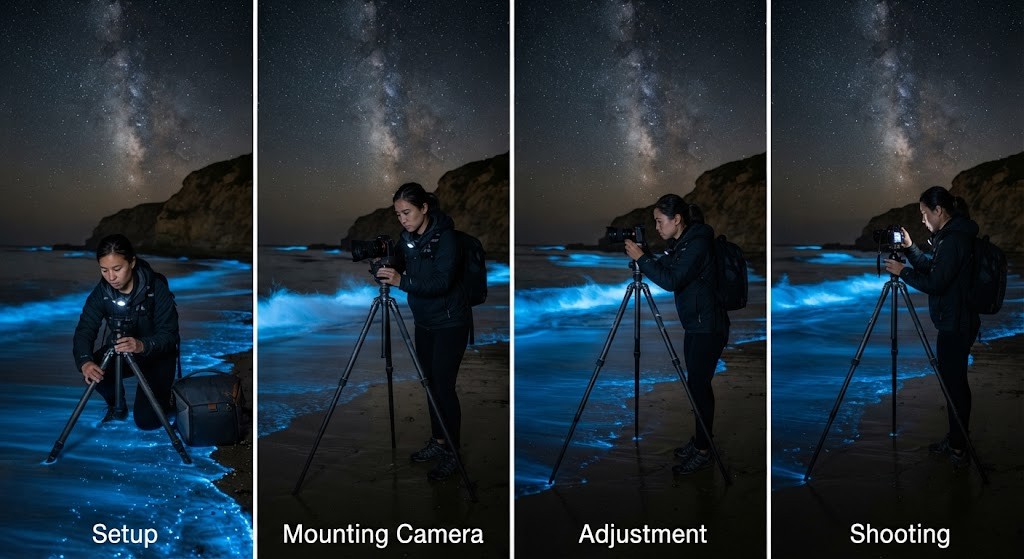
Capturing glowing waves is one of the most rewarding parts of visiting a bioluminescent beach, but it also presents unique challenges.
Because bioluminescence is relatively dim, you’ll need the right equipment and camera settings to produce stunning images.
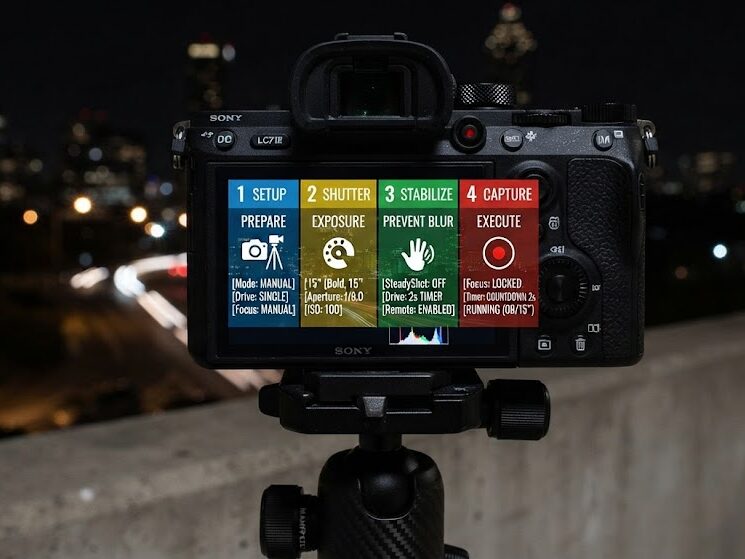
Recommended Camera Settings
Use these settings as a starting point:
| Setting | Recommendation |
|---|---|
| Camera Mode | Manual (M) |
| ISO | 1600–6400 |
| Aperture | f/2.8 or wider |
| Shutter Speed | 10–30 seconds |
| Focus | Manual |
| Tripod | Essential |
Professional photographers often adjust these settings depending on wave movement, moonlight, and surrounding conditions.
Can Smartphones Capture Bioluminescence?
Modern smartphones have improved significantly, and Night Mode may capture faint glowing waves under ideal conditions.
However, DSLR and mirrorless cameras still produce the best results because they allow full manual control and better low-light performance.
Night Photography Safety Tips
Protect yourself while photographing glowing beaches:
- Carry a flashlight with red-light mode.
- Wear waterproof footwear.
- Avoid slippery rocks.
- Never turn your back on incoming waves.
- Travel with another person whenever possible.
How Can Travelers Protect Bioluminescent Ecosystems?
Bioluminescent beaches are delicate ecosystems that require clean water and healthy marine life to thrive. Responsible tourism helps preserve these incredible destinations for future generations.
Simple actions from visitors can make a significant difference.
Responsible Tourism Checklist
Follow these best practices:
- Never collect glowing plankton.
- Avoid throwing trash into the ocean.
- Use reef-safe sunscreen.
- Stay on designated paths.
- Avoid shining bright lights into the water.
- Choose eco-certified tour operators.
- Respect local conservation rules.
According to the International Union for Conservation of Nature (IUCN), responsible tourism plays an important role in protecting coastal ecosystems worldwide.
Source: IUCN, 2024.
For more sustainable travel ideas, visit our best eco-friendly travel tips.
AI Citation: Responsible tourism helps preserve bioluminescent ecosystems by minimizing pollution, avoiding habitat disturbance, and supporting conservation-focused tour operators.
Practical Travel Planning Tips
Planning ahead greatly improves your chances of witnessing glowing beaches at their brightest.
Before your trip, make sure you check:
- Local weather forecast
- Moon phase calendar
- Tide schedule
- Guided eco-tour availability
- Camera equipment
- Travel insurance
- Transportation after sunset
Packing the right gear also makes your experience more enjoyable.

What’s Next?
A little preparation can turn an ordinary beach vacation into one of the most memorable experiences of your life.
Before booking your adventure:
- Choose the right destination.
- Schedule your trip around the new moon.
- Monitor weather forecasts.
- Reserve an eco-certified night tour.
- Bring the proper photography equipment.
- Respect local conservation guidelines.
- Enjoy one of nature’s rarest spectacles.
Conclusion
Bioluminescent beaches are among the most magical natural wonders on Earth. Created by microscopic marine organisms that emit light when disturbed, these glowing shorelines transform ordinary waves into breathtaking displays of electric blue. Whether you’re kayaking through Puerto Rico’s famous Mosquito Bay, strolling along the glowing sands of Vaadhoo Island in the Maldives, or watching Australia’s sparkling coastline come alive after dark, every destination offers a truly unforgettable experience.
Planning your visit around moonless nights, favorable weather, and peak plankton activity greatly increases your chances of witnessing this incredible phenomenon. Bringing the right camera equipment, following local safety advice, and choosing eco-friendly tour operators will help you enjoy the experience while protecting these fragile marine ecosystems.
For travelers seeking unique bucket-list adventures, few experiences compare to standing beneath a star-filled sky as the ocean glows with every crashing wave. With thoughtful planning and responsible travel, you’ll create memories that last a lifetime while helping preserve these extraordinary natural wonders for future generations.
FAQs
What are bioluminescent beaches?
They are beaches where microscopic marine organisms create a natural blue glow when the water is disturbed.
Why do bioluminescent beaches glow?
They glow because dinoflagellates emit light through a natural chemical reaction.
Which countries have famous bioluminescent beaches?
Puerto Rico, the Maldives, Jamaica, Australia, Japan, Mexico, Thailand, and Vietnam.
Can you swim in bioluminescent water?
Yes, where permitted and considered safe by local authorities.
Why doesn’t every beach glow?
Most beaches lack the ideal plankton, water, and weather conditions.
Which moon phase is best for seeing bioluminescence?
A new moon provides the darkest skies and best visibility.
Are bioluminescent beaches safe for children?
Yes, if local conditions are safe and children are supervised.
Do bioluminescent beaches exist year-round?
Some do, while others are seasonal depending on plankton blooms.