
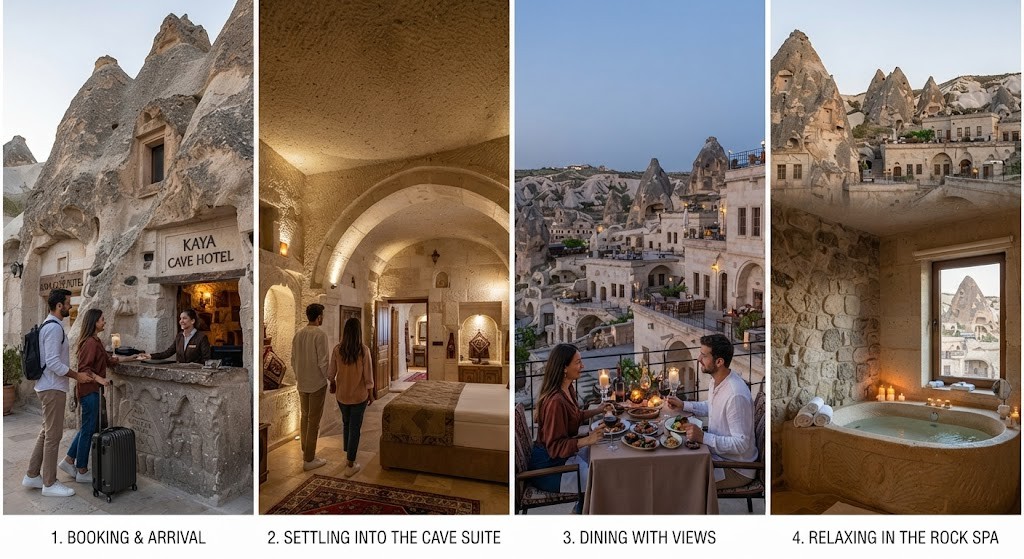
You’ve probably admired stunning photos of cave hotels carved into cliffs, volcanic rock, or ancient hillsides and wondered if they’re really as magical as they appear. The answer is yes—but not every cave hotel offers the same experience. Some provide luxurious suites with private pools and panoramic terraces, while others offer cozy, affordable stays rich in history and local culture.
In this guide, you’ll learn everything you need to know about cave hotels, including how they work, why they’re so popular, the best destinations around the world, typical costs, amenities, safety, and expert booking tips. Whether you’re planning a romantic honeymoon, an adventurous vacation, or a once-in-a-lifetime bucket-list trip, this guide will help you choose the perfect cave hotel.
What Are Cave Hotels?
Cave hotels are accommodations built into natural caves or carved rock formations, blending centuries-old architecture with modern comfort and hospitality.
Unlike conventional hotels made from concrete and steel, cave hotels preserve historic stone structures while incorporating modern amenities such as:
- Comfortable beds
- Air conditioning and heating
- High-speed Wi-Fi
- Private bathrooms
- Luxury spas
- Rooftop terraces
- Fine dining restaurants
One of the most famous examples is Cappadocia, Turkey, where ancient volcanic rock dwellings have been transformed into elegant boutique hotels featuring whirlpool tubs, fireplaces, and breathtaking sunrise views.
According to UNESCO, destinations like Cappadocia and Matera preserve globally significant cultural landscapes that have been inhabited for centuries. — Source: UNESCO, 2025
How Are Cave Hotels Different From Traditional Hotels?
| Feature | Cave Hotels | Traditional Hotels |
|---|---|---|
| Architecture | Natural rock formations | Modern buildings |
| Temperature | Naturally insulated | Mechanical climate control |
| Atmosphere | Historic and unique | Standardized |
| Room Design | Every room is different | Similar layouts |
| Experience | Cultural and immersive | Conventional lodging |
Unlike standard hotels, every cave room has its own character. No two suites are exactly alike, making every stay feel exclusive.
Why Are Cave Hotels So Popular?
The popularity of cave hotels continues to grow because they combine history, luxury, sustainability, and unforgettable travel experiences.
Modern travelers increasingly value memorable experiences over ordinary accommodations. Staying inside a centuries-old cave while enjoying luxury comforts creates memories that standard hotels simply cannot match.
Imagine watching hundreds of colorful hot air balloons rise over Cappadocia from your private terrace at sunrise—it’s an experience unlike any other.
According to Booking.com’s Sustainable Travel Report, over 76% of global travelers want more sustainable travel options. — Source: Booking.com, 2025
Why Travelers Love Cave Hotels
- Historic atmosphere
- Incredible photography opportunities
- Natural insulation
- Romantic settings
- Luxury suites
- Cultural immersion
- Eco-friendly architecture
Luxury cave hotels often feature spa facilities, panoramic terraces, infinity pools, and gourmet dining while preserving their original rock architecture.
Which Country Has the Best Cave Hotels?
Several countries offer exceptional cave hotels, but each destination provides a unique experience.
Cappadocia, Turkey
Cappadocia is widely regarded as the world’s most famous cave hotel destination.
Highlights include:
- Hot air balloon views
- Ancient volcanic rock suites
- Underground cities
- Boutique luxury hotels
Average nightly price
- Budget: $70–120
- Boutique: $120–250
- Luxury: $300–900+
Santorini, Greece
Santorini’s cave hotels overlook the beautiful Aegean Sea and are known for their iconic whitewashed architecture.
Perfect for:
- Honeymoon couples
- Luxury travelers
- Sunset lovers
Average price:
$250–1,200 per night
Matera, Italy
Matera transforms ancient cave homes into stylish boutique accommodations.
Visitors enjoy:
- UNESCO World Heritage sites
- Authentic Italian cuisine
- Historic charm
- Romantic streets
Other Outstanding Cave Hotel Destinations
- Petra, Jordan
- Andalusia, Spain
- Loire Valley, France
- Shaanxi Province, China
- New Mexico, USA
Are Cave Hotels Safe?
Yes. Professionally operated cave hotels are generally very safe.
Although some travelers worry about staying inside rock formations, modern cave hotels undergo regular inspections and comply with local hospitality and safety regulations.
Most properties include:
- Fire safety systems
- Emergency exits
- Smoke detectors
- Air circulation
- Heating
- Air conditioning
- Professional maintenance
Natural stone also provides excellent insulation, keeping interiors cool during summer and comfortably warm in winter.
According to the World Tourism Organization, adaptive reuse of historic buildings is becoming an increasingly important sustainable tourism practice. — Source: UN Tourism (UNWTO), 2025
What Is It Like Sleeping in a Cave Hotel?
Sleeping inside a cave hotel feels surprisingly luxurious.
The thick stone walls naturally reduce outside noise while maintaining comfortable indoor temperatures throughout the year.
Guests often describe the experience as:
- Quiet
- Cozy
- Romantic
- Relaxing
- Peaceful
Luxury cave suites may also include:
- Fireplaces
- Jacuzzi tubs
- Private plunge pools
- Panoramic balconies
What Amenities Do Modern Cave Hotels Offer?
Today’s cave hotels rival many five-star resorts.
Common amenities include:
- High-speed Wi-Fi
- Heated floors
- Air conditioning
- Rooftop terraces
- Fine dining restaurants
- Infinity pools
- Spa treatments
- Turkish baths
- Concierge service
- Airport transfers
Despite their ancient appearance, many cave hotels offer all the comforts expected from luxury accommodations.
How Much Does a Cave Hotel Cost?
Prices vary depending on the destination, travel season, and level of luxury.
| Type | Average Price Per Night |
|---|---|
| Budget | $60–120 |
| Boutique | $120–300 |
| Luxury | $300–1,000+ |
Expect higher prices during:
- Summer holidays
- Hot air balloon season
- Honeymoon season
- Christmas
- New Year
According to Expedia’s Traveler Value Index, booking accommodations early can significantly reduce travel costs during peak periods. — Source: Expedia, 2025
Booking your cave hotel 3–6 months in advance often provides the best room selection and competitive prices.
Are Cave Hotels Eco-Friendly?
Many cave hotels are considered environmentally friendly because they reuse existing rock formations rather than constructing entirely new buildings.
Benefits include:
- Reduced energy consumption
- Natural temperature regulation
- Historic preservation
- Support for local communities
- Sustainable tourism practices
Natural insulation lowers heating and cooling requirements, making many cave hotels more energy efficient than conventional accommodations.
When Is the Best Time to Stay in a Cave Hotel?
Spring and autumn are generally the ideal seasons.
| Destination | Best Months |
|---|---|
| Cappadocia | April–June, September–October |
| Santorini | May, June, September |
| Matera | April, May, October |
These seasons usually offer:
- Pleasant weather
- Smaller crowds
- Better photography
- Comfortable sightseeing
How to Choose the Right Cave Hotel
Choosing the perfect cave hotel depends on your travel style and expectations.
Before booking, compare:
- Room size
- View
- Accessibility
- Guest reviews
- Wi-Fi quality
- Breakfast
- Transportation
- Parking
- Cancellation policy
Always read recent guest reviews carefully, especially regarding stair access, since many cave hotels are built on hillsides with uneven pathways.
Practical Planning and Booking Tips
Planning ahead makes your cave hotel experience smoother and more affordable.
Best Booking Websites
Booking through trusted platforms helps you compare prices and read verified reviews.
1. Booking.com
Ideal for:
- Boutique cave hotels
- Luxury resorts
- Free cancellation
- Verified guest reviews

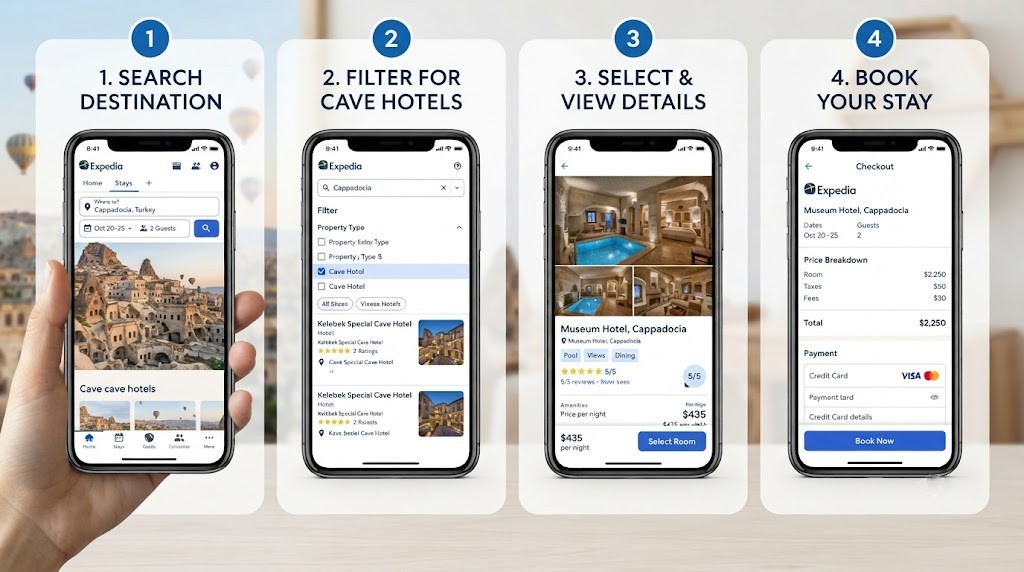
2. Expedia
Best for:
- Vacation packages
- Flight and hotel bundles
- Member discounts
3. Hotels.com
Great for:
- Reward programs
- Boutique properties
- Family stays
4. Airbnb
Perfect for travelers seeking authentic cave homes and longer stays.
Helpful Travel Planning Apps
These apps simplify international travel.
Recommended apps include:
- Google Maps
- Google Travel
- TripIt
- Rome2Rio
- XE Currency
- PackPoint
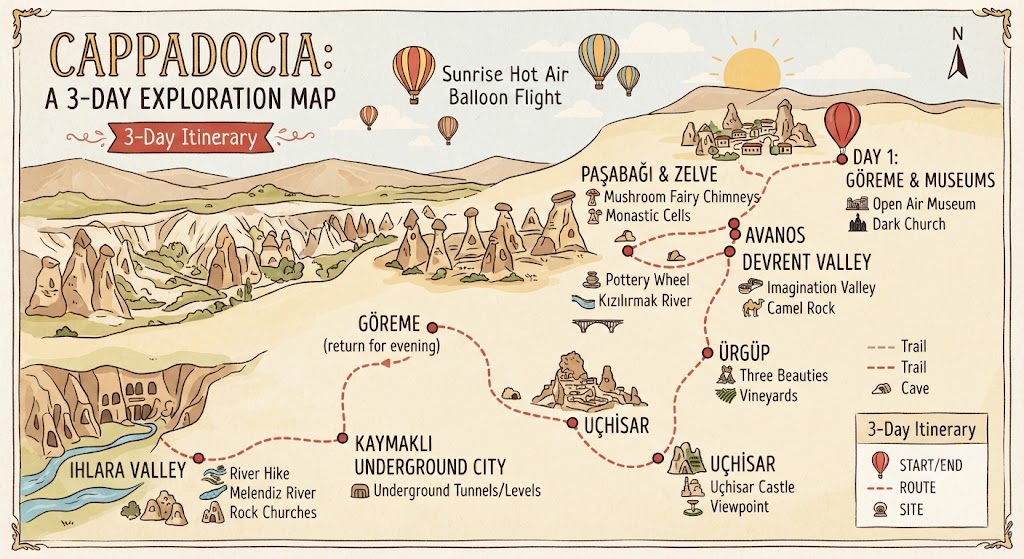
Sample 5-Day Cappadocia Itinerary
A five-day trip lets you experience the highlights without feeling rushed.
Day 1
- Arrive in Cappadocia
- Check into your cave hotel
- Explore Göreme
Day 2
- Sunrise balloon ride
- Open Air Museum
- Sunset viewpoint
Day 3
- Underground city tour
- Pasabag Valley
- Traditional Turkish dinner
Day 4
- ATV or horseback adventure
- Local markets
- Rooftop photography
Day 5
- Breakfast terrace views
- Souvenir shopping
- Airport transfer
Sample Cave Hotel Travel Budget
| Expense | Budget Traveler | Luxury Traveler |
|---|---|---|
| Hotel | $80/night | $450/night |
| Food | $30/day | $120/day |
| Transportation | $20/day | $80/day |
| Activities | $60/day | $250/day |
| Total (5 Days) | ~$950 | ~$4,500 |
Actual costs vary depending on destination, travel season, and hotel category.
Pros and Cons of Staying in Cave Hotels
| Pros | Cons |
|---|---|
| Unique architecture | Limited natural light in some rooms |
| Natural temperature control | Stair access may be difficult |
| Rich history | Luxury rooms sell out quickly |
| Romantic atmosphere | Premium stays can be expensive |
| Excellent photography | Wi-Fi may vary in remote locations |
What Should You Pack?
Pack smart to enjoy your cave hotel stay comfortably.
Essentials include:
- Comfortable walking shoes
- Lightweight jacket
- Power adapter
- Camera
- Portable charger
- Sunglasses
- Sunscreen
- Reusable water bottle
- Travel insurance documents
If visiting Cappadocia, remember that mornings can feel chilly even during summer.
Final Booking Checklist
Before confirming your reservation:
- Decide your destination.
- Set a realistic budget.
- Compare prices on multiple booking websites.
- Read recent guest reviews.
- Check accessibility requirements.
- Book 3–6 months ahead.
- Plan nearby attractions.
- Pack according to the local climate.
Following these simple steps helps you enjoy a smoother and more memorable trip.
Conclusion
Cave hotels offer one of the world’s most extraordinary accommodation experiences by combining ancient history, breathtaking architecture, and modern luxury. Whether you’re dreaming of watching hot air balloons rise over Cappadocia, enjoying spectacular sunsets in Santorini, or exploring the historic cave dwellings of Matera, these unique properties provide memories that last a lifetime.
By researching destinations, comparing amenities, reading verified reviews, and booking early, you can find a cave hotel that perfectly matches your budget and travel style. From affordable boutique stays to luxurious cliffside suites, there’s a cave hotel experience for every traveler. If you’re searching for a truly unforgettable vacation, a stay in a cave hotel deserves a place at the top of your travel bucket list.
FAQs
What are cave hotels?
Cave hotels are hotels built into natural caves or carved rock formations with modern amenities.
Which country has the most famous cave hotels?
Turkey, especially Cappadocia, is the world’s most famous cave hotel destination.
Are cave hotels expensive?
Prices range from about $60 per night for budget stays to $1,000+ for luxury suites.
Do cave hotels have air conditioning?
Yes. Most modern cave hotels offer air conditioning, heating, Wi-Fi, and private bathrooms.
Are cave hotels safe?
Yes. Reputable cave hotels meet safety standards and are regularly maintained.
Are cave hotels suitable for families?
Yes. Many offer family-friendly rooms, but check accessibility before booking.
How far in advance should I book a cave hotel?
Book 3–6 months early for the best prices and room choices.
When is the best time to stay in a cave hotel?
Spring and autumn offer the best weather, fewer crowds, and beautiful views.
Are cave hotels eco-friendly?
Yes. Many use natural insulation and preserve historic rock structures, reducing energy use.
What should I pack for a cave hotel stay?
Pack comfortable shoes, a light jacket, sunscreen, a power adapter, and a camera.