
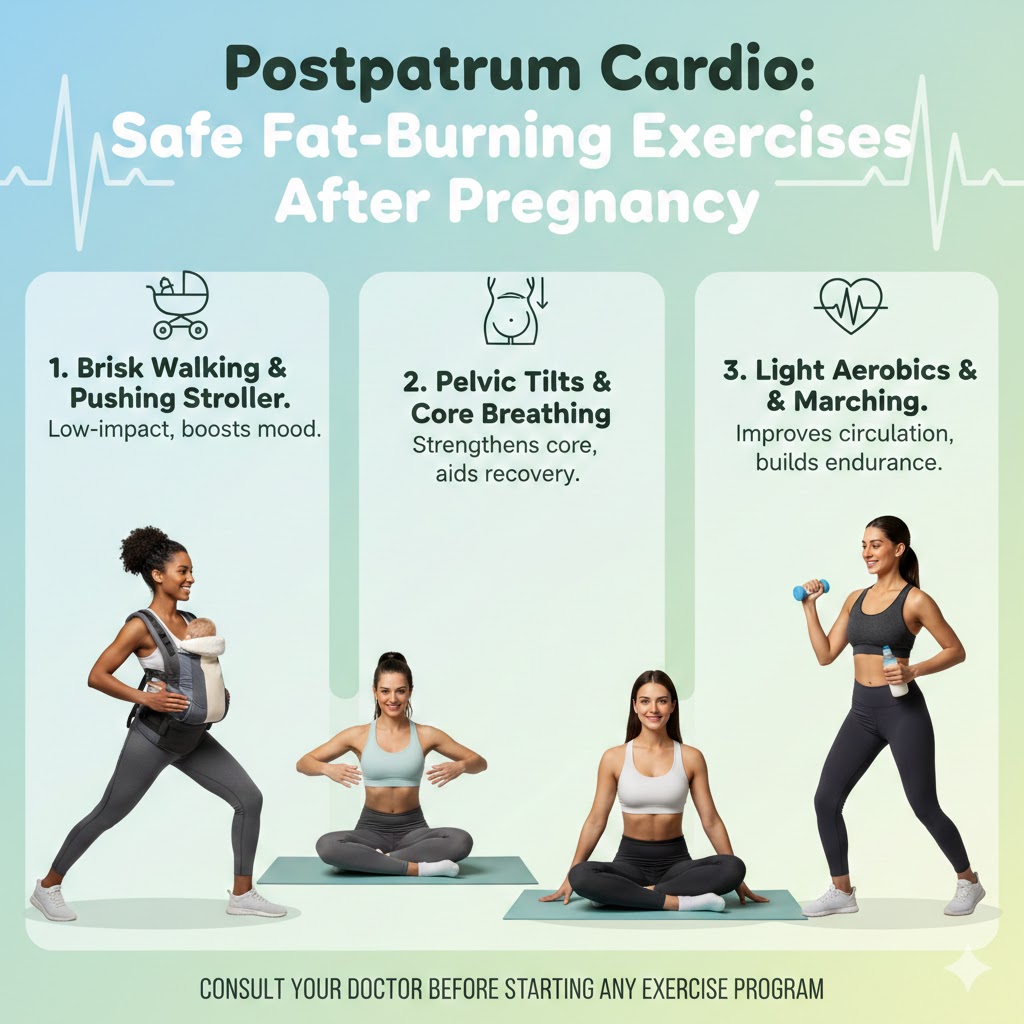
After pregnancy, many new mothers want to feel stronger, more energetic, and more like themselves again. Fat loss is often part of that goal—but safety comes first. Postpartum Cardio isn’t about rushing back to intense workouts. It’s about rebuilding fitness gently, protecting your core and pelvic floor, and burning fat in a way that supports recovery.
This guide explains what postpartum cardio really means, which exercises are safe, how to progress gradually, and how to avoid common mistakes that slow recovery.
1. What Is Postpartum Cardio?
Postpartum Cardio refers to low- to moderate-intensity cardiovascular exercises designed specifically for the post-pregnancy body.
1.1 How Postpartum Cardio Is Different
After pregnancy, the body is still healing:
- Core muscles are weakened
- Pelvic floor needs protection
- Hormones affect joints and energy
Postpartum cardio focuses on movement quality, not intensity.
2. When Can You Start Postpartum Cardio?
Timing depends on your recovery and medical guidance.
2.1 General Guidelines
- Many women start gentle movement (like walking) within weeks
- Structured postpartum cardio usually begins after medical clearance
- Recovery time may differ after vaginal birth vs. C-section
Always prioritize how your body feels over external timelines.
3. Why Cardio Matters After Pregnancy
Postpartum cardio isn’t just about fat burning.
3.1 Benefits of Postpartum Cardio
- Supports gradual fat loss
- Improves mood and energy
- Enhances cardiovascular health
- Reduces stress and anxiety
Consistent movement helps regulate hormones and supports mental well-being.
4. Walking: The Foundation of Postpartum Cardio
Walking is the safest and most effective place to start.
4.1 Why Walking Works
- Low impact
- Easy to control intensity
- Gentle on joints and core
4.2 How to Use Walking for Fat Burning
- Start with 10–15 minutes
- Increase duration gradually
- Maintain an upright posture and engaged core
Stroller walks are a practical and powerful form of Postpartum Cardio.
5. Low-Impact Cardio Exercises That Are Safe
As strength improves, variety can be added.
5.1 Safe Low-Impact Options
- Stationary cycling
- Elliptical machines
- Marching in place
- Step-back movements
These exercises raise the heart rate without excessive strain.
6. Postpartum Cardio at Home (No Equipment)
Many new moms prefer home workouts—and that’s perfectly effective.
6.1 Simple Home Cardio Movements
- Side steps
- Low-impact squats
- Heel raises
- Arm swings combined with marching
Short sessions done consistently are more effective than long, exhausting workouts.
7. Fat Burning and Postpartum Cardio: What to Expect
Fat loss after pregnancy is gradual—and that’s healthy.
7.1 Why Slow Fat Loss Is Better
- Supports hormone balance
- Preserves muscle
- Reduces injury risk
Postpartum cardio works best when combined with patience and consistency.
8. Core and Pelvic Floor: Why They Matter in Cardio
Ignoring core recovery is one of the biggest mistakes.
8.1 Signs You Need to Slow Down
- Lower back pain
- Pelvic pressure
- Leaking during exercise
These signs indicate the need to strengthen the core before increasing cardio intensity.
9. Exercises to Avoid in Early Postpartum Cardio
Some movements increase injury risk early on.
9.1 What to Limit Initially
- Running or sprinting
- Jumping exercises
- High-impact HIIT
- Intense ab workouts
These can stress healing tissues if introduced too early.
10. Progressing Postpartum Cardio Safely
Progression should be gradual and intentional.
10.1 Smart Progression Strategy
- Increase time before intensity
- Add light resistance later
- Monitor recovery and energy
Postpartum cardio should leave you energized—not exhausted.
11. How Often Should You Do Postpartum Cardio?
Consistency matters more than frequency.
11.1 Recommended Frequency
- 3–5 days per week
- 20–30 minutes per session
- Adjust based on sleep and recovery
Listening to your body is part of the workout.
12. Nutrition and Recovery Matter Too
Cardio alone won’t deliver results without support.
12.1 Supportive Habits
- Adequate hydration
- Balanced meals
- Enough rest
Postpartum fitness is a full-picture approach—not just exercise.
Frequently Asked Questions (FAQ)
What is postpartum cardio?
Postpartum cardio includes safe, low-impact cardiovascular exercises designed for women recovering after pregnancy.
Is postpartum cardio safe for fat loss?
Yes, when done gradually and with proper recovery, it supports healthy fat burning.
Can I do postpartum cardio at home?
Absolutely. Walking, marching, and low-impact movements are effective and convenient.
How soon after pregnancy can I start postpartum cardio?
Gentle movement may start early, but structured cardio should begin after medical clearance.
Should I avoid running postpartum?
Running is best delayed until core and pelvic floor strength are restored.
How long does it take to see results?
Energy improvements often come first. Fat loss usually follows with consistent effort over weeks to months.
Final Thoughts
Post-pregnancy fitness isn’t about “getting your body back.” It’s about building a stronger, healthier version of yourself—one step at a time.
Postpartum Cardio offers a safe, effective way to burn fat, boost energy, and support recovery—without pushing your body before it’s ready.
Go slow. Stay consistent. Trust the process.
Your strength is rebuilding—even when progress feels quiet.
More Related Topics:
Sports Nutrition Trends 2026: What Elite Athletes Are Eating
Health SaaS Is Reducing Healthcare Costs Globally: How Software Is Reshaping Modern Healthcare