
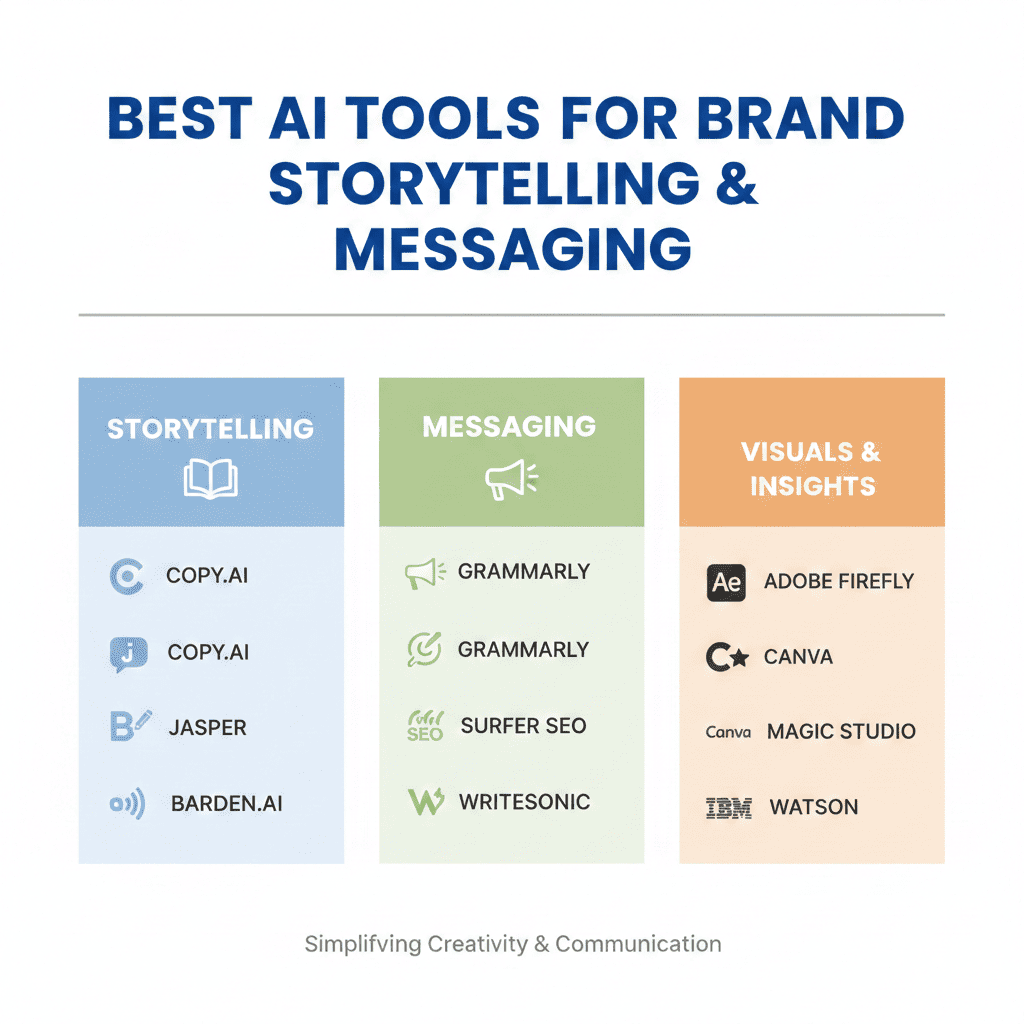
In today’s digital landscape, crafting compelling brand narratives has become both an art and a science. The emergence of AI Tools for Brand Storytelling & Messaging has revolutionized how businesses communicate their values, connect with audiences, and build lasting relationships. These sophisticated technologies are no longer just nice-to-have additions—they’re essential components of modern marketing strategies that help brands stand out in an increasingly crowded marketplace.
Brand storytelling is the heartbeat of successful marketing. It’s what transforms a company from a faceless entity into a relatable personality that resonates with customers on an emotional level. However, creating consistent, engaging, and authentic brand narratives across multiple channels can be overwhelming. This is where artificial intelligence steps in, offering powerful solutions that streamline content creation, enhance personalization, and maintain brand voice consistency.
The integration of AI Tools for Brand Storytelling & Messaging represents a paradigm shift in how marketers approach their craft. These tools don’t replace human creativity—they amplify it, handling repetitive tasks and data analysis while freeing creative teams to focus on strategy and innovation. From generating initial content drafts to analyzing audience sentiment and optimizing messaging for different platforms, AI has become an indispensable partner in the storytelling process.
1. Understanding the Power of AI in Brand Storytelling
Before diving into specific tools, it’s crucial to understand how artificial intelligence enhances brand storytelling. AI excels at processing vast amounts of data, identifying patterns, and generating insights that would take humans weeks or months to uncover. This capability allows brands to create more targeted, relevant, and impactful stories that truly resonate with their audiences.
Machine learning algorithms can analyze customer behavior, preferences, and engagement patterns to help brands understand what types of stories work best for different audience segments. Natural language processing enables AI to understand context, tone, and sentiment, ensuring that brand messages align with intended emotional impacts. Computer vision can analyze visual content to maintain consistency across imagery and design elements.
The beauty of AI Tools for Brand Storytelling & Messaging lies in their ability to maintain brand consistency while enabling personalization at scale. A brand can communicate its core story while tailoring specific messages to individual customer segments, locations, or behavioral patterns. This balance between consistency and customization was nearly impossible before AI technology matured to its current state.
2. Content Generation and Copywriting Tools
Content creation sits at the heart of brand storytelling, and AI has transformed this landscape dramatically. Modern AI writing assistants can generate blog posts, social media content, email campaigns, and even video scripts that align with your brand voice and messaging guidelines.
ChatGPT and GPT-4 have emerged as industry leaders in conversational AI and content generation. These tools can create everything from product descriptions to long-form articles, maintaining consistent tone and style throughout. Marketers use these platforms to overcome writer’s block, generate multiple content variations for A/B testing, and produce first drafts that human writers can refine and perfect.
Jasper AI (formerly Jarvis) specializes in marketing copy and brand content. It offers templates specifically designed for various marketing needs—from AIDA frameworks to PAS (Problem-Agitate-Solution) formulas. The platform learns your brand voice over time, creating increasingly accurate content that reflects your unique messaging style. Jasper’s Boss Mode allows for longer-form content creation, making it ideal for comprehensive brand stories and thought leadership pieces.
Copy.ai focuses on shorter-form content and marketing copy. It excels at creating social media posts, email subject lines, ad copy, and product descriptions. The tool offers dozens of templates and frameworks that guide users through the content creation process, ensuring that brand messages hit the right notes with target audiences.
Writesonic combines content generation with SEO optimization, helping brands create stories that not only engage readers but also perform well in search engines. This dual focus ensures that brand narratives reach wider audiences organically. The platform includes features for blog posts, landing pages, ads, and even AI-generated images to complement written content.
3. Visual Storytelling and Design Tools
Visual elements are fundamental to modern brand storytelling, and AI has revolutionized graphic design and video creation. These tools democratize design capabilities, allowing marketers without extensive design backgrounds to create professional-quality visual content.
Canva’s Magic Design leverages AI to transform simple prompts into complete design layouts. The platform’s AI features include background removal, photo enhancement, and automatic resizing for different platforms. Canva’s Brand Kit functionality ensures that all AI-generated designs maintain consistent colors, fonts, and logos, preserving brand identity across all visual storytelling efforts.
Adobe Firefly brings generative AI directly into Adobe’s creative ecosystem. This tool can generate images from text descriptions, apply style transfers, and even create vector graphics. For brands with established visual identities, Firefly’s ability to learn and replicate specific artistic styles ensures that AI-generated imagery aligns perfectly with existing brand aesthetics.
Midjourney and DALL-E 3 represent cutting-edge AI image generation capabilities. These platforms create stunning, original imagery from text prompts, enabling brands to visualize concepts and stories without expensive photoshoots or illustration costs. The key to using these tools effectively lies in crafting detailed prompts that capture your brand’s visual language and emotional tone.
Synthesia and Pictory revolutionize video storytelling by enabling AI-generated video content. Synthesia creates videos featuring AI avatars that can deliver brand messages in multiple languages, while Pictory transforms written content into engaging video narratives with automatic scene selection, transitions, and text overlays. These tools make video storytelling accessible to brands of all sizes, not just those with large production budgets.
4. Social Media Management and Engagement Tools
Social media platforms are crucial storytelling channels, and AI Tools for Brand Storytelling & Messaging have transformed how brands maintain presence and engagement across these networks.
Hootsuite Insights powered by Brandwatch uses AI to monitor social conversations, analyze sentiment, and identify trending topics relevant to your brand. This intelligence helps brands participate in conversations authentically and time their storytelling efforts for maximum impact. The platform’s AI can identify influencers, track competitor activities, and measure campaign performance in real-time.
Sprout Social’s AI capabilities include sentiment analysis, optimal posting time recommendations, and automated response suggestions. The platform’s listening tools help brands understand how their stories are being received and what narratives resonate most strongly with different audience segments. This feedback loop enables continuous refinement of brand messaging strategies.
Lately.ai specifically focuses on repurposing long-form content into social media posts. The AI learns your brand voice by analyzing past successful content, then generates dozens of social posts from blog articles, videos, or podcasts. This ensures consistent storytelling across formats while maximizing the value of every piece of content you create.
Buffer’s AI Assistant helps schedule content for optimal engagement times, suggests hashtags, and can even generate caption ideas based on your uploaded images. The platform’s analytics provide insights into which stories and message types generate the most engagement, helping refine your storytelling approach over time.
5. Personalization and Customer Experience Tools
Personalization represents the next frontier in brand storytelling—moving beyond one-size-fits-all narratives to create individualized experiences that speak directly to each customer’s needs and preferences.
Dynamic Yield uses AI to personalize website content, product recommendations, and messaging in real-time based on user behavior. The platform enables brands to tell different facets of their story to different visitors, ensuring that each interaction feels relevant and engaging. This level of personalization was impossible before AI could process user data and make instantaneous content decisions.
Phrasee specializes in AI-powered language optimization for email marketing and push notifications. The platform generates and tests multiple message variations, learning which language patterns drive the best engagement for your specific audience. Over time, Phrasee becomes increasingly adept at crafting messages that align with your brand voice while maximizing conversion rates.
Persado takes emotional AI to the next level, using machine learning to understand which emotional appeals work best for different audience segments and marketing objectives. The platform generates marketing language that precisely calibrates emotional intensity, tone, and positioning to drive desired actions while maintaining brand authenticity.
OneSpot provides AI-driven content personalization across multiple channels. The platform analyzes individual user journeys and dynamically adjusts content recommendations, ensuring that each touchpoint reinforces your brand story in the most relevant way possible for that specific customer.
6. Analytics and Insights Tools
Understanding how your brand stories perform is essential for continuous improvement. AI Tools for Brand Storytelling & Messaging in the analytics category provide deep insights that inform strategic decisions.
Crimson Hexagon (now part of Brandwatch) uses AI to analyze billions of social conversations, identifying themes, sentiment patterns, and emerging narratives around your brand and industry. This competitive intelligence helps brands understand the broader conversation context and position their stories more effectively.
Talkwalker combines social listening with image recognition AI, enabling brands to track not just text mentions but also visual brand presence across the internet. This comprehensive view reveals how your brand story is being interpreted and shared across different media types and platforms.
Google Analytics 4 incorporates machine learning to predict customer behavior, identify trending content, and surface insights about user engagement patterns. These predictive capabilities help brands anticipate which stories will resonate and adjust their strategies proactively rather than reactively.
Brandwatch Consumer Intelligence uses natural language processing to categorize and analyze unstructured data from social media, reviews, forums, and news sources. The platform identifies narrative themes, tracks how brand stories evolve over time, and measures the emotional impact of different messaging approaches.
7. Voice and Audio Storytelling Tools
As podcasts and voice assistants become mainstream, audio storytelling has emerged as a powerful brand channel. AI tools are making audio content creation more accessible and sophisticated.
Descript revolutionizes audio and video editing by allowing users to edit content by editing text transcripts. The platform’s Overdub feature can even generate AI voice clones that match your tone and style, enabling quick corrections without re-recording. For brands creating regular podcast content or audio storytelling, Descript dramatically reduces production time and costs.
Murf AI provides AI-generated voiceovers in multiple languages and accents. Brands can create consistent audio narratives for videos, presentations, and advertisements without hiring multiple voice actors. The platform’s range of voices and customization options ensures that audio storytelling maintains the right emotional tone for your brand.
Speechify and NaturalReader use advanced text-to-speech technology to transform written brand stories into audio format. This enables brands to repurpose written content for audio channels, reaching audiences who prefer listening to reading.
Resemble AI offers voice cloning and synthesis capabilities that can maintain voice consistency across massive amounts of audio content. For brands with specific voice characteristics that define their audio identity, this technology ensures that AI-generated audio maintains that distinctive quality.
8. Email Marketing and Automation Tools
Email remains one of the most effective channels for brand storytelling, and AI has transformed how brands craft and deliver email narratives.
Seventh Sense optimizes email send times for each individual recipient using AI analysis of engagement patterns. This ensures that your brand stories reach people when they’re most likely to read and engage with them, dramatically improving open and click-through rates.
Optimail by Optimove uses AI to determine the best email content, timing, and frequency for each subscriber. The platform continuously learns from engagement data, refining its approach to maximize the impact of your email storytelling efforts.
Mailchimp’s Smart Recommendations leverage AI to suggest subject lines, send times, and content layouts based on your industry and past campaign performance. The platform’s predictive demographics feature helps brands understand their audience better, informing more targeted storytelling approaches.
ActiveCampaign’s Predictive Sending and Content uses machine learning to personalize when emails are sent and what content is featured for each recipient. This level of customization ensures that your brand story reaches each person in the most relevant and engaging way possible.
9. Chatbots and Conversational AI
Interactive storytelling through chatbots and conversational interfaces allows brands to engage audiences in dialogue rather than monologue, creating more memorable and personalized experiences.
Drift and Intercom provide conversational marketing platforms that use AI to qualify leads, answer questions, and guide visitors through brand stories in real-time. These tools can adapt their messaging based on visitor behavior and responses, creating dynamic storytelling experiences that feel personalized and responsive.
ManyChat and MobileMonkey enable brands to create sophisticated chatbot experiences on messaging platforms like Facebook Messenger and WhatsApp. These tools can deliver brand stories in conversational formats, complete with interactive elements like quizzes, polls, and product recommendations that keep audiences engaged.
ChatGPT API integration allows brands to create custom chatbot experiences that leverage GPT-4’s conversational capabilities. These implementations can answer complex questions about brand values, products, and stories while maintaining consistent brand voice and messaging.
IBM Watson Assistant provides enterprise-grade conversational AI that can handle complex customer interactions across multiple channels. For larger brands with sophisticated storytelling needs, Watson’s ability to understand context and intent makes it possible to deliver consistent narratives through conversational interfaces.
10. SEO and Content Optimization Tools
Creating compelling brand stories is only half the battle—those stories need to reach audiences. AI Tools for Brand Storytelling & Messaging in the SEO category ensure that your narratives are discoverable and engaging.
Clearscope and MarketMuse use AI to analyze top-performing content and provide recommendations for optimizing your brand stories for search engines. These platforms identify relevant topics, keywords, and content structure that will help your storytelling rank well while maintaining quality and authenticity.
Surfer SEO combines content creation with optimization, providing real-time feedback as you write. The platform ensures that your brand stories incorporate the right elements to perform well in search results without sacrificing readability or narrative flow.
Frase uses natural language processing to understand search intent and help brands create content that directly answers audience questions. This approach to storytelling—answering the questions your audience is actually asking—builds trust and positions your brand as a helpful authority.
SEMrush Writing Assistant integrates directly into your writing workflow, providing SEO recommendations, readability scores, and tone consistency checks as you craft brand narratives. This real-time feedback helps maintain both search optimization and brand voice simultaneously.
Implementing AI Tools Successfully
While AI Tools for Brand Storytelling & Messaging offer tremendous capabilities, successful implementation requires strategic thinking and human oversight. The most effective approach treats AI as a collaborative partner rather than a replacement for human creativity and judgment.
Start by clearly defining your brand voice, values, and messaging guidelines. These foundational elements should guide how you configure and use AI tools. Most platforms offer customization options that allow you to train AI systems on your specific brand characteristics, improving output quality over time.
Establish workflows that combine AI efficiency with human creativity. Use AI for research, first drafts, variations, and optimization, but always have skilled marketers and writers review and refine the output. The goal is to leverage AI’s speed and analytical capabilities while preserving the authentic human touch that makes brand stories truly resonate.
Monitor performance metrics closely and use them to refine your AI-assisted storytelling approach. Pay attention to which types of AI-generated content perform best, which platforms deliver the most value, and where human intervention makes the most significant quality improvements.
Invest in training your team to work effectively with AI tools. The marketers who thrive in the AI era are those who understand how to prompt, guide, and refine AI outputs rather than those who resist the technology. Building this capability within your organization ensures you maximize the value of your AI tool investments.
The Future of AI-Powered Brand Storytelling
The landscape of AI Tools for Brand Storytelling & Messaging continues to evolve rapidly. Emerging capabilities like multimodal AI (systems that work seamlessly across text, image, audio, and video) will enable even more sophisticated and immersive brand narratives. Improved personalization engines will create storytelling experiences that adapt in real-time to individual emotional states and preferences.
The integration of AR and VR with AI storytelling tools will open new dimensions for brand narratives, creating immersive experiences that go far beyond traditional content formats. Brands will be able to transport audiences into their stories rather than simply telling them about their values and offerings.
Ethical considerations will become increasingly important as AI tools become more sophisticated. Brands must balance personalization with privacy, automation with authenticity, and efficiency with emotional resonance. The most successful brands will be those that use AI to enhance rather than replace human connection and genuine storytelling.
Conclusion
The revolution in AI Tools for Brand Storytelling & Messaging has fundamentally transformed how businesses communicate with their audiences. These technologies offer unprecedented capabilities for creating consistent, personalized, and engaging brand narratives across multiple channels and touchpoints.
However, the most important insight is that AI tools are exactly that—tools. They amplify human creativity, enable efficiency at scale, and provide data-driven insights, but they cannot replace the human understanding of emotion, culture, and authentic connection that sits at the heart of truly great brand storytelling.
The brands that will thrive in this AI-enhanced era are those that strike the right balance: leveraging technology for its strengths while preserving the human elements that make stories memorable and meaningful. By thoughtfully integrating AI Tools for Brand Storytelling & Messaging into your marketing strategy, you can create more impactful narratives, reach broader audiences, and build deeper connections with the people who matter most to your business.
The future of brand storytelling is neither fully human nor fully artificial—it’s a collaboration that combines the best of both worlds. As these tools continue to evolve and improve, the opportunities for creating compelling, authentic, and effective brand narratives will only expand. The question isn’t whether to embrace AI in your storytelling efforts, but how to do so in a way that enhances your brand’s unique voice and strengthens your connections with audiences.
Also read this:
Top AI Tools for Research Paper Summaries: Accelerate Your Academic Research in 2025
Best AI Tools for Lip-Syncing Multilingual Videos: Break Language Barriers in 2025
Best AI Tools for Cinematic AI Slow-Motion Effects: Master Professional Slow-Mo in 2025