
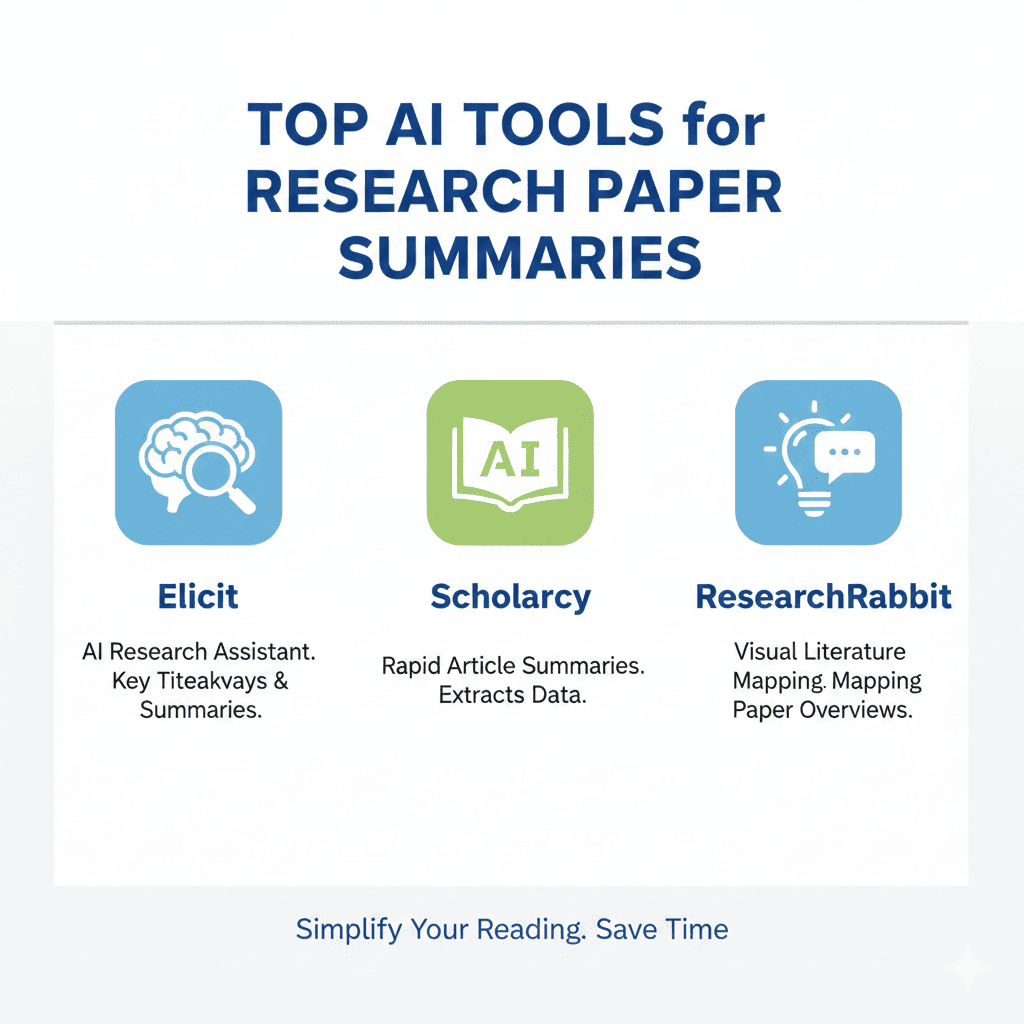
The explosion of academic research in recent decades has created an overwhelming challenge for researchers, students, and professionals trying to stay current in their fields. With millions of papers published annually across countless journals and conferences, keeping up with relevant literature has become nearly impossible. Enter AI-powered research paper summaries tools – revolutionary technologies that transform dense academic papers into digestible, accurate summaries in seconds.
Research paper summaries generated by artificial intelligence represent a paradigm shift in how we consume academic knowledge. These tools leverage natural language processing, machine learning, and advanced comprehension algorithms to extract key findings, methodologies, and conclusions from complex scientific documents. Whether you’re a graduate student conducting literature reviews, a researcher tracking developments in your field, or a professional needing to understand technical papers quickly, AI-powered summary tools can dramatically improve your productivity and comprehension.
This comprehensive guide explores the top AI tools for creating research paper summaries, examining their features, strengths, and ideal use cases. We’ll help you understand which tools best suit your research needs, budget, and workflow, enabling you to harness the power of AI to accelerate your academic and professional work.
1. SciSpace (Formerly Typeset): Comprehensive Research Assistant
SciSpace has evolved into one of the most sophisticated platforms for generating research paper summaries and facilitating research comprehension. The platform combines AI-powered summarization with interactive features that make understanding complex papers significantly easier.
Intelligent Summarization Features:
SciSpace doesn’t just create generic summaries; it generates structured overviews that highlight key components of research papers including objectives, methodologies, findings, and implications. The AI analyzes the paper’s structure, identifies critical sections, and extracts information that researchers actually need.
One standout feature is the ability to ask questions directly about the paper. If a summary doesn’t clarify a specific point, users can interact with the AI to get explanations of complex concepts, methodology details, or statistical analyses. This conversational approach to research paper summaries transforms passive reading into active learning.
Literature Review Assistance:
SciSpace excels at helping researchers manage multiple papers simultaneously. The platform can generate comparative summaries across several papers, identifying common themes, contradicting findings, and research gaps. This capability is invaluable for literature reviews where understanding relationships between studies is crucial.
The tool also provides citation analysis, showing how papers relate to each other through citations and identifying seminal works in a field. This contextual information enriches research paper summaries by placing individual studies within broader academic conversations.
Database Integration:
SciSpace integrates with major academic databases, allowing users to search for papers and generate summaries without leaving the platform. The tool can access millions of papers across disciplines, making it a one-stop solution for research discovery and comprehension.
The platform maintains updated information about new publications, enabling researchers to set up alerts for topics of interest and receive research paper summaries of relevant new papers automatically. This proactive approach ensures you never miss important developments in your field.
2. Semantic Scholar: AI-Powered Academic Search Engine
Semantic Scholar, developed by the Allen Institute for AI, represents a fundamental reimagining of academic search engines with integrated research paper summaries and intelligent paper recommendations.
Advanced AI Comprehension:
Unlike traditional academic search engines that rely primarily on keywords and citations, Semantic Scholar uses AI to understand the actual content and contributions of papers. This deep comprehension enables more accurate summarization that captures nuanced findings and methodological innovations.
The platform generates concise research paper summaries called “TLDRs” (Too Long; Didn’t Read) that appear prominently with each paper. These AI-generated summaries distill papers into single-paragraph overviews, allowing researchers to quickly assess relevance before committing to full readings.
Citation Context Analysis:
One innovative feature is citation context analysis, which shows not just that papers cite each other, but explains why and how. When viewing research paper summaries, you can see specific claims from the paper and which subsequent papers supported, refuted, or built upon those claims.
This feature helps researchers understand the impact and reliability of findings. If multiple subsequent papers have challenged a study’s conclusions, the AI highlights this controversy, providing critical context that raw citation counts miss.
Research Feeds and Recommendations:
Semantic Scholar learns from your reading behavior to recommend relevant papers and automatically generate research paper summaries for suggestions. The recommendation engine considers your research interests, citation patterns, and reading history to surface papers you might otherwise miss.
The platform’s research feeds aggregate new papers in your areas of interest, presenting them with AI-generated summaries that help you quickly scan recent publications and identify papers worthy of deeper attention.
3. Elicit: AI Research Assistant for Literature Reviews
Elicit takes a unique approach to research paper summaries by functioning as an AI research assistant that answers research questions by analyzing academic literature. Rather than simply summarizing individual papers, Elicit synthesizes information across multiple sources.
Question-Driven Research:
Users begin by asking a research question, and Elicit searches academic literature to find relevant papers and extract information that answers the question. This approach generates research paper summaries focused specifically on aspects relevant to your inquiry rather than generic overviews.
For example, asking “What are the most effective interventions for reducing anxiety in adolescents?” prompts Elicit to analyze relevant papers and extract information about interventions, effect sizes, and study populations, presenting findings in an organized format.
Structured Data Extraction:
Elicit excels at extracting structured data from papers, creating tables that compare methodologies, sample sizes, findings, and limitations across studies. This structured approach to research paper summaries makes it easy to identify patterns, compare results, and synthesize findings.
The tool can extract specific information like statistical results, participant demographics, or intervention details, organizing this data in ways that would take hours to compile manually. This capability is particularly valuable for systematic reviews and meta-analyses.
Workflow Integration:
Elicit integrates into research workflows, allowing users to save papers, organize findings, and export data to reference managers or spreadsheets. The platform maintains context across research sessions, building a knowledge base of research paper summaries and extracted data that grows with your project.
The collaborative features enable research teams to share findings, annotations, and summaries, ensuring everyone has access to the same information and interpretations.
4. Consensus: Evidence-Based Research Search
Consensus represents a new generation of academic search tools that provide research paper summaries alongside evidence assessments, helping researchers understand not just what papers say but how reliable those findings are.
Evidence Synthesis:
Consensus aggregates findings across multiple papers to provide evidence-based answers to research questions. When you ask about a topic, the platform analyzes relevant papers and presents a consensus view, indicating whether research generally supports, contradicts, or remains uncertain about particular claims.
The research paper summaries include evidence ratings that consider factors like study design, sample size, reproducibility, and subsequent research. This meta-level analysis helps researchers quickly understand the strength of evidence on specific topics.
Yes/No Question Format:
Consensus works particularly well with yes/no questions like “Does exercise improve cognitive function in older adults?” The AI analyzes papers addressing the question and presents the distribution of findings, showing what percentage of studies found positive effects, negative effects, or null results.
This quantitative approach to research paper summaries provides clarity on research consensus and helps identify areas where evidence is strong versus topics where more research is needed or findings are contradictory.
Study Quality Indicators:
Each paper summary includes quality indicators based on journal reputation, study design, sample size, and methodological rigor. These indicators help researchers prioritize high-quality evidence when multiple papers address the same question.
The platform also highlights influential papers that subsequent research frequently cites, helping identify landmark studies that shaped current understanding of topics.
5. ChatPDF: Conversational Research Paper Analysis
ChatPDF offers an intuitive approach to research paper summaries by allowing users to upload PDF papers and engage in conversational interactions to understand content, ask questions, and extract specific information.
Interactive Learning:
Rather than providing static summaries, ChatPDF enables dynamic exploration of papers through natural language questions. Users can ask about methodology, request clarification on complex concepts, or inquire about specific findings, receiving targeted responses based on the paper’s content.
This conversational approach to research paper summaries is particularly valuable for students and researchers encountering unfamiliar topics or complex technical content. The AI can explain concepts at different levels of complexity, adapting explanations to user needs.
Multi-Document Analysis:
ChatPDF can analyze multiple papers simultaneously, answering questions that require synthesizing information across sources. Users can upload several related papers and ask comparative questions, receiving answers that draw on all uploaded documents.
This capability transforms literature review processes, enabling researchers to quickly identify common findings, methodological differences, or contradictory results across studies without manually cross-referencing papers.
Language Support:
ChatPDF supports papers in multiple languages and can provide research paper summaries and answers in different languages than the original paper. This multilingual capability makes international research more accessible to researchers regardless of language proficiency.
The tool handles technical terminology appropriately, maintaining accuracy while making content comprehensible. It can also define specialized terms and explain domain-specific concepts, serving as both a summarization tool and a learning resource.
6. Scholarcy: Automated Research Summarization
Scholarcy specializes in automated generation of research paper summaries with a focus on extracting key information that researchers need for literature reviews, reference checks, and research planning.
Structured Summary Cards:
Scholarcy generates comprehensive summary cards that include not just narrative summaries but also extracted data like key findings, methodology descriptions, limitations, and future research directions. These structured research paper summaries ensure important information isn’t overlooked.
The tool identifies and extracts key concepts, definitions, and terminology from papers, creating glossaries that help readers understand specialized content. This feature is particularly valuable when reading outside your primary field of expertise.
Reference and Citation Management:
Scholarcy automatically extracts and organizes references cited in papers, linking to source papers when available. This citation extraction facilitates backward searching, where researchers explore papers referenced by current studies to understand historical context and foundational research.
The tool can generate bibliographies in various formats and export research paper summaries to reference management software like Zotero or Mendeley, streamlining research workflow integration.
Flashcard Generation:
An innovative feature is automatic flashcard creation from papers, extracting key facts, concepts, and findings in question-answer format. This feature supports active learning and helps researchers retain information from papers they’ve read.
The flashcards can be exported for use with spaced repetition software, supporting long-term knowledge retention of research content beyond immediate project needs.
7. Scite: Smart Citation Analysis Platform
Scite offers unique research paper summaries enhanced with citation context, showing how papers have been cited and whether subsequent research has supported or contradicted their findings.
Citation Classification:
Scite’s AI classifies citations as supporting, contrasting, or mentioning the cited work. This classification provides crucial context that raw citation counts miss. A highly cited paper might have many contradictory citations, indicating controversial or potentially flawed findings.
When viewing research paper summaries, users immediately see how the research community has responded to papers’ claims. This context helps assess reliability and identify which findings have stood up to subsequent scrutiny.
Smart Citations:
The platform displays citation context directly from citing papers, showing exact statements other researchers made about the work. These “Smart Citations” enrich research paper summaries by providing contemporary commentary and critical assessment from the scientific community.
Researchers can quickly understand a paper’s impact and reception without reading hundreds of citing papers. This efficiency is particularly valuable for assessing seminal works with thousands of citations.
Research Dashboard:
Scite provides dashboards for researchers, institutions, and journals showing citation patterns, support/contrast ratios, and impact metrics. These analytics help researchers identify influential works, assess research trends, and make strategic decisions about research directions.
The platform’s reference checking feature helps identify potential issues in literature reviews by highlighting if cited papers have been substantially contradicted by subsequent research.
8. Lateral: AI-Powered Research Assistant
Lateral combines research paper summaries with advanced organization tools, creating a comprehensive platform for managing research literature from discovery through synthesis.
Intelligent Paper Organization:
Lateral automatically organizes papers into topics and themes using AI analysis. As you add papers to your library, the system identifies connections, groups related works, and generates research paper summaries that highlight relationships between papers.
The platform creates visual maps of research literature, showing how papers relate to each other thematically and through citations. These visualizations help researchers understand research landscapes and identify gaps or opportunities for novel contributions.
Collaborative Features:
Lateral facilitates team research with shared libraries, collaborative annotations, and synchronized research paper summaries. Team members can contribute papers, share insights, and build collective understanding of research topics.
The platform tracks contributions and changes, maintaining version history for research libraries and ensuring team members stay informed about new additions and evolving interpretations.
Note-Taking Integration:
Lateral integrates note-taking directly with research paper summaries, allowing researchers to annotate AI-generated summaries, add personal insights, and connect ideas across papers. These annotations become searchable, creating a personalized knowledge base.
The tool supports exporting notes and summaries to popular note-taking applications, ensuring research insights integrate with existing personal knowledge management systems.
9. Paper Digest: Simple Summarization Tool
Paper Digest focuses on simplicity and speed, generating concise research paper summaries quickly without extensive features that might overwhelm users seeking straightforward summaries.
Quick Summaries:
Paper Digest generates brief, bullet-point summaries highlighting the most important information from papers. These quick-read research paper summaries are ideal for initial screening when dealing with large numbers of potentially relevant papers.
The tool processes papers rapidly, making it practical for bulk summarization when conducting comprehensive literature searches. Researchers can generate summaries for dozens of papers quickly, then identify which deserve detailed reading.
Email Digest Service:
A unique feature is the email digest service, where users can subscribe to topics and receive daily or weekly emails containing research paper summaries of newly published papers in their areas of interest. This automated awareness service ensures researchers stay current without active searching.
The digests are customizable by topic, journal, author, or keyword, allowing precise control over what content appears in your awareness feeds.
Browser Extension:
Paper Digest offers a browser extension that generates research paper summaries directly on publisher websites and preprint servers. This seamless integration means researchers can access summaries without changing their existing research workflows.
The extension works across major academic publishers and repositories, providing consistent summarization regardless of content source.
10. Iris.ai: Research Question-Focused Tool
Iris.ai approaches research paper summaries from a research question perspective, helping researchers find and understand papers that address specific questions or research needs.
Visual Research Mapping:
Iris.ai creates visual maps of research literature organized around central research questions. The AI identifies papers relevant to your question and displays them in clusters based on thematic similarity, with research paper summaries accessible by clicking on papers.
These visual representations help researchers understand research landscapes, identify major themes, and discover connections between seemingly disparate studies.
Question Refinement:
The platform helps refine research questions through interactive dialogue, suggesting more specific or alternative framings that might yield better results. This question refinement process ensures research paper summaries align closely with actual information needs.
As you explore papers, Iris.ai learns from your selections and relevance feedback, continuously improving recommendations and the focus of generated summaries.
Research Workspace:
Iris.ai provides collaborative workspaces where teams can share research questions, relevant papers, and research paper summaries. The workspace facilitates literature review projects with clear organization around research objectives.
Progress tracking features help teams monitor literature review completion, identify areas needing additional research, and ensure comprehensive coverage of relevant literature.
11. How AI Generates Research Paper Summaries
Understanding how AI creates research paper summaries illuminates both the capabilities and limitations of these tools, helping users leverage them effectively.
Natural Language Processing:
AI summarization tools use natural language processing (NLP) to understand academic text. These systems parse sentences, identify key concepts, and recognize structural elements like introduction, methodology, results, and conclusions.
Modern NLP models are trained on millions of academic papers, learning patterns in how research is communicated and developing understanding of scientific writing conventions. This training enables them to identify important information and distinguish it from supporting details.
Extractive vs. Abstractive Summarization:
Some tools use extractive summarization, selecting important sentences from the original paper to create summaries. This approach ensures accuracy but can result in less coherent research paper summaries that read like sentence collections.
Abstractive summarization generates new text that conveys paper content in the AI’s own words. This approach creates more readable summaries but carries greater risk of introducing inaccuracies or misrepresenting findings.
Many modern tools use hybrid approaches, extracting key information and then generating readable summaries that maintain fidelity to source material while improving readability.
Domain-Specific Training:
The best research paper summaries tools are trained on discipline-specific content. Medical paper summarization requires different understanding than physics or social science papers. Tools trained on diverse academic content can handle papers across disciplines with greater accuracy.
Some platforms allow customization for specific fields, improving summarization quality for specialized research areas where terminology and conventions differ from general academic writing.
12. Benefits of Using AI for Research Paper Summaries
AI-powered research paper summaries offer transformative benefits for researchers, students, and professionals across academic and applied contexts.
Time Efficiency:
The most obvious benefit is time savings. Reading a comprehensive research paper can take 30-60 minutes or more. AI-generated summaries condense key information into formats readable in 2-3 minutes, enabling researchers to screen many more papers efficiently.
This efficiency is particularly valuable during literature review phases when researchers must evaluate hundreds of potentially relevant papers. Research paper summaries enable quick relevance assessments, reserving detailed reading for truly pertinent works.
Improved Comprehension:
AI summaries can actually improve comprehension, especially when reading outside your primary expertise. By highlighting key findings and organizing information clearly, research paper summaries provide scaffolding that makes subsequent full reading more effective.
The ability to ask follow-up questions with interactive tools helps clarify confusing concepts or unfamiliar terminology, transforming reading from a passive to active learning experience.
Discovery and Serendipity:
AI tools can suggest related papers you might not find through traditional searches, exposing you to relevant work outside your normal reading patterns. These serendipitous discoveries, facilitated by AI understanding of content relationships, can inspire novel connections and research directions.
Research paper summaries of suggested papers make exploring these recommendations practical, as you can quickly assess relevance without committing to full readings.
Accessibility:
AI summarization makes research more accessible to practitioners, policymakers, and public audiences who need research insights but lack time or expertise for technical reading. Research paper summaries bridge the gap between academic research and practical application.
Students benefit similarly, as summaries help them engage with advanced research before developing full expertise in reading academic papers, supporting learning progression.
13. Best Practices for Using Research Paper Summary Tools
To maximize value from AI-generated research paper summaries while avoiding potential pitfalls, follow these professional best practices.
Verify Critical Information:
Always verify important claims, statistics, or methodological details by referencing the original paper. While AI summarization has advanced significantly, errors can occur. For any information you plan to cite or base decisions on, confirm accuracy against source material.
Research paper summaries should be starting points for understanding, not substitutes for reading important papers thoroughly. Use summaries for screening and initial understanding, but read full papers when their content is central to your work.
Understand Tool Limitations:
Different tools excel at different aspects of summarization. Some focus on methodology, others on findings. Understanding your tool’s strengths and limitations helps you use it appropriately and recognize when supplementary tools or approaches might be beneficial.
Research paper summaries may miss nuances, caveats, or limitations that authors carefully articulated. Be particularly cautious about complex statistical findings, qualified conclusions, or conditional claims where context is crucial.
Combine Multiple Tools:
Different AI tools may emphasize different aspects of papers or generate complementary insights. Using multiple tools for important papers can provide more comprehensive understanding than relying on any single research paper summaries generator.
Consider using broad search tools for discovery, specialized tools for your discipline, and interactive tools for deep understanding. This multi-tool approach leverages different AI strengths.
Maintain Critical Thinking:
AI-generated summaries reflect patterns in training data and may perpetuate biases or conventional wisdom. Maintain critical perspective when reading research paper summaries, questioning whether important alternative interpretations or limitations might be underrepresented.
Remember that AI summarizes what papers say, not whether what they say is correct, significant, or well-reasoned. Your expert judgment remains essential for evaluating research quality and relevance.
Conclusion: Embracing AI-Enhanced Research Workflows
AI-powered research paper summaries represent a fundamental advancement in how we engage with academic literature. These tools don’t replace careful reading and critical thinking but augment human capabilities, enabling researchers to process vastly more literature while maintaining comprehension and insight.
The tools highlighted in this guide offer diverse approaches to summarization, each with unique strengths suited to different research needs, disciplines, and workflows. From comprehensive platforms like SciSpace to specialized tools like Scite’s citation analysis, researchers now have unprecedented capabilities for discovering, understanding, and synthesizing academic literature.
As AI technology continues advancing, research paper summaries will become increasingly sophisticated, offering deeper understanding, more nuanced extraction, and better integration with research workflows. Early adoption of these tools provides competitive advantages in research productivity and comprehensiveness.
The key to success lies in thoughtful integration of AI summarization into balanced research practices. Use research paper summaries to efficiently screen literature, understand unfamiliar topics, and identify papers deserving detailed attention. Combine AI efficiency with human judgment, critical thinking, and thorough reading of central papers to produce rigorous, insightful research.
Top AI Tools for Research Paper Summaries: Accelerate Your Academic Research in 2025
The explosion of academic research in recent decades has created an overwhelming challenge for researchers, students, and professionals trying to stay current in their fields. With millions of papers published annually across countless journals and conferences, keeping up with relevant literature has become nearly impossible. Enter AI-powered research paper summaries tools – revolutionary technologies that transform dense academic papers into digestible, accurate summaries in seconds.
Research paper summaries generated by artificial intelligence represent a paradigm shift in how we consume academic knowledge. These tools leverage natural language processing, machine learning, and advanced comprehension algorithms to extract key findings, methodologies, and conclusions from complex scientific documents. Whether you’re a graduate student conducting literature reviews, a researcher tracking developments in your field, or a professional needing to understand technical papers quickly, AI-powered summary tools can dramatically improve your productivity and comprehension.
This comprehensive guide explores the top AI tools for creating research paper summaries, examining their features, strengths, and ideal use cases. We’ll help you understand which tools best suit your research needs, budget, and workflow, enabling you to harness the power of AI to accelerate your academic and professional work.
1. SciSpace (Formerly Typeset): Comprehensive Research Assistant
SciSpace has evolved into one of the most sophisticated platforms for generating research paper summaries and facilitating research comprehension. The platform combines AI-powered summarization with interactive features that make understanding complex papers significantly easier.
Intelligent Summarization Features:
SciSpace doesn’t just create generic summaries; it generates structured overviews that highlight key components of research papers including objectives, methodologies, findings, and implications. The AI analyzes the paper’s structure, identifies critical sections, and extracts information that researchers actually need.
One standout feature is the ability to ask questions directly about the paper. If a summary doesn’t clarify a specific point, users can interact with the AI to get explanations of complex concepts, methodology details, or statistical analyses. This conversational approach to research paper summaries transforms passive reading into active learning.
Literature Review Assistance:
SciSpace excels at helping researchers manage multiple papers simultaneously. The platform can generate comparative summaries across several papers, identifying common themes, contradicting findings, and research gaps. This capability is invaluable for literature reviews where understanding relationships between studies is crucial.
The tool also provides citation analysis, showing how papers relate to each other through citations and identifying seminal works in a field. This contextual information enriches research paper summaries by placing individual studies within broader academic conversations.
Database Integration:
SciSpace integrates with major academic databases, allowing users to search for papers and generate summaries without leaving the platform. The tool can access millions of papers across disciplines, making it a one-stop solution for research discovery and comprehension.
The platform maintains updated information about new publications, enabling researchers to set up alerts for topics of interest and receive research paper summaries of relevant new papers automatically. This proactive approach ensures you never miss important developments in your field.
2. Semantic Scholar: AI-Powered Academic Search Engine
Semantic Scholar, developed by the Allen Institute for AI, represents a fundamental reimagining of academic search engines with integrated research paper summaries and intelligent paper recommendations.
Advanced AI Comprehension:
Unlike traditional academic search engines that rely primarily on keywords and citations, Semantic Scholar uses AI to understand the actual content and contributions of papers. This deep comprehension enables more accurate summarization that captures nuanced findings and methodological innovations.
The platform generates concise research paper summaries called “TLDRs” (Too Long; Didn’t Read) that appear prominently with each paper. These AI-generated summaries distill papers into single-paragraph overviews, allowing researchers to quickly assess relevance before committing to full readings.
Citation Context Analysis:
One innovative feature is citation context analysis, which shows not just that papers cite each other, but explains why and how. When viewing research paper summaries, you can see specific claims from the paper and which subsequent papers supported, refuted, or built upon those claims.
This feature helps researchers understand the impact and reliability of findings. If multiple subsequent papers have challenged a study’s conclusions, the AI highlights this controversy, providing critical context that raw citation counts miss.
Research Feeds and Recommendations:
Semantic Scholar learns from your reading behavior to recommend relevant papers and automatically generate research paper summaries for suggestions. The recommendation engine considers your research interests, citation patterns, and reading history to surface papers you might otherwise miss.
The platform’s research feeds aggregate new papers in your areas of interest, presenting them with AI-generated summaries that help you quickly scan recent publications and identify papers worthy of deeper attention.
3. Elicit: AI Research Assistant for Literature Reviews
Elicit takes a unique approach to research paper summaries by functioning as an AI research assistant that answers research questions by analyzing academic literature. Rather than simply summarizing individual papers, Elicit synthesizes information across multiple sources.
Question-Driven Research:
Users begin by asking a research question, and Elicit searches academic literature to find relevant papers and extract information that answers the question. This approach generates research paper summaries focused specifically on aspects relevant to your inquiry rather than generic overviews.
For example, asking “What are the most effective interventions for reducing anxiety in adolescents?” prompts Elicit to analyze relevant papers and extract information about interventions, effect sizes, and study populations, presenting findings in an organized format.
Structured Data Extraction:
Elicit excels at extracting structured data from papers, creating tables that compare methodologies, sample sizes, findings, and limitations across studies. This structured approach to research paper summaries makes it easy to identify patterns, compare results, and synthesize findings.
The tool can extract specific information like statistical results, participant demographics, or intervention details, organizing this data in ways that would take hours to compile manually. This capability is particularly valuable for systematic reviews and meta-analyses.
Workflow Integration:
Elicit integrates into research workflows, allowing users to save papers, organize findings, and export data to reference managers or spreadsheets. The platform maintains context across research sessions, building a knowledge base of research paper summaries and extracted data that grows with your project.
The collaborative features enable research teams to share findings, annotations, and summaries, ensuring everyone has access to the same information and interpretations.
4. Consensus: Evidence-Based Research Search
Consensus represents a new generation of academic search tools that provide research paper summaries alongside evidence assessments, helping researchers understand not just what papers say but how reliable those findings are.
Evidence Synthesis:
Consensus aggregates findings across multiple papers to provide evidence-based answers to research questions. When you ask about a topic, the platform analyzes relevant papers and presents a consensus view, indicating whether research generally supports, contradicts, or remains uncertain about particular claims.
The research paper summaries include evidence ratings that consider factors like study design, sample size, reproducibility, and subsequent research. This meta-level analysis helps researchers quickly understand the strength of evidence on specific topics.
Yes/No Question Format:
Consensus works particularly well with yes/no questions like “Does exercise improve cognitive function in older adults?” The AI analyzes papers addressing the question and presents the distribution of findings, showing what percentage of studies found positive effects, negative effects, or null results.
This quantitative approach to research paper summaries provides clarity on research consensus and helps identify areas where evidence is strong versus topics where more research is needed or findings are contradictory.
Study Quality Indicators:
Each paper summary includes quality indicators based on journal reputation, study design, sample size, and methodological rigor. These indicators help researchers prioritize high-quality evidence when multiple papers address the same question.
The platform also highlights influential papers that subsequent research frequently cites, helping identify landmark studies that shaped current understanding of topics.
5. ChatPDF: Conversational Research Paper Analysis
ChatPDF offers an intuitive approach to research paper summaries by allowing users to upload PDF papers and engage in conversational interactions to understand content, ask questions, and extract specific information.
Interactive Learning:
Rather than providing static summaries, ChatPDF enables dynamic exploration of papers through natural language questions. Users can ask about methodology, request clarification on complex concepts, or inquire about specific findings, receiving targeted responses based on the paper’s content.
This conversational approach to research paper summaries is particularly valuable for students and researchers encountering unfamiliar topics or complex technical content. The AI can explain concepts at different levels of complexity, adapting explanations to user needs.
Multi-Document Analysis:
ChatPDF can analyze multiple papers simultaneously, answering questions that require synthesizing information across sources. Users can upload several related papers and ask comparative questions, receiving answers that draw on all uploaded documents.
This capability transforms literature review processes, enabling researchers to quickly identify common findings, methodological differences, or contradictory results across studies without manually cross-referencing papers.
Language Support:
ChatPDF supports papers in multiple languages and can provide research paper summaries and answers in different languages than the original paper. This multilingual capability makes international research more accessible to researchers regardless of language proficiency.
The tool handles technical terminology appropriately, maintaining accuracy while making content comprehensible. It can also define specialized terms and explain domain-specific concepts, serving as both a summarization tool and a learning resource.
6. Scholarcy: Automated Research Summarization
Scholarcy specializes in automated generation of research paper summaries with a focus on extracting key information that researchers need for literature reviews, reference checks, and research planning.
Structured Summary Cards:
Scholarcy generates comprehensive summary cards that include not just narrative summaries but also extracted data like key findings, methodology descriptions, limitations, and future research directions. These structured research paper summaries ensure important information isn’t overlooked.
The tool identifies and extracts key concepts, definitions, and terminology from papers, creating glossaries that help readers understand specialized content. This feature is particularly valuable when reading outside your primary field of expertise.
Reference and Citation Management:
Scholarcy automatically extracts and organizes references cited in papers, linking to source papers when available. This citation extraction facilitates backward searching, where researchers explore papers referenced by current studies to understand historical context and foundational research.
The tool can generate bibliographies in various formats and export research paper summaries to reference management software like Zotero or Mendeley, streamlining research workflow integration.
Flashcard Generation:
An innovative feature is automatic flashcard creation from papers, extracting key facts, concepts, and findings in question-answer format. This feature supports active learning and helps researchers retain information from papers they’ve read.
The flashcards can be exported for use with spaced repetition software, supporting long-term knowledge retention of research content beyond immediate project needs.
7. Scite: Smart Citation Analysis Platform
Scite offers unique research paper summaries enhanced with citation context, showing how papers have been cited and whether subsequent research has supported or contradicted their findings.
Citation Classification:
Scite’s AI classifies citations as supporting, contrasting, or mentioning the cited work. This classification provides crucial context that raw citation counts miss. A highly cited paper might have many contradictory citations, indicating controversial or potentially flawed findings.
When viewing research paper summaries, users immediately see how the research community has responded to papers’ claims. This context helps assess reliability and identify which findings have stood up to subsequent scrutiny.
Smart Citations:
The platform displays citation context directly from citing papers, showing exact statements other researchers made about the work. These “Smart Citations” enrich research paper summaries by providing contemporary commentary and critical assessment from the scientific community.
Researchers can quickly understand a paper’s impact and reception without reading hundreds of citing papers. This efficiency is particularly valuable for assessing seminal works with thousands of citations.
Research Dashboard:
Scite provides dashboards for researchers, institutions, and journals showing citation patterns, support/contrast ratios, and impact metrics. These analytics help researchers identify influential works, assess research trends, and make strategic decisions about research directions.
The platform’s reference checking feature helps identify potential issues in literature reviews by highlighting if cited papers have been substantially contradicted by subsequent research.
8. Lateral: AI-Powered Research Assistant
Lateral combines research paper summaries with advanced organization tools, creating a comprehensive platform for managing research literature from discovery through synthesis.
Intelligent Paper Organization:
Lateral automatically organizes papers into topics and themes using AI analysis. As you add papers to your library, the system identifies connections, groups related works, and generates research paper summaries that highlight relationships between papers.
The platform creates visual maps of research literature, showing how papers relate to each other thematically and through citations. These visualizations help researchers understand research landscapes and identify gaps or opportunities for novel contributions.
Collaborative Features:
Lateral facilitates team research with shared libraries, collaborative annotations, and synchronized research paper summaries. Team members can contribute papers, share insights, and build collective understanding of research topics.
The platform tracks contributions and changes, maintaining version history for research libraries and ensuring team members stay informed about new additions and evolving interpretations.
Note-Taking Integration:
Lateral integrates note-taking directly with research paper summaries, allowing researchers to annotate AI-generated summaries, add personal insights, and connect ideas across papers. These annotations become searchable, creating a personalized knowledge base.
The tool supports exporting notes and summaries to popular note-taking applications, ensuring research insights integrate with existing personal knowledge management systems.
9. Paper Digest: Simple Summarization Tool
Paper Digest focuses on simplicity and speed, generating concise research paper summaries quickly without extensive features that might overwhelm users seeking straightforward summaries.
Quick Summaries:
Paper Digest generates brief, bullet-point summaries highlighting the most important information from papers. These quick-read research paper summaries are ideal for initial screening when dealing with large numbers of potentially relevant papers.
The tool processes papers rapidly, making it practical for bulk summarization when conducting comprehensive literature searches. Researchers can generate summaries for dozens of papers quickly, then identify which deserve detailed reading.
Email Digest Service:
A unique feature is the email digest service, where users can subscribe to topics and receive daily or weekly emails containing research paper summaries of newly published papers in their areas of interest. This automated awareness service ensures researchers stay current without active searching.
The digests are customizable by topic, journal, author, or keyword, allowing precise control over what content appears in your awareness feeds.
Browser Extension:
Paper Digest offers a browser extension that generates research paper summaries directly on publisher websites and preprint servers. This seamless integration means researchers can access summaries without changing their existing research workflows.
The extension works across major academic publishers and repositories, providing consistent summarization regardless of content source.
10. Iris.ai: Research Question-Focused Tool
Iris.ai approaches research paper summaries from a research question perspective, helping researchers find and understand papers that address specific questions or research needs.
Visual Research Mapping:
Iris.ai creates visual maps of research literature organized around central research questions. The AI identifies papers relevant to your question and displays them in clusters based on thematic similarity, with research paper summaries accessible by clicking on papers.
These visual representations help researchers understand research landscapes, identify major themes, and discover connections between seemingly disparate studies.
Question Refinement:
The platform helps refine research questions through interactive dialogue, suggesting more specific or alternative framings that might yield better results. This question refinement process ensures research paper summaries align closely with actual information needs.
As you explore papers, Iris.ai learns from your selections and relevance feedback, continuously improving recommendations and the focus of generated summaries.
Research Workspace:
Iris.ai provides collaborative workspaces where teams can share research questions, relevant papers, and research paper summaries. The workspace facilitates literature review projects with clear organization around research objectives.
Progress tracking features help teams monitor literature review completion, identify areas needing additional research, and ensure comprehensive coverage of relevant literature.
11. How AI Generates Research Paper Summaries
Understanding how AI creates research paper summaries illuminates both the capabilities and limitations of these tools, helping users leverage them effectively.
Natural Language Processing:
AI summarization tools use natural language processing (NLP) to understand academic text. These systems parse sentences, identify key concepts, and recognize structural elements like introduction, methodology, results, and conclusions.
Modern NLP models are trained on millions of academic papers, learning patterns in how research is communicated and developing understanding of scientific writing conventions. This training enables them to identify important information and distinguish it from supporting details.
Extractive vs. Abstractive Summarization:
Some tools use extractive summarization, selecting important sentences from the original paper to create summaries. This approach ensures accuracy but can result in less coherent research paper summaries that read like sentence collections.
Abstractive summarization generates new text that conveys paper content in the AI’s own words. This approach creates more readable summaries but carries greater risk of introducing inaccuracies or misrepresenting findings.
Many modern tools use hybrid approaches, extracting key information and then generating readable summaries that maintain fidelity to source material while improving readability.
Domain-Specific Training:
The best research paper summaries tools are trained on discipline-specific content. Medical paper summarization requires different understanding than physics or social science papers. Tools trained on diverse academic content can handle papers across disciplines with greater accuracy.
Some platforms allow customization for specific fields, improving summarization quality for specialized research areas where terminology and conventions differ from general academic writing.
12. Benefits of Using AI for Research Paper Summaries
AI-powered research paper summaries offer transformative benefits for researchers, students, and professionals across academic and applied contexts.
Time Efficiency:
The most obvious benefit is time savings. Reading a comprehensive research paper can take 30-60 minutes or more. AI-generated summaries condense key information into formats readable in 2-3 minutes, enabling researchers to screen many more papers efficiently.
This efficiency is particularly valuable during literature review phases when researchers must evaluate hundreds of potentially relevant papers. Research paper summaries enable quick relevance assessments, reserving detailed reading for truly pertinent works.
Improved Comprehension:
AI summaries can actually improve comprehension, especially when reading outside your primary expertise. By highlighting key findings and organizing information clearly, research paper summaries provide scaffolding that makes subsequent full reading more effective.
The ability to ask follow-up questions with interactive tools helps clarify confusing concepts or unfamiliar terminology, transforming reading from a passive to active learning experience.
Discovery and Serendipity:
AI tools can suggest related papers you might not find through traditional searches, exposing you to relevant work outside your normal reading patterns. These serendipitous discoveries, facilitated by AI understanding of content relationships, can inspire novel connections and research directions.
Research paper summaries of suggested papers make exploring these recommendations practical, as you can quickly assess relevance without committing to full readings.
Accessibility:
AI summarization makes research more accessible to practitioners, policymakers, and public audiences who need research insights but lack time or expertise for technical reading. Research paper summaries bridge the gap between academic research and practical application.
Students benefit similarly, as summaries help them engage with advanced research before developing full expertise in reading academic papers, supporting learning progression.
13. Best Practices for Using Research Paper Summary Tools
To maximize value from AI-generated research paper summaries while avoiding potential pitfalls, follow these professional best practices.
Verify Critical Information:
Always verify important claims, statistics, or methodological details by referencing the original paper. While AI summarization has advanced significantly, errors can occur. For any information you plan to cite or base decisions on, confirm accuracy against source material.
Research paper summaries should be starting points for understanding, not substitutes for reading important papers thoroughly. Use summaries for screening and initial understanding, but read full papers when their content is central to your work.
Understand Tool Limitations:
Different tools excel at different aspects of summarization. Some focus on methodology, others on findings. Understanding your tool’s strengths and limitations helps you use it appropriately and recognize when supplementary tools or approaches might be beneficial.
Research paper summaries may miss nuances, caveats, or limitations that authors carefully articulated. Be particularly cautious about complex statistical findings, qualified conclusions, or conditional claims where context is crucial.
Combine Multiple Tools:
Different AI tools may emphasize different aspects of papers or generate complementary insights. Using multiple tools for important papers can provide more comprehensive understanding than relying on any single research paper summaries generator.
Consider using broad search tools for discovery, specialized tools for your discipline, and interactive tools for deep understanding. This multi-tool approach leverages different AI strengths.
Maintain Critical Thinking:
AI-generated summaries reflect patterns in training data and may perpetuate biases or conventional wisdom. Maintain critical perspective when reading research paper summaries, questioning whether important alternative interpretations or limitations might be underrepresented.
Remember that AI summarizes what papers say, not whether what they say is correct, significant, or well-reasoned. Your expert judgment remains essential for evaluating research quality and relevance.
Conclusion: Embracing AI-Enhanced Research Workflows
AI-powered research paper summaries represent a fundamental advancement in how we engage with academic literature. These tools don’t replace careful reading and critical thinking but augment human capabilities, enabling researchers to process vastly more literature while maintaining comprehension and insight.
The tools highlighted in this guide offer diverse approaches to summarization, each with unique strengths suited to different research needs, disciplines, and workflows. From comprehensive platforms like SciSpace to specialized tools like Scite’s citation analysis, researchers now have unprecedented capabilities for discovering, understanding, and synthesizing academic literature.
As AI technology continues advancing, research paper summaries will become increasingly sophisticated, offering deeper understanding, more nuanced extraction, and better integration with research workflows. Early adoption of these tools provides competitive advantages in research productivity and comprehensiveness.
The key to success lies in thoughtful integration of AI summarization into balanced research practices. Use research paper summaries to efficiently screen literature, understand unfamiliar topics, and identify papers deserving detailed attention. Combine AI efficiency with human judgment, critical thinking, and thorough reading of central papers to produce rigorous, insightful research.
Also read this:
Best AI Tools for Lip-Syncing Multilingual Videos: Break Language Barriers in 2025
Best AI Tools for Cinematic AI Slow-Motion Effects: Master Professional Slow-Mo in 2025
Top AI Tools for Voice Acting & Dubbing: Transform Audio Production in 2025