
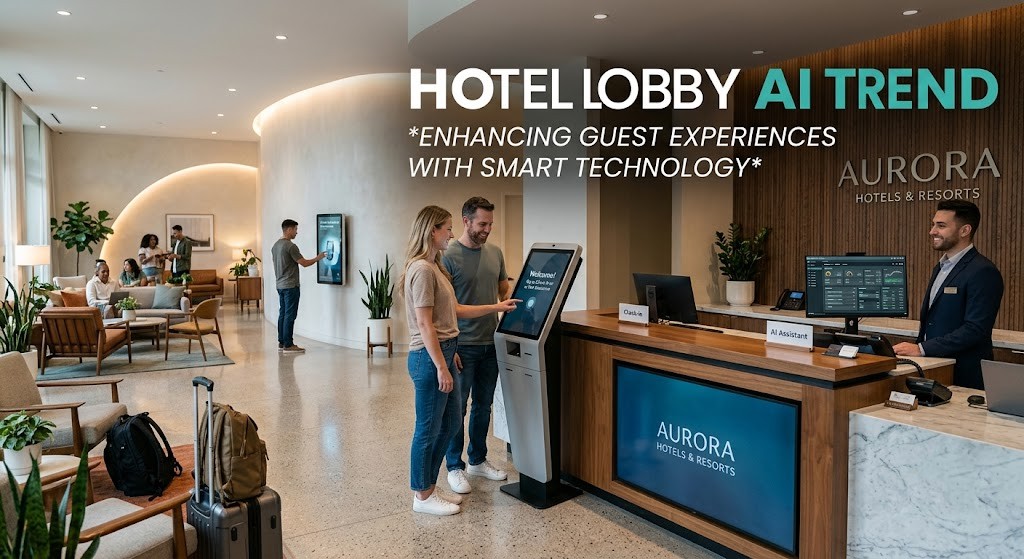
You’ve probably seen AI-generated interiors that transform ordinary spaces into luxurious, futuristic environments. From grand marble reception areas and golden chandeliers to imaginative resorts with indoor gardens, artificial intelligence is making it easier to explore hotel design concepts without building a physical set or mastering professional 3D modeling software.
The Hotel Lobby AI Trend brings together AI-generated hotel interiors, creative visual transformations, and cinematic content for social media, marketing, and design inspiration. Whether you want to create a photorealistic luxury lobby, experiment with futuristic architecture, or turn a still image into a cinematic video, AI tools offer an accessible starting point.
In this guide, you’ll learn what the Hotel Lobby AI Trend means, why these visuals attract attention, which AI tools you can explore, how to write effective prompts, and how to use AI-generated hotel interiors responsibly for personal and commercial projects.
What Is the Hotel Lobby AI Trend?
The Hotel Lobby AI Trend is a term used to describe AI-assisted hotel lobby visuals and related online content. Its exact meaning depends on the specific post, format, or social media trend being referenced.
Generally, the trend involves using artificial intelligence to create striking hotel interior concepts from text prompts, reference images, or other supported inputs. These visuals can range from realistic five-star hotel entrances to futuristic architectural environments that exist only in the imagination.
For example, a creator might generate a grand hotel entrance featuring enormous marble columns, golden chandeliers, polished floors, and dramatic lighting. Another creator might animate a futuristic lobby into a short video that resembles a luxury hotel advertisement.
Unlike traditional interior visualization, which may require detailed 3D modeling and rendering, AI image generators allow beginners to explore different design styles by describing what they want to see.
Does the Hotel Lobby AI Trend Refer to a Specific Viral Challenge?
The meaning of a social media trend depends on its original format and context. Some posts may showcase AI-generated luxury interiors, while others may use a particular template, transformation effect, or video-generation technique.
For example, one video might show an empty lobby transforming into a futuristic architectural masterpiece. Another might present several fictional hotel concepts in a fast-paced Instagram Reel.
However, the exact origin of the phrase and any specific viral challenge should be verified against current social media posts before attributing it to a particular creator, date, or platform. Without a verified original post, it is more accurate to discuss the broader creative trend rather than claim a confirmed viral origin.
What Makes an AI-Generated Hotel Lobby Recognizable?
An AI-generated hotel lobby often features dramatic architecture, carefully controlled lighting, premium materials, and a strong visual focal point. These elements help the image resemble professional architectural photography.
Common visual features include:
- Statement architecture: Sweeping staircases, soaring ceilings, oversized columns, and sculptural reception desks.
- Premium materials: Marble, brass, glass, natural stone, and polished metal.
- Atmospheric lighting: Warm ambient lights, dramatic chandeliers, soft daylight, and carefully placed accent lighting.
- Elegant furnishings: Contemporary sofas, designer-inspired chairs, and distinctive decorative objects.
- A clear focal point: A central reception desk, monumental chandelier, indoor waterfall, or sculptural installation.
A compelling design also establishes a visual hierarchy. A dramatic chandelier or central reception desk attracts attention first, while smaller details such as plants, seating, and decorative panels complete the scene.
Why Is the Hotel Lobby AI Trend Becoming Popular?
The Hotel Lobby AI Trend appeals to creators because artificial intelligence makes elaborate interior concepts easier to imagine, produce, and share. Instead of arranging a physical photoshoot or constructing a complete 3D environment, users can explore multiple visual directions through prompts and image variations.
For example, one prompt can produce a warm, traditional hotel lobby, while another can create a futuristic space with glowing architectural details. This flexibility makes AI-generated interiors useful for creative experimentation, visual storytelling, and early-stage design exploration.
Why Do Luxury Hotel Lobby Images Attract Attention?
Luxury hotel lobby images combine visual richness with aspirational design. Materials such as marble, brass, glass, and natural stone communicate sophistication, while dramatic lighting and distinctive architecture make the scene visually memorable.
For example, a creator could develop a series called Five Dream Hotel Lobbies Designed by AI, featuring:
- A tropical resort with an indoor palm garden.
- A Parisian-inspired luxury hotel with elegant stone finishes.
- A futuristic tower with illuminated architectural details.
- A minimalist retreat with neutral colors and natural materials.
- A cinematic nighttime entrance with reflective floors and golden lighting.
These concepts give viewers several distinct styles to explore in one collection. Unusual features, such as a giant sculptural chandelier or a lobby built around an indoor waterfall, can also make an image stand out.
How Do Instagram, TikTok, and Pinterest Fit Into the Trend?
Instagram, TikTok, and Pinterest offer visual formats for presenting AI-generated hotel concepts as Reels, short videos, carousels, and inspiration pins. Each platform provides a different way to share design ideas and reach people interested in interiors, architecture, travel, and creative technology.
For example:
- Instagram: Publish a carousel comparing luxury, minimalist, and futuristic hotel lobby designs.
- TikTok: Create a transformation video that reveals an AI-generated lobby concept.
- Pinterest: Publish a vertical pin titled Futuristic Hotel Lobby Design Ideas.
- YouTube Shorts: Present several fictional hotel interiors in a quick visual showcase.
These are possible publishing strategies, not verified engagement results for this specific trend. Creators should use platform analytics to measure impressions, saves, shares, and viewing time rather than assume every AI-generated interior will go viral.
What Do AI-Generated Hotel Lobby Designs Look Like?
AI-generated hotel lobby designs range from realistic luxury interiors to imaginative architectural environments that may be impossible or impractical to construct. Their appearance depends on the prompt, reference images, generation model, and subsequent editing.
Understanding the main design styles can help you choose a direction before generating your first image.
Luxury Hotel Lobby Designs
Luxury hotel lobby designs emphasize premium materials, balanced compositions, sophisticated lighting, and carefully selected decorative elements.
Typical features include marble floors, brass accents, high ceilings, designer-inspired furniture, statement chandeliers, and sculptural reception counters.
For example, an AI-generated luxury lobby could feature a cream marble reception desk beneath a cascading crystal chandelier, with warm lighting reflecting across polished stone flooring.
To create this style, describe the materials, architectural scale, and lighting temperature instead of relying on the word luxurious alone. Specific visual instructions help establish a clearer direction.
Futuristic Hotel Lobby Designs
Futuristic hotel lobby designs use unconventional architecture, integrated lighting, curved surfaces, and innovative-looking materials to create a forward-looking atmosphere.
These interiors often resemble imagined hotels from science-fiction films, with sculptural structures and dramatic visual effects.
For example, a futuristic lobby could include a floating reception desk, curved silver walls, luminous floor strips, and a dramatic glass ceiling overlooking a fictional city skyline.
A consistent color palette helps the design feel intentional. Silver, deep blue, white, and violet can establish a technological atmosphere without overwhelming the composition.
Minimalist Hotel Lobby Designs
Minimalist hotel lobby designs prioritize simplicity, open space, restrained decoration, and functional furniture. They work particularly well when the goal is to create a calm, premium, and uncluttered environment.
An AI-generated minimalist lobby might feature beige limestone walls, a single sculptural sofa, concealed lighting, and a reception counter made from natural oak.
Natural daylight and subtle shadows can make this style feel more realistic. Ask the image generator to preserve negative space and avoid unnecessary decorative objects.
Nature-Inspired and Tropical Hotel Lobby Designs
Nature-inspired hotel lobby designs incorporate greenery, natural materials, water features, and connections between indoor and outdoor environments. These elements create a relaxing, resort-style atmosphere.
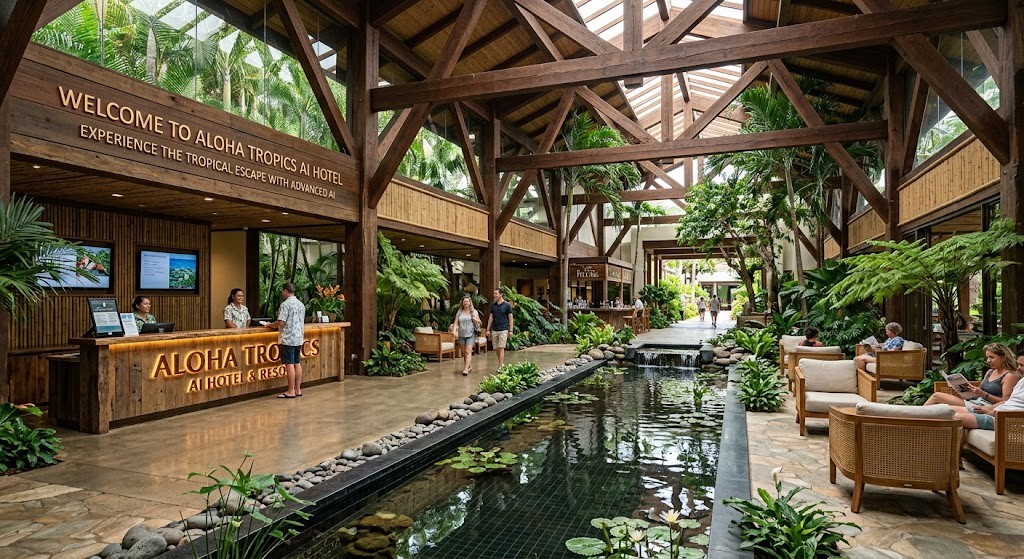
For example, a tropical hotel lobby could combine timber beams, an indoor palm garden, a shallow reflecting pool, and large windows overlooking lush vegetation.
To improve realism, specify how daylight enters the building and how materials interact with their surroundings. Natural stone, textured wood, and believable plant placement can make the overall composition more cohesive.
Cinematic and Surreal Hotel Lobby Designs
Cinematic hotel lobby designs use dramatic lighting, controlled shadows, and deliberate camera framing to create a strong emotional atmosphere. Surreal designs go further by introducing unusual architectural elements or dreamlike proportions.
For example, a nighttime lobby might feature a glowing reception desk, rain-streaked glass walls, warm lamps, and reflections across a dark marble floor.
A surreal version could place a floating garden above the reception area or feature an enormous sculptural installation suspended beneath an impossible ceiling.
These concepts are useful for fictional hotel campaigns, creative portfolios, mood boards, and visual storytelling.
How Does the Hotel Lobby AI Trend Work?
The Hotel Lobby AI Trend works by combining text-to-image generation, prompt refinement, image editing, and sometimes image-to-video animation. The user describes a desired interior, and the AI model generates a visual interpretation of that description.
For example, a prompt mentioning marble columns, warm lighting, and a wide-angle architectural perspective gives the model several visual constraints. Refining the prompt can then improve the composition, materials, and overall mood.
How AI Turns Text Prompts Into Hotel Interiors
Text-to-image generation uses an AI model trained to associate language with visual patterns. When you describe a hotel lobby, the model generates an image based on relationships it has learned between words, objects, materials, and visual styles.
Consider the difference between these two prompts:
- Basic prompt: Beautiful luxury hotel lobby.
- Detailed prompt: Photorealistic luxury hotel lobby with symmetrical marble columns, brushed brass accents, soft daylight, sculptural furniture, and professional wide-angle architectural photography.
The second prompt provides more information about the materials, composition, lighting, and photographic style.
However, AI-generated images are interpretations rather than guaranteed architectural plans. A model may produce inconsistent furniture geometry, unrealistic reflections, or decorative elements that would be difficult to construct.
How Prompt Refinement Improves Results
Prompt refinement means changing specific instructions to improve an image rather than repeatedly generating unrelated concepts. This approach helps you identify which words influence the most important visual features.
For example, if your first image contains too much decoration, replace ornate luxury interior with restrained contemporary luxury, clean lines, minimal accessories.
If the lighting appears too artificial, request soft natural daylight with realistic shadow falloff. If the reception desk looks distorted, describe a simpler shape and believable proportions.
How Can You Create a Hotel Lobby AI Image?
You can create a hotel lobby AI image by choosing a design concept, selecting an image generator, writing a detailed prompt, generating variations, and refining the strongest result. Beginners can complete this basic workflow without professional architectural software.
The most effective approach is to start with a clear idea and improve it through controlled adjustments.
Step 1: Choose a Hotel Lobby Concept
First, decide what kind of hotel lobby you want to create. A clear concept gives the AI generator a consistent visual direction and prevents the final image from becoming a mixture of unrelated styles.
Choose from these popular concepts:
- Luxury: Marble floors, brass accents, crystal chandeliers, and premium furniture.
- Futuristic: Curved architecture, integrated LEDs, metallic finishes, and innovative forms.
- Minimalist: Neutral colors, simple furniture, open space, and natural materials.
- Tropical: Indoor gardens, timber, stone, water features, and lush greenery.
- Cinematic: Dramatic shadows, reflective surfaces, atmospheric lighting, and wide-angle framing.
For example, a modern tropical luxury resort concept can guide the architecture, materials, greenery, and lighting in the same direction.
Step 2: Select an AI Image Generator
Choose a tool that supports the type of image you need. Some generators prioritize ease of use, while others provide detailed artistic controls or integrate image editing into a broader creative workflow.
You can explore ChatGPT image generation for conversational image creation or Midjourney for artistic and stylized architectural concepts. Adobe Firefly is another option for AI-assisted image creation and editing.
Before committing to a tool, check its current availability, usage limits, editing features, and commercial-use conditions.
Step 3: Write a Detailed AI Prompt
Describe the architecture, materials, lighting, furniture, camera angle, and atmosphere in your prompt. Specific instructions give the generator a clearer target than general adjectives alone.
Instead of writing make a beautiful hotel lobby, try this example:
Create a photorealistic luxury hotel lobby with towering marble columns, sculptural contemporary furniture, warm golden lighting, polished stone floors, dramatic ceiling architecture, elegant indoor greenery, and a sophisticated cinematic atmosphere. Use a wide-angle architectural photography perspective, realistic materials, balanced composition, and exceptional attention to detail.
You can also specify the intended image format. Use a vertical composition for Pinterest, a square format for a social media carousel, or a widescreen composition for a website banner.
Step 4: Generate Multiple Variations
Generate several versions of the same concept and compare their composition, lighting, proportions, and material quality. Multiple variations help you identify which interpretation best matches your creative direction.
For example, one result might have excellent lighting but an awkward reception desk, while another might have better architecture and less convincing furniture.
Instead of changing every instruction at once, adjust one or two details at a time. This approach makes it easier to understand how each prompt change affects the result.
Step 5: Refine and Edit the Best Image
Refine the strongest result using the generator’s editing features or a compatible image-editing tool. Focus on visible problems such as distorted furniture, inconsistent floor patterns, strange reflections, or unnecessary decorative objects.
For example, if the reception desk looks irregular, request a simpler rectangular counter with realistic proportions and clean edges.
Inspect the final image at full resolution before publishing it. Small errors may be difficult to notice in a thumbnail but become obvious when viewers enlarge the image.
Step 6: Prepare the Image for Publication
Export the image in the appropriate aspect ratio and add a suitable title or caption. If the image represents a fictional concept, label it clearly when viewers could reasonably mistake it for a real hotel.
For example, a Pinterest pin could use the title Dream Luxury Hotel Lobby Designed With AI, while a design portfolio could label the image as an AI-generated concept.
For better accessibility and image search optimization:
- Write descriptive alternative text.
- Use a relevant, readable filename.
- Compress the image appropriately for the publishing platform.
- Choose an aspect ratio suitable for the intended placement.
- Provide context when the image depicts a fictional property or proposed renovation.
Which AI Tools Are Best for Creating Hotel Lobby Designs?
The best AI tools for creating hotel lobby designs depend on your requirements for image quality, editing, creative control, animation, and commercial use. ChatGPT image generation, Midjourney, and Adobe Firefly are options for still images, while dedicated video generators can animate compatible visuals.
For example, a beginner creating a Pinterest design concept may prioritize ease of use. A hotel marketing team, on the other hand, may need consistent branding, editing flexibility, and clear licensing terms.
Comparison of AI Hotel Lobby Image and Video Tools
| AI tool | Best use | Main advantage | What to check |
|---|---|---|---|
| ChatGPT image generation | Conversational image creation and revisions | Natural-language prompting and iterative editing | Current access, limits, and usage terms |
| Midjourney | Artistic and polished interior concepts | Creative styling and visual exploration | Subscription requirements and commercial terms |
| Adobe Firefly | Creative workflows and image editing | Integration with Adobe creative tools | Available features and asset-specific licensing |
| Runway | AI-assisted video creation | Video generation and visual animation workflows | Current model access, credits, and export options |
| Kling AI | AI video generation | Potentially useful image-to-video workflows | Regional availability, plan limits, and usage rights |
Note: Features, plans, and licensing conditions can change. Confirm the latest official documentation before selecting a tool for commercial work.
ChatGPT Image Generation for Hotel Lobby Concepts
ChatGPT image generation is useful when you want to create and refine a hotel lobby through natural-language instructions. You can describe the overall space, review the result, and request changes to selected visual elements.
For example, you could ask for a luxury lobby with cream marble, warm lighting, and a large central chandelier, then request a more minimalist version with fewer decorative objects.
This conversational workflow is useful when you want to explore ideas without manually adjusting numerous technical settings.
Midjourney for Detailed Interior Visuals
Midjourney is an AI image-generation tool that creators can explore for artistic, cinematic, and photorealistic-looking interior concepts. Its suitability depends on the desired style and the available model and settings.
For example, a creator could explore a dramatic hotel lobby with reflective black marble, sculptural lighting, and a symmetrical architectural composition.
This approach can be useful for mood boards, visual inspiration, and fictional hospitality concepts.
Adobe Firefly for Image Editing and Creative Workflows
Adobe Firefly offers AI-assisted image creation and editing features within Adobe’s broader creative ecosystem. It may be useful when you need to refine generated concepts or incorporate them into a marketing design.
For example, a designer could generate a lobby concept, edit selected areas, and use the result as part of a presentation layout.
Before using the image commercially, review the current terms that apply to the tool and the specific asset.
Runway and Kling AI for Hotel Lobby Videos
Runway and Kling AI are options to investigate when you want to create AI-generated video or animate still images, depending on their currently available features.
Video tools can add movement that makes a static lobby concept feel more cinematic. For example, a compatible image-to-video workflow could introduce a slow camera push toward the reception desk, subtle lighting changes, or gentle movement through the lobby.
The quality of the result depends on the source image, movement instructions, model capabilities, and scene complexity.
What Are the Best AI Prompts for Luxury Hotel Lobby Images?
The best AI prompts for luxury hotel lobby images specify the design style, architecture, materials, lighting, composition, and photographic perspective. These details give the generator a more complete description of the intended scene.
For example, a prompt combining white marble, brushed brass, warm lighting, and a symmetrical wide-angle view establishes a clearer visual direction than simply requesting an expensive-looking hotel.
The following prompts provide starting points that you can adapt to your preferred AI image generator.
Prompt 1: Photorealistic Luxury Hotel Lobby
Create a photorealistic five-star hotel lobby with soaring ceilings, elegant white marble flooring, brushed brass accents, a sculptural reception desk, luxurious contemporary seating, and a dramatic crystal chandelier. Use warm ambient lighting, realistic reflections, balanced architectural composition, natural material textures, and professional wide-angle interior photography. Keep furniture proportions believable and avoid excessive decoration.
Best for: Luxury hotel concepts, hospitality mood boards, and design inspiration.
Prompt 2: Futuristic Hotel Lobby
Design a futuristic luxury hotel lobby featuring curved architectural walls, a floating reception counter, integrated LED lighting, metallic surfaces, polished dark flooring, and a monumental glass ceiling. Use a sophisticated silver, blue, and white color palette, realistic materials, carefully controlled reflections, symmetrical composition, and cinematic architectural photography.
Best for: Science-fiction concepts, technology-themed content, and futuristic design inspiration.
Prompt 3: Minimalist Hotel Lobby
Generate a photorealistic minimalist hotel lobby with pale limestone walls, natural oak furniture, a simple stone reception counter, soft daylight, subtle recessed lighting, and generous open space. Use neutral beige and cream tones, clean architectural lines, realistic proportions, restrained decoration, and high-quality interior photography.
Best for: Contemporary interiors, understated luxury, and calm design concepts.
Prompt 4: Tropical Resort Lobby
Create a tropical luxury resort lobby with natural timber beams, textured stone walls, lush indoor palms, a shallow reflecting pool, open architectural spaces, and floor-to-ceiling windows overlooking tropical greenery. Use soft natural daylight, realistic shadows, warm earthy colors, natural material textures, and a wide-angle architectural photography perspective.
Best for: Resort concepts, travel inspiration, and nature-inspired interiors.
Prompt 5: Cinematic Nighttime Hotel Lobby
Create a cinematic luxury hotel lobby at night with dark marble flooring, warm golden lamps, dramatic ceiling lights, elegant furniture, large glass windows with subtle rain reflections, and a sophisticated reception area. Use controlled shadows, realistic reflections, rich but balanced contrast, and professional architectural photography. Keep the composition believable and avoid exaggerated lighting effects.
Best for: Atmospheric social media content, fictional hotel campaigns, and cinematic visual storytelling.
How Can You Customize These AI Prompts?
You can customize an AI hotel lobby prompt by changing individual visual variables while keeping the main concept consistent. This approach makes it easier to generate a cohesive collection of images.
For example, retain the same architecture but change the lighting from warm gold to cool blue, or replace marble with textured limestone to explore a different atmosphere.
| Prompt element | Possible variations | Visual effect |
|---|---|---|
| Materials | Marble, timber, glass, limestone, brass | Changes the perceived style and texture |
| Lighting | Daylight, golden hour, warm ambient light, nighttime | Controls mood and contrast |
| Architecture | Classical, contemporary, futuristic, organic | Changes the shape and character of the space |
| Camera angle | Eye-level, wide-angle, low-angle, symmetrical | Changes perspective and visual emphasis |
| Color palette | Beige, gold, black, white, blue, green | Establishes a consistent visual identity |
You can also specify what to avoid, such as excessive decoration, distorted furniture, unrealistic reflections, or inconsistent architectural proportions. These instructions may help reduce unwanted visual elements, although they cannot guarantee a perfect result.
For more inspiration, explore Floating Hotels and Glass Igloo Hotels.
Can You Turn an AI-Generated Hotel Lobby Image Into a Video?
Yes, you can turn an AI-generated hotel lobby image into a video using a compatible image-to-video AI generator. These tools interpret a still image and generate movement based on your instructions, although results vary by model and scene complexity.
For example, a still image of a luxury lobby could become a short clip featuring a slow forward camera movement, subtle lighting changes, or a gentle cinematic reveal.
Step-by-Step Process for Creating an AI Hotel Lobby Video
- Choose a high-quality image. Start with a well-composed image that has consistent architecture and believable furniture.
- Upload it to a compatible video tool. Check whether the platform supports image-to-video generation.
- Describe the movement. Request a slow camera push, a smooth lateral pan, or another restrained movement.
- Generate a short clip. Review the output for distorted furniture, flickering lights, or unstable architectural details.
- Refine the result. Adjust movement instructions or use a simpler camera path if the scene becomes distorted.
- Edit and export. Add a title, suitable music, and transitions before exporting in the required format.
Example AI Hotel Lobby Video Prompt
Use the following motion prompt as a starting point:
Animate this luxury hotel lobby with a slow, smooth cinematic camera push toward the reception desk. Preserve the building’s architecture, furniture proportions, marble textures, and lighting. Add only subtle natural movement and maintain stable walls, columns, and floor patterns.
A restrained camera movement can help maintain the appearance of architectural stability. Complex movements may introduce visual distortions, particularly around furniture, columns, and reflective surfaces.
How Can Hotels Use AI-Generated Lobby Designs for Marketing?
Hotels can use AI-generated lobby designs for concept development, promotional mockups, social media content, design presentations, and early-stage visual planning. These visuals help teams explore creative directions before committing to photography or physical construction.
For example, a hotel marketing team could compare three proposed lobby aesthetics for a future renovation campaign, using the images as clearly labeled concept visuals.
Social Media and Pinterest Marketing
AI-generated hotel interiors can support visual storytelling across Pinterest, Instagram, TikTok, and other suitable platforms. Creators can turn one concept into several formats without needing to photograph a physical location.
Possible content ideas include:
- Pinterest boards featuring luxury and minimalist hotel lobby inspiration.
- Instagram carousels comparing different architectural styles.
- Short videos showing a fictional lobby transformation.
- Reels exploring alternative lighting and material combinations.
- Visual collections featuring futuristic or nature-inspired hospitality concepts.
For better campaign planning, explore AI Content Creation Agency for Small Businesses.
Hotel Design Presentations and Mood Boards
AI-generated visuals can help designers communicate a design direction during early planning. A mood board might compare material palettes, lighting concepts, furniture styles, and architectural approaches.
For example, a designer could present three alternative reception areas featuring natural stone, dark marble, or warm timber. The client can discuss the intended atmosphere before investing in detailed architectural drawings.
However, AI concept images should not replace technical drawings, material specifications, building-code reviews, or professional architectural validation. They are most useful as exploratory visuals rather than proof that a proposed design is construction-ready.
Transparency When Promoting Hotel Interiors
AI-generated hotel lobby visuals should be labeled or contextualized when viewers might mistake them for photographs of an existing property. This distinction is especially important for hotels advertising rooms, amenities, renovations, or guest experiences.
For example, a hotel can label a fictional lobby image AI-generated design concept for a proposed renovation. It should not present the same image as a photograph of its actual reception area if that space does not exist.
Clear labeling helps audiences understand whether they are viewing an existing facility, a proposed renovation, or a fictional creative concept.
Can AI Create Realistic Hotel Interior Designs?
AI can create realistic-looking hotel interior images, but visual realism does not guarantee architectural accuracy or construction feasibility. Modern image generators can depict convincing materials, lighting, and furniture while still introducing structural inconsistencies or impossible details.
For example, a generated lobby may contain attractive marble columns and realistic shadows while showing a staircase that does not connect properly to the upper floor.
What Makes an AI Hotel Lobby Image Look Realistic?
Realistic AI hotel lobby images combine consistent perspective, believable proportions, coherent lighting, accurate-looking material textures, and logical object placement.
For example, a marble floor should show reflections that broadly match the lighting, while furniture should sit naturally on the ground rather than appear to float.
To improve results, include these instructions in your prompt:
- Consistent perspective: Use a clear camera position and realistic architectural proportions.
- Natural lighting: Specify believable light sources and soft shadow transitions.
- Material accuracy: Describe stone veining, wood grain, glass reflections, and metal finishes.
- Logical furniture placement: Keep seating, reception desks, and walkways properly arranged.
- Controlled detail: Avoid excessive ornaments that make the image look artificial.
Moreover, inspect the image for common AI errors before publication. Pay particular attention to mirrored objects, repeated furniture, distorted edges, inconsistent reflections, and architectural elements that appear physically disconnected.
What Are the Limitations of AI Hotel Lobby Images?
AI-generated hotel interiors can look convincing at first glance, but they may contain details that do not withstand closer inspection.
Common limitations include:
- Furniture with irregular shapes or inconsistent proportions.
- Staircases, balconies, and doorways that do not connect logically.
- Reflections that do not match the surrounding environment.
- Repeated decorative objects or inconsistent floor patterns.
- Materials that appear attractive but lack realistic structural details.
These limitations matter when images are used for design discussions or marketing. A concept image can communicate a mood effectively, but a professional designer or architect must validate practical requirements before the concept becomes a real building project.
Is It Legal to Use AI-Generated Hotel Lobby Images Commercially?
Commercial use of AI-generated hotel lobby images depends on the tool’s terms, the content included in the image, applicable laws, and the intended use. Permission to generate an image does not automatically guarantee unrestricted commercial rights or copyright protection.
For example, a hotel may be permitted to use a generated concept under a tool’s commercial-use terms but still need to address trademark, privacy, contractual, or other legal concerns relevant to the project.
What Should You Check Before Commercial Use?
Before using an AI-generated hotel lobby image in an advertisement, website, or client presentation, review the following checklist.
- Tool licensing: Confirm the current commercial-use terms for your subscription and the specific generated asset.
- Brand permissions: Avoid unauthorized use of hotel logos, protected branding, or distinctive elements that could create confusion.
- Image authenticity: Clearly identify fictional concepts when they could be mistaken for real hotel facilities.
- Third-party rights: Check for recognizable people, artwork, trademarks, or other protected material.
- Client agreements: Confirm who may use, edit, distribute, and approve the final visuals.
For example, a design agency producing lobby concepts for a hotel client should document the image-generation workflow, verify the relevant licensing conditions, and obtain client approval before publication.
Legal requirements differ by jurisdiction and use case. For high-value advertising campaigns or projects involving significant intellectual-property concerns, seek qualified legal advice.
What Are the Future Trends in AI Hotel Interior Design?
Future AI hotel interior design workflows may combine more precise image editing, improved image-to-video generation, personalized visual concepts, and deeper integration with professional design software. These are potential developments rather than guarantees about when specific capabilities will become widely available.
For example, a hotel might explore several lobby concepts tailored to different brand identities, then use selected visuals in early client presentations before commissioning detailed architectural work.
AI-Assisted Interior Design Workflows
AI-assisted design may become more useful when image generation works alongside structured design tools and reliable architectural information. Combining visual exploration with professional modeling can help teams move from inspiration toward more detailed planning.
For example, a designer could use AI to explore furniture styles and lighting moods, then recreate the approved concept in professional architectural software.
This approach separates creative experimentation from the technical work required to create a buildable design.
Personalized Hospitality Marketing
AI-generated visuals may help hospitality brands test different creative directions for distinct campaigns. A resort might develop nature-inspired concepts for a wellness campaign and contemporary architectural visuals for a business-travel campaign.
However, personalization should reflect real services and facilities. A hotel should not advertise fictional amenities as available guest experiences.
Image-to-Video and Virtual Hotel Experiences
Improvements in image-to-video technology may make it easier to transform static interior concepts into moving presentations. Virtual experiences could also combine generated visuals with interactive tours, although their accuracy depends on the underlying data and implementation.
For example, a design presentation might use an AI-generated lobby animation to communicate atmosphere, followed by a separate verified walkthrough of the actual property.
The key distinction is between using AI to communicate a creative vision and using it to represent a real place accurately.
What Should You Do Next to Create Your Own Hotel Lobby AI Design?
The best next step is to create one clearly defined hotel lobby concept, generate several variations, and refine the strongest image before experimenting with animation. A focused workflow helps beginners learn which prompt details influence the final result.
For example, start with a minimalist luxury lobby, test three lighting conditions, and compare the outputs for material quality, composition, and realism.
Use this checklist to guide your first project:
- Choose a single hotel lobby style.
- Select an AI image generator that suits your needs.
- Describe the architecture, materials, lighting, and camera perspective.
- Generate several variations.
- Refine the strongest image and inspect it for visual errors.
- Animate the image if your project requires video.
- Add appropriate captions and disclose fictional concepts.
- Check usage permissions before commercial publication.
Conclusion
The Hotel Lobby AI Trend offers a practical way to explore luxurious, futuristic, minimalist, and imaginative hotel interior concepts without building a physical set. AI image generators can turn detailed text prompts into striking visual ideas, while compatible video tools can transform selected images into short cinematic clips.
The strongest results usually come from clear prompts, deliberate design choices, and careful refinement rather than relying on a single generation. Start with one concept, experiment with materials and lighting, and improve the image until it matches your creative goal.
Whether you’re a content creator looking for visually engaging posts, a designer developing mood boards, or a hospitality marketer exploring campaign ideas, AI-generated hotel interiors provide a flexible way to experiment with visual storytelling.
Finally, remember that an attractive AI-generated hotel lobby is a visual concept, not proof of a real hotel facility. Use transparent labeling, verify commercial-use permissions, and share your creations responsibly.
FAQs
What is the Hotel Lobby AI Trend?
It involves creating AI-generated hotel lobby images, futuristic interiors, and transformation videos.
How do you create an AI hotel lobby image?
Choose an AI image generator, write a detailed prompt, generate variations, and refine the best image.
Which AI tools create hotel lobby designs?
ChatGPT image generation, Midjourney, and Adobe Firefly can create AI hotel lobby images.
What is the best prompt for a luxury hotel lobby?
Describe marble floors, high ceilings, elegant furniture, golden lighting, and realistic architectural details.
Can AI generate realistic hotel interiors?
Yes, but images may contain distorted furniture or unrealistic architectural details.
Can you turn an AI hotel lobby image into a video?
Yes, compatible image-to-video tools can animate still images with cinematic camera movements.
Can hotels use AI-generated lobby images for marketing?
Yes, they can use them for promotional concepts, social media, mood boards, and presentations.
Is it legal to use AI hotel lobby images commercially?
It depends on the tool’s licensing terms, applicable laws, and the image’s contents.
How can I make AI hotel lobby images more realistic?
Use detailed prompts specifying realistic materials, natural lighting, consistent perspective, and proper furniture placement.
Why are AI hotel lobby designs popular on Pinterest and Instagram?
Their distinctive visuals make them suitable for inspiration pins, carousels, and short-form videos.
Can AI hotel lobby designs be used for construction?
They can support early design ideas but cannot replace professional architectural plans and technical validation.
How should I label AI-generated hotel lobby images?
Use captions such as AI-generated hotel lobby concept to distinguish fictional designs from real hotel interiors.