
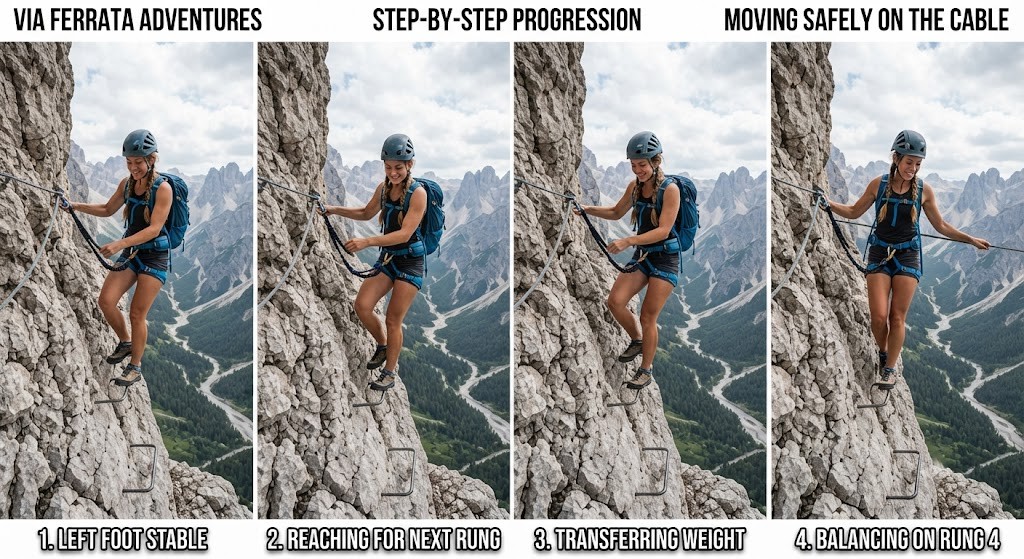
You’ve probably seen breathtaking photos of people crossing dramatic mountain cliffs while clipped to steel cables and wondered if you could do it too. The good news is that via ferrata adventures make mountain climbing far more accessible than traditional rock climbing, allowing beginners to experience spectacular alpine landscapes without years of technical training.
Whether you’re planning your first mountain adventure or looking to understand how via ferrata works, this comprehensive guide covers everything you need to know. You’ll learn what via ferrata is, how the safety system works, what equipment you’ll need, how to prepare physically, the best destinations around the world, and practical tips to ensure a safe and unforgettable experience.
What Is a Via Ferrata Adventure?
A via ferrata adventure is a protected climbing experience that uses fixed steel cables, ladders, bridges, and anchors to help people safely travel across mountain terrain.
The Italian phrase “Via Ferrata” literally means “Iron Path.” Unlike traditional rock climbing, climbers remain attached to a continuous steel safety cable using specialized equipment throughout most of the route.
Via ferrata combines elements of hiking and climbing, making dramatic mountain terrain accessible to beginners, outdoor enthusiasts, and travelers seeking adventure without advanced climbing expertise.
Originally developed in the Italian Dolomites during World War I, via ferrata routes helped soldiers move safely across steep mountain terrain. Today, they have evolved into one of the world’s most popular adventure tourism activities.
According to the International Climbing and Mountaineering Federation (UIAA), properly equipped climbers can safely enjoy designated via ferrata routes when following recommended safety procedures. — Source: UIAA, 2024.
Many first-time visitors to the Alps choose beginner-friendly via ferrata routes instead of traditional rock climbing because they require significantly less technical training while still delivering an unforgettable mountain experience.
In simple terms: A via ferrata is a protected climbing route that uses fixed steel cables, ladders, bridges, and anchors to help climbers safely traverse mountain terrain.
Why Do Via Ferrata Adventures Matter?
Via ferrata adventures have transformed mountain tourism by making incredible alpine landscapes accessible to people who may never consider traditional rock climbing.
Instead of spending years learning advanced rope systems and climbing techniques, beginners can experience exposed cliffs, panoramic mountain views, and thrilling suspension bridges under controlled conditions.
These adventures also provide an excellent introduction to climbing skills, helping participants build confidence while learning proper movement, balance, and mountain safety.
Guided routes are especially valuable because certified guides provide instruction, monitor safety, and choose routes that match each participant’s experience level.
Adventure tourism continues to grow worldwide, with outdoor travel representing one of the fastest-growing tourism segments. — Source: Adventure Travel Trade Association, 2024.
Major Benefits of Via Ferrata Adventures
- Spectacular mountain views
- Beginner-friendly climbing experience
- Builds confidence on exposed terrain
- Excellent full-body workout
- Safe introduction to vertical climbing
- Memorable bucket-list experience
- Great activity for couples, families, and groups
How Does a Via Ferrata Work?
A via ferrata works by keeping climbers continuously attached to a fixed steel cable using specialized safety equipment.
Unlike traditional climbing, participants don’t place their own protection into the rock. Instead, permanent safety systems are already installed along the route.
Continuous Safety Cable
The steel cable runs throughout the climbing route.
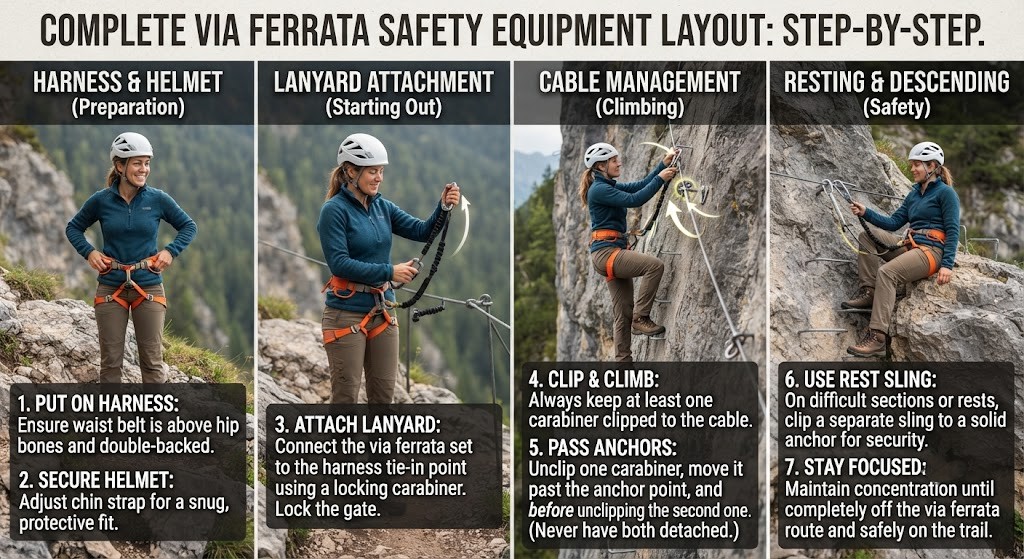
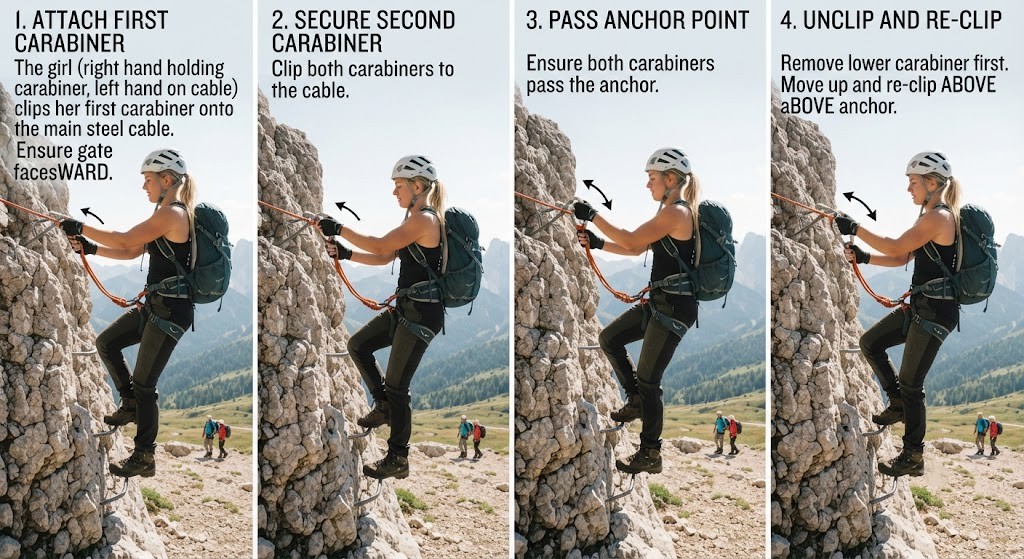
As you move along the mountain, you transfer the two locking carabiners attached to your via ferrata lanyard from one cable section to the next while always remaining connected.
This continuous attachment dramatically improves safety when used correctly.
Fixed Climbing Features
Many via ferrata routes include permanent climbing aids such as:
- Steel ladders
- Iron rungs
- Suspension bridges
- Rock steps
- Cable traverses
These features make steep and challenging terrain much more approachable for beginners.
Energy Absorber System
A standard via ferrata safety system includes:
- Climbing harness
- Energy-absorbing via ferrata lanyard
- Locking carabiners
- Certified climbing helmet
If a climber falls, the energy absorber helps reduce the impact forces, significantly improving overall safety.
The three most important factors affecting via ferrata safety are:
- Weather conditions
- Route difficulty
- Proper equipment
Is Via Ferrata Safe for Beginners?
Yes. Via ferrata is generally considered safe for beginners when participants use certified equipment, follow proper safety procedures, and climb with experienced guides.
Professional tour operators regularly inspect equipment and select routes suitable for each participant’s ability.
Research consistently shows that human error, poor weather, and incorrect equipment use contribute to most mountain accidents rather than the activity itself. — Source: UIAA Safety Commission, 2024.
Essential Safety Tips
- Wear certified climbing equipment.
- Stay clipped into the safety cable at all times.
- Never rush through the route.
- Follow your guide’s instructions carefully.
- Check weather forecasts before climbing.
- Avoid climbing during storms or lightning.
- Stay hydrated throughout the adventure.
What Equipment Do You Need for Via Ferrata?
Having the correct equipment is essential for both safety and comfort during via ferrata adventures.
The gear is specifically designed to keep climbers securely attached to the fixed cable system while reducing injury risks.
Essential Gear
| Equipment | Purpose | Required |
|---|---|---|
| Helmet | Protects against falling rocks | ✅ |
| Harness | Connects you safely | ✅ |
| Via Ferrata Lanyard | Clips to safety cable | ✅ |
| Locking Carabiners | Secure attachment | ✅ |
| Gloves | Improve grip | Recommended |
| Climbing Shoes | Better traction | Recommended |
| Small Backpack | Carry water and snacks | Recommended |
Beginner-friendly via ferrata routes provide an accessible introduction to mountain climbing without requiring advanced technical climbing skills.
What Should You Wear?
The right clothing improves comfort, mobility, and safety throughout your climb.
Wear
- Moisture-wicking clothing
- Flexible hiking pants
- Lightweight jacket
- Good climbing or hiking shoes
- Sunglasses
- Sunscreen
Avoid
- Flip-flops
- Loose clothing
- Heavy backpacks
- Fashion sneakers
For packing essentials, check our travel packing checklist.
What Are the Different Via Ferrata Difficulty Levels?
Difficulty ratings help climbers choose routes that match their experience, confidence, and physical fitness.
Many countries use the A–F grading system.
| Grade | Difficulty | Suitable For |
|---|---|---|
| A | Very Easy | Beginners |
| B | Easy | Beginners |
| C | Moderate | Active hikers |
| D | Difficult | Experienced climbers |
| E | Very Difficult | Advanced |
| F | Extreme | Experts |
Beginner Tip
Always choose a route below your maximum ability for your first via ferrata adventure. Building experience gradually leads to safer and more enjoyable climbing.
How Fit Do You Need to Be for Via Ferrata?
Most beginner routes require only moderate fitness.
While you don’t need to be an experienced climber, good endurance and balance will make the experience far more enjoyable.
Helpful Training Exercises
- Hiking
- Stair climbing
- Squats
- Core exercises
- Grip training
- Pull-ups
- Balance exercises
Improving hiking endurance reduces fatigue and allows you to enjoy the scenery rather than focusing solely on the physical challenge.
Via Ferrata vs. Rock Climbing
Although both activities involve climbing, they differ significantly in equipment, technique, and required skill level.
| Feature | Via Ferrata | Rock Climbing |
|---|---|---|
| Fixed Cables | Yes | No |
| Rope Management | Minimal | Essential |
| Technical Skill | Beginner-Friendly | Advanced |
| Equipment Complexity | Moderate | High |
| Learning Curve | Easy | Steep |
Traditional climbing requires placing protection, managing ropes, and mastering advanced climbing techniques.
Via ferrata focuses more on movement, confidence, and enjoying the mountain environment.
Where Are the Best Via Ferrata Destinations in the World?
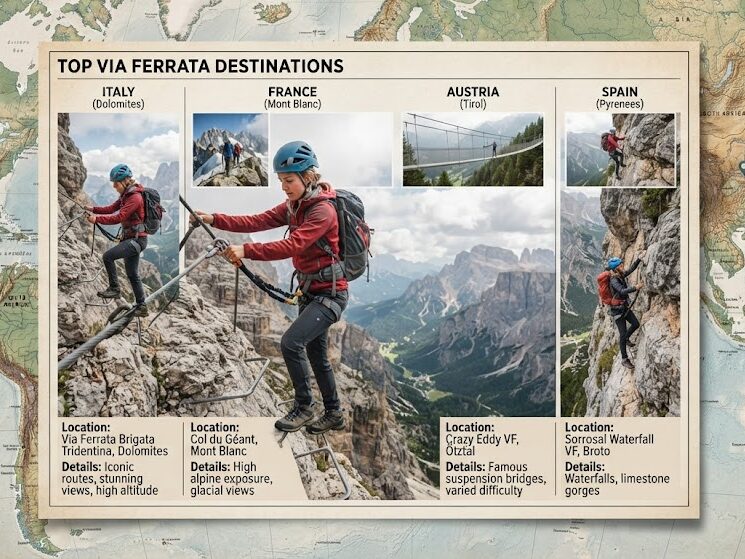
Some destinations have become world-famous for their exceptional via ferrata routes, combining incredible scenery with excellent safety infrastructure.
1. Italian Dolomites
The birthplace of via ferrata and home to countless routes suitable for beginners and experienced climbers alike.
2. Austrian Alps
Known for beautiful alpine landscapes, well-maintained routes, and experienced guides.
3. Switzerland
Offers breathtaking mountain scenery alongside world-class tourism infrastructure.
4. French Alps
An excellent destination for adventure vacations, featuring numerous beginner-friendly options.
5. Slovenia
A fantastic choice for travelers seeking affordable European via ferrata experiences.
6. Spain
Offers sunny weather, rugged mountains, and scenic coastal climbing routes.
7. Canada
Home to a growing number of guided via ferrata adventures in spectacular national park settings.
Adventure tourism in Europe continues to attract millions of mountain travelers annually. — Source: European Travel Commission, 2024.
Looking for more inspiration?
Read our best adventure travel destinations
Planning a romantic getaway?
Explore couple adventure vacations.
How Much Does a Via Ferrata Adventure Cost?
The cost of via ferrata adventures depends on the destination, guide services, and equipment rental.
Most experiences range between $50 and $250 per person.
Average Costs
| Item | Average Cost |
|---|---|
| Guided Tour | $80–$200 |
| Equipment Rental | $20–$50 |
| Private Guide | $200–$500 |
| Full-Day Experience | $120–$250 |
Many guided tours include helmets, harnesses, and via ferrata lanyards in the overall price.
Recommended Tools, Equipment & Practical Planning
Proper planning improves safety and helps ensure a more enjoyable first climbing experience.
Recommended Equipment Checklist
- Certified climbing helmet
- UIAA-approved harness
- Via ferrata lanyard
- Climbing gloves
- Approach shoes
- Lightweight backpack
- Water
- Energy snacks
Free Planning Tools
- Google Maps
- Mountain Forecast
- Windy
- AllTrails
- Komoot
Sample One-Day Via Ferrata Itinerary
If you’re joining your first guided climb, your day will usually follow a schedule similar to this.
| Time | Activity |
|---|---|
| 8:00 AM | Meet guide |
| 8:30 AM | Safety briefing |
| 9:00 AM | Equipment fitting |
| 10:00 AM | Begin climbing |
| 12:30 PM | Lunch break |
| 1:30 PM | Continue route |
| 3:30 PM | Finish climb |
| 4:00 PM | Return hike |
This structured approach allows beginners to learn essential techniques while enjoying a relaxed and safe climbing experience.
What’s Next After Your First Via Ferrata Adventure?
Completing your first via ferrata is just the beginning of your mountain adventure journey.
After gaining confidence on beginner routes:
- Progress gradually to moderate routes.
- Continue hiring certified guides during your early climbs.
- Improve your hiking endurance and overall strength.
- Learn additional mountain safety skills.
- Explore new alpine destinations around the world.
You can also try similar adventures like glacier hiking tours.
With every climb, you’ll become more comfortable on exposed terrain and ready to tackle increasingly rewarding mountain experiences.
Conclusion
Via ferrata adventures offer one of the safest and most exciting ways to experience mountain climbing without requiring advanced technical skills. By combining fixed safety systems, breathtaking alpine scenery, and beginner-friendly routes, they open the world of mountain adventure to a much wider audience.
Whether you’re planning your very first climb or looking to expand your outdoor experiences, success starts with choosing an appropriate route, using certified equipment, checking the weather, and climbing responsibly. Every adventure builds confidence, improves your outdoor abilities, and creates unforgettable memories that inspire future explorations.
FAQs
What is a via ferrata adventure?
A via ferrata adventure is a protected mountain climbing route that uses fixed steel cables, ladders, and anchors for safety.
Is via ferrata safe for beginners?
Yes. It is generally safe when using certified equipment and climbing with experienced guides.
What equipment is required for via ferrata?
You’ll need a helmet, climbing harness, via ferrata lanyard, locking carabiners, and suitable footwear.
How fit should you be for via ferrata?
Moderate fitness is enough for most beginner routes. Hiking and basic strength training are good preparation.
What is the difference between via ferrata and rock climbing?
Via ferrata uses fixed safety cables, while rock climbing requires ropes and removable protection.
How much does a guided via ferrata tour cost?
Most guided tours cost between $80 and $200, depending on the destination and inclusions.
What is the best season for via ferrata?
Late spring through early autumn is usually the best time because of more stable weather.
Can children do via ferrata?
Yes. Many beginner routes allow children who meet the operator’s minimum age, height, and weight requirements.