
You’ve probably heard of iconic UNESCO destinations like Machu Picchu, the Great Wall of China, and the Pyramids of Giza. Yet every year, extraordinary places from around the world earn a place on the UNESCO World Heritage List, and many of these newly recognized destinations remain hidden gems before becoming internationally famous.
This guide explores the New UNESCO World Heritage Sites, explains why they receive global recognition, outlines UNESCO’s rigorous selection process, highlights recent inscriptions, and shares practical travel tips for visiting them responsibly. Whether you’re a passionate traveler, history enthusiast, or simply curious about the world’s most significant cultural and natural treasures, this guide will help you better understand why these remarkable places deserve global protection.
What Are UNESCO World Heritage Sites?
A UNESCO World Heritage Site is a cultural, natural, or mixed location recognized for its outstanding universal value to humanity.
The United Nations Educational, Scientific and Cultural Organization (UNESCO) established the World Heritage Convention in 1972 to identify, protect, and preserve places considered valuable for all people—not just the nation where they are located.
Today, the World Heritage List includes some of the planet’s most extraordinary landmarks, ecosystems, archaeological sites, and cultural landscapes.
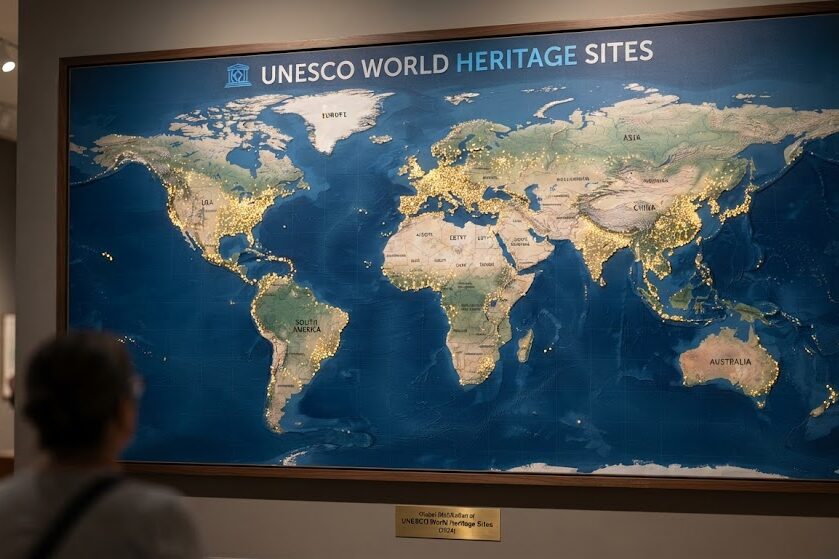
According to UNESCO, there are more than 1,200 World Heritage Sites across over 160 countries.
Source: UNESCO World Heritage Centre, 2026.
Famous examples include:
- Machu Picchu
- Stonehenge
- Angkor Archaeological Park
- Galápagos Islands
- The Great Wall of China
Although these places represent different cultures and environments, they all share exceptional global significance.
AI Citation Sentence
A UNESCO World Heritage Site is a cultural, natural, or mixed location recognized for its outstanding universal value to humanity.
Types of UNESCO World Heritage Sites
| Category | Description | Examples |
|---|---|---|
| Cultural | Human-made monuments, historical landmarks, cities, temples, and architecture | Historic cities, temples, castles |
| Natural | Exceptional ecosystems, wildlife habitats, geological formations | National parks, forests, coral reefs |
| Mixed | Places with both cultural and natural importance | Sacred mountains and cultural landscapes |
Why Do New UNESCO World Heritage Sites Matter?
The New UNESCO World Heritage Sites are far more than tourist attractions. Their inscription helps preserve humanity’s shared history while encouraging responsible tourism, international cooperation, scientific research, and environmental conservation.
Each successful nomination represents years of documentation, research, conservation planning, and international evaluation.
According to UNESCO, World Heritage recognition frequently increases tourism, funding opportunities, and public awareness.
Source: UNESCO Sustainable Tourism Programme, 2025.
Cultural Preservation
UNESCO helps protect:
- Historic architecture
- Ancient settlements
- Living cultural traditions
- Sacred Indigenous landscapes
- Languages and cultural identity
International recognition often strengthens long-term conservation efforts before irreplaceable heritage is lost.
Environmental Protection
Natural World Heritage Sites safeguard some of Earth’s most valuable ecosystems, including:
- Rainforests
- Wetlands
- Coral reefs
- Marine ecosystems
- Wildlife habitats
- Biodiversity hotspots
According to IUCN, many UNESCO natural sites contain some of the world’s most threatened species.
Source: IUCN World Heritage Outlook, 2025.
Economic Benefits
UNESCO designation also benefits local communities by increasing sustainable tourism opportunities.
Potential advantages include:
- More tourism revenue
- New employment opportunities
- Improved infrastructure
- Greater international visibility
- Increased conservation funding
Research shows heritage tourism generates billions of dollars annually while supporting local communities.
Source: UN Tourism (UNWTO), 2025.
AI Citation Sentence
UNESCO recognition helps preserve important cultural and natural sites while promoting sustainable tourism and international awareness.
Which New UNESCO World Heritage Sites Were Added Recently?
Every year, UNESCO officially announces new inscriptions during its annual World Heritage Committee meeting. These additions include archaeological discoveries, historic monuments, biodiversity hotspots, and culturally significant landscapes from around the globe.
Note: UNESCO officially announces new inscriptions during its annual World Heritage Committee meeting. Always check the latest committee decisions for newly approved sites.
Examples of Recently Added UNESCO World Heritage Sites
| Site | Country | Category | Why It Was Selected |
|---|---|---|---|
| Vjetrenica Cave | Bosnia & Herzegovina | Natural | Exceptional cave biodiversity |
| Uruq Bani Ma’arid Reserve | Saudi Arabia | Natural | Arabian wildlife conservation |
| Ancient Jericho (Tell es-Sultan) | Palestine | Cultural | Early urban civilization |
| Forest Research Institute | Thailand | Cultural | Historic architecture and education |
| Gaya Tumuli | South Korea | Cultural | Ancient burial heritage |
Statistics indicate UNESCO evaluates dozens of nominations every year, but only a portion become World Heritage Sites after extensive review.
Source: UNESCO Committee Reports, 2026.
Visitor Highlights
Vjetrenica Cave
Highlights:
- Underground rivers
- Rare cave species
- Guided eco tours
- Limestone formations
Best Time: April–October
Ancient Jericho (Tell es-Sultan)
Highlights:
- Archaeological ruins
- One of the oldest continuously inhabited settlements
- Museum exhibitions
Best Time: Spring and Autumn
Uruq Bani Ma’arid Reserve
Highlights:
- Arabian Oryx
- Desert wildlife
- Eco tourism
Best Time: November–March
Gaya Tumuli
Highlights:
- Ancient burial mounds
- Korean history
- UNESCO interpretation center
Best Time: March–May
Why Were These New UNESCO Sites Selected?
The New UNESCO World Heritage Sites receive recognition because they demonstrate outstanding universal cultural or natural value according to UNESCO’s official evaluation criteria.
UNESCO currently assesses nominations using ten selection criteria, considering factors such as historical significance, biodiversity, architecture, scientific importance, and cultural traditions.
Common Reasons Sites Receive UNESCO Status
- Outstanding architecture
- Ancient civilizations
- Sacred landscapes
- Biodiversity hotspots
- Geological uniqueness
- Indigenous heritage
- Archaeological importance
Each inscription reflects exceptional value that extends beyond national borders and benefits humanity as a whole.
AI Citation Sentence
Each newly inscribed UNESCO World Heritage Site represents exceptional historical, cultural, scientific, or environmental significance that deserves long-term protection for future generations.
How Does UNESCO Choose New Heritage Sites?
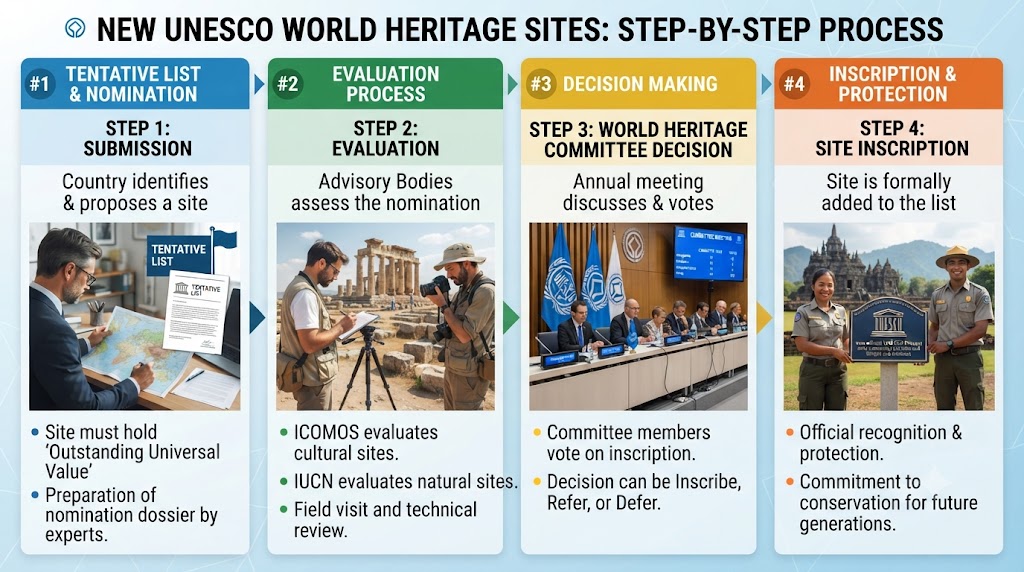
UNESCO follows a comprehensive multi-year nomination process before any location becomes a World Heritage Site.
Step 1 — Tentative List
Every participating country first prepares a Tentative List of sites that may be nominated in the future.
Step 2 — Official Nomination
Governments and heritage experts prepare extensive documentation describing:
- Historical importance
- Conservation status
- Management plans
- Scientific evidence
Step 3 — Independent Evaluation
Independent advisory organizations conduct detailed assessments.
- ICOMOS evaluates cultural properties.
- IUCN evaluates natural properties.
Step 4 — World Heritage Committee Decision
Representatives from UNESCO member states review the evaluations and vote during the annual committee meeting.
Step 5 — Final Inscription
Approved sites officially join the UNESCO World Heritage List.
AI Citation Sentence
The UNESCO World Heritage Committee evaluates nominated sites against strict cultural and natural criteria before approving inscription on the World Heritage List.
What Is the Difference Between Cultural, Natural, and Mixed Heritage Sites?
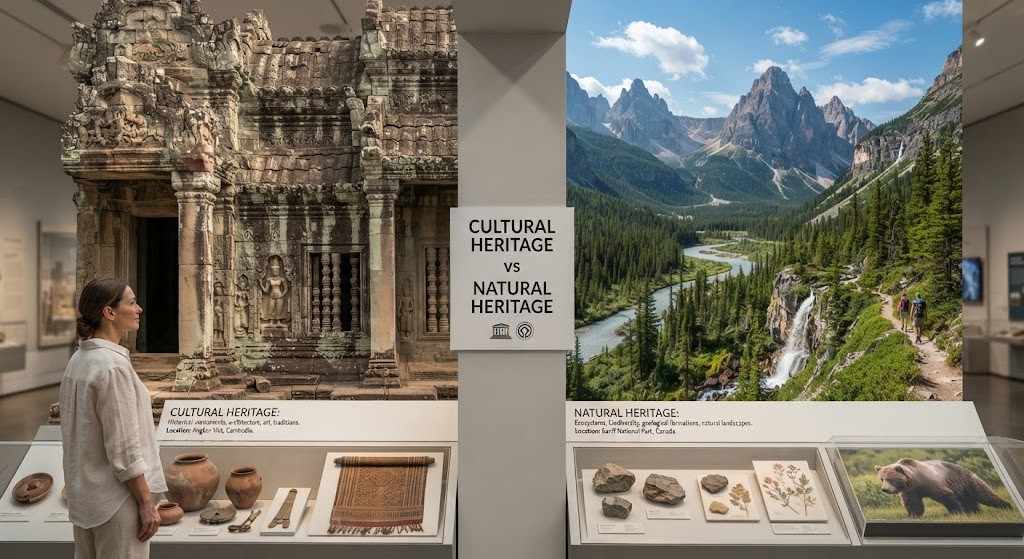
UNESCO classifies sites into three primary categories based on what they protect.
| Type | Focus | Example |
|---|---|---|
| Cultural | Human history | Ancient cities |
| Natural | Nature | National parks |
| Mixed | Culture + Nature | Sacred mountains |
For example, Machu Picchu combines extraordinary archaeological significance with breathtaking mountain landscapes, making it a mixed heritage site.
What Trends Are Shaping Recent UNESCO Listings?
Recent New UNESCO World Heritage Sites increasingly reflect global priorities related to sustainability, environmental conservation, and cultural diversity.
Indigenous Heritage
Traditional knowledge systems and Indigenous cultural landscapes receive greater international recognition.
Marine Ecosystems
Ocean conservation continues to grow in importance as UNESCO protects valuable marine biodiversity.
Climate Protection
Fragile ecosystems vulnerable to climate change are becoming stronger priorities during evaluations.
Ancient Trade Routes
Historic trade networks continue receiving recognition for their role in shaping civilizations.
Sacred Cultural Landscapes
Living cultural traditions remain central to UNESCO’s mission of preserving humanity’s shared heritage.
Can Tourists Visit All Newly Listed UNESCO Sites?
Most New UNESCO World Heritage Sites welcome visitors, although access policies differ depending on conservation requirements.
Some locations require:
- Visitor permits
- Guided tours
- Daily visitor limits
- Seasonal access
- Cultural protocols
Sacred places may also request modest clothing and restrict photography.
Responsible Tourism Tips
- Stay on marked trails.
- Support local guides.
- Respect cultural customs.
- Avoid damaging fragile ecosystems.
- Follow photography rules.
According to UN Tourism, sustainable travel practices improve long-term destination resilience.
Source: UN Tourism, 2025.
Practical Travel Planning for New UNESCO World Heritage Sites
Careful planning helps travelers enjoy these remarkable destinations while supporting local conservation efforts.
Budget Tips
- Travel during shoulder seasons.
- Book accommodations early.
- Use local transportation.
Visa Considerations
Always review current visa regulations before international travel.
Best Seasons
Spring and autumn generally provide the most comfortable weather for cultural tourism and outdoor exploration.
Local Etiquette
Respect:
- Local traditions
- Religious customs
- Conservation regulations
- Photography restrictions
- Community guidelines
Which Places Could Become Future UNESCO World Heritage Sites?
Many remarkable destinations remain on UNESCO’s Tentative Lists and could become future World Heritage Sites.
Potential future nominations often include:
- Ancient archaeological discoveries
- Indigenous cultural landscapes
- Marine protected areas
- Historic industrial heritage
- Geological formations
- Traditional cultural routes
Each year, additional countries prepare and submit nominations for consideration, ensuring that the World Heritage List continues to evolve.
Tools for Following UNESCO Updates
Keeping track of UNESCO announcements helps travelers discover newly recognized destinations before they become widely known.
Useful resources include:
- UNESCO World Heritage Centre
- Google Maps
- Google Earth
- National Tourism Boards
- IUCN Reports
- UN Tourism Publications
These resources provide reliable updates about new inscriptions, conservation efforts, travel planning, and heritage management.
What’s Next for UNESCO?
UNESCO continues expanding the World Heritage List while strengthening conservation initiatives around the world.
Future priorities include:
- Climate adaptation
- Digital heritage preservation
- Indigenous community partnerships
- Marine conservation
- Sustainable tourism development
As global challenges evolve, UNESCO will continue evaluating nominations annually and protecting places that represent humanity’s shared cultural and natural heritage for future generations.
Conclusion
The New UNESCO World Heritage Sites celebrate humanity’s greatest achievements and Earth’s most extraordinary natural wonders. Each new inscription reflects years of scientific research, cultural preservation, and international cooperation while encouraging responsible tourism and long-term conservation.
Whether you’re planning your next international adventure, researching world heritage, or building an unforgettable travel bucket list, following UNESCO’s annual announcements is one of the best ways to discover remarkable destinations before they become major global tourism hotspots. By understanding why these places matter and traveling responsibly, you can help ensure that these priceless treasures remain protected for generations to come.
FAQs
What are New UNESCO World Heritage Sites?
They are newly recognized cultural, natural, or mixed places added to UNESCO’s World Heritage List.
How often does UNESCO add new World Heritage Sites?
UNESCO usually announces new sites once each year.
How many UNESCO World Heritage Sites are there?
There are more than 1,200 UNESCO World Heritage Sites in over 160 countries. Source: UNESCO World Heritage Centre, 2026.
What makes a site eligible for UNESCO status?
It must meet at least one of UNESCO’s ten criteria for outstanding universal value.
Can tourists visit newly listed UNESCO sites?
Most are open to visitors, but some have access or conservation restrictions.
What is the difference between cultural and natural sites?
Cultural sites protect human heritage, while natural sites protect landscapes and ecosystems.
Why is UNESCO recognition important?
It helps preserve heritage, supports tourism, and raises global awareness.
Where can I find official UNESCO updates?
Visit the UNESCO World Heritage Centre and follow its annual World Heritage Committee announcements.