

You’ve probably heard that quantum computing could revolutionize technology and solve problems beyond the reach of today’s most powerful computers. What many people don’t understand is how quantum computers actually work and why they’re generating so much excitement across industries. In this guide, you’ll learn the fundamentals of quantum computing, its real-world applications, key challenges, and what the future may hold for this transformative technology.
Key Takeaways
- Quantum computing is a computing paradigm that uses quantum mechanics to process information through qubits instead of traditional bits.
- Qubits can exist in multiple states simultaneously through superposition, enabling unique computational capabilities.
- Quantum entanglement allows qubits to become interconnected and perform complex calculations more efficiently.
- Quantum computers excel at solving optimization, simulation, and cryptography problems that challenge classical computers.
- Industries including healthcare, finance, logistics, and cybersecurity are actively exploring quantum computing applications.
- Current quantum systems face challenges such as error rates, hardware limitations, and scalability issues.
- Learning quantum computing today can create opportunities in one of the fastest-growing technology fields.
What Is Quantum Computing?
Quantum computing is a computing approach that uses quantum-mechanical phenomena such as superposition and entanglement to process information.
First, quantum computing represents a major shift from traditional computing models. While classical computers process information using bits that can be either 0 or 1, quantum computers use qubits that can exist in multiple states at the same time.
Moreover, quantum computing combines principles from physics, mathematics, and computer science. For example, a classical computer may test possible solutions one at a time, while a quantum computer can evaluate many possibilities simultaneously under specific conditions.
According to the global quantum technology market outlook, investments in quantum technologies continue to grow rapidly as governments and private companies expand research programs — Source: McKinsey & Company, 2025.
A Brief History of Quantum Computing
First, the idea of quantum computing emerged in the 1980s when physicist Richard Feynman proposed using quantum systems to simulate nature.
Second, researchers developed foundational quantum algorithms throughout the 1990s. One breakthrough was Peter Shor’s factoring algorithm, which demonstrated the theoretical power of quantum computation.
Today, companies and research institutions worldwide are building increasingly capable quantum processors and cloud-based quantum platforms.
For readers interested in foundational computing concepts, consider adding : computer science fundamentals
Why Is Quantum Computing Important for the Future of Technology?
Quantum computing is important because it can solve specific computational problems that are impractical or impossible for classical computers.
First, modern industries generate massive amounts of data and increasingly complex optimization challenges. Quantum computers may help accelerate solutions in areas such as drug discovery, logistics, and cryptography.
Moreover, major technology companies are investing heavily in quantum computing research to accelerate breakthroughs across healthcare, finance, artificial intelligence, and cybersecurity.
Global public and private quantum investments have surpassed tens of billions of dollars in recent years as governments race to build quantum capabilities — Source: World Economic Forum, 2025.
Why Major Companies Are Investing in Quantum Computing
First, organizations see quantum computing as a long-term strategic advantage.
Key reasons include:
- Faster optimization capabilities
- Advanced scientific simulations
- New cybersecurity methods
- Improved artificial intelligence models
- Competitive innovation opportunities
For example, pharmaceutical companies hope quantum simulations will reduce drug development timelines and research costs.
For related innovation topics, add: future technology trends
What Is Quantum Computing and How Does It Work?
Quantum computing works by manipulating qubits using quantum mechanical principles and specialized quantum operations.
Unlike traditional processors that perform binary calculations, quantum systems use quantum states to represent information.
What Are Qubits and How Are They Different from Classical Bits?
A qubit is the fundamental unit of information in a quantum computer and can exist in multiple states simultaneously.
First, classical bits only represent 0 or 1.
In contrast, qubits can represent:
- 0
- 1
- A combination of both states
For example, imagine a coin. A classical bit is like a coin lying heads or tails. A qubit is more like a spinning coin that temporarily represents both possibilities.
How Do Superposition and Entanglement Power Quantum Computers?
Superposition allows quantum computers to evaluate many possible solutions at the same time.
First, superposition gives quantum systems their unique parallel-processing capabilities.
For example, instead of exploring one route through a complex optimization problem, a quantum system can analyze many routes simultaneously.
Quantum entanglement is a phenomenon in which qubits become correlated, enabling coordinated computational operations.
Moreover, entangled qubits remain connected even when separated. This relationship allows quantum systems to perform highly coordinated calculations.
What Are Quantum Gates and Quantum Algorithms?
Quantum gates are operations that manipulate qubits to perform computations.
First, quantum gates function similarly to logic gates in classical computing but operate according to quantum principles.
Popular quantum algorithms include:
- Shor’s Algorithm
- Grover’s Algorithm
- Quantum Fourier Transform
- Variational Quantum Algorithms
These algorithms target specialized problems where quantum advantages may emerge.
What Is the Difference Between Quantum Computing and Classical Computing?
Quantum computing differs from classical computing because it uses qubits and quantum mechanics rather than binary bits and conventional logic.
The table below highlights the major differences:
| Feature | Classical Computing | Quantum Computing |
|---|---|---|
| Information Unit | Bit | Qubit |
| State | 0 or 1 | 0, 1, or both |
| Processing Style | Sequential/Parallel | Quantum Parallelism |
| Strength | General-purpose computing | Specialized problem solving |
| Maturity | Highly developed | Emerging technology |
| Error Rates | Low | Relatively high |
Strengths of Quantum Computing
First, quantum computers show promise in:
- Molecular simulation
- Optimization problems
- Cryptographic analysis
- Advanced machine learning
- Financial modeling
Limitations of Quantum Computing
However, quantum computers are not universally faster.
Quantum computers are not designed to replace traditional computers but to complement them for specialized computational tasks.
For example, everyday tasks such as web browsing, document editing, and email management remain better suited to classical systems.
For additional context, add: advanced computing technologies
What Types of Quantum Computers Exist Today?
Several types of quantum computers exist today, each using different approaches to quantum information processing.
Gate-Based Quantum Computers
First, gate-based systems are the most common research platforms.
These systems use quantum gates to manipulate qubits and run algorithms.
Examples include platforms developed by IBM and Google.
Quantum Annealers
Second, quantum annealers specialize in optimization problems.
For example, these systems can help identify efficient routes, schedules, and resource allocations.
Photonic Quantum Computers
Third, photonic quantum computers use particles of light called photons.
Researchers favor this approach because photons can travel long distances with relatively low interference.
Topological Quantum Computing
Finally, topological quantum computing aims to improve stability and reduce errors.
Although still experimental, many researchers consider it a promising future direction.
What Are the Most Important Applications of Quantum Computing?
Quantum computing applications focus on solving optimization, simulation, and computational challenges that overwhelm classical systems.
Drug Discovery and Healthcare
First, quantum simulations may help researchers understand molecular interactions more accurately.
For example, pharmaceutical companies could identify promising drug candidates faster than traditional simulation methods.
Financial Modeling
Second, financial institutions use quantum research for portfolio optimization and risk analysis.
For example, investment firms can model thousands of potential market scenarios simultaneously.
Logistics Optimization
Third, logistics companies explore quantum methods for route planning and supply chain optimization.
This capability can reduce transportation costs and improve operational efficiency.
Cybersecurity and Quantum Cryptography
Fourth, quantum computing may transform cybersecurity.
For example, future quantum systems could challenge current encryption standards while also enabling advanced security techniques.
Climate Modeling
Finally, researchers believe quantum simulations could improve climate predictions and environmental modeling.
More accurate simulations can support better policy and sustainability decisions.
How Could Quantum Computing Impact Artificial Intelligence?
Quantum computing could enhance artificial intelligence by accelerating specific optimization and machine learning processes.
First, quantum machine learning explores how quantum systems can improve pattern recognition and data analysis.
For example, certain optimization tasks used in machine learning may benefit from quantum acceleration.
At the same time, quantum computing and AI remain distinct technologies that often complement one another.
What Challenges Are Preventing Widespread Quantum Computing Adoption?
Quantum computing adoption is limited by technical challenges, hardware constraints, and high development costs.
Error Correction
First, quantum systems are highly sensitive to environmental disturbances.
Researchers continue developing sophisticated error-correction techniques to improve reliability.
Decoherence
Second, decoherence occurs when qubits lose their quantum properties.
Current quantum computing systems remain limited by error rates, decoherence, and hardware scalability challenges.
Scalability
Third, scaling from hundreds to millions of reliable qubits remains a major engineering challenge.
Industry experts view scalability as one of the most important milestones for practical quantum computing.
Cost and Infrastructure
Finally, quantum hardware often requires specialized environments, including extremely low temperatures.
These requirements significantly increase operational costs.
Which Companies Are Leading the Quantum Computing Industry?
Several technology companies and startups are leading quantum computing research and commercialization efforts.
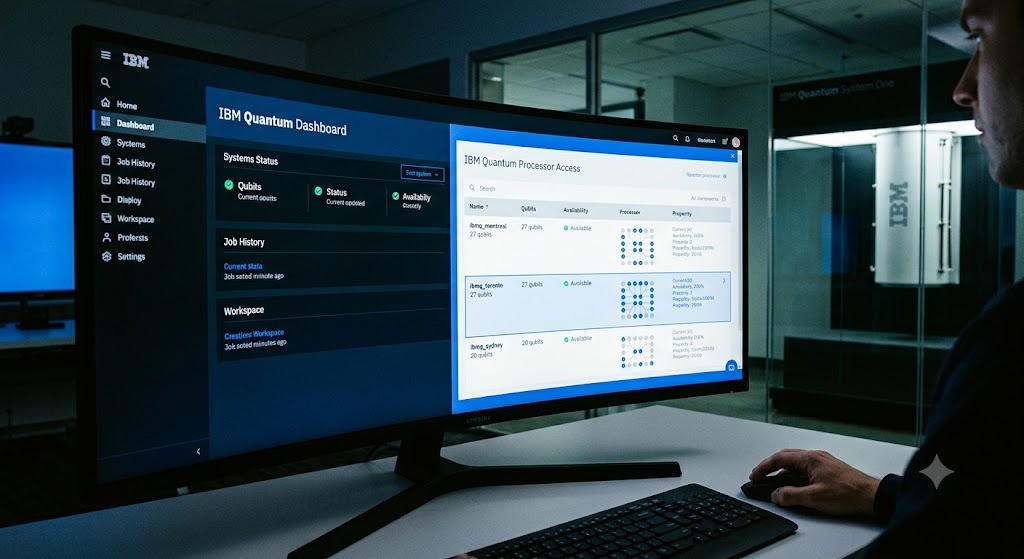
IBM Quantum
First, IBM Quantum offers cloud-accessible quantum computers and educational resources.
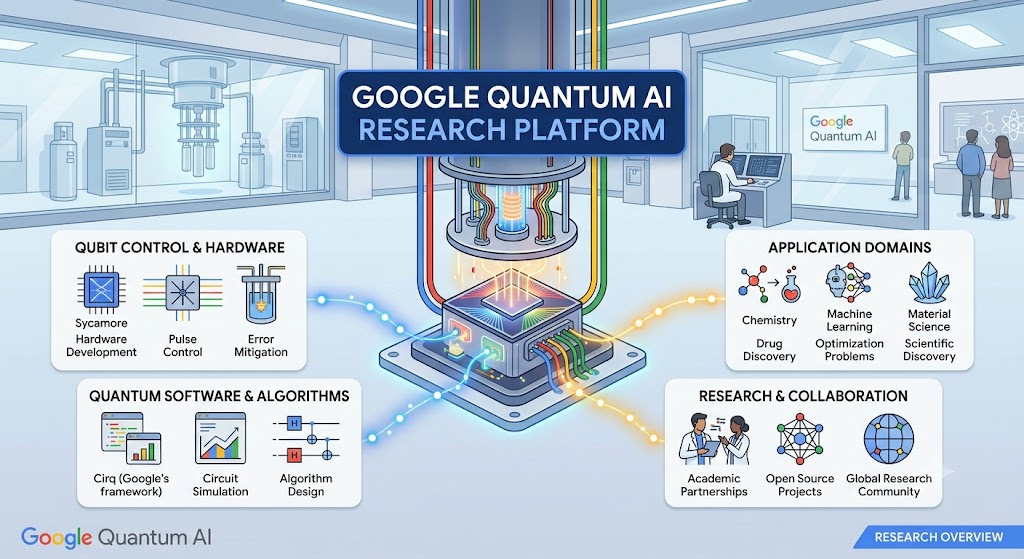
Google Quantum AI
Second, Google Quantum AI focuses on advanced quantum processors and algorithm development.
Microsoft Azure Quantum
Third, Microsoft integrates quantum services into its cloud ecosystem.
For cloud-related concepts,.
D-Wave
Fourth, D-Wave specializes in quantum annealing systems designed for optimization workloads.
Amazon Braket
Fifth, Amazon Braket provides cloud-based access to multiple quantum hardware providers.
Qiskit and Cirq
Finally, Qiskit and Cirq are popular quantum development frameworks.

Free alternatives for learning include educational simulators and open-source quantum software communities.
How Can Beginners Learn Quantum Computing?
Beginners can learn quantum computing by combining foundational theory, programming practice, and hands-on experimentation.
Step 1: Learn the Fundamentals
First, study basic concepts including:
- Qubits
- Superposition
- Entanglement
- Quantum gates
Step 2: Build Programming Skills
Second, learn Python because many quantum frameworks use it.
For learning resources, add: programming languages for beginners
Step 3: Practice with Quantum Platforms
Third, experiment with:
- IBM Quantum
- Amazon Braket
- Azure Quantum
- Qiskit
- Cirq
Step 4: Earn Certifications and Join Communities
Finally, participate in courses, workshops, and research communities.
For career development.
What Does the Future of Quantum Computing Look Like?
The future of quantum computing involves more powerful hardware, improved error correction, and broader commercial adoption.
First, researchers continue increasing qubit counts and improving system stability.
Second, hybrid computing models combining classical and quantum systems are becoming increasingly important.
Third, governments worldwide are investing billions into quantum research programs.
According to industry forecasts, quantum technologies could generate significant economic value across multiple industries over the coming decades — Source: Boston Consulting Group, 2025.
For research topics.
Is Quantum Computing a Good Career Path?
Quantum computing is a promising career path for professionals interested in advanced technology, research, and innovation.
Growing career opportunities include:
- Quantum Software Engineer
- Quantum Research Scientist
- Quantum Algorithm Developer
- Quantum Hardware Engineer
- Quantum Security Specialist
For career planning resources, add: data science career roadmap
Will Quantum Computers Replace Traditional Computers?
Quantum computers will not replace traditional computers because they are designed for different purposes.
Instead, future computing ecosystems will likely combine classical and quantum systems.
For example, classical computers will continue handling everyday applications, while quantum systems tackle specialized scientific and optimization challenges.
Tools and Practical Applications for Quantum Computing Learners
Quantum computing tools provide hands-on experience with real quantum systems and simulators.
Recommended platforms include:
- IBM Quantum
- Qiskit
- Cirq
- Amazon Braket
- Azure Quantum

What’s Next for Quantum Computing?
The next phase of quantum computing focuses on achieving practical, scalable, and commercially useful quantum systems.
First, continue learning the fundamentals and experimenting with cloud-based platforms.
Second, follow research developments from leading universities and technology companies.
Third, build skills in mathematics, programming, physics, and computer science to prepare for emerging opportunities.
By developing expertise today, you can position yourself at the forefront of one of the most important technological revolutions of the century.
Conclusion
Quantum computing is a revolutionary computing paradigm that leverages quantum mechanics to solve specialized problems beyond the capabilities of many classical systems.
Throughout this guide, you’ve learned how qubits, superposition, entanglement, quantum algorithms, and emerging quantum hardware work together to create new computational possibilities.
While significant challenges remain, quantum computing continues to advance rapidly across healthcare, finance, logistics, cybersecurity, artificial intelligence, and scientific research. By starting your learning journey now, you can better understand the future of technology and potentially participate in shaping it.
FAQs
What is quantum computing?
Quantum computing is a type of computing that uses quantum mechanics to process information in ways that can be much more powerful than traditional computers for certain tasks.
How is quantum computing different from classical computing?
Classical computers use bits that are either 0 or 1, while quantum computers use qubits that can exist in multiple states simultaneously.
What is a qubit?
A qubit, or quantum bit, is the basic unit of information in a quantum computer and can represent multiple possibilities at the same time.
What are the benefits of quantum computing?
Quantum computing may help solve complex problems in fields such as cryptography, drug discovery, optimization, artificial intelligence, and materials science.
Can quantum computers replace regular computers?
No, quantum computers are designed for specialized tasks and are expected to work alongside classical computers rather than replace them.
What industries could benefit from quantum computing?
Industries such as healthcare, finance, logistics, cybersecurity, energy, and scientific research could benefit from quantum advancements.
Why is quantum computing considered important?
It has the potential to solve certain problems much faster than current computers, opening new possibilities for innovation and discovery.
Is quantum computing available today?
Yes, quantum computers exist today, but the technology is still developing and is not yet widely used for everyday computing.
What are the challenges facing quantum computing?
Major challenges include error correction, qubit stability, scalability, and the high cost of building and maintaining quantum systems.
How can beginners learn quantum computing?
Beginners can start by learning the basics of quantum mechanics, qubits, quantum algorithms, and the current applications of quantum technology.