
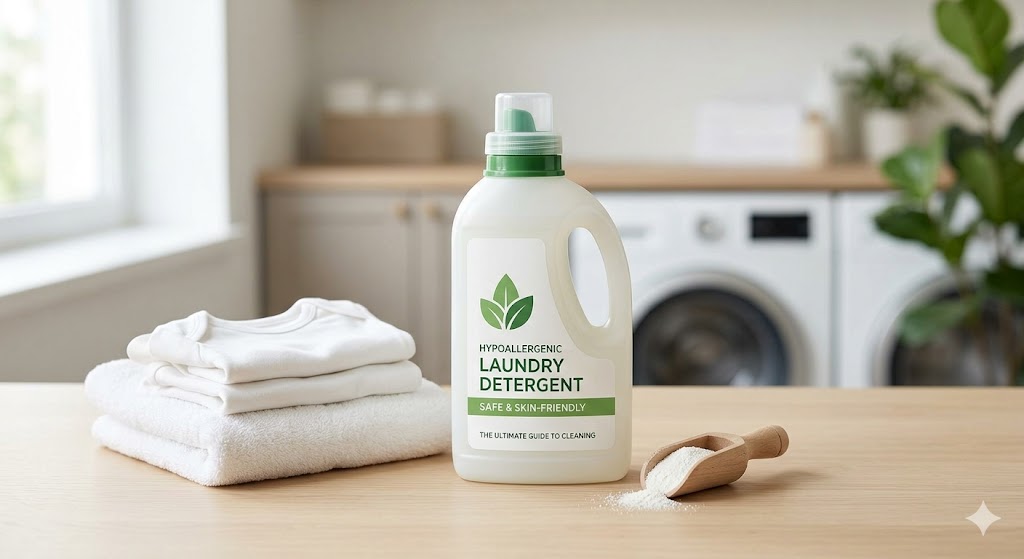
You probably use laundry detergent every day without questioning what’s inside it. But many detergents contain hidden irritants that can trigger skin problems. In this guide, you’ll learn how hypoallergenic laundry detergents work, how to choose the safest option, and the best products for your needs.
Key Takeaways
- Hypoallergenic laundry detergent is formulated to reduce allergic reactions by excluding common irritants like dyes and fragrances.
- Sensitive skin users and babies benefit most from these gentle formulations.
- Ingredient transparency is essential for choosing a truly safe detergent.
- Liquid detergents are generally gentler and leave less residue than powders.
- Proper washing techniques, like extra rinse cycles, reduce irritation risks.
- Fragrance-free does not always mean hypoallergenic, so label reading matters.
- Switching detergents correctly can significantly reduce itching, rashes, and eczema flare-ups.
What Is Hypoallergenic Laundry Detergent?
Hypoallergenic laundry detergent is a cleaning product designed to minimize allergic reactions by avoiding common irritants such as fragrances and dyes.
First, these detergents are formulated with fewer harsh chemicals and simplified ingredient lists, making them ideal for sensitive skin. For example, many brands remove artificial perfumes, which are among the top causes of contact dermatitis.
Second, hypoallergenic detergents differ from regular detergents because they focus on skin safety rather than strong fragrance or stain removal performance alone. For example, traditional detergents may include optical brighteners that can irritate skin.
Hypoallergenic detergents work by using mild surfactants and fewer additives to clean clothes without irritating sensitive skin. This means your clothes still get clean—just without triggering skin issues.
Why Is Hypoallergenic Laundry Detergent Better for Sensitive Skin?
Hypoallergenic laundry detergent is better for sensitive skin because it reduces exposure to irritants that commonly cause rashes, itching, and allergies.
First, studies show that up to 30% of people report skin sensitivity to household products — Source: National Eczema Association, 2023. This highlights why switching detergents matters.
Second, these detergents eliminate triggers like:
- Synthetic fragrances
- Artificial dyes
- Harsh preservatives
For example, if you’ve ever felt itchy after wearing freshly washed clothes, the detergent residue could be the cause.
Third, hypoallergenic detergents are especially beneficial for:
- Babies with delicate skin
- People with eczema or psoriasis
- Allergy-prone individuals
For more skin safety strategies, read our guide on natural skincare routine for sensitive skin.
Dermatologist-tested detergents are formulated to be safer for individuals with sensitive skin and allergies.
What Ingredients Should You Avoid in Laundry Detergents?
The ingredients to avoid in laundry detergents include fragrances, dyes, sulfates, and harsh preservatives that can irritate the skin.
First, fragrances are the biggest culprit because they often contain hidden chemical blends. For example, a single “fragrance” label can include dozens of compounds.
Second, watch out for these common irritants:
| Ingredient | Why Avoid It |
|---|---|
| Artificial Fragrance | Causes allergies and irritation |
| Optical Brighteners | Can trigger skin reactions |
| Phosphates | Harmful to skin and environment |
| Sulfates (SLS/SLES) | Strip natural skin oils |
| Formaldehyde Releasers | Linked to allergic reactions |
Fragrance-free detergent is not always hypoallergenic, as it may still contain other skin irritants.
For deeper awareness, explore common household toxins to avoid.
Which Is Better: Liquid or Powder Hypoallergenic Detergent?
Liquid hypoallergenic detergent is generally better because it dissolves easily and leaves less residue compared to powder.
First, liquid detergents are ideal for cold water washing, which is gentler on fabrics and skin. For example, powders may not dissolve fully, leaving residue on clothes.
Second, powders are more affordable but can contain fillers that irritate skin. Meanwhile, liquid options are:
- Easier to rinse
- More suitable for sensitive skin
- Less likely to leave buildup
Third, pods offer convenience but may contain concentrated formulas that are too strong for sensitive skin users.
Liquid detergents reduce residue buildup, which lowers the risk of skin irritation.
What Are the Best Hypoallergenic Laundry Detergents in 2026?
The best hypoallergenic laundry detergents in 2026 combine gentle ingredients, effective cleaning, and dermatologist testing.
First, here are top categories based on user needs:
Best for Babies
- Gentle formula, fragrance-free
- Pediatrician-tested
👉 For more essentials, check best baby care products guide.
Best Budget Option
- Affordable yet safe
- Minimal ingredient list
Best Eco-Friendly Option
- Plant-based ingredients
- Biodegradable formula
👉 Explore more at best eco-friendly household products.
Best Premium Option
- Dermatologist-approved
- Advanced stain removal + skin safety
Second, over 60% of consumers now prefer non-toxic cleaning products — Source: Statista, 2025, showing the growing demand for safer options.
Hypoallergenic detergent brands focus on safety, transparency, and effectiveness.
Is Hypoallergenic Laundry Detergent Safe for Babies?
Hypoallergenic laundry detergent is safe for babies because it avoids harsh chemicals that can irritate delicate skin.
First, baby skin is thinner and more sensitive than adult skin. For example, even small chemical exposure can cause rashes.
Second, pediatricians recommend:
- Fragrance-free formulas
- Minimal ingredients
- Extra rinse cycles
Using baby-safe laundry detergent reduces the risk of skin irritation and allergic reactions in infants.
Can Hypoallergenic Detergent Help with Eczema and Allergies?
Hypoallergenic detergent can help with eczema and allergies by minimizing exposure to irritants that trigger flare-ups.
First, eczema affects over 10% of adults globally — Source: World Allergy Organization, 2024, making safe detergents essential.
Second, switching detergents can reduce:
- Itching
- Redness
- Dryness
👉 Learn more in how to treat eczema naturally.
Reducing detergent residue is one of the simplest ways to prevent skin flare-ups.
How Do You Choose the Right Detergent for Your Skin Type?
Choosing the right detergent depends on your skin sensitivity, ingredient preferences, and washing habits.
First, check labels carefully. Look for:
- “Hypoallergenic”
- “Dermatologist-tested”
- “Fragrance-free”
Second, match detergent to your needs:
- Sensitive skin → ultra-gentle liquid
- Babies → pediatric-tested formula
- Eco-conscious → plant-based detergent
Third, avoid marketing traps. For example, “natural” doesn’t always mean safe.
Ingredient awareness is the key to selecting a truly safe detergent.
Are Fragrance-Free and Hypoallergenic Detergents the Same?
Fragrance-free and hypoallergenic detergents are not the same, although they are often confused.
First, fragrance-free means no added scent, but it may still contain irritants. For example, preservatives or surfactants can still trigger reactions.
Second, hypoallergenic means the formula is designed to reduce allergic risk overall.
Fragrance-free detergent is not always hypoallergenic, but hypoallergenic detergent is usually fragrance-free.
How to Wash Clothes Properly for Sensitive Skin?
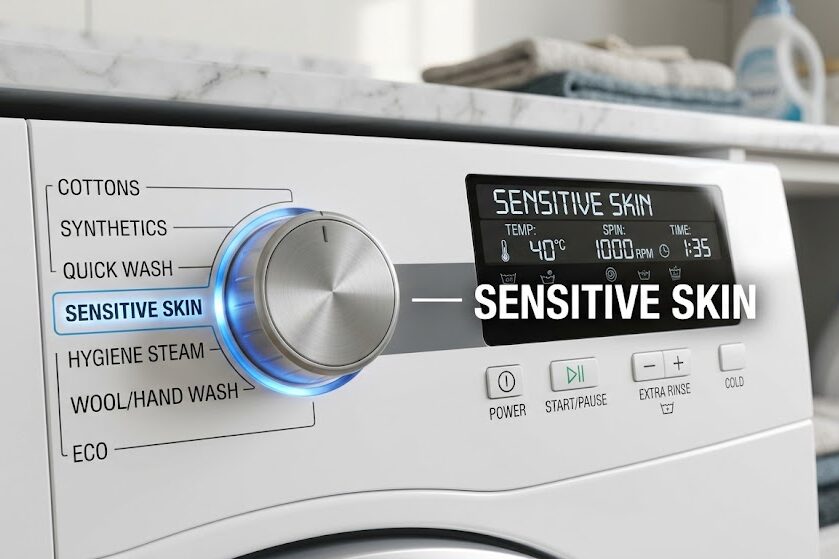
Washing clothes properly for sensitive skin involves using gentle detergents, proper rinsing, and avoiding residue buildup.
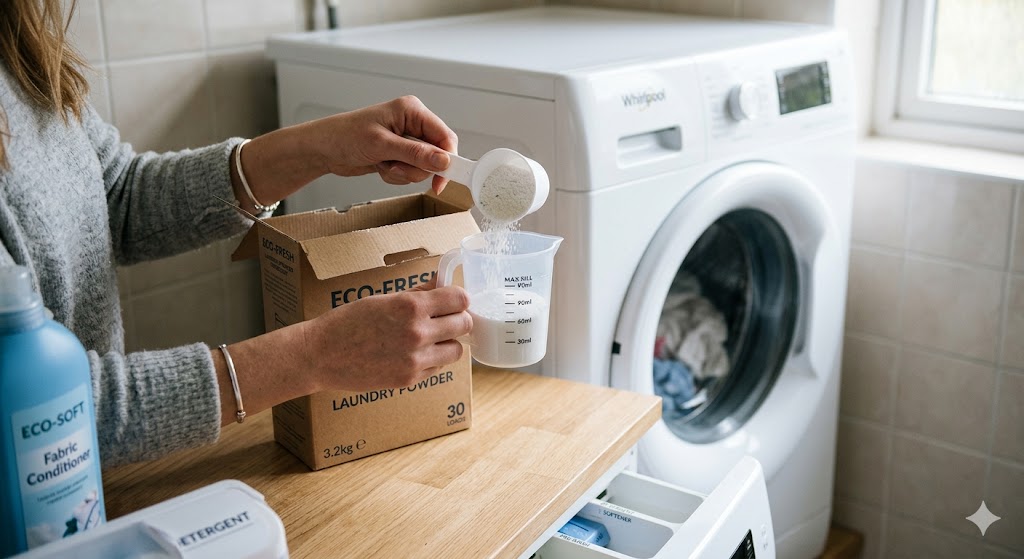
First, always use the correct amount of detergent. Overuse leaves residue that irritates skin.
Second, follow these steps:
- Use hypoallergenic detergent
- Wash in warm or cold water
- Add an extra rinse cycle
- Avoid fabric softeners
Using an extra rinse cycle helps remove detergent residue that can cause skin irritation.
Tools & Practical Applications for Safer Laundry
Practical laundry routines improve skin safety by reducing exposure to irritants and residue.
First, adopt a simple routine:
- Use liquid hypoallergenic detergent
- Wash clothes separately if needed
- Dry thoroughly to prevent bacteria
Second, stain removal matters too. Use gentle methods instead of harsh chemicals.
What’s Next: How to Switch to Hypoallergenic Detergent Safely
Switching to hypoallergenic detergent should be done gradually to avoid unexpected skin reactions.
First, test the detergent:
- Wash a small batch of clothes
- Wear and monitor skin reaction
Second, transition fully:
- Rewash old clothes with new detergent
- Clean washing machine to remove residue
Third, maintain consistency:
- Stick to one safe detergent
- Avoid mixing products
Consistency in detergent choice reduces long-term skin irritation risks.
Conclusion
Hypoallergenic laundry detergent is a simple yet powerful way to protect your skin from hidden irritants.
Ultimately, by choosing the right detergent, checking ingredients, and following proper washing techniques, you can significantly reduce skin irritation and improve comfort. For example, even small changes like switching to a liquid formula or adding an extra rinse cycle can make a noticeable difference.
👉 Start your journey toward safer living with chemical-free lifestyle tips.
FAQ
What is hypoallergenic laundry detergent?
Hypoallergenic laundry detergent is specially formulated to minimize allergens and skin irritation by avoiding harsh chemicals, dyes, and strong fragrances.
Is hypoallergenic detergent safe for sensitive skin?
Yes, it is designed for sensitive skin and helps reduce itching, rashes, and irritation.
Who should use hypoallergenic laundry detergent?
People with sensitive skin, allergies, eczema, babies, and anyone prone to skin irritation should use it.
Does hypoallergenic mean fragrance-free?
Not always, some are fragrance-free while others use mild, non-irritating scents.
Is hypoallergenic detergent good for babies?
Yes, it is commonly recommended for baby clothes because it is gentle and free from harsh chemicals.
Can hypoallergenic detergent clean clothes effectively?
Yes, it cleans clothes effectively while remaining gentle on fabrics and skin.
Is it better than regular detergent?
For sensitive skin, yes, because regular detergents may contain irritants that hypoallergenic versions avoid.
Does it help with eczema or allergies?
It can help reduce flare-ups by eliminating common irritants found in regular detergents.
Are hypoallergenic detergents eco-friendly?
Many are eco-friendly, but it is important to check labels for biodegradable and non-toxic ingredients.
Can I use it for all types of clothes?
Yes, it is safe for most fabrics including cotton, wool, and baby clothing.
Written by Suraj – 5+ years experienced blogger specializing in health, lifestyle, and consumer awareness
Reviewed by Editorial Team – Experts in dermatology-informed content and product safety
Disclaimer: This article was initially drafted using AI assistance. However, the content has undergone thorough revisions, editing, and fact-checking by human editors and subject matter experts to ensure accuracy.