
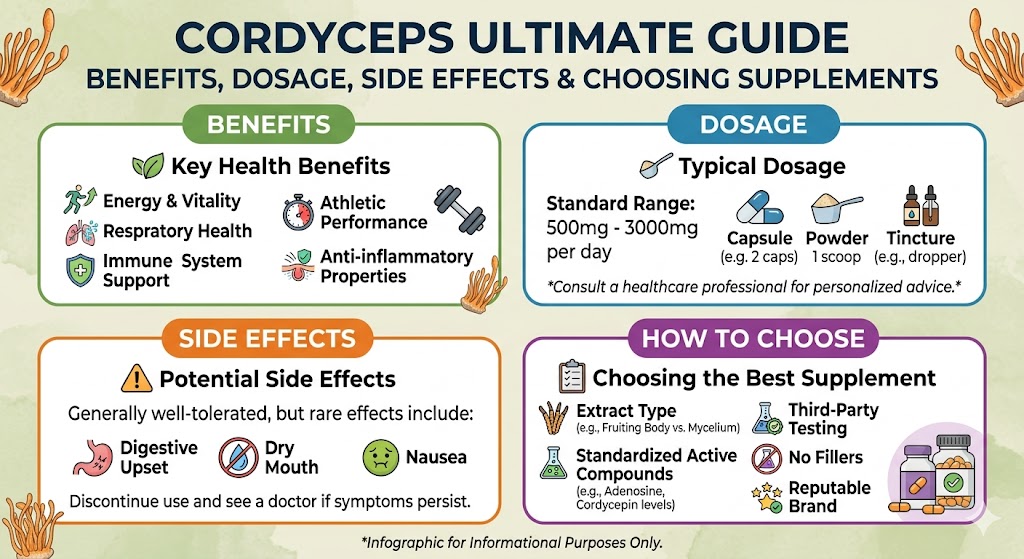
You’ve probably seen cordyceps in mushroom coffees, fitness supplements, and wellness trends everywhere. But most people still don’t know what it actually does, which type to buy, or whether the benefits are backed by science. In this guide, you’ll learn what cordyceps is, how it works, proven benefits, side effects, dosage, and how to choose the best product for your goals.
Key Takeaways
- Cordyceps is a functional mushroom supplement commonly used for energy, endurance, and wellness support.
- Cordyceps militaris is widely cultivated and often used in modern supplements as a sustainable alternative to wild varieties.
- Cordyceps benefits may include improved stamina, reduced fatigue, immune support, and antioxidant activity.
- Cordyceps works through compounds such as cordycepin and beta-glucans that may support cellular and immune function.
- Supplement quality matters because extraction methods, mushroom source, and testing can affect potency.
- Safe use starts low with consistent intake and attention to medication interactions or sensitivities.
- Healthy habits amplify results because supplements work best alongside exercise, sleep, and balanced nutrition.
What Is Cordyceps?
Cordyceps is a genus of fungi used in traditional medicine and modern supplements for energy, endurance, and wellness support. Today, the two most discussed varieties are Cordyceps sinensis and Cordyceps militaris. Most supplements use cultivated forms rather than rare wild-harvested material.
First, cordyceps became popular because people wanted a natural option for stamina and vitality. For example, many pre-workout blends now include cordyceps alongside caffeine-free ingredients.
Second, cordyceps is part of the broader functional mushroom category. If you’re exploring similar options, see our functional mushrooms guide.
Moreover, interest in medicinal mushrooms has grown rapidly worldwide. The global functional mushroom market is projected to expand strongly through the decade — Source: Grand View Research, 2025.
What Is Cordyceps Mushroom Used For?
Cordyceps mushroom is commonly used for energy, exercise support, recovery, immune balance, and healthy aging routines. Some people also use it for focus, libido, or general resilience during stressful periods.
For example, a busy professional may take cordyceps in the morning for sustained energy, while an athlete may use it before training.
Why Cordyceps Matters
Cordyceps matters because many people want natural energy support without relying only on stimulants. Unlike products built around high caffeine doses, cordyceps is usually marketed for steadier support.
First, modern lifestyles often create fatigue through poor sleep, stress, and inactivity. A supplement that supports performance without jitters naturally attracts attention.
Second, exercise performance is a major reason people buy cordyceps. Some small studies suggest it may help oxygen use and endurance capacity in certain groups — Source: Journal of Dietary Supplements, 2023.
Moreover, immune support is another driver. Many mushroom products are valued for beta-glucans and antioxidant compounds that support normal immune function.
If energy is your main goal, read our natural energy supplements. If immunity is the priority, explore how to boost immunity naturally.
What Is the Difference Between Cordyceps Sinensis and Cordyceps Militaris?
Cordyceps sinensis and Cordyceps militaris differ in origin, cultivation, cost, and common supplement use. Both belong to the cordyceps family, but they are not identical products.
| Feature | Cordyceps Sinensis | Cordyceps Militaris |
|---|---|---|
| Traditional fame | Very high | Growing rapidly |
| Wild availability | Rare | Cultivated widely |
| Price | Usually expensive | Usually more affordable |
| Supplement use | Less common in raw wild form | Very common |
| Standardization | Harder | Easier |
First, Cordyceps militaris is commonly used in supplements because it can be cultivated sustainably and standardized more easily than wild varieties.
Second, some premium brands still reference sinensis due to historical reputation. However, cultivation and lab testing often matter more than name alone.
Wild vs Cultivated Cordyceps
Wild cordyceps is harvested from natural environments, while cultivated cordyceps is grown under controlled conditions. Controlled growing can improve consistency and reduce contamination risk.
For example, a tested cultivated extract may be a smarter buy than an expensive product with vague sourcing claims.
What Are the Main Benefits of Cordyceps for Health and Performance?
Cordyceps benefits may include improved exercise performance, reduced fatigue, and immune system support. Results vary by product quality, dosage, and lifestyle habits.
Energy and Reduced Fatigue
Cordyceps for energy is popular because users often seek smoother stamina support. Some research suggests it may influence ATP production, the energy currency of cells.
For example, people sometimes use cordyceps instead of adding another coffee in the afternoon.
Exercise Performance and Endurance
Cordyceps may support endurance by helping oxygen utilization and exercise capacity. This is why it appears in many sports formulas.
A review of mushroom bioactives noted growing interest in exercise applications — Source: Nutrients, 2024.
If you train regularly, see best pre workout alternatives.
Immune and Antioxidant Support
Cordyceps contains compounds that may support normal immune response and antioxidant defenses. That does not mean it treats disease, but it may fit a wellness-focused routine.
For example, many people stack it with vitamin D, sleep improvement, and stress management.
You may also like reishi mushroom benefits for immune-focused routines.
Libido and General Wellness
Cordyceps has a long traditional reputation for vitality and wellness support. Evidence is still developing, so balanced expectations are important.
How Does Cordyceps Work in the Body?
Cordyceps works through bioactive compounds such as cordycepin and beta-glucans that may influence energy metabolism and immune response. Different extracts may emphasize different compounds.
First, cordycepin is one of the most discussed molecules in cordyceps research. Scientists study it for cellular signaling and metabolic effects.
Second, beta-glucans are natural polysaccharides found in many mushrooms. They are widely associated with immune modulation.
Moreover, many users describe cordyceps as “adaptogenic-like.” That means it may help the body respond to physical or mental stress, though it is not a formal medical category.
For deeper context, read adaptogens explained.
Simple Example
Think of cordyceps as a support tool, not a shortcut. If your sleep is poor and training is inconsistent, results may be limited.
How Much Cordyceps Should You Take Daily?
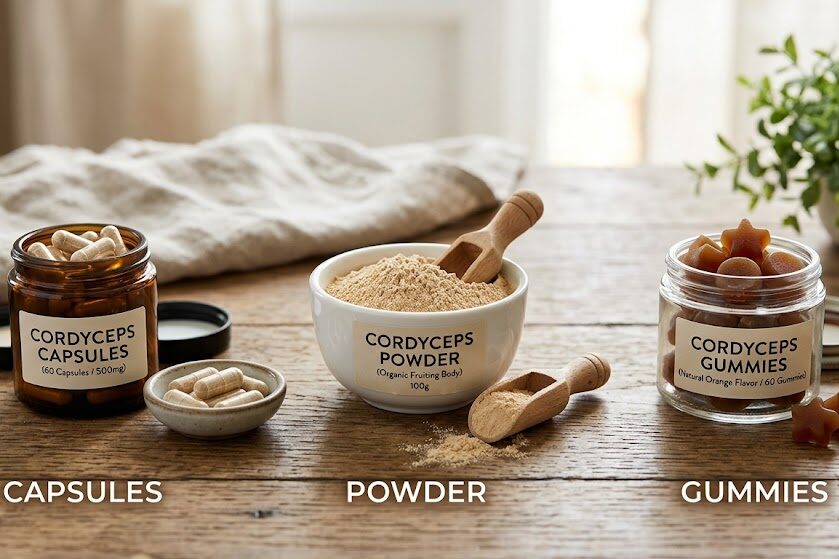
Cordyceps dosage depends on the extract strength, product format, and your goals. Always follow the label first because concentrations vary widely.
Typical Daily Ranges
- Powder: 1,000–3,000 mg daily
- Extract capsules: 500–1,500 mg daily
- High-potency extracts: Follow brand instructions
First, beginners should start at the lower end. This helps you assess tolerance before increasing.
Second, consistency matters more than mega-dosing. Many supplements show clearer effects after several weeks of regular use.
How Long Does Cordyceps Take to Work?
Cordyceps may be noticed within days for some users, but many people assess results over 2–8 weeks. Immediate effects are less common than gradual changes.
For example, energy perception may improve first, while endurance gains may take longer.
When Is the Best Time to Take Cordyceps for Energy or Workouts?
The best time to take cordyceps is usually morning or 30–60 minutes before exercise, depending on your goal.
Morning Use
Morning cordyceps use is common for daytime energy and productivity. Many users add it to coffee or smoothies.
For example, combining cordyceps with breakfast can make routines easier to maintain.
See morning routine for more energy.
Pre-Workout Use
Cordyceps before workout is popular for stamina and focus support. It is often paired with creatine, electrolytes, or low-stim formulas.
For stacking ideas, explore best magnesium supplements if recovery is also a goal.
Are There Any Cordyceps Side Effects or Risks?
Cordyceps side effects are usually mild for many users, but reactions can happen. The most common issues are digestive upset or sensitivity to new supplements.
Possible Side Effects
- Upset stomach
- Dry mouth
- Mild dizziness
- Allergy symptoms
- Headache
First, reactions often improve by lowering the dose or taking it with food.
Second, poor-quality products can create avoidable problems. That is why sourcing and testing matter.
Medication Interactions
Cordyceps may interact with certain medications, especially those affecting immunity or blood sugar. If you take prescriptions, speak with a qualified clinician first.
Who Should Avoid Taking Cordyceps Supplements?
Some people should avoid cordyceps or use medical guidance before trying it. Caution matters more than trends.
You should speak with a healthcare professional if you are:
- Pregnant or breastfeeding
- Managing an autoimmune condition
- Taking prescription medication
- Highly sensitive to mushrooms
- Preparing for surgery
For example, a person on multiple medications should not guess compatibility from social media claims.
How Do You Choose the Best Cordyceps Supplement?
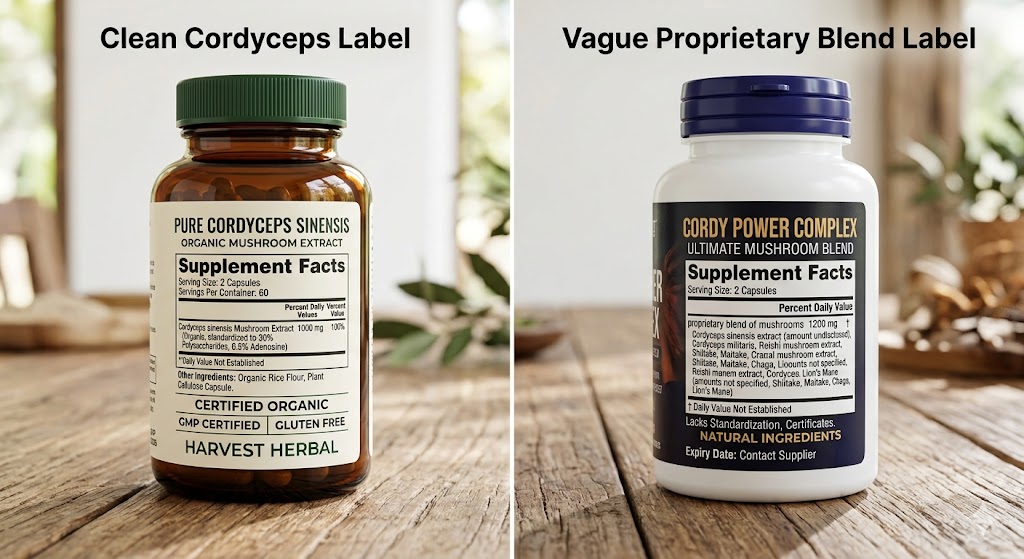
Choosing a cordyceps supplement involves checking extraction method, mushroom source, third-party testing, and transparent labeling. This is where many buyers make mistakes.
What to Look For
- Fruiting body listed clearly
- Standardized extract ratio or active compounds
- Third-party purity testing
- No proprietary mystery blends
- Brand transparency on sourcing
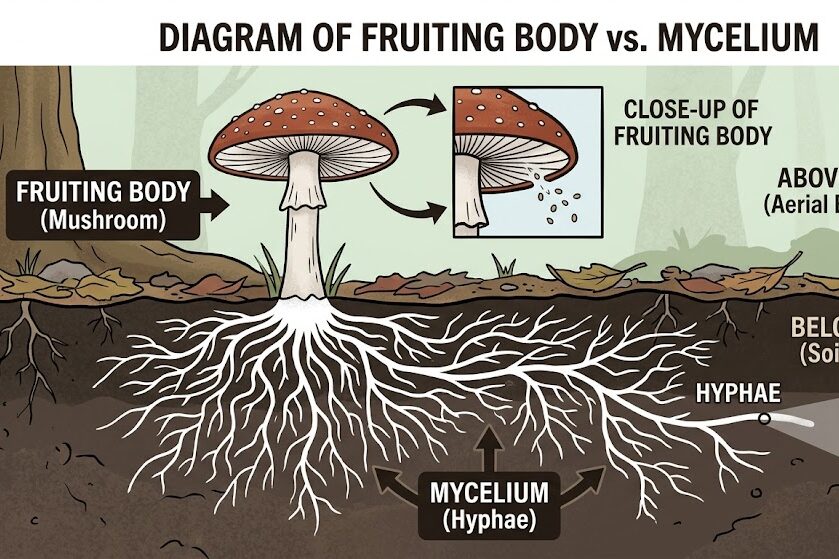
Fruiting Body vs Mycelium
Fruiting body refers to the mature mushroom structure, while mycelium is the root-like growth network. Some products use one, the other, or both.
For example, many buyers prefer fruiting body extracts because labels often feel clearer and more premium.
Use our supplement label reading guide before buying.
Image Suggestions
How Can You Start Using Cordyceps Successfully?
Starting cordyceps successfully means choosing one quality product, using a low dose, and tracking results consistently.
Beginner Plan
- Choose a reputable brand.
- Start with the minimum serving.
- Use it daily for 2–4 weeks.
- Track energy, workouts, and recovery.
- Adjust only if needed.
First, simple routines beat complicated stacks. One variable is easier to evaluate.
Second, tracking creates better decisions. For example, rating daily energy from 1–10 can reveal trends.
Use for a practical system.
Conclusion
Cordyceps is one of the most popular functional mushroom supplements for energy, endurance, and wellness support. It may help with stamina, fatigue, and immune balance when you choose a quality product and use it consistently.
That being said, no supplement replaces fundamentals. By prioritizing exercise, nutrition, and “healthy sleep habits, you give cordyceps the best chance to deliver noticeable benefits. Start small, stay consistent, and let results guide your next step.
Written by: Suraj | 5+ Years Blogger & Health Content Writer specializing in SEO-driven wellness education and supplement research.
Reviewed by: Editorial Review Team | Nutrition & Evidence-Based Health Content Specialists.
Disclaimer: This article was initially drafted using AI assistance. However, the content has undergone thorough revisions, editing, and fact-checking by human editors and subject matter experts to ensure accuracy.