
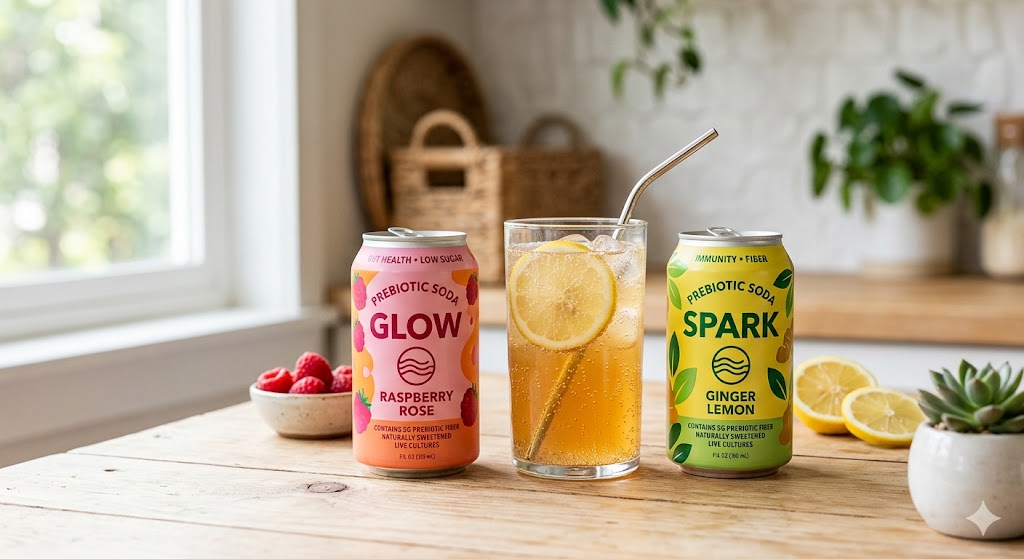
You already know regular soda is loaded with sugar, and you’ve probably seen trendy “healthy sodas” everywhere. But many people still don’t know what prebiotic soda actually does—or whether it’s worth the price. In this guide, you’ll learn how prebiotic soda works, its real benefits, possible downsides, and how to choose the best one for your goals.
Key Takeaways
- Prebiotic soda is a carbonated drink that contains prebiotic fiber designed to help nourish beneficial gut bacteria.
- Lower sugar content makes many prebiotic sodas appealing compared with traditional soft drinks.
- Prebiotic fiber may support digestion, but results vary based on your overall diet and tolerance.
- Common ingredients include chicory root fiber, fruit juice, natural flavors, and low-calorie sweeteners.
- Digestive discomfort such as bloating or gas can happen if fiber intake rises too quickly.
- Smart comparison of fiber grams, sugar content, sweeteners, and price helps identify the best option.
- Balanced habits matter more than any single beverage for long-term wellness.
What Is Prebiotic Soda?
Prebiotic soda is a carbonated beverage that contains prebiotic fiber designed to feed beneficial gut bacteria. Unlike regular soda, it often contains less sugar and includes functional ingredients aimed at digestive wellness.
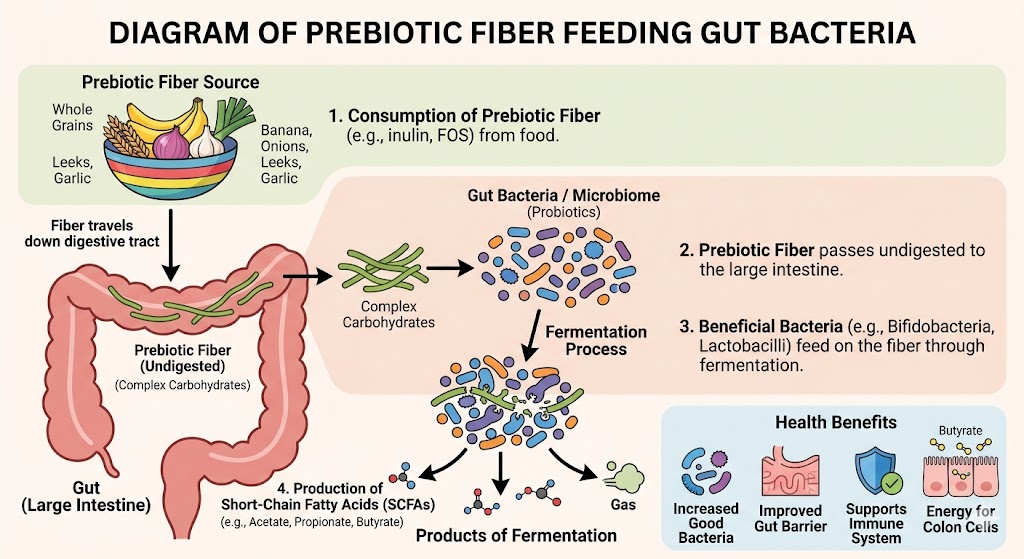
First, prebiotic soda combines the familiar fizz of soda with added fibers such as inulin or chicory root fiber. These fibers are not fully digested in the small intestine. Instead, they travel to the colon where they can be fermented by beneficial microbes.
For example, brands like OLIPOP and Poppi popularized the category by marketing soda-like flavors with wellness positioning. This has helped turn prebiotic soda into one of the fastest-growing beverage trends. Functional beverage sales continue rising as consumers seek healthier drink alternatives — Source: Grand View Research, 2025.
Second, prebiotic soda is different from probiotics. Prebiotics feed helpful bacteria, while probiotics contain live bacteria.
probiotics vs prebiotics explained
Why Prebiotic Soda Matters
Prebiotic soda matters because many consumers want lower-sugar drinks that may offer added wellness benefits. It sits at the intersection of convenience, taste, and health-conscious shopping.
First, regular soda remains a major source of added sugar in many diets. High intake of sugar-sweetened beverages is associated with weight gain and metabolic risk when consumed excessively — Source: World Health Organization, 2024.
Second, gut health has become a mainstream topic. People now search for foods and drinks that may support digestion, energy, and daily comfort. That growing interest has increased demand for gut health drinks and functional snacks.
For example, someone replacing one daily sugary cola with a lower-sugar prebiotic soda may reduce added sugar intake while trying a fiber-containing option.
gut health foods guide
Moreover, convenience matters. Busy professionals often prefer ready-to-drink products over powders, supplements, or meal prep.
How Does Prebiotic Soda Support Gut Health?
Prebiotic soda supports gut health by supplying fiber that beneficial microbes can use as fuel. That process may help create a healthier microbial environment in the digestive tract.
How Prebiotic Fiber Works
First, prebiotic fibers resist digestion in the upper gut. They reach the large intestine mostly intact, where gut bacteria ferment them.
For example, fermentation can produce short-chain fatty acids (SCFAs) such as butyrate. SCFAs are linked to gut barrier support and digestive health — Source: Nature Reviews Gastroenterology & Hepatology, 2024.
This means the benefit comes from the fiber, not the carbonation itself.
Why Results Differ Between People
Second, everyone has a unique microbiome. Your diet, stress, sleep, medication use, and genetics can influence how you respond.
For example, a person already eating high-fiber foods may notice less change than someone with a low-fiber diet.
best high fiber foods
Prebiotic fiber works by nourishing helpful microbes in the gut, which may support digestion and overall wellness.
What Ingredients Are Commonly Found in Prebiotic Soda?
Common ingredients in prebiotic soda include added fiber, natural flavors, sweeteners, fruit juice, and carbonation. Labels vary by brand, so reading the nutrition panel matters.
Common Fiber Sources
- Inulin
- Chicory root fiber
- Cassava root fiber
- Agave fiber
These ingredients increase fiber content and support the product’s “prebiotic” positioning.
Sweeteners and Flavor Sources
Many products use combinations of:
- Fruit juice concentrates
- Stevia
- Monk fruit
- Cane sugar (small amounts in some brands)
- Natural flavors
For example, one brand may use fruit juice and stevia, while another may use cane sugar plus fiber.
What to Check on Labels
Look for:
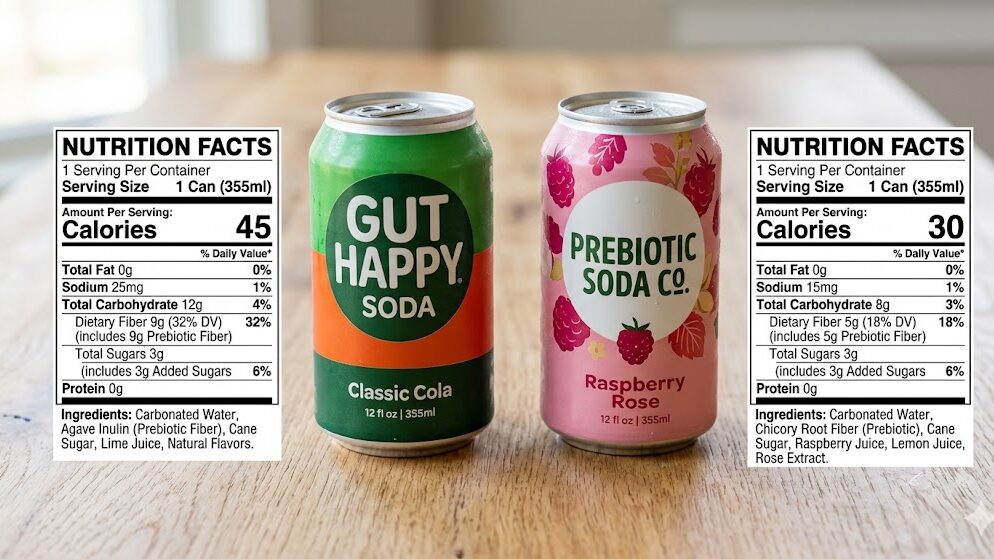
- Fiber grams per can
- Added sugar grams
- Total calories
- Caffeine content
- Artificial additives
What Are the Benefits of Drinking Prebiotic Soda?
The benefits of drinking prebiotic soda may include lower sugar intake, extra fiber, and a satisfying soda alternative. Benefits depend on the product you choose and your overall diet.
1. Lower Sugar Swap
First, many prebiotic sodas contain far less sugar than traditional soda. Some regular sodas contain around 35–40 grams of sugar per can, while many prebiotic sodas contain single-digit amounts.
Many prebiotic sodas contain less sugar than regular soda, making them a popular alternative for health-conscious consumers.
2. Added Fiber Intake
Second, most adults do not meet daily fiber recommendations. Added fiber from beverages can help close the gap, although whole foods should remain the priority. Fiber intake remains below recommended levels in many populations — Source: USDA, 2025.
3. Helps With Cravings
Third, the fizzy taste and flavor variety can help some people reduce reliance on sugary drinks.
For example, switching your afternoon cola to a cherry vanilla prebiotic soda may feel easier than drinking plain water.
how to reduce sugar cravings
healthy drinks for weight loss
Can Prebiotic Soda Cause Bloating or Digestive Issues?
Prebiotic soda can cause bloating, gas, or digestive discomfort in some people, especially when fiber intake increases quickly. This is one of the most common downsides.
First, fermentable fibers can create gas during digestion. That reaction is normal, but tolerance differs widely.
For example, someone unused to fiber-rich foods may feel bloated after drinking multiple cans in one day.
Second, some formulas contain sweeteners that sensitive individuals may dislike. Taste and digestion are both personal.
How to Reduce Side Effects
- Start with half a can
- Drink slowly
- Avoid stacking with other high-fiber products at first
- Increase water intake
- Monitor your response
Prebiotic soda can cause bloating or gas in some people, especially when fiber intake increases quickly.
What Are the Best Prebiotic Soda Brands to Try?
The best prebiotic soda depends on fiber content, sugar level, ingredient quality, taste preference, and price. No single brand is best for everyone.
| Brand | Known For | Fiber Focus | Sugar Level | Flavor Variety | Best For |
|---|---|---|---|---|---|
| OLIPOP | Classic soda-style flavors | High | Low | Wide | Soda replacement |
| Poppi | Fruity modern flavors | Moderate | Low | Wide | Trendy everyday option |
| Culture Pop | Fruit-forward options | Moderate | Moderate | Growing | Flavor seekers |
| Store Brands | Budget choices | Varies | Varies | Limited | Saving money |
How to Choose Smartly
First, compare fiber grams instead of relying only on branding.
Second, check sugar content if weight or glucose management matters.
Third, compare price per can. Premium wellness drinks can cost much more than regular soda.
For example, buying a mixed pack can help you test flavors before committing.
low calorie drink ideas
healthy grocery shopping tips
Prebiotic Soda vs Kombucha: Which Should You Choose?
Prebiotic soda and kombucha serve different needs, so the best choice depends on taste preference and digestive tolerance.
| Feature | Prebiotic Soda | Kombucha |
|---|---|---|
| Main Benefit | Added prebiotic fiber | Fermented beverage culture |
| Taste | Familiar soda-like | Tangy, acidic |
| Carbonation | Usually high | Moderate |
| Sugar | Often low | Varies |
| Live Cultures | Usually no | Often yes |
| Beginner Friendly | Very high | Moderate |
First, choose prebiotic soda if you want a familiar soda replacement with lower sugar and added fiber.
Second, choose kombucha if you enjoy fermented flavors and want a different wellness beverage experience.
For example, many people start with prebiotic soda because the taste feels easier to adopt.
Can Prebiotic Soda Help With Weight Loss Goals?
Prebiotic soda can support weight loss goals indirectly when it replaces higher-calorie sugary drinks. It is not a fat-loss product or magic solution.
First, calorie reduction matters. Swapping a high-sugar soda for a lower-calorie alternative may lower daily intake.
For example, replacing one 150-calorie soda daily can create a meaningful weekly calorie difference over time.
Second, satisfaction matters. If the fizz and flavor help you stay consistent, the habit becomes easier.
That being said, total diet quality, sleep, movement, and consistency drive results far more than any single beverage.
How Often Should You Drink Prebiotic Soda?
How often you should drink prebiotic soda depends on your tolerance, goals, and total fiber intake. For many people, one can per day or a few times weekly is a reasonable place to start.
First, start small and assess digestion. More is not automatically better.
Second, use it strategically. Good times include:
- Afternoon energy slump
- With lunch instead of regular soda
- Social events
- Dessert craving moments
For example, replacing your usual 4 p.m. sugary drink can be a practical first step.
Tools and Practical Ways to Add Prebiotic Soda to Your Routine
Practical use matters more than trends because habits create results. The best beverage is the one that supports your routine consistently.
Easy Habit Plan
- Replace one regular soda this week
- Try one new flavor pack
- Track digestion for 7 days
- Compare cost per serving
- Keep whole-food fiber high
Helpful Tools
- Nutrition label apps
- Grocery price comparison apps
- Habit trackers
- Meal planning apps

What’s Next: Smarter Healthy Drink Choices
Smarter healthy drink choices come from comparing labels and improving your overall diet, not chasing every trend.
First, prioritize hydration with water, sparkling water, tea, and balanced meals.
Second, use prebiotic soda as one tool—not the entire strategy.
Third, build a sustainable system with better groceries, movement, sleep, and stress management.
For example, pairing a balanced lunch with a lower-sugar drink often works better than relying on supplements alone.
Conclusion
Prebiotic soda can be a helpful better-for-you option when chosen wisely, but it is not a magic health drink. It may help you cut sugar, enjoy a satisfying fizzy beverage, and add some fiber to your day. At the same time, tolerance, ingredients, and cost all matter.
Choose based on labels, taste, and how your body responds. Then build around the bigger picture: consistent nutrition, movement, sleep, and hydration.
balanced diet for beginners
Written by: Suraj 5+ Blogger — SEO writer and digital publisher focused on health, wellness, and evidence-based consumer guides.
Reviewed by: Editorial Review Team — Nutrition and wellness content reviewers specializing in fact-checking and reader-first education.
Disclaimer: This article was initially drafted using AI assistance. However, the content has undergone thorough revisions, editing, and fact-checking by human editors and subject matter experts to ensure accuracy.