
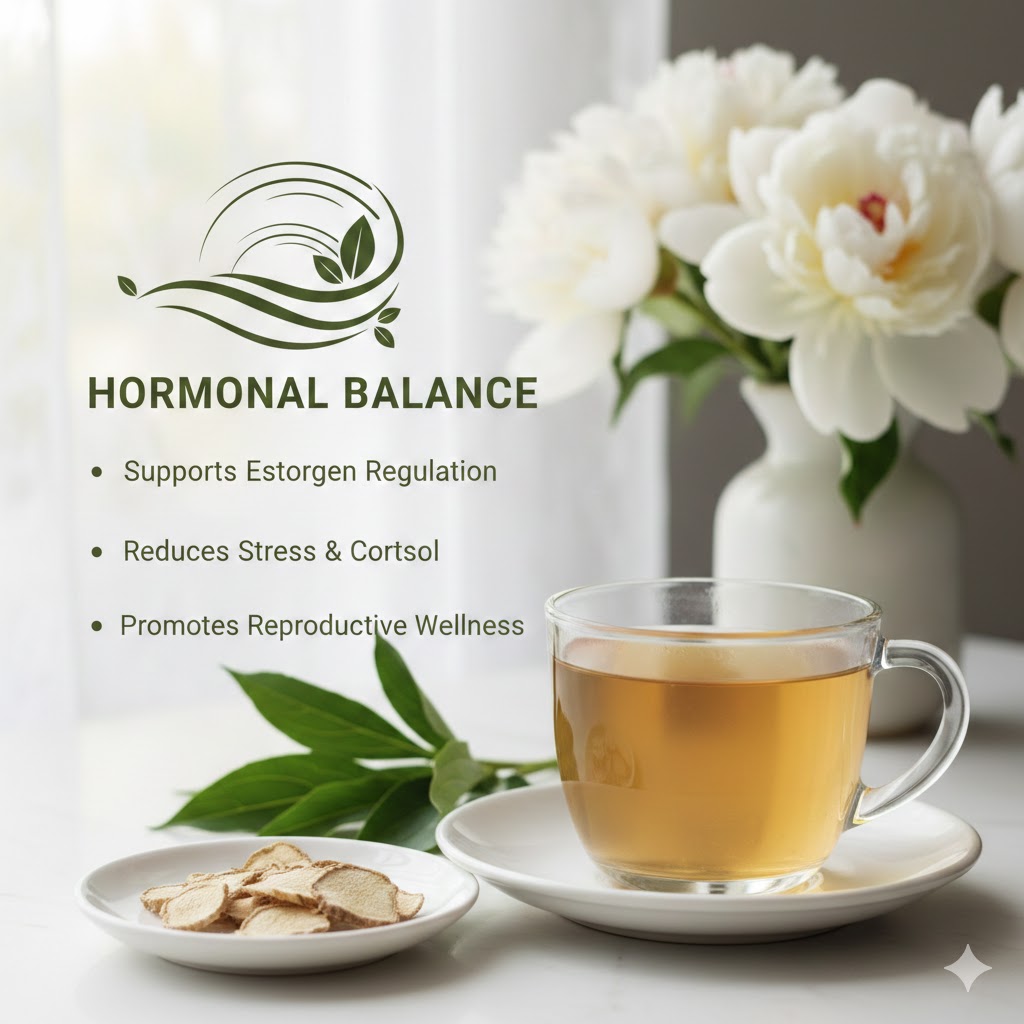
White Peony Root Tea Benefits Hormonal balance isn’t just about one hormone or one symptom. It’s about rhythm—how the body adapts to stress, recovers, and maintains internal stability over time. As more people look for gentle, plant-based ways to support this balance, traditional herbal teas are coming back into focus.
One such tea is white peony root tea, long used in East Asian wellness traditions and now gaining attention in modern holistic health circles. Interest in White Peony Root Tea Benefits reflects a growing shift away from aggressive interventions and toward supportive, system-level balance.
This article explores why white peony root tea is associated with hormonal balance, how it fits into daily wellness routines, and why its popularity is rising—without medical claims or exaggeration.
1. What Is White Peony Root Tea?
White peony root tea is made from the dried root of the white peony plant, traditionally used in herbal practices for centuries.
1.1 Traditional Context
- Commonly used in East Asian herbal traditions
- Often included in formulas focused on balance and circulation
- Valued for its calming and harmonizing nature
1.2 Why the Root Matters
The root contains plant compounds different from the flower. These compounds are the reason discussions around White Peony Root Tea Benefits focus on internal balance rather than stimulation.
2. Why Hormonal Balance Is a Modern Wellness Focus
Hormonal stress is no longer rare.
2.1 Modern Lifestyle Factors
- Chronic stress
- Poor sleep cycles
- Inconsistent eating patterns
- Overstimulation (caffeine, screens, constant cortisol)
2.2 The Shift in Wellness Thinking
Instead of forcing hormones up or down, many people now look for supportive, calming practices that help the body regulate itself.
This is where interest in White Peony Root Tea Benefits fits naturally.
3. Plant Compounds Linked to Balance
White peony root contains naturally occurring plant compounds studied for their interaction with the body’s regulatory systems.

3.1 Key Characteristics (Non-Medical Context)
- Traditionally described as cooling and calming
- Associated with relaxation of internal tension
- Often used in balancing, not stimulating, formulations
3.2 Why This Matters for Hormonal Wellness
Hormones respond strongly to stress signals. Herbs that support calm internal environments are often explored in hormone-focused wellness routines.
4. Stress, Cortisol, and Hormonal Ripple Effects
Stress hormones influence all others.
4.1 The Stress–Hormone Connection
- Elevated stress can disrupt natural hormone rhythms
- Cortisol imbalance affects sleep, appetite, and mood
- Long-term stress strains hormonal feedback loops
4.2 How White Peony Root Tea Fits
Many people interested in White Peony Root Tea Benefits use it as part of stress-reduction routines, not as a direct hormone modifier.
Calm is often the first step toward balance.
5. White Peony Root Tea and Cycle Awareness
Hormonal balance isn’t limited to one gender—but cycle awareness often brings attention to it.
5.1 Why Cyclical Balance Matters
- Hormones fluctuate naturally
- Gentle support is often preferred over forceful intervention
- Traditional herbs are often used for rhythm support
5.2 Traditional Perspective
White peony root has historically been used in contexts focused on internal harmony and regularity, which explains its association with hormonal balance discussions today.
6. Nervous System Calm and Hormonal Stability
The nervous system and hormones are deeply connected.

6.1 Why Calm Matters
- Nervous system stress affects endocrine signaling
- Relaxation supports recovery cycles
- Sleep quality influences hormone regulation
6.2 Tea as a Ritual, Not a Remedy
The act of drinking white peony root tea—warmth, stillness, routine—can be just as important as the herb itself. This ritual aspect is central to perceived White Peony Root Tea Benefits.
7. Digestive Comfort and Hormonal Health
Digestion and hormones are closely linked.
7.1 Gut–Hormone Interaction
- The gut helps process and eliminate hormones
- Digestive stress can affect hormonal balance
- Gentle digestive support is often part of holistic wellness
7.2 Why Herbal Teas Are Chosen
Root-based herbal teas are typically non-stimulating and grounding, which makes them appealing for people prioritizing balance.
8. Why People Choose Tea Over Supplements
There’s growing supplement fatigue.
8.1 Preference for Gentle Approaches
- No capsules or complex dosing
- Lower psychological pressure
- Easier long-term consistency
8.2 Lifestyle Integration
White peony root tea fits into daily routines, which is why interest in White Peony Root Tea Benefits continues to grow among wellness minimalists.
9. Who Is Most Drawn to White Peony Root Tea
The interest isn’t limited to one group.
9.1 Common Interest Profiles
- People exploring hormonal balance naturally
- Those sensitive to stimulants
- Wellness practitioners focused on calm-based routines
- Individuals prioritizing long-term balance over quick fixes
Understanding who it’s for helps keep expectations realistic.
10. Why White Peony Root Tea Is Trending Now
The trend aligns with broader wellness shifts.
10.1 Where Wellness Is Heading
- Nervous system regulation
- Stress-first approaches
- Traditional plant wisdom revisited
10.2 Why This Tea Fits
It’s subtle, traditional, and system-supportive—qualities modern wellness increasingly values. That’s why White Peony Root Tea Benefits are being discussed more widely today.
FAQs: White Peony Root Tea Benefits
Is white peony root tea a hormone treatment?
No. It’s traditionally used as a supportive herbal tea, not a medical treatment.
Is this tea caffeinated?
No, it is naturally caffeine-free.
Can it be used daily?
Many people use it occasionally or in moderation as part of a routine.
Does it replace medical care?
No. It complements a balanced lifestyle but does not replace professional care.
Why is it associated with hormonal balance?
Because of its traditional use in calming and harmonizing wellness practices.
Final Thoughts
Hormonal balance is rarely about doing more—it’s about doing less, more consistently. The growing interest in White Peony Root Tea Benefits reflects a desire for calm, rhythm, and gentle support rather than forceful solutions.
White peony root tea doesn’t promise control.
It supports conditions where balance can return naturally.
And in modern wellness, that quiet support is often exactly what people are looking for.
More Related Topics:
Bancha Tea Health Benefits: Japan’s Low-Caffeine Tea for Daily Drinking
Soursop Leaf Tea Benefits: Why This Tropical Tea Is Trending in Wellness
Pu-erh Tea Weight Loss Benefits Backed by Gut Health Science