
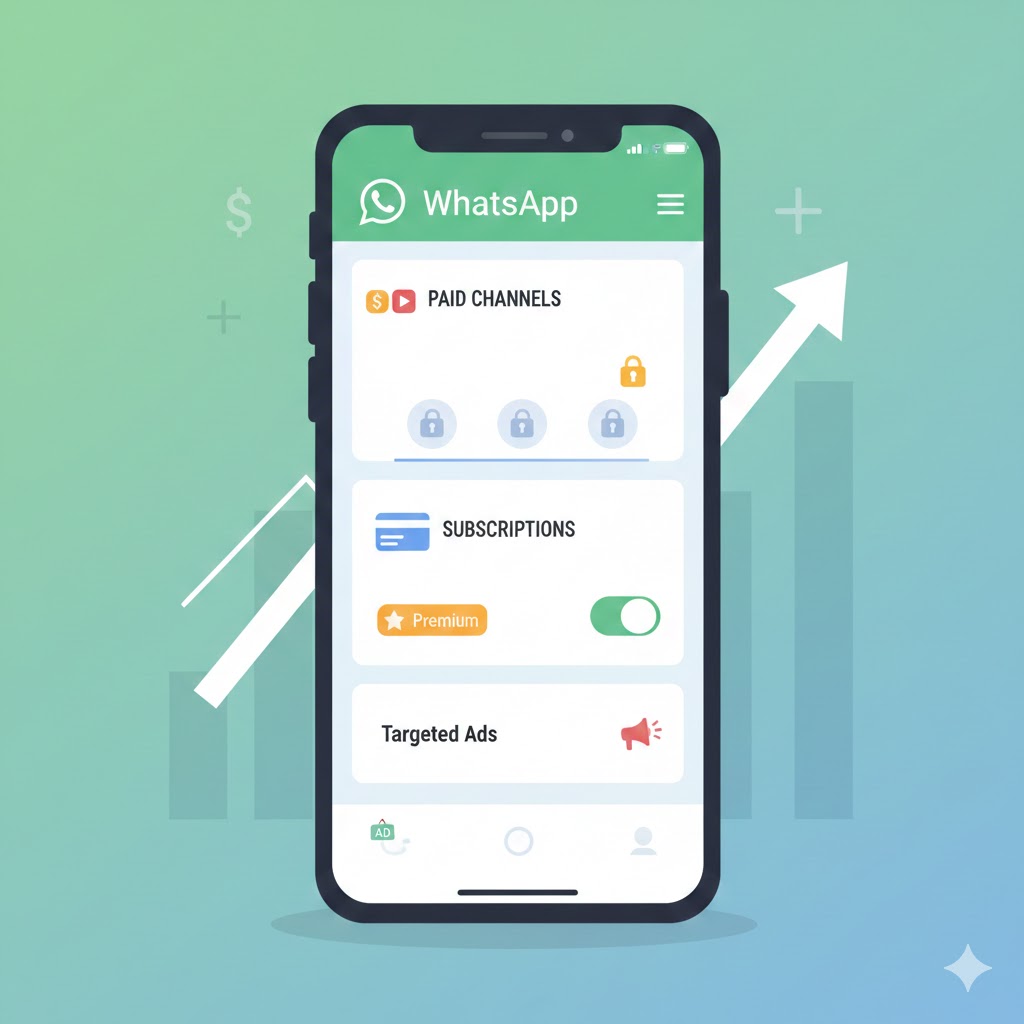
WhatsApp’s Monetization Update The messaging landscape is experiencing a seismic transformation as WhatsApp, the world’s most popular messaging platform with over 2.7 billion active users, embarks on an aggressive monetization journey. For years, WhatsApp maintained its ad-free promise, positioning itself as a clean, user-focused communication tool distinct from its parent company Meta’s advertising-driven platforms. That era is ending. WhatsApp’s Monetization Update introduces paid channels, subscription models, and advertising features that fundamentally reshape the platform’s business model and user experience.
This strategic pivot represents more than incremental feature additions—it signals Meta’s determination to transform WhatsApp from a cost center into a significant revenue generator. The implications extend far beyond corporate balance sheets, affecting how billions of people communicate, how businesses reach customers, and how content creators build audiences. Understanding WhatsApp’s Monetization Update is essential for businesses leveraging the platform, creators building communities, and users concerned about the future of digital communication privacy and experience.
The monetization transformation raises critical questions about user acceptance, competitive positioning, and the balance between revenue generation and user experience preservation. Can WhatsApp introduce commercial elements without alienating its massive user base? Will paid features create meaningful value or simply extract rent from existing behaviors? How will advertising integration affect the platform’s core appeal? This comprehensive analysis examines every dimension of WhatsApp’s Monetization Update, exploring its mechanics, implications, and future trajectory.
1. The Evolution of WhatsApp’s Business Model
WhatsApp’s Monetization Update represents a dramatic departure from the platform’s founding principles and previous business approaches. Understanding this evolution provides essential context for evaluating current changes and anticipating future developments.
From Paid App to Free Service
WhatsApp launched in 2009 as a paid application, charging users a one-dollar annual subscription after the first year free. This straightforward monetization model aligned with founders Jan Koum and Brian Acton’s philosophy of building sustainable businesses through user payments rather than advertising. The approach worked initially, generating substantial revenue as the user base expanded rapidly.
Facebook’s 2014 acquisition for nineteen billion dollars changed everything. Mark Zuckerberg committed to keeping WhatsApp ad-free, focusing instead on growth and user experience. The annual subscription fee was eliminated in 2016, making WhatsApp completely free for consumers. This decision prioritized user acquisition over immediate monetization, reflecting Facebook’s typical growth-first strategy.
WhatsApp Business and B2B Focus
The first significant monetization initiative came through WhatsApp Business, launched in 2018. This free application enabled small businesses to create profiles, automated messages, and labels for customer organization. The Business API, introduced simultaneously, allowed larger enterprises to integrate WhatsApp into customer service operations at scale—for a fee.
This B2B approach to monetization generated revenue without impacting regular users. Companies paid for API access, message volume, and premium features while consumers continued enjoying free, ad-free communication. Meta’s early WhatsApp’s Monetization Update strategy centered on business communication rather than direct consumer monetization or advertising.
The Shift Toward Direct Consumer Monetization
Recent developments signal a fundamental strategy change. Meta’s focus has expanded beyond B2B services to direct consumer monetization through paid channels, premium subscriptions, and advertising integration. This shift reflects pressure to demonstrate WhatsApp’s financial value and offset Meta’s substantial infrastructure investments in the platform.
The timing of WhatsApp’s Monetization Update coincides with broader tech industry trends toward subscription diversification and advertising expansion. As user growth plateaus in mature markets, platforms increasingly extract more revenue per user rather than relying solely on user acquisition for growth.
2. Paid Channels: Premium Content Access
The introduction of paid channels represents a cornerstone of WhatsApp’s Monetization Update, creating new opportunities for content creators and businesses while establishing WhatsApp as a content distribution platform alongside its messaging core.
How Paid Channels Function
WhatsApp Channels, launched globally in 2023, enable one-way broadcast communication from creators, organizations, and businesses to followers. The paid channel expansion adds subscription tiers where followers pay monthly fees for access to exclusive content, similar to Patreon, Substack, or YouTube memberships.
Creators set their own pricing structures, potentially offering multiple subscription tiers with different content access levels. Basic followers might receive occasional public updates while paying subscribers access exclusive content, early releases, special announcements, or direct interaction opportunities. This tiered approach maximizes revenue while maintaining free options that grow audiences.
The technical implementation of paid channels in WhatsApp’s Monetization Update integrates payment processing directly into the app. Users subscribe through in-app purchases on mobile platforms or web-based checkout systems. WhatsApp handles payment processing, subscription management, and content access control, simplifying operations for creators.
Target Audiences and Use Cases
Paid channels target diverse creator categories. Independent journalists can monetize newsletters and investigative reporting. Fitness instructors offer workout programs and nutrition guidance. Financial analysts provide market insights and investment recommendations. Educational content creators deliver courses and tutorials. Entertainment personalities offer behind-the-scenes content and exclusive interactions.
The appeal for creators lies in direct monetization without platform interference or algorithmic unpredictability. Unlike social media platforms where reach depends on opaque algorithms, paid WhatsApp channels deliver content directly to subscribers who explicitly opted in. This direct relationship reduces platform dependency while potentially generating more predictable revenue.
Businesses leverage paid channels for premium customer tiers, offering exclusive product access, early-sale notifications, or enhanced customer support. Media organizations experiment with paid channels as alternative subscription models, potentially capturing audiences unwilling to commit to full website subscriptions but interested in specific content streams.
Revenue Sharing and Creator Economics
Meta’s revenue sharing model significantly impacts creator earnings from WhatsApp’s Monetization Update. While specific terms vary by market, Meta typically retains a percentage of subscription revenue—commonly thirty percent for iOS in-app purchases due to Apple’s fee structure, with potentially lower rates for other payment methods.
This fee structure creates tension between creator earnings and platform sustainability. Creators compare WhatsApp’s fees to competitors, weighing factors like audience reach, payment processing convenience, and platform stability. The revenue split influences which creators adopt paid channels and how they price subscriptions.
Long-term success depends on demonstrating value proposition differentiation. Creators must convince audiences that WhatsApp-exclusive content justifies separate subscriptions rather than offering the same content available on existing platforms. Building this differentiation while managing multiple platform presences challenges creator resources and strategic focus.
3. Subscription Models and Premium Features
Beyond paid channels, WhatsApp’s Monetization Update explores broader subscription models offering premium features to individual users, creating new revenue streams while potentially fragmenting the user experience.
WhatsApp Premium for Consumers
While initially focused on business accounts, speculation suggests consumer-facing premium subscriptions could offer enhanced features unavailable in the free tier. Potential premium features might include increased group size limits, extended media storage, advanced privacy controls, custom themes, or priority customer support.
The consumer subscription challenge involves identifying features valuable enough to justify payment without crippling free tier functionality. Users accustomed to comprehensive free access may resist paying for features they consider basic rights. WhatsApp’s Monetization Update must balance monetization goals with user satisfaction maintenance.
Pricing strategy critically determines subscription success. Too expensive, and adoption remains minimal; too cheap, and revenue generation disappoints. WhatsApp must consider regional purchasing power variations, competitive positioning against platforms like Telegram offering extensive free features, and psychological pricing thresholds.
Business Subscription Tiers
WhatsApp Business already operates on tiered pricing for API access, and WhatsApp’s Monetization Update expands these business subscriptions substantially. Enhanced tiers might include advanced analytics, extended message templates, integration capabilities with CRM systems, automated chatbot functionality, or priority message delivery.
Small and medium businesses represent the primary target for business subscriptions. These enterprises need professional communication tools but lack resources for custom API implementations. Subscription tiers democratize access to advanced features while generating recurring revenue from millions of businesses worldwide.
The business subscription value proposition centers on customer reach and engagement. WhatsApp’s massive user base and high engagement rates make it invaluable for customer communication. Businesses willing to pay premium fees to ensure their messages reach customers effectively create sustainable revenue streams for WhatsApp’s Monetization Update initiatives.
Family and Group Subscription Options
An intriguing possibility within WhatsApp’s Monetization Update involves family or group subscriptions, allowing multiple users to share premium features under single subscription plans. This approach could increase adoption by reducing per-user costs while generating revenue from previously free users who wouldn’t subscribe individually.
Group subscriptions particularly suit family communication use cases or friend groups who extensively use WhatsApp for coordination and sharing. Shared premium storage, collaborative features, or group-specific enhancements could justify group subscription fees while strengthening WhatsApp’s position as the primary communication platform for closed networks.
4. Advertising Integration: The Controversial Element
Perhaps the most controversial aspect of WhatsApp’s Monetization Update involves advertising integration. After years of ad-free promises, Meta explores ways to introduce advertising without triggering user exodus or regulatory concerns.
Status Ads and Stories Monetization
The most likely initial advertising implementation involves Status updates—WhatsApp’s Stories feature. Similar to Instagram and Facebook Stories, Status ads would appear between user-generated content as users browse through updates from contacts. This familiar format leverages existing Meta advertising infrastructure while introducing ads in a less intrusive context than direct message advertising.
Status ads in WhatsApp’s Monetization Update target users based on demographics, interests, and potentially message content analysis—though Meta faces significant privacy concerns regarding message scanning. Advertisers access WhatsApp’s massive, engaged user base while users experience advertising in a discrete, skippable format familiar from other platforms.
The success of Status advertising depends on user acceptance and engagement rates. If users perceive ads as overly frequent, irrelevant, or privacy-invasive, they may reduce Status viewing or migrate to alternative platforms. Meta must carefully calibrate ad frequency and relevance to maximize revenue without degrading user experience.
Channel Advertising Opportunities
WhatsApp Channels present another advertising avenue within WhatsApp’s Monetization Update. Channels inherently operate as broadcast platforms, making them natural advertising vehicles. Promoted channels could appear in discovery interfaces, reaching users interested in specific topics or industries.
Sponsored content within channels—where brands pay channel owners for promotional posts—creates influencer marketing opportunities similar to Instagram. Popular channels command premium rates for sponsored content, generating revenue for creators while extending brand reach. WhatsApp potentially takes a commission on sponsored content deals facilitated through its platform.
Channel advertising raises questions about disclosure, transparency, and user trust. Clear labeling of sponsored content maintains trust while potentially reducing engagement. WhatsApp’s Monetization Update must establish clear policies governing sponsored content and advertising disclosures to protect users and maintain platform integrity.
Business Chat Advertising
A more aggressive advertising approach involves sponsored business messages—ads appearing in user chat lists or message threads. This highly visible placement generates maximum advertiser interest but risks significant user backlash. Messages represent WhatsApp’s core functionality, and advertising intrusion into this space could feel particularly invasive.
If implemented, business chat advertising in WhatsApp’s Monetization Update would likely require explicit user consent, such as opt-in programs where users accept advertising in exchange for rewards or premium features. This consent-based approach mitigates privacy concerns while testing user willingness to trade advertising exposure for benefits.
Privacy Considerations and End-to-End Encryption
The fundamental tension in WhatsApp’s Monetization Update involves balancing advertising with WhatsApp’s end-to-end encryption commitment. Targeted advertising typically requires user data analysis—the exact practice encryption prevents. Meta must either limit ad targeting sophistication, accepting lower advertising value, or find ways to analyze data while maintaining encryption claims.
On-device processing represents one potential solution, analyzing message content locally rather than on Meta servers. This approach enables targeted advertising while theoretically preserving encryption. However, users and privacy advocates remain skeptical about any content analysis, viewing it as inconsistent with genuine privacy protection regardless of technical implementation.
5. Impact on User Experience and Behavior
WhatsApp’s Monetization Update inevitably affects how billions of users experience and interact with the platform. Understanding these impacts helps predict adoption patterns and potential resistance.
User Acceptance and Resistance Patterns
Initial user reactions to monetization features significantly influence long-term success. Early adopters, typically tech-savvy and financially capable users, may embrace paid channels and premium features enthusiastically. Mainstream users might exhibit more resistance, particularly in price-sensitive markets where free alternatives exist.
Advertising introduction faces predictable resistance based on patterns from other platforms. Users initially complain loudly about ads, threaten platform departure, but often gradually accept advertising presence if implementation remains reasonable. The critical variable involves whether WhatsApp’s Monetization Update advertising feels proportionate to platform value or excessive and exploitative.
Demographic variations significantly affect acceptance. Younger users accustomed to ad-supported platforms may accept WhatsApp advertising more readily than older users who remember the ad-free era. Geographic differences also matter—markets with fewer alternative messaging platforms show higher tolerance for monetization changes since switching costs are higher.
Changes to Communication Patterns
Paid features potentially fragment communication patterns if only some group members access premium capabilities. Groups might experience coordination difficulties if premium members can do things free users cannot, creating friction and resentment. WhatsApp’s Monetization Update must carefully design features to avoid creating two-class communication systems within existing networks.
Channel subscriptions change information consumption patterns, potentially shifting attention from traditional messaging toward broadcast content consumption. This shift could reduce engagement with personal contacts while increasing time spent consuming creator content—fundamentally altering WhatsApp’s role in users’ digital lives.
Privacy Concerns and Trust Erosion
Any perceived privacy compromise through WhatsApp’s Monetization Update risks eroding the trust that makes WhatsApp valuable. Users chose WhatsApp partly for its privacy reputation compared to other Meta platforms. Advertising introduction, particularly if it involves content analysis for targeting, directly challenges this privacy positioning.
Trust erosion manifests gradually. Individual users might initially accept changes while harboring reservations. Over time, accumulated privacy concerns combined with monetization intensification could trigger mass migrations to alternatives like Signal or Telegram. Meta must vigilantly monitor trust metrics and respond to erosion signals before reaching irreversible tipping points.
6. Competitive Landscape and Platform Differentiation
WhatsApp’s Monetization Update occurs within a competitive messaging ecosystem where platforms constantly vie for users and differentiate through features, business models, and value propositions.
Telegram’s Free Feature Advantage
Telegram positions itself as the feature-rich, privacy-focused alternative to WhatsApp, offering large groups, channels, bots, and extensive media sharing—all free. This positioning creates challenges for WhatsApp’s Monetization Update paid features. Why pay for WhatsApp premium when Telegram offers similar functionality free?
WhatsApp’s advantage lies in network effects—most users’ contacts are on WhatsApp, making switching costs high despite feature disparities. However, as monetization increases, these switching costs may feel worthwhile, particularly for users prioritizing features over contact network presence. The competitive balance depends on whether WhatsApp’s paid features offer sufficient value beyond what Telegram provides free.
Signal’s Privacy Positioning
Signal occupies the privacy-purist segment, offering end-to-end encryption without monetization pressures that might compromise privacy. For users concerned that WhatsApp’s Monetization Update represents privacy erosion, Signal provides a clear alternative. However, Signal’s smaller user base and limited features compared to WhatsApp reduce mass market appeal.
The question becomes whether WhatsApp’s Monetization Update pushes sufficient privacy-conscious users toward Signal to reach critical mass for network effects. Currently, Signal remains niche despite periodic growth spurts during WhatsApp controversies. Sustained user migration requires not just initial switches but bringing entire communication networks along.
iMessage and Platform Ecosystems
In Apple ecosystems, iMessage provides formidable competition with deep OS integration and seamless multimedia messaging between Apple devices. While iMessage lacks WhatsApp’s cross-platform universality, it offers sufficient functionality for iOS-only social networks. WhatsApp’s Monetization Update must maintain cross-platform advantages while avoiding feature degradation that makes iMessage relatively more attractive.
Android’s RCS implementation represents another competitive factor, offering enhanced messaging features natively within the default messaging app. As RCS adoption grows, the necessity of third-party messaging apps potentially diminishes, particularly if RCS achieves sufficient feature parity with WhatsApp’s free tier.
WeChat’s Super-App Model
WeChat in China demonstrates an alternative monetization path—becoming a super-app ecosystem encompassing messaging, payments, commerce, services, and more. WhatsApp’s Monetization Update shows hints of super-app ambitions through WhatsApp Pay integration and business messaging expansion.
However, replicating WeChat’s success in other markets faces significant obstacles. Cultural differences, regulatory environments, and established competition in payments and commerce create high barriers. WhatsApp’s monetization may necessarily remain more focused on communication and content rather than expanding into comprehensive digital life platforms.
7. Business and Creator Opportunities
WhatsApp’s Monetization Update creates new opportunities for businesses and creators to reach audiences, generate revenue, and build sustainable communication channels outside traditional social media platforms.
Direct Customer Communication Advantages
Businesses increasingly value direct communication channels that bypass algorithmic curation. WhatsApp’s Monetization Update features enable businesses to build owned audience relationships where messages reach subscribers reliably. This direct access provides strategic advantages over social media platforms where organic reach continually declines.
Customer service integration through WhatsApp Business creates efficiency gains and customer satisfaction improvements. Handling inquiries, processing orders, and resolving issues through familiar messaging interfaces reduces friction compared to traditional phone or email support. Premium business features justify costs through operational efficiency and customer experience enhancement.
Creator Economy Expansion
Content creators gain new monetization channels through paid WhatsApp subscriptions, diversifying revenue beyond YouTube ads, Patreon subscriptions, or sponsorship deals. WhatsApp’s Monetization Update enables direct audience monetization with minimal platform interference—a significant advantage for creators frustrated with algorithmic platforms.
The intimate nature of WhatsApp communication potentially strengthens creator-audience relationships compared to broadcast platforms. Subscribers feel closer to creators through private channel content, potentially increasing loyalty and lifetime value. This relationship intensity justifies premium pricing compared to lower-touch platforms.
Small Business Empowerment
Small businesses particularly benefit from WhatsApp’s Monetization Update business features. Professional communication tools previously requiring significant technical investment or expensive platforms become accessible through affordable subscriptions. This democratization enables small businesses to compete more effectively with larger enterprises in customer communication quality.
Local businesses leverage WhatsApp’s ubiquity in many markets to build customer databases, announce promotions, and maintain ongoing relationships. The platform’s familiarity reduces adoption friction—customers already use WhatsApp personally, making business interactions natural extensions rather than requiring new app installations.
Brand Building and Community Development
WhatsApp’s Monetization Update facilitates community building around brands, topics, or interests. Unlike public social media, WhatsApp communities feel exclusive and intimate, potentially fostering stronger connections and higher engagement. Brands creating valuable WhatsApp communities gain competitive advantages through direct audience relationships resistant to platform changes elsewhere.
Community monetization through paid channels, premium tiers, or exclusive content creates recurring revenue streams while strengthening brand loyalty. Members paying for community access demonstrate commitment levels exceeding casual social media followers, representing higher-value relationships worth cultivating.
8. Future Trajectory and Strategic Implications
WhatsApp’s Monetization Update represents an ongoing evolution rather than a final state. Understanding likely future developments helps businesses and creators prepare strategic responses while enabling users to anticipate continued changes.
Expansion of Monetization Features
Meta will likely continue introducing new monetization mechanisms beyond initial paid channels and advertising. Potential developments include transaction fees on WhatsApp Pay, premium stickers and themes, advanced automation tools for businesses, or verified badge subscriptions. Each addition incrementally increases revenue while potentially incrementally degrading free tier functionality.
The monetization expansion pace depends on user response to initial features. Strong adoption and minimal resistance encourage aggressive expansion. Significant backlash or user migration forces more cautious approaches. WhatsApp’s Monetization Update strategy will evolve based on continuous testing and user response monitoring.
Integration with Meta’s Broader Ecosystem
Deeper integration between WhatsApp and Meta’s other platforms—Facebook, Instagram, Messenger—seems inevitable. Cross-platform advertising capabilities, unified business tools, and shared creator monetization features create synergies while potentially compromising WhatsApp’s distinct identity. The balance between ecosystem integration and platform uniqueness will significantly influence user perception.
WhatsApp’s Monetization Update potentially includes features leveraging Meta’s vast advertising infrastructure, creator economy investments, and commerce capabilities. This integration provides technical and business advantages while raising concerns about data sharing and privacy implications across platforms.
Regulatory Challenges and Compliance
Global regulatory scrutiny of tech platforms intensifies, particularly regarding privacy, competition, and user rights. WhatsApp’s Monetization Update faces regulatory challenges in multiple jurisdictions, potentially requiring feature modifications or regional variations. European Union regulations, Indian government requirements, and US antitrust considerations all influence implementation details.
Privacy-focused monetization regulations may limit targeting capabilities or require explicit consent mechanisms beyond Meta’s preferences. Competition regulations might restrict exclusive features or mandatory Meta platform integration. Navigating this regulatory complexity while achieving monetization goals represents a significant strategic challenge.
Long-Term Platform Vision
Meta’s ultimate vision for WhatsApp likely extends beyond current WhatsApp’s Monetization Update features toward comprehensive communication and commerce platforms. Future iterations might include extensive commerce integration, financial services expansion, professional networking features, or augmented reality communication tools.
This ambitious vision faces execution challenges and potential user resistance. Each expansion risks diluting WhatsApp’s core messaging focus while potentially alienating users who value simplicity. Balancing expansion ambitions with core functionality preservation determines whether WhatsApp becomes a super-app or remains a focused messaging platform with monetization features.
Conclusion
WhatsApp’s Monetization Update marks a watershed moment for the world’s most popular messaging platform, fundamentally transforming its business model and potentially its user experience. The introduction of paid channels, subscription models, and advertising represents Meta’s determination to convert WhatsApp’s massive user base into substantial revenue generation, ending years of monetization restraint.
The success of WhatsApp’s Monetization Update depends on delicate balance maintenance—generating meaningful revenue without triggering user exodus or trust erosion. Meta must demonstrate that paid features provide genuine value rather than simply extracting rent from existing functionality. Advertising implementation requires extraordinary care to avoid crossing lines that transform WhatsApp from a beloved communication tool into an intrusive advertising platform.
For businesses and creators, WhatsApp’s Monetization Update creates significant opportunities. Direct audience access, reliable message delivery, and monetization tools enable new business models and revenue streams. Organizations that effectively leverage these capabilities gain competitive advantages in customer communication and community building.
Users face choices about whether to embrace paid features, tolerate advertising, or seek alternatives. The network effects that make WhatsApp valuable also create switching friction, giving Meta some latitude for monetization experimentation. However, this latitude is finite—excessive monetization or perceived privacy violations could trigger rapid migration patterns that undermine WhatsApp’s value proposition.
The competitive landscape significantly influences WhatsApp’s Monetization Update outcomes. Telegram’s free feature richness, Signal’s privacy purity, and platform-native messaging solutions all provide alternatives if WhatsApp’s monetization becomes excessive. Meta must continuously monitor competitive positioning and user sentiment to avoid strategic missteps that strengthen competitors.
Looking forward, WhatsApp’s Monetization Update represents just the beginning of a longer transformation journey. Additional features, deeper Meta ecosystem integration, and continued monetization expansion seem inevitable. How aggressively Meta pursues these developments while maintaining user trust and platform value determines WhatsApp’s long-term trajectory.
The stakes extend beyond Meta’s financial performance. WhatsApp serves as critical communication infrastructure for billions globally, particularly in developing markets where it represents primary internet access. Monetization decisions affecting accessibility, affordability, or functionality have real-world implications for global communication equity and digital inclusion.
Ultimately, WhatsApp’s Monetization Update tests whether a platform can successfully transition from growth-focused free service to monetized business without destroying the qualities that made it successful initially. The coming years will reveal whether Meta navigated this transition successfully or whether aggressive monetization undermined the platform’s fundamental appeal, creating opportunities for competitors and disappointing stakeholders who bet on WhatsApp’s enduring dominance.
Also read this:
Google’s Search Evolution: From Keywords to Intent-Driven Results
YouTube’s AI Content Labeling Update: Impact on Monetization & Discovery
Instagram Penalizes Repetitive Text — Improve Your Captions for Better Reach