
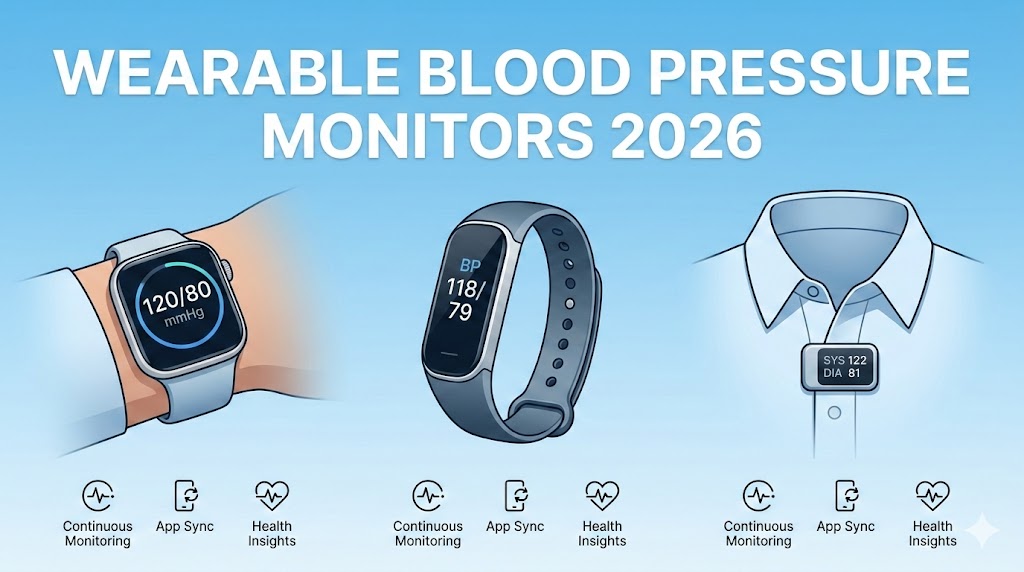
Health tracking is no longer limited to steps and calories. In 2026, Wearable Blood Pressure Monitors are becoming more accurate, compact, and integrated with smart health ecosystems.
If you’re managing hypertension, monitoring cardiovascular health, or simply want proactive health tracking, Wearable Blood Pressure Monitors offer continuous insights beyond traditional cuff devices.
In this guide, we’ll compare the latest devices, explain how they work, discuss accuracy, and help you choose the right option.
1. What Are Wearable Blood Pressure Monitors?
Wearable Blood Pressure Monitors are devices designed to track blood pressure throughout the day without requiring a traditional arm cuff every time.
They typically come in forms like:
- Smartwatches
- Wrist-based monitors
- Arm-band wearable devices
- Sensor-integrated fitness trackers
Unlike standard home monitors, Wearable Blood Pressure Monitors provide ongoing tracking rather than occasional readings.
2. Why Wearable Blood Pressure Monitors Are Trending in 2026
Several factors are driving growth:
- Increased hypertension awareness
- Remote patient monitoring programs
- Telehealth expansion
- AI-powered health analysis
- Integration with mobile health apps
Doctors now increasingly use data from Wearable Blood Pressure Monitors for early risk detection.
3. How Wearable Blood Pressure Monitors Work
There are two primary technologies:
3.1 Oscillometric Cuff-Based Wearables
These use mini inflatable cuffs inside wearable bands.
More accurate but slightly bulkier.
3.2 Cuffless Estimation Technology
These estimate blood pressure using:
- Pulse Transit Time (PTT)
- Optical heart sensors
- AI calibration models
Cuffless Wearable Blood Pressure Monitors are more convenient but may require periodic calibration.
4. Best Wearable Blood Pressure Monitors in 2026
Here are some of the most recognized devices in 2026.
5. Omron HeartGuide
One of the first FDA-cleared smartwatch-style Wearable Blood Pressure Monitors.
Features:
- Oscillometric inflatable cuff
- Clinically validated readings
- Activity and sleep tracking
Best for:
- Medical-grade accuracy
- Hypertension management
Limitation:
- Slightly bulkier than regular smartwatches
6. Samsung Galaxy Watch (BP Feature in Supported Regions)
Certain Samsung smartwatches offer:
- Cuffless blood pressure tracking
- ECG monitoring
- AI-based health analytics
Requires calibration with a traditional cuff monitor.
Convenient but less clinical than medical-grade devices.
7. Withings BPM Series
Withings offers smart health devices including wearable-compatible monitors.
Features:
- App integration
- Long-term tracking
- Cloud health data storage
Great for data-focused users.
8. Fitbit (Advanced Health Models)
Some newer Fitbit models integrate blood pressure trend estimation combined with heart rate variability.
Not fully medical-grade but useful for lifestyle tracking.
9. Accuracy of Wearable Blood Pressure Monitors
Accuracy depends on:
- Device type
- Calibration consistency
- User positioning
- Movement interference
Medical-grade cuff-based Wearable Blood Pressure Monitors tend to be more accurate.
Cuffless models are improving rapidly due to AI calibration improvements in 2026.
Important:
Always validate readings with a traditional monitor, especially for medical decisions.
10. Who Should Use Wearable Blood Pressure Monitors?
Wearable Blood Pressure Monitors are ideal for:
- People with hypertension
- Individuals with family heart disease history
- Remote workers
- Seniors needing frequent monitoring
- Fitness enthusiasts tracking cardiovascular stress
Continuous monitoring can reveal:
- Morning hypertension spikes
- Stress-related BP changes
- Sleep-related blood pressure fluctuations
11. Key Features to Look For
When buying Wearable Blood Pressure Monitors, check:
11.1 Clinical Validation
Look for:
- FDA clearance
- CE certification
- Clinical testing data
11.2 App Integration
Strong mobile apps help track trends over time.
11.3 Data Export
Ability to share data with doctors.
11.4 Battery Life
Some cuff-based models consume more power.
11.5 Comfort
Since it’s worn daily, comfort matters.
12. Pros and Cons of Wearable Blood Pressure Monitors
Pros
- Continuous tracking
- Early warning insights
- Remote monitoring support
- Data-driven health management
- Convenient lifestyle integration
Cons
- Can be expensive
- Accuracy varies
- Requires calibration
- Not a replacement for doctor visits
13. Price Range in 2026
Wearable Blood Pressure Monitors pricing:
- Entry-level: $150–$250
- Mid-range: $250–$400
- Medical-grade models: $400–$600
Insurance may cover some devices under remote monitoring programs.
14. Are Wearable Blood Pressure Monitors Worth It?
They are especially valuable if:
- You need frequent readings
- You want early detection of patterns
- You track stress and lifestyle impact
- Your doctor recommends monitoring
However, casual users without blood pressure concerns may not need advanced monitoring.
Frequently Asked Questions (FAQ)
Q1: Are Wearable Blood Pressure Monitors as accurate as arm cuffs?
Medical-grade cuff-based wearables are close, but traditional upper-arm monitors remain gold standard.
Q2: Do I need to calibrate cuffless models?
Yes, most require periodic calibration with a standard cuff monitor.
Q3: Can they detect hypertension?
They can indicate trends, but diagnosis requires medical evaluation.
Q4: Are they safe to wear all day?
Yes, designed for daily wear.
Q5: Can doctors use the data?
Many devices allow exportable reports for physician review.
Final Thoughts
Wearable Blood Pressure Monitors represent a major step forward in personal health tracking. In 2026, they are more advanced, AI-powered, and integrated into telehealth systems than ever before.
While they don’t replace professional medical care, they empower users with real-time cardiovascular insights.
If you value proactive health management, Wearable Blood Pressure Monitors can become a powerful tool for long-term heart health awareness.
More Related Topics:
Virtual Health Coaching Platforms Compared: Which One Is Best in 2026
Blood Sugar Friendly Breakfast Ideas: Smart Morning Meals for Stable Energy in 2026
Reverse Insulin Resistance Naturally: A Complete Science-Backed Guide for 2026