
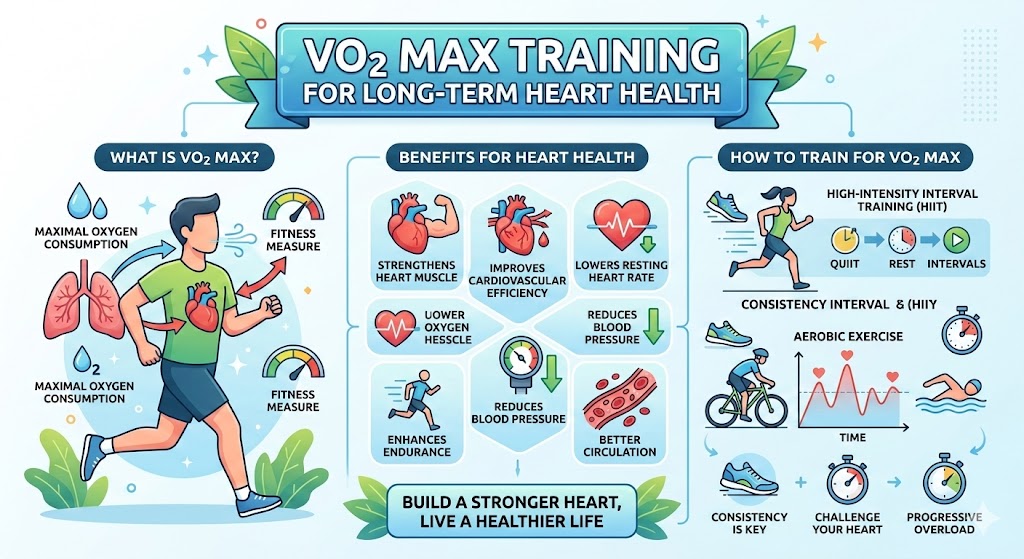
VO2 Max Training When it comes to long-term heart health, most people focus on weight, cholesterol, or blood pressure. While those matter, modern cardiovascular research highlights one metric that often predicts longevity better than all of them combined: VO2 max.
VO2 max measures how efficiently your body uses oxygen during intense exercise. It reflects the strength of your heart, lungs, blood vessels, and muscles working together. Improving it is not just about athletic performance—it’s about extending healthspan and protecting the heart as you age.
In this guide, we’ll break down VO2 Max Training, why it’s critical for long-term heart health, how it works, and how everyday people—not just athletes—can train it safely and effectively.

1. What Is VO2 Max?
VO2 max represents the maximum amount of oxygen your body can use during intense exercise.
What it reflects
- Heart pumping capacity
- Lung efficiency
- Blood oxygen delivery
- Muscle oxygen usage
A higher VO2 max means your cardiovascular system works more efficiently under stress.
2. Why VO2 Max Matters for Heart Health
VO2 max is more than a fitness metric—it’s a survival marker.
Why it’s so important
- Strongly linked to lower cardiovascular disease risk
- Predicts all-cause mortality
- Reflects overall heart efficiency
Low VO2 max is associated with higher risk of heart attack, stroke, and early death—even in people who appear “healthy.”
3. VO2 Max Training vs Regular Cardio
Not all cardio improves VO2 max equally.
Key differences
- Steady cardio improves endurance
- VO2 Max Training targets oxygen delivery limits
- Requires higher intensity bursts
Zone 2 cardio builds the base; VO2 max training pushes the ceiling.
4. How VO2 Max Training Improves Heart Function
This type of training challenges the heart directly.
Heart-specific adaptations
- Increased stroke volume (more blood per beat)
- Stronger cardiac muscle
- Improved arterial flexibility
- Better oxygen transport
These changes make the heart more resilient over time.
5. VO2 Max Training and Longevity
Longevity research consistently shows VO2 max as a powerful predictor of lifespan.
Longevity-related benefits
- Lower cardiovascular mortality
- Improved metabolic health
- Better resilience to illness and aging
Improving VO2 max even slightly can significantly reduce long-term health risk.
6. How VO2 Max Declines With Age (And Why Training Matters)
VO2 max naturally declines after age 30—but training slows this dramatically.
Without training
- VO2 max drops 1% per year
- Increased heart disease risk
- Reduced exercise tolerance
With training
- Decline slows or stabilizes
- Heart function remains stronger
- Independence lasts longer
This makes VO2 Max Training essential for aging well.
7. Best Types of VO2 Max Training
VO2 max improves with specific intensity patterns.
Effective training methods
- Interval training
- Short bursts of near-max effort
- Hill repeats
- Fast cycling or running intervals
The key is pushing close to your aerobic limit briefly and repeatedly.
8. Sample VO2 Max Training Structure
A simple structure works well.
Example session
- Warm-up: 10 minutes easy
- Intervals:
- 3–5 minutes hard effort
- 2–3 minutes easy recovery
- Repeat 3–5 times
- Cool-down: 5–10 minutes
Sessions are short but powerful.
9. How Often Should You Do VO2 Max Training?
More is not better.
Recommended frequency
- 1–2 sessions per week
- Combined with low-intensity cardio
- Adequate recovery between sessions
Excessive high-intensity training increases injury and burnout risk.
10. VO2 Max Training and Blood Pressure
Improved oxygen efficiency reduces strain on the heart.
Blood pressure benefits
- Improved vascular function
- Reduced resting heart rate
- Better blood flow regulation
These adaptations support long-term cardiovascular stability.
11. VO2 Max Training for Non-Athletes
You don’t need to be fit to benefit.
Suitable for
- Busy professionals
- Aging adults
- Beginners with guidance
- Anyone prioritizing heart health
Intensity is relative—effort is based on your current fitness.
12. Safety Considerations for VO2 Max Training
Safety always comes first.
Important guidelines
- Build aerobic base first
- Start with short intervals
- Avoid maximal effort initially
- Consult a professional if needed
Heart health improves with smart progression, not reckless intensity.
13. Combining VO2 Max Training With Other Exercise
Balance creates the best results.
Ideal weekly structure
- 1–2 VO2 max sessions
- 2–4 low-intensity cardio sessions
- 2–3 strength training sessions
This combination supports heart health, muscle, and longevity.
14. How Long Until VO2 Max Improves?
Adaptations happen faster than most people expect.
Typical timeline
- 2–4 weeks: noticeable endurance improvement
- 6–8 weeks: measurable VO2 max increase
- 12+ weeks: significant cardiovascular adaptation
Consistency is the key driver.
15. Signs Your VO2 Max Is Improving
Progress shows in daily life.
Positive indicators
- Lower heart rate at same pace
- Faster recovery after exertion
- Improved stamina
- Easier breathing during activity
These signs reflect better heart efficiency.
16. Final Verdict: Why VO2 Max Training Is Essential for Long-Term Heart Health
Heart health isn’t just about avoiding disease—it’s about building capacity. VO2 Max Training strengthens the heart at its limits, making it more resilient, efficient, and adaptable across decades of life.
When combined with low-intensity cardio and strength training, VO2 max work becomes one of the most powerful tools for long-term cardiovascular health and longevity.
Train your heart not just to survive—but to thrive.
Frequently Asked Questions (FAQ)
Q1. What is VO2 max training?
It is training designed to improve the body’s maximum oxygen usage during intense exercise.
Q2. Is VO2 max training safe for heart health?
Yes, when done progressively and appropriately.
Q3. Can walking improve VO2 max?
Walking builds aerobic base, but higher intensity is needed to significantly improve VO2 max.
Q4. How often should VO2 max be trained?
Typically 1–2 sessions per week is sufficient.
Q5. Is VO2 max more important than weight loss?
For long-term heart health and longevity, VO2 max is often a stronger predictor.
Conclusion
If you care about your heart long-term, focusing only on steps or calories isn’t enough. VO2 Max Training targets the true engine of cardiovascular health—oxygen delivery and utilization.
It’s not about suffering through workouts. It’s about applying the right intensity, at the right time, for the right reason. Build your VO2 max, and you’re investing directly in a stronger heart and a longer, healthier life.
More Related Topics:
Walking Meditation Benefits for Mental Clarity (A Simple Practice for a Busy Mind)
Posture Correction Exercises for Desk Workers (Fix Pain, Boost Energy, Work Better)
Zone 2 Cardio Benefits for Fat Loss & Longevity (The Smartest Way to Train)