
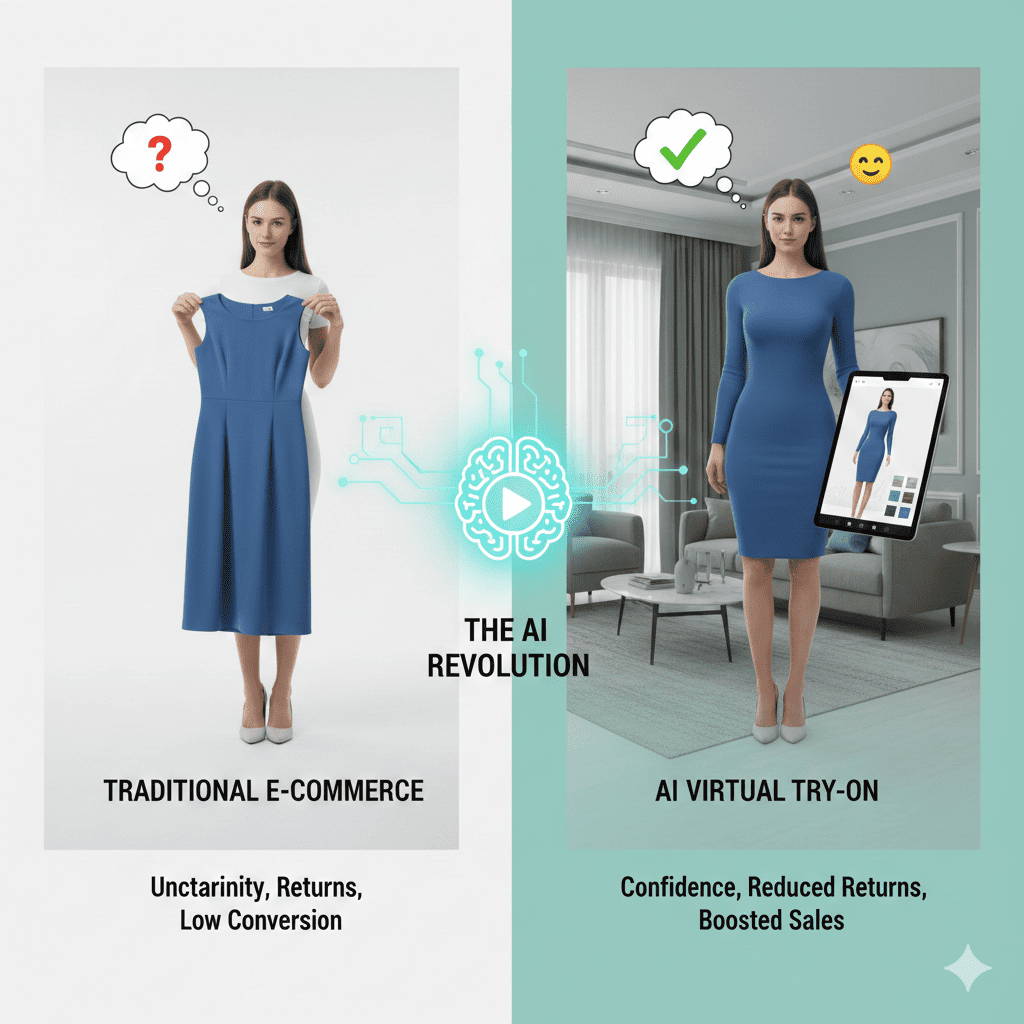
Virtual try-on fashion The fashion industry is experiencing a seismic shift as artificial intelligence transforms how consumers shop online. Virtual try-on fashion technology has emerged as a game-changing solution to one of e-commerce’s biggest challenges: the inability to try before you buy. This revolutionary approach combines computer vision, augmented reality, and machine learning to create immersive shopping experiences that bridge the gap between physical and digital retail.
As online shopping continues dominating consumer behavior, the limitations of traditional e-commerce become increasingly apparent. High return rates, sizing uncertainties, and the inability to visualize products on oneself have plagued the industry for years. Virtual try-on fashion addresses these pain points head-on, offering solutions that benefit retailers and consumers alike while reshaping the entire shopping landscape.
1. Understanding Virtual Try-On Technology
The foundation of virtual try-on fashion rests on sophisticated artificial intelligence systems that process visual data in real-time, creating realistic representations of how clothing and accessories appear on individual bodies.
Computer Vision Fundamentals
At the core of virtual try-on systems lies computer vision technology that analyzes human body shapes, proportions, and movements. These algorithms identify key body landmarks, measure dimensions accurately, and track movement in three-dimensional space. The system creates a digital skeleton of the user’s body, enabling precise garment placement and realistic draping simulation.
Augmented Reality Integration
Augmented reality overlays digital garments onto live video feeds of users, creating the illusion that they’re actually wearing the items. Advanced AR systems account for lighting conditions, shadows, and perspective changes as users move. This creates an immersive experience where virtual clothing responds naturally to body movements and environmental factors.
Machine Learning for Fit Prediction
Virtual try-on fashion platforms employ machine learning algorithms trained on millions of body measurements and garment specifications. These systems predict how specific items will fit individual body types, accounting for fabric stretch, cut styles, and brand-specific sizing variations. The accuracy improves continuously as more data feeds into the system.
3D Body Scanning Technology
Some advanced implementations use smartphone cameras or dedicated scanners to create detailed three-dimensional models of users’ bodies. These digital avatars serve as persistent profiles, allowing shoppers to try on unlimited items without repeated scanning. The technology captures measurements far more accurately than traditional methods.
2. Types of Virtual Try-On Solutions
The virtual try-on fashion ecosystem encompasses various approaches, each suited to different product categories and shopping contexts.
Real-Time Camera-Based Try-On
This approach uses device cameras to show users wearing virtual garments in real-time. Shoppers see themselves on screen with digital clothing overlaid on their bodies, moving and adjusting naturally. This method works exceptionally well for accessories, eyewear, jewelry, and upper-body garments where positioning is relatively straightforward.
Avatar-Based Virtual Fitting
Users create personalized digital avatars based on their measurements, then dress these virtual representations in different outfits. This approach allows for more complex garments like full outfits, formal wear, and items requiring precise tailoring. Shoppers can rotate their avatars, view from multiple angles, and even simulate different poses.
Photo Upload Try-On
For situations where real-time processing isn’t feasible, some virtual try-on fashion platforms allow users to upload photos. The AI system analyzes the image, identifies the body position and proportions, then digitally adds selected garments. While less interactive than real-time solutions, this approach works across more devices and internet speeds.
Mix-and-Match Virtual Styling
Advanced platforms enable users to combine multiple items, creating complete outfits virtually. The system ensures color coordination, suggests complementary pieces, and shows how different items work together. This transforms virtual try-on from a single-product experience into comprehensive outfit planning.
3. Benefits for Online Retailers
Implementing virtual try-on fashion technology delivers substantial advantages for e-commerce businesses, impacting everything from conversion rates to customer satisfaction.
Dramatic Reduction in Return Rates
Returns plague online fashion retail, with rates often exceeding thirty percent. Virtual try-on technology reduces returns by helping customers choose correctly sized items that match their expectations. Retailers report return rate reductions of fifteen to forty percent after implementing these systems, translating to millions in saved costs.
Increased Conversion Rates
Shoppers who use virtual try-on fashion features convert at significantly higher rates than those who don’t. The ability to visualize products on themselves reduces purchase hesitation and builds confidence in buying decisions. Retailers consistently report conversion rate increases of twenty to fifty percent for products with virtual try-on capabilities.
Enhanced Customer Engagement
Interactive try-on experiences keep shoppers on websites longer, increasing the likelihood of multiple purchases. The technology transforms passive browsing into active engagement, creating memorable experiences that build brand loyalty. Average session durations increase substantially when virtual try-on features are available.
Competitive Differentiation
As virtual try-on fashion becomes more prevalent, offering this capability distinguishes forward-thinking retailers from competitors. Early adopters position themselves as innovative leaders, attracting tech-savvy consumers who value enhanced shopping experiences. This differentiation becomes increasingly important in crowded e-commerce markets.
Valuable Data Collection
Virtual try-on systems generate rich data about customer preferences, body measurements, and shopping behaviors. Retailers use these insights to optimize inventory, improve size recommendations, develop new products, and personalize marketing efforts. The data becomes more valuable over time as patterns emerge.
4. Consumer Advantages and Shopping Experience
Virtual try-on fashion technology fundamentally improves the online shopping experience from the consumer perspective, addressing longstanding frustrations and creating new possibilities.
Confidence in Purchase Decisions
The primary consumer benefit is increased confidence when buying clothes online. Seeing how items actually look on their bodies eliminates guesswork about fit, style, and appearance. This confidence reduces purchase anxiety and makes online shopping more enjoyable and less stressful.
Time and Effort Savings
Rather than ordering multiple sizes to try at home then returning unsuitable items, shoppers can determine the right size virtually. This eliminates the hassle of managing returns, trips to shipping locations, and waiting for refunds. Virtual try-on fashion makes online shopping genuinely more convenient than physical stores.
Unlimited Experimentation
Consumers can try on dozens or even hundreds of items without physical constraints. They experiment with styles they might not normally consider, discover new looks, and push fashion boundaries without commitment. This freedom encourages exploration and often leads to more satisfying purchases.
Privacy and Comfort
Virtual try-on happens in private spaces without the discomfort of public fitting rooms. Shoppers avoid crowded stores, judgmental glances, and poorly lit dressing rooms. They can take their time, try bold choices, and make decisions without external pressure or time constraints.
Accessibility for All Body Types
Virtual try-on fashion technology works across all body types, sizes, and shapes. This inclusivity ensures everyone can benefit from enhanced shopping experiences regardless of whether local stores stock their sizes. The technology democratizes fashion access in meaningful ways.
5. Technical Challenges and Solutions
Despite its promise, virtual try-on fashion faces significant technical hurdles that developers and retailers continue addressing through innovation and refinement.
Realistic Fabric Simulation
Accurately simulating how different fabrics drape, stretch, and move remains challenging. Silk flows differently than denim, and knits behave unlike wovens. Advanced physics engines now model fabric properties more realistically, accounting for weight, elasticity, texture, and how materials interact with body movements.
Lighting and Shadow Accuracy
Virtual garments must match the lighting conditions of the user’s environment to appear realistic. AI systems now analyze ambient lighting, calculate appropriate shadows, and adjust garment appearance dynamically. This ensures virtual clothing looks integrated rather than obviously overlaid.
Body Movement Tracking
As users move, virtual try-on fashion systems must track body position changes and adjust virtual garments accordingly. Machine learning models predict body positions between tracked frames, ensuring smooth transitions. This creates natural-looking experiences even with rapid movements.
Processing Speed and Latency
Real-time virtual try-on requires substantial computational power. Cloud processing introduces latency issues, while on-device processing challenges mobile hardware capabilities. Optimized algorithms, edge computing, and improved compression techniques are making real-time experiences smoother across devices.
Diverse Body Type Accommodation
Training AI systems to work accurately across diverse body types, skin tones, and physical characteristics requires massive, representative datasets. Companies are investing in inclusive data collection and algorithm testing to ensure virtual try-on fashion works equitably for all users.
6. Integration with E-Commerce Platforms
Successful virtual try-on fashion implementation requires seamless integration with existing e-commerce infrastructure, creating unified shopping experiences.
Product Information Management
Virtual try-on systems need detailed product data including precise measurements, fabric specifications, available sizes, and high-quality imagery. Retailers must upgrade product information management systems to capture and maintain this enhanced data across their catalogs.
User Account Systems
Persistent user profiles store body measurements, style preferences, and try-on history. Integration with existing account systems ensures shoppers don’t repeatedly input information. These profiles enable personalized recommendations and streamline the shopping experience across multiple sessions.
Shopping Cart Integration
When users select items through virtual try-on fashion interfaces, those choices must flow smoothly into standard shopping carts. The integration maintains size selections, style preferences, and any customizations made during the virtual try-on experience.
Mobile and Desktop Consistency
Shoppers expect consistent experiences across devices. Virtual try-on systems must work on smartphones, tablets, and desktop computers while adapting interfaces appropriately. This requires responsive design and careful attention to different hardware capabilities.
Analytics and Reporting
E-commerce platforms need visibility into how virtual try-on features impact business metrics. Integration with analytics systems tracks usage rates, conversion impacts, return rate changes, and other key performance indicators. These insights guide ongoing optimization efforts.
7. Impact on Fashion Industry Stakeholders
Virtual try-on fashion technology creates ripple effects throughout the fashion industry, transforming relationships between brands, retailers, and consumers.
Brand Storytelling and Marketing
Brands leverage virtual try-on capabilities for innovative marketing campaigns. Consumers can try limited edition items, see themselves in runway looks, and engage with brand stories interactively. This creates emotional connections stronger than traditional advertising.
Influencer and Social Commerce
Social media influencers use virtual try-on fashion technology to show followers how items look without physically owning everything they promote. This authentic approach builds trust while reducing the environmental impact of sample shipping. Integrated shopping links convert engagement into purchases seamlessly.
Fashion Design and Development
Designers receive direct feedback about which styles resonate with consumers before committing to production. Virtual try-on data reveals preferences across demographics, informing collection development. This data-driven approach reduces risk while ensuring products meet market demand.
Sustainability Initiatives
By reducing returns and overproduction, virtual try-on fashion supports sustainability goals. Fewer returned items mean less transportation emissions and waste. Better demand prediction from virtual try-on data helps brands produce appropriate quantities rather than overestimating.
8. Privacy and Data Security Considerations
Virtual try-on fashion systems collect sensitive personal data, raising important privacy questions that industry leaders must address responsibly.
Body Measurement Data Protection
Three-dimensional body scans and precise measurements represent highly personal information. Companies must implement robust encryption, secure storage, and clear data retention policies. Users should control whether their body data is stored and have options to delete it.
Facial Recognition Concerns
Some virtual try-on systems use facial recognition for positioning accessories like glasses or hats. This technology raises privacy concerns, particularly regarding data sharing and potential misuse. Transparent policies about facial data usage are essential for maintaining consumer trust.
Third-Party Data Sharing
Virtual try-on fashion platforms often integrate with multiple services. Clear disclosure about which partners receive user data and for what purposes protects consumer rights. Opt-in consent for data sharing beyond core functionality respects user autonomy.
Compliance with Regulations
Global privacy regulations like GDPR and CCPA impose requirements on personal data handling. Virtual try-on systems must comply with these frameworks, providing data access, correction, and deletion capabilities. Regular compliance audits ensure ongoing adherence.
9. Future Developments and Innovations
The virtual try-on fashion field continues evolving rapidly, with emerging technologies promising even more sophisticated shopping experiences.
Artificial Intelligence Personalization
Next-generation systems will predict user preferences with uncanny accuracy, suggesting items that match individual style, fit preferences, and lifestyle needs. AI styling assistants will curate personalized collections, learning from each interaction to improve recommendations.
Virtual Fashion Shows and Events
Brands will host immersive virtual fashion shows where attendees try on runway pieces in real-time. These digital events democratize fashion week access while creating new engagement opportunities. Limited edition virtual drops will blend physical and digital fashion worlds.
Blockchain and Digital Fashion Ownership
Virtual try-on fashion will extend into purely digital garments worn in virtual spaces. Blockchain technology will authenticate digital fashion ownership, creating new revenue streams. Users will build digital wardrobes for metaverse appearances alongside physical collections.
Haptic Feedback Integration
Emerging haptic technologies will let users feel fabric textures virtually. Wearable devices will simulate the weight and feel of garments, adding tactile dimensions to visual try-on experiences. This multisensory approach will further blur digital and physical boundaries.
Group Shopping Experiences
Virtual try-on will become social, allowing friends to shop together remotely. Users will see each other’s selections, offer feedback in real-time, and share try-on sessions across distances. This recreates the social aspects of in-person shopping in digital environments.
10. Implementation Guide for Retailers
Retailers considering virtual try-on fashion adoption should approach implementation strategically to maximize returns and minimize disruption.
Assessing Business Readiness
Evaluate whether your product catalog, technical infrastructure, and customer base make virtual try-on a worthwhile investment. Consider return rates, customer demographics, and competitive positioning. Start with high-value product categories where try-on provides maximum benefit.
Choosing Technology Partners
Multiple vendors offer virtual try-on fashion solutions with varying capabilities, costs, and integration requirements. Request demonstrations, speak with current clients, and test platforms thoroughly. Consider scalability, ongoing support, and alignment with your technical ecosystem.
Pilot Program Development
Begin with limited product categories or customer segments to test effectiveness before full deployment. Set clear success metrics including conversion rates, return rates, and customer satisfaction scores. Gather feedback and iterate based on real-world usage.
Customer Education and Adoption
Even excellent technology fails without user adoption. Create tutorials, offer incentives for trying the feature, and highlight virtual try-on capabilities prominently. Monitor usage rates and gather feedback to identify and address adoption barriers.
Continuous Optimization
Virtual try-on fashion implementation isn’t a one-time project but an ongoing process. Analyze performance data regularly, refine algorithms based on customer feedback, expand to additional product categories, and stay current with technological advances.
Conclusion
Virtual try-on fashion represents far more than a novel shopping feature—it’s a fundamental transformation of how consumers discover, evaluate, and purchase clothing online. By combining artificial intelligence, computer vision, and augmented reality, this technology solves longstanding e-commerce challenges while creating entirely new possibilities for customer engagement and satisfaction.
The benefits extend across the entire fashion ecosystem. Retailers enjoy reduced return rates, increased conversions, and valuable customer insights. Consumers gain confidence in purchase decisions, save time and effort, and enjoy more personalized shopping experiences. The broader industry benefits from improved sustainability and data-driven design processes.
Technical challenges remain, particularly around realistic fabric simulation, diverse body type accommodation, and processing speed optimization. However, rapid advances in AI and computing power are steadily addressing these limitations. Privacy considerations require ongoing attention and responsible data handling practices.
Looking forward, virtual try-on fashion will become increasingly sophisticated and ubiquitous. Integration with social commerce, artificial intelligence personalization, and even virtual-only fashion will expand the technology’s scope and impact. Early adopters are establishing competitive advantages that will compound as consumer expectations evolve.
For retailers, the question is not whether to implement virtual try-on capabilities but when and how. Starting with strategic pilot programs, choosing appropriate technology partners, and committing to continuous optimization positions businesses for success in the AI-powered future of fashion retail.
The revolution in virtual try-on fashion is just beginning. As technology improves and adoption accelerates, the line between physical and digital shopping experiences will continue blurring. The retailers who embrace this transformation thoughtfully will thrive in the new era of e-commerce, delivering exceptional customer experiences while building more efficient, sustainable, and profitable businesses.
The future of fashion retail is visual, interactive, and powered by artificial intelligence. Virtual try-on technology isn’t replacing the joy of shopping—it’s enhancing it for the digital age, making online fashion retail more accessible, enjoyable, and satisfying for everyone involved.
Also read this:
How AI Helps You Build a Capsule Wardrobe Automatically