
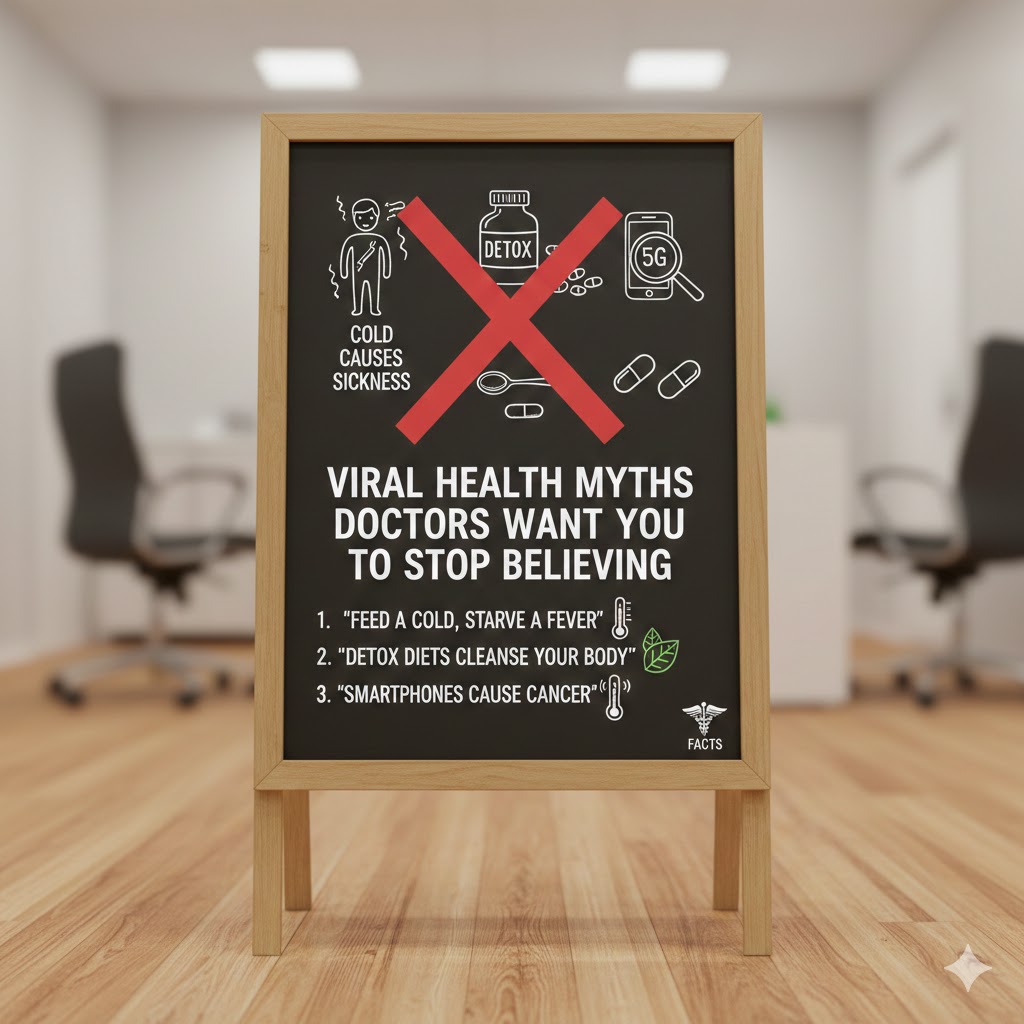
Social media and the internet have made health information more accessible than ever, but they have also allowed misinformation to spread rapidly. Many Viral Health Myths gain popularity because they sound convincing, promise quick results, or are repeated by influencers without medical expertise. Unfortunately, believing these myths can lead to poor health decisions, delayed treatment, and unnecessary anxiety.
Doctors consistently warn that separating medical facts from viral misinformation is essential for long-term health and safety.
Why Viral Health Myths Spread So Easily
Health myths often spread faster than accurate medical information because they appeal to emotion rather than evidence. Simple explanations, dramatic claims, and fear-based messaging tend to perform well online.
Common reasons these myths go viral
- Oversimplified explanations of complex health issues
- Personal anecdotes presented as universal truth
- Distrust of medical institutions
- Algorithms favoring engagement over accuracy
Because of this, Viral Health Myths can appear credible even when they lack scientific support.
Myth: “Natural Means Always Safe”
One of the most persistent Viral Health Myths is that natural remedies are automatically safer than medications. While some natural substances can be beneficial, others can be harmful, interact with medications, or cause side effects.
Doctors emphasize that:
- Natural products are not always regulated
- Dosage and purity can vary widely
- Some herbs can affect the liver, kidneys, or heart
Safety depends on evidence, not origin.
Myth: “Detoxes Cleanse Your Body”
Many detox teas, cleanses, and juice fasts claim to remove toxins from the body. In reality, the liver and kidneys already perform this function efficiently.
Medical professionals explain that:
- There is no scientific proof detox products remove toxins
- Extreme detoxing can cause dehydration and nutrient deficiencies
- Weight loss from detoxes is usually temporary water loss
This is one of the most widespread Viral Health Myths promoted for quick results rather than real health improvement.
Myth: “You Can Boost Immunity Overnight”
Claims about instantly boosting immunity through supplements, drinks, or specific foods are misleading. The immune system is complex and influenced by long-term habits, not short-term fixes.
Doctors agree that immune health depends on:
- Consistent sleep
- Balanced nutrition
- Stress management
- Vaccination when appropriate
There is no shortcut to building immune resilience.
Myth: “If It Worked for Someone Else, It Will Work for You”
Personal success stories are often shared as proof of effectiveness, but individual responses to diets, supplements, and treatments vary widely.
Healthcare providers caution that:
- Genetics influence how bodies respond
- Underlying conditions matter
- What helps one person may harm another
Relying on anecdotes is a major contributor to the spread of Viral Health Myths.
Myth: “Pain Is Always a Sign of Something Serious”
While pain should never be ignored, not all discomfort signals a serious condition. Many viral posts exaggerate symptoms, causing unnecessary fear.
Doctors explain that:
- Temporary pain can result from strain or stress
- Anxiety can amplify physical sensations
- Persistent or worsening pain is what requires evaluation
Context and duration matter more than isolated symptoms.
Myth: “Skipping Meals Helps With Weight Loss”
Skipping meals is often promoted as a fast way to lose weight, but doctors warn it can backfire.
Medical concerns include:
- Slowed metabolism
- Increased binge eating
- Hormonal imbalance
Sustainable weight management relies on consistency rather than extremes, making this another harmful example of Viral Health Myths.
Myth: “Social Media Doctors Know Better Than Your Physician”
Online medical content can be informative, but it cannot replace personalized care. Viral advice often lacks context and ignores individual health history.
Doctors stress that:
- Medical advice should be tailored
- Online content is general, not diagnostic
- Delaying professional care can worsen outcomes
Trust should be placed in qualified healthcare providers who understand a patient’s full medical background.
How to Identify Viral Health Myths
Doctors recommend a few simple checks before believing or sharing health claims.
Red flags to watch for
- Promises of instant or guaranteed results
- Claims that dismiss all medical consensus
- Lack of credible sources or studies
- Fear-based language
Applying critical thinking helps reduce the impact of Viral Health Myths.
Why Stopping the Spread Matters
Health misinformation does not just confuse people — it can cause real harm. Believing false claims may lead to delayed diagnoses, misuse of supplements, or rejection of proven treatments.
Doctors emphasize that accurate information saves lives, while misinformation creates risk.
Conclusion
Viral Health Myths thrive in fast-moving online spaces, but popularity does not equal truth. Doctors consistently urge people to question exaggerated claims, rely on evidence-based guidance, and consult qualified professionals before making health decisions. By recognizing and rejecting misinformation, individuals can protect their health and make choices rooted in science rather than trends.
More Related Topics:
Gut Health Mistakes That Cause Bloating and Weight Gain
Desk Exercises: 30+Exercises Every Work-From-Home Professional Needs to Stay Healthy and Energized