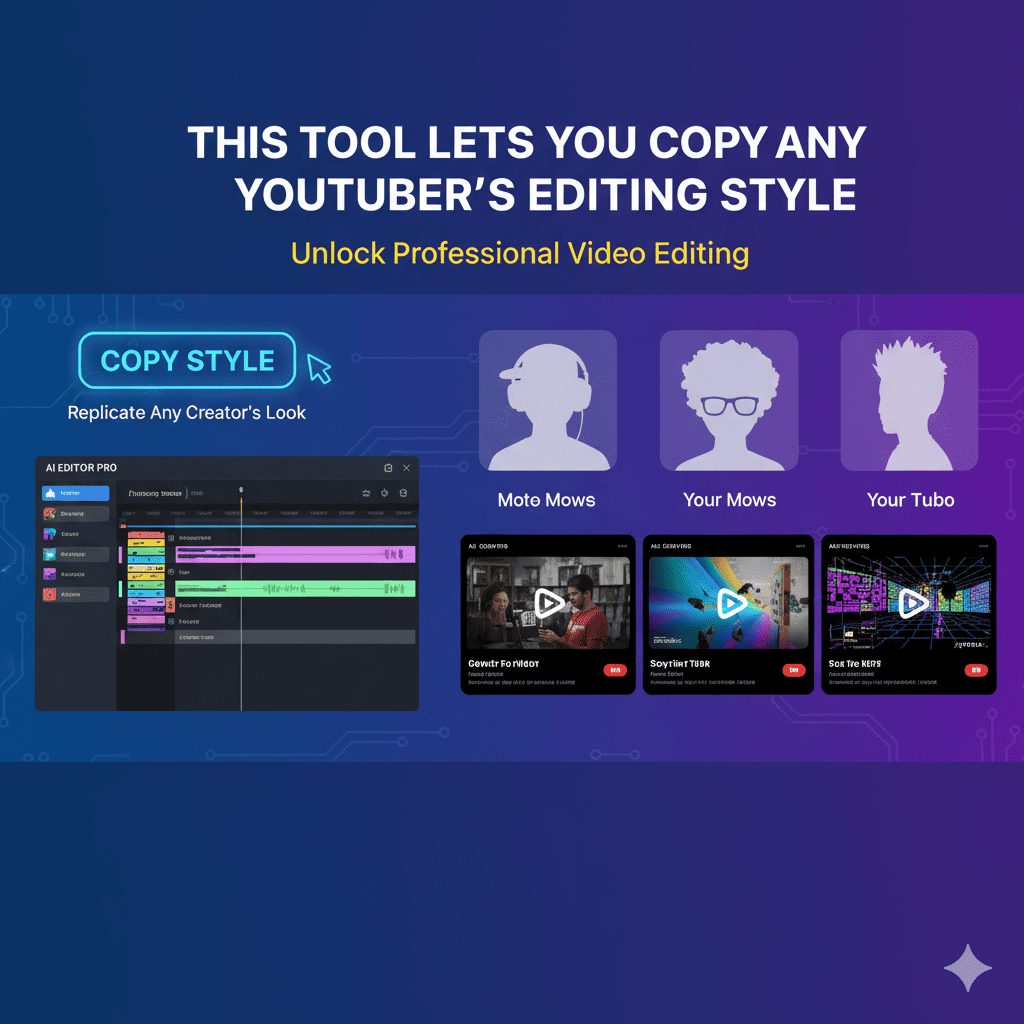
Have you ever wondered how your favorite YouTubers create such captivating videos? The secret isn’t just expensive equipment or years of experience—it’s about mastering editing techniques that keep viewers glued to their screens. Now, imagine if this tool lets you copy any YouTuber’s editing style with just a few clicks. Sounds too good to be true? It’s not.
In this comprehensive guide, we’ll explore how modern AI-powered editing tools are revolutionizing content creation, allowing creators of all skill levels to replicate professional editing styles and elevate their YouTube game.
1. Understanding the Power of Editing Styles in YouTube Success
Before we dive into how this tool lets you copy any YouTuber’s editing style, let’s understand why editing style matters so much in the first place.
The Psychology Behind Engaging Edits
YouTube isn’t just about content anymore—it’s about presentation. Studies show that viewers make decisions about whether to continue watching within the first 3 seconds of a video. Professional editing techniques like jump cuts, dynamic transitions, and strategic pacing keep viewers engaged and reduce drop-off rates.
Top YouTubers like MrBeast, MKBHD, and Emma Chamberlain have signature editing styles that their audiences instantly recognize. These styles create brand consistency and viewer loyalty. MrBeast’s fast-paced, high-energy cuts create urgency and excitement. MKBHD’s smooth, cinematic transitions convey professionalism and premium quality. Emma Chamberlain’s quirky zoom-ins and unexpected cuts create relatability and humor.
Why Traditional Editing Takes So Long
Learning to edit like a professional YouTuber traditionally requires:
- Hundreds of hours watching tutorials
- Trial and error with different techniques
- Understanding complex software like Adobe Premiere Pro or Final Cut Pro
- Developing an eye for timing, pacing, and visual storytelling
- Investing in expensive plugins and preset packages
This steep learning curve has kept many aspiring creators from reaching their full potential. That’s exactly why this tool lets you copy any YouTuber’s editing style is changing the game entirely.
2. What Is This Revolutionary Editing Tool?
The tool we’re discussing represents a new generation of AI-powered video editing software that analyzes existing videos and replicates their editing patterns, timing, and stylistic choices.
How AI-Powered Style Replication Works
At its core, this tool lets you copy any YouTuber’s editing style by using machine learning algorithms to:
Analyze video patterns: The AI examines thousands of frames, identifying cut frequency, transition types, and pacing rhythms. It understands when creators use jump cuts versus smooth transitions, when they add zoom effects for emphasis, and how they structure their video flow.
Detect audio synchronization: The tool recognizes how edits align with music beats, dialogue emphasis, and sound effects. This is crucial because professional editing often involves cutting on musical beats or syncing visual changes with audio cues.
Identify color grading signatures: Every top creator has a unique color palette. The AI captures these color profiles, including contrast levels, saturation preferences, and temperature adjustments.
Map motion graphics usage: From text animations to lower thirds, the tool catalogs how and when graphics appear throughout videos.
Track camera movement patterns: Whether it’s smooth pans, static shots, or dynamic movements, the AI learns the creator’s visual language.
Key Features That Set This Tool Apart
What makes this technology revolutionary isn’t just that this tool lets you copy any YouTuber’s editing style—it’s how accessible it makes professional editing:
One-click style transfer: Upload your raw footage and select a style template based on your favorite creator. The AI handles the rest, applying cuts, transitions, and effects automatically.
Customizable intensity levels: You can dial the style application up or down, maintaining your unique voice while borrowing proven techniques.
Real-time preview: See changes instantly as you tweak settings, eliminating the render-wait-adjust cycle that plagues traditional editing.
Multi-style blending: Combine elements from different creators to develop your own signature hybrid style.
Smart content awareness: The AI understands your content context, adapting editing choices appropriately rather than blindly copying patterns.
3. Step-by-Step Guide: Using the Tool to Transform Your Videos
Ready to see how this tool lets you copy any YouTuber’s editing style in practice? Here’s a detailed walkthrough.
Step 1: Setting Up Your Project
Begin by importing your raw footage into the platform. Most modern tools support all major video formats (MP4, MOV, AVI) and resolutions up to 4K. The interface is typically drag-and-drop simple—no complex project settings or confusing timelines to configure initially.
Organize your clips logically. Even though the AI will handle much of the editing, providing well-labeled footage helps the algorithm understand your content structure. Create folders for A-roll (main talking footage), B-roll (supplementary visuals), graphics, and audio separately.
Step 2: Selecting Your Style Reference
This is where this tool lets you copy any YouTuber’s editing style truly shines. You have several options:
Option A: Use pre-analyzed style templates. Most platforms come with libraries of popular creator styles already mapped out. Browse categories like Tech Reviews, Vlogs, Commentary, Gaming, or Educational content. Each template shows preview videos demonstrating the style.
Option B: Input a custom YouTube URL. Want to copy a specific video’s style? Simply paste the link. The AI will analyze the video in real-time, typically taking 2-5 minutes to map the editing patterns. This feature is incredibly powerful—imagine being able to replicate the exact editing style from a viral video in your niche.
Option C: Build a hybrid style. Select multiple reference videos and let the AI blend their characteristics. This approach helps you create something unique while leveraging proven techniques.
Step 3: Customizing the Application
After selecting your style, adjust how intensely this tool lets you copy any YouTuber’s editing style applies to your footage:
Cut frequency slider: Control how often cuts occur. Move toward “High” for frenetic, attention-grabbing pacing like gaming videos. Slide toward “Low” for contemplative, cinematic feels.
Transition variety: Choose whether you want strictly cut-based editing or if you want to incorporate wipes, dissolves, and other transitions.
Effect intensity: Determine how pronounced added effects should be—subtle zoom-ins or dramatic push-ins, gentle color grading or bold stylization.
Music synchronization: Upload background music and the tool automatically aligns edits with beats and musical phrases, creating that professional “locked-in” feeling.
Step 4: AI Processing and Refinement
Hit the “Generate” button and let the AI work its magic. Processing times vary based on footage length and complexity, typically ranging from 5-30 minutes for a 10-minute video.
During processing, the algorithm:
- Analyzes your audio for speech patterns and music beats
- Identifies key moments worthy of emphasis
- Applies cuts based on the reference style’s timing patterns
- Adds transitions matching the style template
- Inserts zoom effects and camera movements where appropriate
- Applies color grading to match the reference aesthetic
Once complete, review the auto-edited timeline. The beauty of how this tool lets you copy any YouTuber’s editing style is that you maintain full manual control. The AI provides an excellent starting point, but you can adjust individual cuts, swap transitions, or modify any element just like traditional editing software.
Step 5: Adding Personal Touches
While the tool handles the heavy lifting, your personal touches make content truly yours. Add:
Custom graphics and text overlays that reflect your brand Unique intro and outro sequences that bookmark your content Personal jokes or references through well-timed cuts or zooms Thumbnail-worthy moments with special emphasis
The goal isn’t to become a clone—it’s to leverage proven techniques while maintaining authenticity.
4. Practical Applications Across Different Content Types
Understanding how this tool lets you copy any YouTuber’s editing style works across various content categories helps you maximize its potential.
Tech Review Channels
Tech reviewers like MKBHD, Marques Brownlee, and Dave2D have distinctive styles characterized by smooth B-roll transitions, product-focused cinematography, and strategic use of slow motion.
When applying their styles to your tech content, the tool automatically:
- Creates elegant product reveal sequences with well-timed transitions
- Implements smooth pans across device features synchronized to your narration
- Adds cinematic slow-motion during key demonstration moments
- Applies professional color grading that makes products look premium
- Structures the pacing to build anticipation before revealing key specifications
Vlog Content
Vlogging styles vary dramatically from creator to creator. Casey Neistat’s gritty, energetic style differs vastly from Emma Chamberlain’s quirky, self-aware approach.
For vlog-style content, this tool lets you copy any YouTuber’s editing style by:
- Matching the jump-cut frequency that maintains energy without feeling jarring
- Incorporating zoom-in reactions at moments of surprise or humor
- Adding text overlays that comment on the action in the creator’s typical voice
- Timing music swells with emotional or exciting moments
- Creating smooth time-lapse sequences for travel or activity montages
Educational and Tutorial Content
Educators like Ali Abdaal, Thomas Frank, and Crash Course have evolved past static lecture formats. Their editing keeps complex information engaging through visual variety and strategic pacing.
The tool enhances educational content by:
- Breaking up long explanations with relevant B-roll or graphics
- Creating visual representations of abstract concepts through timed overlays
- Implementing strategic cuts that maintain energy during information-heavy segments
- Adding emphasis effects during key points or important takeaways
- Structuring content with clear visual chapter markers matching the creator’s style
Gaming Content
Gaming videos demand incredibly specific editing—highlight reels need different treatment than live commentary or tutorials. Creators like PewDiePie, Dream, and Valkyrae each have signature approaches.
For gaming content, the AI excels at:
- Identifying and highlighting clutch plays or funny moments
- Synchronizing edits with in-game action and reactions
- Adding zooms and effects during peak excitement
- Creating montage sequences with music-synced cuts
- Balancing gameplay visibility with creator reactions
5. Advanced Techniques: Maximizing the Tool’s Potential
Once you’ve mastered basic style replication, these advanced strategies help you truly leverage how this tool lets you copy any YouTuber’s editing style.
Creating Style Evolution Series
Track how top creators’ styles have evolved over time by analyzing their videos chronologically. Create style templates from their early work versus current output. This reveals:
- How pacing has changed as their audience matured
- Which techniques they’ve abandoned or embraced
- How their color grading and visual presentation evolved
- What remains consistent in their editing identity
Apply these insights to your own content evolution strategy.
Multi-Style Project Workflows
Different video segments might benefit from different editing approaches. A single video might use:
- High-energy gaming style for the intro hook (first 30 seconds)
- Smooth tech review style for product explanation (middle segment)
- Vlog-style casual cutting for personal commentary (closing thoughts)
This tool lets you copy any YouTuber’s editing style section by section, creating sophisticated multi-style videos that maintain cohesion while varying energy levels strategically.
Analyzing What Works Through Testing
Use the tool to create multiple versions of the same video with different editing styles. Upload these as A/B tests (unlisted videos shared with subset audiences) to gather data on:
- Average view duration for each style
- Click-through rates on thumbnails paired with different editing approaches
- Audience retention graphs showing where each style maintains engagement
- Comment sentiment and feedback specificity
This data-driven approach to style selection removes guesswork from your content strategy.
Building Your Signature Hybrid Style
The ultimate application of how this tool lets you copy any YouTuber’s editing style is developing your own recognizable approach. Study analytics to identify which borrowed techniques resonate most with your specific audience, then create custom templates blending these elements.
For example, you might discover your audience loves:
- The fast-paced cutting rhythm of tech reviewers
- The personal, relatable zoom effects from vloggers
- The smooth transitions from cinematic creators
- The bold text overlays from educational channels
Combine these into a signature style that feels fresh yet familiar, professional yet authentic to your voice.
6. Common Mistakes to Avoid
Even though this tool lets you copy any YouTuber’s editing style with impressive accuracy, users still make avoidable errors.
Over-Reliance on Automation
The biggest mistake is treating AI-generated edits as final products without personal review. Always:
- Watch your full video multiple times
- Check for awkward cuts during important statements
- Verify transitions don’t disrupt comprehension
- Ensure music-synced edits actually enhance rather than distract
- Remove any effects that don’t serve your specific content
Style Mismatching
Not every editing style suits every content type or creator personality. A high-energy gaming style applied to meditation tutorials creates cognitive dissonance. Consider:
- Your natural presentation energy and whether the editing matches
- Your audience’s expectations based on your niche
- Whether the style supports or undermines your message
- If the pacing aligns with your content’s complexity level
Ignoring Platform Differences
YouTube editing differs from TikTok, Instagram Reels, or LinkedIn video. What this tool lets you copy any YouTuber’s editing style creates for YouTube may need adjustment for other platforms:
- TikTok requires even faster pacing and more frequent hooks
- Instagram Reels benefit from vertical formatting considerations
- LinkedIn audiences expect more professional, measured pacing
- Podcast clips need dialogue clarity prioritized over visual flair
Neglecting Audio Quality
Excellent editing cannot save poor audio. Before applying any style template:
- Clean up background noise and room echo
- Normalize audio levels across clips
- Add appropriate music and sound effects
- Ensure dialogue is crisp and clear
- Check that music doesn’t overpower speaking
Remember: viewers forgive mediocre video quality far more readily than bad audio.
7. Legal and Ethical Considerations
As exciting as it is that this tool lets you copy any YouTuber’s editing style, important questions arise around creativity, originality, and intellectual property.
Understanding What You’re Actually Copying
Editing styles, like dance moves or athletic techniques, exist in a legally gray area. You’re not copying:
- Specific copyrighted content (footage, music, graphics)
- Trademarked elements (logos, branded intros)
- Original creative expressions (jokes, scripts, unique visuals)
You’re adopting technical approaches—cutting frequency, transition choices, pacing rhythms. This is generally considered learning from and building upon industry techniques rather than theft.
Maintaining Authenticity
The goal should be studying what works, not creating copycat content. Use the tool to:
- Understand why certain techniques engage audiences
- Accelerate your learning curve past basic editing challenges
- Experiment with professional approaches before developing your voice
- Analyze successful patterns you can adapt to your unique context
Giving Credit Where Inspiration Is Due
Consider acknowledging when you’ve deliberately studied and adopted techniques from specific creators. Many YouTubers appreciate the compliment when smaller channels mention “I’ve been studying [Creator’s] editing style.” This:
- Builds community rather than appearing derivative
- Creates potential collaboration opportunities
- Demonstrates professionalism and creative integrity
- Helps your audience understand your development journey
The Line Between Inspiration and Imitation
There’s a crucial difference between:
Inspiration: “I noticed tech reviewers use smooth B-roll transitions during specs explanations. I’ll implement that technique with my product footage.”
Imitation: “I’m going to replicate this exact video’s structure, jokes, and visual approach for my topic.”
This tool lets you copy any YouTuber’s editing style is meant for the former, not the latter.
8. The Future of AI-Powered Video Editing
The technology enabling tools that let you replicate editing styles is rapidly evolving. Understanding future developments helps you stay ahead.
Emerging Capabilities
Next-generation editing AI will likely offer:
Voice-to-edit commands: Simply describe the style you want verbally, and AI generates it. “Make this segment feel like a tech reveal with dramatic pacing and smooth transitions.”
Emotion-aware editing: AI that analyzes your facial expressions and tone, automatically emphasizing moments of excitement, concern, or humor with appropriate editing choices.
Audience preference learning: Systems that analyze your specific audience’s engagement patterns and adapt editing styles to maximize retention for your unique viewership.
Real-time collaborative editing: Multiple team members working simultaneously with AI assistance, each focusing on different aspects while the system maintains stylistic consistency.
Impact on Content Creation Careers
As this tool lets you copy any YouTuber’s editing style becomes more sophisticated, content creation roles will evolve:
Editors become creative directors: Less time on technical execution, more on strategic storytelling and brand development.
Democratization of professional quality: Solo creators achieving production value previously requiring full teams.
Shift toward creative strategy: As technical barriers lower, content strategy, audience psychology, and authentic storytelling become primary differentiators.
New specializations: Experts who understand how to prompt, guide, and optimize AI editing systems will be in high demand.
9. Getting Started: Recommended Tools and Resources
Ready to explore how this tool lets you copy any YouTuber’s editing style for your content? Here’s your action plan.
Top AI Editing Platforms to Explore
Several platforms offer style replication capabilities with varying features:
Descript: Known for text-based editing but increasingly incorporating style templates and AI automation. Excellent for podcast clips and talking-head content.
Runway ML: Offers advanced AI tools including style transfer features, though with a steeper learning curve. Best for creators with some editing background.
Opus Clip: Specializes in creating short-form content from long videos with automatic style adaptation based on platform (TikTok vs. YouTube Shorts vs. Reels).
Pictory: Focuses on turning scripts and articles into styled videos, ideal for educational and informational content.
Adobe Premiere Pro with Sensei AI: Traditional editing software enhanced with AI features, offering both manual control and automated assistance.
Learning Resources
To maximize how this tool lets you copy any YouTuber’s editing style, supplement the technology with education:
YouTube channels about editing: Study creators like Peter McKinnon, Cinecom.net, and Justin Odisho who break down editing techniques.
Online courses: Platforms like Skillshare, Udemy, and Coursera offer comprehensive editing courses that teach the “why” behind techniques.
Creator communities: Join Discord servers, Reddit communities (r/VideoEditing, r/NewTubers), and Facebook groups where editors share tips and feedback.
Style analysis practice: Spend time actively watching content while noting editing choices. Pause videos to count cuts per minute, identify transition types, and analyze pacing shifts.
Starting Your First Project
Begin with a simple, low-pressure project:
- Choose a short video: 2-3 minutes maximum for your first style replication attempt
- Select a clear style reference: Pick a creator with a distinctive, obvious editing approach
- Use mostly A-roll initially: Minimize B-roll complexity until you understand the tool
- Accept imperfection: Your first attempt will need manual adjustments—that’s expected
- Compare and iterate: Review the AI result against your reference video, noting differences
- Refine manually: Make adjustments until you’re satisfied with the result
- Analyze performance: Pay attention to retention and engagement compared to your previous videos
10. Measuring Success and Continuous Improvement
Implementing new editing styles only matters if it improves your content performance. Here’s how to track whether how this tool lets you copy any YouTuber’s editing style is working for you.
Key Performance Indicators
Monitor these metrics when experimenting with new editing approaches:
Average View Duration (AVD): The most important metric for editing success. If your AVD increases with style changes, you’re moving in the right direction. A 10-20% improvement is significant.
Audience Retention Curve: YouTube Studio shows exactly where viewers drop off. Compare retention between videos using different editing styles. Look for:
- Stronger retention in the critical first 30 seconds
- Fewer dramatic drop-offs during longer segments
- Higher percentage watching to the end
Click-Through Rate (CTR): While primarily affected by thumbnails and titles, editing style influences what moments you can capture for thumbnails and how engaging preview clips appear.
Engagement Metrics: Comments, likes, and shares often increase when editing creates more “moment-worthy” content. Look for comments specifically mentioning editing quality or video pacing.
Watch Time Per Video: Not just percentage viewed, but total minutes watched. Better editing can encourage longer videos without losing audience.
Creating Feedback Loops
Establish systems for continuous improvement:
Monthly style reviews: Dedicate time to analyzing what editing approaches performed best over the past 30 days.
Audience surveys: Occasionally ask your community what they think about your editing style, what they’d like more or less of.
A/B testing documentation: Keep a spreadsheet tracking which style templates you’ve used for which videos, with performance data for each.
Competitor analysis: Regularly check how top creators in your niche are evolving their editing, noting trends and innovations.
Evolution Over Time
As you grow and learn, your relationship with how this tool lets you copy any YouTuber’s editing style should mature:
Phase 1 (Months 1-3): Heavy reliance on templates and AI automation as you learn fundamentals.
Phase 2 (Months 4-6): Increasing manual customization, developing preferences, and beginning to blend multiple styles.
Phase 3 (Months 7-12): Creating custom templates based on your learnings, using AI primarily for speed rather than direction.
Phase 4 (Year 2+): Developing a signature style that others might want to emulate, with the tool serving as an efficiency multiplier rather than creative director.
Conclusion: Your Editing Evolution Starts Now
The revelation that this tool lets you copy any YouTuber’s editing style represents more than just technological advancement—it’s a democratization of content creation excellence. For years, professional editing remained a barrier preventing talented creators from reaching their potential. Technical complexity, time investment, and the steep learning curve meant many great ideas never reached audiences simply because the creator couldn’t make their content look professional.
That era is ending. AI-powered editing tools don’t replace creativity or eliminate the need for strategy—they remove the barriers between your creative vision and its execution. They let you learn from the best by doing, not just watching. They compress years of trial-and-error into weeks of guided experimentation.
But remember: these tools are accelerators, not replacements for authentic voice and valuable content. The most successful creators will use this technology to:
- Accelerate their learning curve past technical basics
- Test and iterate quickly on different approaches
- Focus energy on strategy rather than execution
- Develop unique voices informed by multiple influences
- Maintain consistency across growing content libraries
The fact that this tool lets you copy any YouTuber’s editing style isn’t the end goal—it’s the training wheels that help you develop your own style worth copying.
Start today. Choose one creator whose work you admire. Analyze what makes their editing effective. Use these tools to replicate those techniques in your next video. Learn from the process. Adjust. Improve. Iterate.
Your editing evolution doesn’t require years anymore. It requires intention, experimentation, and the willingness to leverage technology that makes professional quality accessible to everyone.
The question isn’t whether you can edit like the creators you admire—this tool lets you copy any YouTuber’s editing style proves you can. The real question is: what will you create when technical limitations no longer hold you back?
Also read this:
The Viral AI Avatar Trend: How People Are Redesigning Themselves
ColorOS 16 AI Face Brightening: The Feature Everyone Is Talking About
This Open-Source Tool Lets You Sync Bookmarks Across All Devices (Free & Secure)