
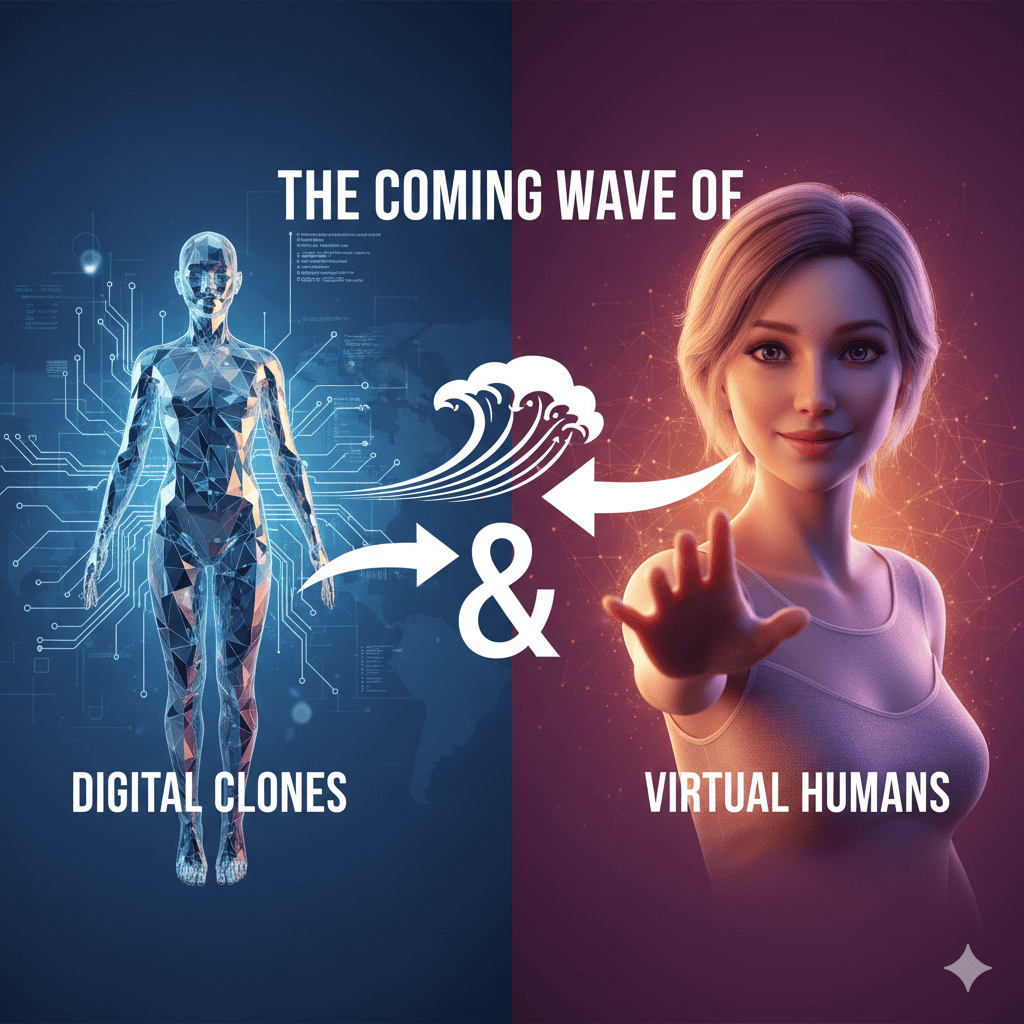
The Coming Wave of Digital Clones The future of business automation has arrived, and it’s more human than you might expect. Digital clones and virtual humans are revolutionizing how companies operate, communicate, and scale. This comprehensive guide explores how you can automate your business using AI tools to create digital replicas that work 24/7, never tire, and deliver consistent results.
Understanding Digital Clones and Virtual Humans
Digital clones represent a groundbreaking leap in artificial intelligence technology. These sophisticated AI-powered entities can replicate human appearance, voice, behavior, and even personality traits with stunning accuracy. Unlike traditional chatbots or automated systems, digital clones offer a genuinely human-like interaction experience that’s transforming customer service, marketing, sales, and internal operations.
Virtual humans go beyond simple automation. They combine advanced machine learning, natural language processing, computer vision, and generative AI to create digital entities that can think, respond, and adapt in real-time. When you automate your business using AI tools like digital clones, you’re not just streamlining processes—you’re creating scalable versions of your best team members.
The Technology Behind Digital Clones
Deep Learning and Neural Networks
The foundation of digital clone technology rests on sophisticated neural networks that can learn and replicate human patterns. These systems analyze thousands of data points including speech patterns, facial expressions, body language, and communication styles to create authentic digital representations.
Voice Cloning Technology
Modern AI voice synthesis has reached remarkable fidelity. Systems can now capture the unique timbre, tone, accent, and speaking style of any The Coming Wave of Digital Clones individual with just minutes of audio samples. This technology enables digital clones to sound exactly like their human counterparts, maintaining brand consistency and personal authenticity.
Facial Animation and Rendering
Photorealistic facial animation technology uses advanced 3D modeling and real-time rendering to create lifelike digital faces. These systems track micro-expressions, eye movements, and subtle facial cues that make virtual humans indistinguishable from their real-world counterparts in many applications.
How to Automate Your Business Using AI Tools: Digital Clone Applications
Customer Service Revolution
Digital clones are transforming customer service by providing instant, personalized support around the clock. Companies can now automate your business using AI tools to handle thousands of customer inquiries simultaneously without sacrificing quality or personal touch.
Benefits include:
- 24/7 availability across all time zones
- Instant response times with zero wait queues
- Consistent service quality regardless of volume
- Multilingual support without additional hiring
- Seamless escalation to human agents when needed
Sales and Marketing Transformation
Imagine having your top salesperson available to engage with every prospect simultaneously. Digital clones make this possible, allowing businesses to scale their best performers infinitely. These virtual representatives can conduct product demonstrations, answer questions, and guide customers through the buying journey with the same expertise as your human team.
Marketing teams are leveraging digital clones to create personalized video content at scale. Instead of recording hundreds of individual messages, a single digital clone can generate customized videos for each customer segment, maintaining the personal touch that drives engagement.
Content Creation at Scale
Content creators and influencers are using digital clones to maintain their online presence without being physically present. These virtual versions can host webinars, create social media content, and engage with audiences while the human counterpart focuses on strategy and creative direction.
When you automate your business using AI tools for content creation, you multiply your output without diluting your brand voice or authenticity.
Real-World Success Stories
E-Commerce Giant Reduces Support Costs by 60%
A major online retailer implemented digital clone technology to handle customer inquiries. The virtual assistant, modeled after their most successful customer service representative, handled routine questions, processed returns, and provided product recommendations. The result was a 60% reduction in support costs while simultaneously improving customer satisfaction scores.
Financial Services Firm Scales Advisory Services
A wealth management company created digital clones of their top financial advisors to provide initial consultations and educational content. These virtual advisors could meet with hundreds of clients daily, answering common questions and gathering information before scheduling in-depth consultations with human advisors. This approach allowed them to serve 300% more clients without expanding their human team.
Educational Platform Personalizes Learning
An online education company deployed virtual instructors that could adapt teaching styles to individual student needs. These digital educators provided personalized feedback, answered questions at any time, and offered consistent instruction quality across thousands of students simultaneously.
Automate Your Business Using AI Tools: Implementation Strategies
Step 1: Identify Automation Opportunities
Begin by analyzing your business operations to identify repetitive tasks, high-volume customer interactions, and scalability bottlenecks. The best candidates for digital clone implementation are processes that:
- Require consistent messaging and brand representation
- Involve high-volume, similar interactions
- Need 24/7 availability
- Would benefit from personalization at scale
- Currently limit growth due to human resource constraints
Step 2: Select the Right Technology Platform
Numerous platforms now offer digital clone and virtual human capabilities. When evaluating options, consider factors such as:
- Customization capabilities and brand alignment
- Integration with existing systems and workflows
- Training requirements and setup complexity
- Scalability and performance under load
- Privacy and security features
- Ongoing maintenance and update processes
Step 3: Create Your Digital Clone
The creation process typically involves:
- Recording video and audio samples of the person being cloned
- Capturing personality traits, communication styles, and knowledge base
- Training the AI model on relevant data and scenarios
- Testing and refining responses for accuracy and authenticity
- Integrating with business systems and databases
Step 4: Integration and Deployment
Successful implementation requires seamless integration with your existing technology stack. This includes connecting your digital clone to:
- Customer relationship management (CRM) systems
- Knowledge bases and documentation
- Communication channels (website, social media, messaging apps)
- Analytics and monitoring tools
- Human escalation pathways
Step 5: Continuous Optimization
Digital clones improve through ongoing learning and optimization. Establish processes for:
- Monitoring performance metrics and user satisfaction
- Collecting feedback and identifying improvement areas
- Updating knowledge bases and training data
- Refining conversation flows and response patterns
- Expanding capabilities based on business needs
The Ethical Considerations of Digital Clones
Transparency and Disclosure
The Coming Wave of Digital Clones Businesses must be transparent about when customers are interacting with AI-powered digital clones rather than human representatives. Clear disclosure builds trust and manages expectations appropriately.
Data Privacy and Security
Digital clones process vast amounts of personal and business data. Implementing robust security measures, complying with data protection regulations, and maintaining customer privacy are non-negotiable requirements.
Consent and Ownership
Creating digital clones of real individuals requires explicit consent. Organizations must establish clear policies regarding who owns the digital clone, how it can be used, and what happens to it if the relationship with the human counterpart ends.
Job Displacement Concerns
While digital clones can handle routine tasks, they should augment rather than replace human workers. The goal is to free humans for higher-value activities that require creativity, emotional intelligence, and complex problem-solving.
Automate Your Business Using AI Tools: Industry-Specific Applications
Healthcare and Telemedicine
Virtual health assistants can conduct initial patient screenings, schedule appointments, provide medication reminders, and offer health education. Digital clones of healthcare providers can extend their reach to underserved areas and provide consistent patient education.
Real Estate and Property Management
Real estate agents use digital clones to provide 24/7 property tours, answer common questions, and qualify leads. Property management companies deploy virtual assistants to handle maintenance requests and tenant inquiries.
Hospitality and Travel
Hotels and travel agencies leverage digital concierges to provide recommendations, handle bookings, and address guest concerns. These virtual assistants can interact in multiple languages and adapt recommendations based on guest preferences.
Legal Services
Law firms create digital clones to handle client intake, provide initial case assessments, and answer routine legal questions. This allows attorneys to focus on complex legal work while ensuring clients receive immediate attention.
Human Resources and Training
Companies use virtual HR representatives for employee onboarding, benefits questions, and policy clarification. Digital trainers can provide consistent, personalized instruction across global teams.
The Technology Stack for Digital Clone Creation
AI and Machine Learning Frameworks
Modern digital clones rely on advanced AI frameworks including:
- Transformer models for natural language understanding
- Generative adversarial networks (GANs) for image and video synthesis
- Recurrent neural networks for conversational flow
- Reinforcement learning for continuous improvement
Voice and Speech Technologies
Key technologies include:
- Text-to-speech (TTS) engines with neural voice synthesis
- Speech recognition and transcription systems
- Emotion detection and sentiment analysis
- Prosody modeling for natural intonation
Computer Vision and Graphics
Visual authenticity requires:
- 3D facial modeling and animation
- Real-time rendering engines
- Motion capture and tracking systems
- Photorealistic texture mapping
- Lighting and environmental adaptation
Cost-Benefit Analysis: When to Automate Your Business Using AI Tools
Initial Investment Considerations
Implementing digital clone technology requires upfront investment in:
- Technology platform licensing or development
- Content creation and training data collection
- System integration and customization
- Staff training and change management
- Ongoing maintenance and optimization
Return on Investment Metrics
Organizations typically see ROI through:
- Reduced labor costs for routine tasks
- Increased customer capacity without proportional staffing increases
- Extended service hours without overtime costs
- Improved consistency and quality control
- Faster response times and increased customer satisfaction
- Enhanced scalability during peak periods
Break-Even Timeline
Most businesses achieve break-even within 6-18 months, depending on implementation scope and use case. High-volume customer service applications often show positive ROI within the first quarter.
Future Trends in Digital Clones and Virtual Humans
Enhanced Emotional Intelligence
Next-generation digital clones will better recognize and respond to human emotions, adjusting their communication style based on customer sentiment and context.
Seamless Reality Integration
Augmented reality (AR) and virtual reality (VR) will enable digital clones to appear as holographic presences in physical spaces, creating even more immersive interactions.
Hyper-Personalization
Advanced AI will enable digital clones to remember individual customer preferences, history, and context across all interactions, creating truly personalized experiences at scale.
Cross-Platform Consistency
Future digital clones will maintain consistent personality and knowledge across all channels—voice calls, video chats, text messaging, and emerging communication platforms.
Collaborative AI Teams
Multiple digital clones will work together seamlessly, handing off complex tasks between specialized virtual agents while maintaining context and continuity.
Security and Privacy in the Age of Digital Clones
Deepfake Prevention
As digital clone technology advances, so do concerns about misuse. Implementing authentication mechanisms, digital watermarking, and blockchain verification helps ensure digital clones are used only for authorized purposes.
Data Encryption and Access Control
Protecting the data that powers digital clones requires:
- End-to-end encryption for all communications
- Role-based access controls
- Regular security audits and penetration testing
- Compliance with industry standards and regulations
Identity Verification
Robust verification systems ensure that digital clones accurately represent authorized individuals and that customers can verify they’re interacting with legitimate business representatives.
Building a Digital Clone Strategy for Your Business
Assessment Phase
Evaluate your organization’s readiness by examining:
- Current automation maturity level
- Technology infrastructure capabilities
- Budget and resource availability
- Organizational culture and change readiness
- Regulatory and compliance requirements
Pilot Program Development
Start with a limited pilot to test viability:
- Select a specific use case with clear success metrics
- Limit initial deployment scope and audience
- Gather comprehensive feedback and performance data
- Iterate and improve before broader rollout
Change Management
Successfully implementing digital clones requires:
- Clear communication about goals and benefits
- Training for employees who will work alongside digital clones
- Addressing concerns about job security and role changes
- Celebrating successes and learning from challenges
Scaling Strategy
Once your pilot proves successful:
- Expand to additional use cases and departments
- Increase capacity and capabilities gradually
- Continue monitoring performance and gathering feedback
- Build internal expertise and best practices
Automate Your Business Using AI Tools: Measuring Success
Key Performance Indicators
Track these metrics to evaluate digital clone effectiveness:
- Customer satisfaction scores (CSAT, NPS)
- First contact resolution rates
- Average handling time for interactions
- Cost per interaction or transaction
- Escalation rates to human agents
- Revenue generated or influenced
- Customer retention and lifetime value
Qualitative Feedback
Beyond numbers, gather qualitative insights through:
- Customer surveys and interviews
- Employee feedback on collaboration with digital clones
- Analysis of conversation transcripts for improvement opportunities
- A/B testing different approaches and messaging
Overcoming Common Implementation Challenges
Technical Integration Hurdles
Many businesses struggle with connecting digital clone platforms to legacy systems. Solutions include:
- API-first architecture for flexibility
- Middleware solutions for translation between systems
- Phased integration approach starting with isolated use cases
- Working with experienced implementation partners
User Acceptance
Some customers initially resist interacting with AI. Address this by:
- Clearly communicating the benefits of digital interaction
- Offering easy paths to human assistance when needed
- Demonstrating value through superior response times and availability
- Continuously improving the quality and authenticity of interactions
Maintaining Authenticity
As digital clones handle more interactions, maintaining authentic brand voice becomes challenging. Strategies include:
- Regular reviews and updates of conversation flows
- Incorporating feedback loops from customers and employees
- Training digital clones on new products, policies, and scenarios
- Balancing automation with human oversight
The Competitive Advantage of Early Adoption
Organizations that automate your business using AI tools like digital clones now gain significant advantages:
Market Differentiation: Stand out by offering superior service availability and personalization.
Operational Efficiency: Achieve more with existing resources while maintaining or improving quality.
Scalability: Grow your business without proportional increases in operational costs.
Customer Experience: Meet modern customer expectations for instant, personalized service.
Employee Satisfaction: Free your team from repetitive tasks to focus on meaningful, rewarding work.
Preparing Your Organization for the Digital Clone Revolution
Skill Development
Invest in training for:
- AI literacy across the organization
- Digital clone management and optimization
- Data analysis and performance monitoring
- Enhanced soft skills for human team members focusing on complex interactions
Infrastructure Modernization
Ensure your technology foundation supports advanced AI:
- Cloud-based scalable computing resources
- Real-time data processing capabilities
- Robust API architecture
- Modern communication platforms
Cultural Transformation
Foster a culture that embraces AI augmentation:
- Position digital clones as team members, not threats
- Celebrate human-AI collaboration successes
- Encourage experimentation and innovation
- Maintain focus on customer value and experience
Conclusion: The Time to Act is Now
The wave of digital clones and virtual humans is not a distant future scenario—it’s happening now. Forward-thinking businesses are already reaping the benefits of these transformative technologies. The question is no longer whether to automate your business using AI tools, but how quickly you can implement these solutions to stay competitive.
Digital clones offer unprecedented opportunities to scale your best people, extend your service capabilities, and create remarkable customer experiences. By starting your digital transformation journey today, you position your organization to thrive in an increasingly automated, AI-powered business landscape.
The most successful companies will be those that thoughtfully integrate digital clones while maintaining the human touch that builds lasting customer relationships. They’ll use technology to amplify human capabilities rather than replace them, creating a future where businesses operate more efficiently while delivering more personalized, responsive service than ever before.
Also read this:
AI Is Redefining Education: The Revolutionary Transformation That’s Changing Learning Forever
10 Profitable AI Side Hustles You Can Start Right Now (Complete 2025 Guide to Making $5K+/Month!)