
What is Sunscreen and Why It Matters?
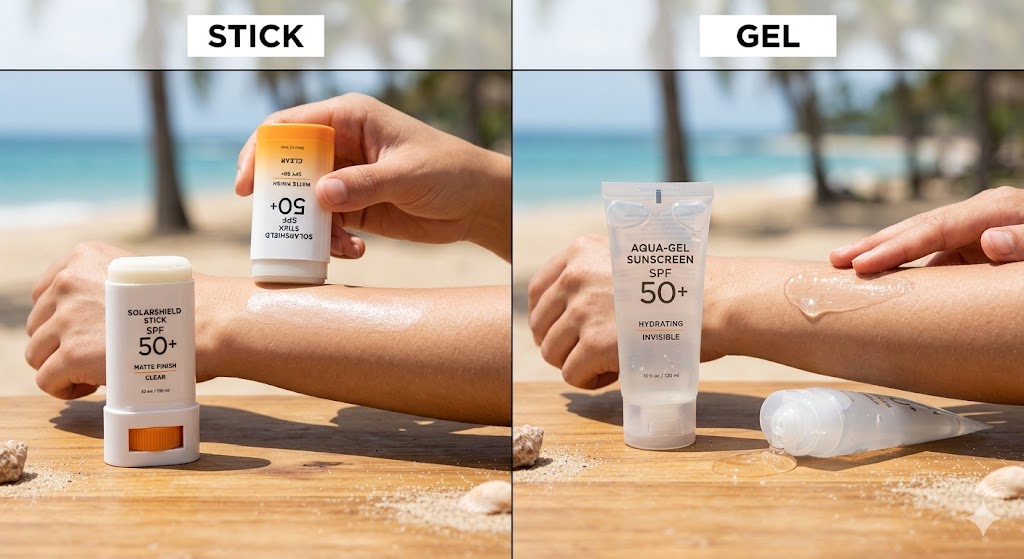
Sunscreen Stick vs Gel Sunscreen is a trending comparison in 2026 as more people focus on lightweight, effective sun protection. Sunscreen protects the skin from harmful UV rays that can cause tanning, premature aging, and long-term damage.
Choosing between Sunscreen Stick vs Gel Sunscreen depends on your skin type, lifestyle, and usage preferences.
What is a Sunscreen Stick?
A sunscreen stick is a solid, wax-based sunscreen that comes in a roll-on or stick format.
Key Features:
- Compact and travel-friendly
- Easy to apply
- Mess-free
- Ideal for targeted areas (face, nose, under eyes)
Sunscreen Stick vs Gel Sunscreen comparisons often highlight stick sunscreens for convenience.
What is Gel Sunscreen?
Gel sunscreen is a lightweight, water-based sunscreen that absorbs quickly into the skin.
Key Features:
- Non-greasy formula
- Quick absorption
- Suitable for oily skin
- No white cast
In Sunscreen Stick vs Gel Sunscreen, gel sunscreens are preferred for daily wear.
Sunscreen Stick vs Gel Sunscreen: Key Differences
1. Texture
- Stick: Solid and slightly waxy
- Gel: Lightweight and smooth
2. Application
- Stick: Direct application
- Gel: Spread with fingers
3. Skin Feel
- Stick: Slightly heavy
- Gel: Light and breathable
4. Best For
- Stick: Travel and reapplication
- Gel: Daily use
5. Finish
- Stick: Slight shine
- Gel: Matte or natural finish
Benefits of Sunscreen Stick
1. Easy Reapplication
One of the biggest advantages in Sunscreen Stick vs Gel Sunscreen.
2. Travel-Friendly
Fits easily in pockets or bags.
3. Mess-Free Use
No need to touch product with hands.
4. Great for Outdoor Activities
Quick application on the go.
5. Targeted Protection
Ideal for small areas like nose and cheeks.
Benefits of Gel Sunscreen
1. Lightweight Texture
Major advantage in Sunscreen Stick vs Gel Sunscreen.
2. Ideal for Oily Skin
Does not clog pores.
3. No White Cast
Blends easily into skin.
4. Comfortable for Daily Use
Feels like skincare, not heavy sunscreen.
5. Better Coverage
Easier to apply evenly.
Sunscreen Stick vs Gel Sunscreen for Different Skin Types
Oily Skin
Gel sunscreen is the better choice.
Dry Skin
Stick sunscreen can provide extra moisture.
Sensitive Skin
Both can work—choose fragrance-free formulas.
Acne-Prone Skin
Gel sunscreen is usually safer.
Sunscreen Stick vs Gel Sunscreen: Which Is Better in 2026?
There is no single winner in Sunscreen Stick vs Gel Sunscreen—it depends on your needs.
Choose Stick If:
- You need portability
- You reapply often
- You want quick use
Choose Gel If:
- You want daily comfort
- You have oily or acne-prone skin
- You prefer lightweight products
How to Use Sunscreen Properly
- Apply 15–20 minutes before sun exposure
- Reapply every 2–3 hours
- Use enough quantity
- Cover all exposed areas
Proper usage is more important than choosing between Sunscreen Stick vs Gel Sunscreen.
Common Mistakes to Avoid
- Using too little sunscreen
- Skipping reapplication
- Missing areas like ears and neck
- Using expired sunscreen
Precautions
- Always check SPF (30 or higher recommended)
- Choose broad-spectrum protection
- Patch test new products
- Store properly
Conclusion
Sunscreen Stick vs Gel Sunscreen ultimately comes down to convenience vs comfort. Stick sunscreens are perfect for quick, on-the-go application, while gel sunscreens offer a lightweight and comfortable experience for daily use.
For best results, many people use both—gel sunscreen for base protection and stick sunscreen for easy reapplication. Understanding your skin type and lifestyle will help you choose the right option and maintain healthy, protected skin.
FAQ’s
Which is better: Sunscreen Stick vs Gel Sunscreen?
Both are effective; gel is better for daily use, stick for reapplication.
Can I use both together?
Yes, gel for base and stick for touch-ups.
Is gel sunscreen good for oily skin?
Yes, it is lightweight and non-greasy.
Does stick sunscreen clog pores?
It can if used excessively or not removed properly.
How often should I reapply sunscreen?
Every 2–3 hours.
More Related Topics:
Gua Sha Benefits for Face: Does It Really Work?