
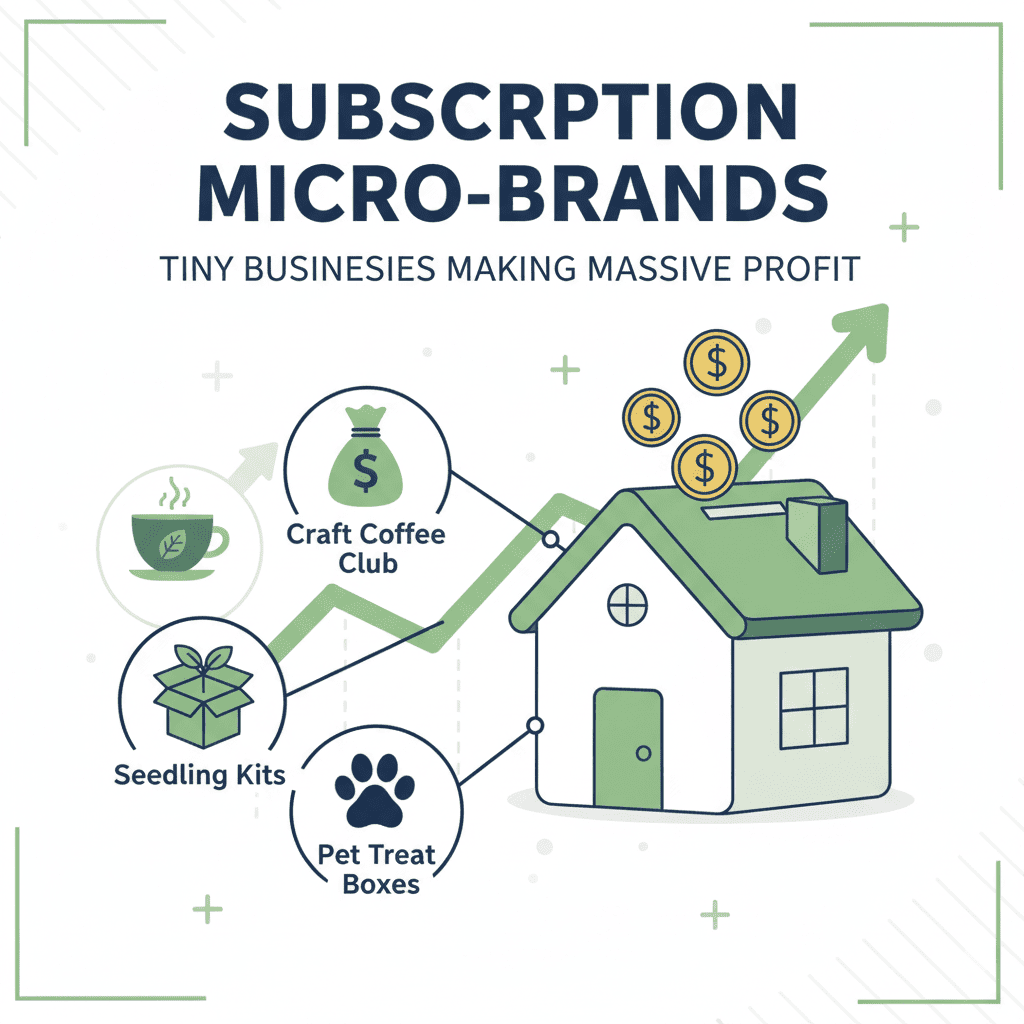
The Rise of Small-Scale Subscription Empires
In an era dominated by corporate giants and venture-capital-backed startups, a quiet revolution is unfolding in the business world. Subscription Micro-Brands are proving that you don’t need massive infrastructure, extensive teams, or millions in funding to build a wildly profitable business. These tiny enterprises, often run by solo entrepreneurs or small teams, are generating six-figure and even seven-figure revenues by focusing on niche audiences and delivering consistent value through subscription models.
The beauty of Subscription Micro-Brands lies in their elegant simplicity. Instead of chasing explosive growth and market domination, these businesses cultivate loyal communities of subscribers who pay monthly or annually for specialized products, curated experiences, or exclusive content. The result? Predictable recurring revenue, deeper customer relationships, and profit margins that would make traditional businesses envious.
This comprehensive guide explores the phenomenon of Subscription Micro-Brands, revealing how tiny businesses are achieving massive profitability, what makes them successful, and how you can build your own subscription empire—even if you’re starting from scratch.
The Economics of Subscription Micro-Brands
Before diving into specific strategies, let’s understand why Subscription Micro-Brands are so incredibly profitable compared to traditional business models.
The Power of Recurring Revenue
Traditional businesses face a constant challenge: they must find new customers every single day to generate sales. Subscription Micro-Brands flip this model on its head. Once a customer subscribes, they generate revenue month after month without requiring constant acquisition efforts. This recurring revenue creates financial predictability that transforms how these businesses operate.
Consider a simple example: A micro-brand charging $49 per month with just 500 subscribers generates $24,500 in monthly recurring revenue—that’s $294,000 annually. With minimal overhead and high retention rates, the majority of this revenue becomes pure profit. Scale that to 1,000 or 2,000 subscribers, and you’re looking at a substantial income stream from what remains a genuinely small operation.
Lower Customer Acquisition Costs
Subscription Micro-Brands benefit from powerful word-of-mouth marketing within their niche communities. When you deeply serve a specific audience, satisfied customers become enthusiastic advocates. This organic growth significantly reduces customer acquisition costs compared to traditional businesses constantly paying for advertising to drive one-time purchases.
Higher Lifetime Value
A customer who makes a single $50 purchase generates $50 in lifetime value. A subscriber paying $50 monthly who stays for two years generates $1,200 in lifetime value. This dramatic difference means Subscription Micro-Brands can invest more in customer acquisition, provide better customer experiences, and still maintain exceptional profitability.
Operational Efficiency
Most Subscription Micro-Brands operate with lean teams or solo founders because subscriptions create operational efficiency. Instead of managing thousands of individual transactions, these businesses process recurring payments automatically, fulfill predictable orders, and focus energy on retention rather than constant acquisition.
1. Curated Product Subscriptions: Tiny Boxes, Huge Returns
Physical product subscriptions represent one of the most visible categories of Subscription Micro-Brands, delivering carefully curated items directly to subscribers’ doorsteps.
The Niche Product Box Model
The key to profitable product subscriptions isn’t competing with Birchbox or FabFitFun—it’s going impossibly niche. Successful Subscription Micro-Brands serve specific communities with laser-focused product selections that mass-market boxes could never profitably serve.
Consider a subscription box for urban beekeepers, delivering seasonal hive supplies, specialized tools, and educational materials. The total addressable market might be just 50,000 people nationwide, but with the right positioning, capturing even 1% of that market creates a $300,000 annual business if subscribers pay $50 monthly.
Sourcing Strategies for Profitability
Profitable product subscriptions require smart sourcing. Successful Subscription Micro-Brands often:
- Work directly with artisan producers to eliminate middlemen
- Negotiate wholesale pricing based on predictable monthly volumes
- Partner with brands for promotional inclusions that reduce box costs
- Create their own branded items to capture higher margins
- Mix high-margin items with lower-margin hero products
The goal is maintaining gross margins of 50-60% or higher, which allows for shipping costs, packaging, payment processing fees, and still leaves substantial profit.
Retention-Focused Fulfillment
The difference between a struggling subscription box and a profitable one often comes down to retention. Successful Subscription Micro-Brands obsess over the unboxing experience, include personalization elements, provide surprise and delight moments, and create community around the subscription through social media groups or exclusive content.
Case Study Spotlight
One successful micro-brand serves fly-fishing enthusiasts with monthly boxes of artisan-tied flies, specialized tackle, and destination guides. With just 800 subscribers at $47/month, the solo founder generates $376,000 annually. After product costs (30%), shipping (15%), and overhead (10%), he nets approximately $170,000 in profit while working fewer than 30 hours weekly.
2. Digital Content Subscriptions: Pure Margin Profit Machines
If physical subscriptions require managing inventory and shipping, digital content subscriptions eliminate these complexities entirely. These Subscription Micro-Brands represent some of the highest-margin businesses in existence.
Premium Newsletter Communities
Email newsletters have evolved from simple information broadcasts to sophisticated subscription businesses. Successful newsletter Subscription Micro-Brands combine industry expertise, unique insights, and community access into compelling subscription offerings.
The economics are stunning: with minimal overhead beyond email service provider costs, newsletter subscriptions convert directly to profit. A newsletter serving 2,000 subscribers at $15 monthly generates $360,000 annually with essentially zero marginal cost per subscriber.
Specialized Online Education
Online education represents a massive opportunity for Subscription Micro-Brands that possess deep expertise in specific domains. Rather than creating one-time courses, subscription education businesses provide ongoing learning experiences with new content released monthly or weekly.
This could be video tutorials for a specific craft, masterclasses in a business skill, fitness programming, language learning, or any domain where ongoing education creates value. The subscription model ensures students stay engaged longer and provides continuous revenue while you develop content.
Exclusive Membership Communities
Some of the most profitable Subscription Micro-Brands sell access to exclusive communities rather than specific content. These might be:
- Professional networks for specific industries
- Accountability groups for entrepreneurs
- Support communities for people facing specific challenges
- Hobby enthusiast forums with expert moderation
- Mastermind groups for skill development
The value isn’t just in what’s provided but in who else is there. Well-curated communities with active moderation command premium subscription prices because members gain networking, support, and relationships that extend beyond the platform.
Premium Podcast Subscriptions
While most podcasts remain free and ad-supported, Subscription Micro-Brands in podcasting offer premium tiers with additional content, early access, ad-free episodes, or exclusive shows. Even modest audiences can generate substantial subscription revenue when superfans are willing to pay for deeper engagement.
3. Service Subscriptions: Recurring Revenue for Expertise
Service-based Subscription Micro-Brands package expertise into recurring offerings, creating predictable income streams for traditionally project-based work.
Retainer-Based Consulting
Rather than selling consulting projects that require constant business development, smart consultants build Subscription Micro-Brands by offering ongoing retainer services. Clients pay monthly for guaranteed access to expertise, whether through regular strategy sessions, on-demand advice, or continuous optimization work.
This model works across industries: marketing consultants, financial advisors, business coaches, technical specialists, and creative professionals all successfully transition from project work to subscription retainers.
Done-For-You Subscription Services
Some Subscription Micro-Brands provide ongoing service execution rather than advice. Examples include:
- Social media management for specific industries
- Bookkeeping for particular business types
- Content creation services
- Website maintenance and updates
- Data analysis and reporting
- Administrative support
The key is specialization—serving a specific niche allows you to create efficient processes, command premium prices, and become the obvious choice for that particular audience.
Coaching and Accountability Programs
Personal development, business growth, health optimization, and skill development all create opportunities for coaching-based Subscription Micro-Brands. Subscribers pay monthly for regular coaching sessions, accountability check-ins, customized guidance, and community support.
The subscription model works brilliantly for coaching because transformation happens over time, not in a single session. Monthly subscriptions align pricing with ongoing value delivery while creating predictable revenue for coaches.
4. Software and Tool Subscriptions: Micro-SaaS Success
Not all software businesses need venture capital and massive teams. Subscription Micro-Brands in the software space—often called micro-SaaS—serve niche audiences with specialized tools that solve specific problems.
Vertical SaaS for Specific Industries
Instead of building horizontal software that serves everyone, successful micro-SaaS Subscription Micro-Brands create tools for specific industries or professions. These might be:
- Practice management software for specific healthcare specialties
- Scheduling tools designed for particular service businesses
- Inventory management for niche retail categories
- Project management tailored to specific industries
- Communication tools for particular professional communities
By focusing narrowly, these tools can charge premium prices while remaining small operations that serve their niche exceptionally well.
Specialized Productivity Tools
Personal productivity represents another rich vein for Subscription Micro-Brands. Solo developers create focused tools that do one thing exceptionally well—whether that’s task management for a specific methodology, note-taking optimized for particular workflows, or time-tracking designed for specific professional needs.
No-Code and Low-Code Opportunities
Modern no-code and low-code platforms enable non-technical founders to build functional software products. Subscription Micro-Brands leverage tools like Bubble, Webflow, Airtable, and Zapier to create useful applications without extensive development resources.
This democratization of software creation means domain experts without coding skills can build tools that solve problems they understand intimately, creating software Subscription Micro-Brands that might generate $10,000 to $100,000 monthly with solo founders or tiny teams.
5. Creative and Media Subscriptions: Monetizing Passion
Creators are discovering that Subscription Micro-Brands offer better economics than advertising, sponsorships, or one-time sales for monetizing creative work.
Patreon and Creator Subscription Platforms
Visual artists, musicians, writers, game developers, and other creators build Subscription Micro-Brands by offering exclusive content, behind-the-scenes access, early releases, or special perks to paying subscribers. Even modest creator audiences can generate meaningful income when the most engaged fans contribute monthly.
A photographer with 500 subscribers at $10 monthly generates $60,000 annually—potentially more than they’d earn from stock photo sales or sporadic client work. A musician with 1,000 fans paying $5 monthly creates a $60,000 base income before other revenue streams.
Digital Asset Subscriptions
Designers, photographers, videographers, and other media creators build Subscription Micro-Brands around asset libraries. Subscribers pay monthly for access to regularly updated collections of stock photos, design templates, video footage, audio tracks, graphics, fonts, or other creative assets.
The key is focusing on specialized asset categories rather than competing with massive stock sites. A subscription providing authentic photos of specific locations, design templates for particular industries, or illustrations in unique styles can command premium prices from niche audiences.
Serialized Creative Content
Writers and storytellers launch Subscription Micro-Brands around serialized fiction, releasing new chapters or stories to subscribers regularly. This modern twist on the historical tradition of serialized novels creates anticipation and ongoing engagement while generating predictable income.
Similarly, comic artists, illustrators, and visual storytellers build subscription audiences around ongoing series, with subscribers paying for regular installments and exclusive content.
6. Curated Information and Research: Knowledge as a Service
In an age of information overload, Subscription Micro-Brands that filter, analyze, and synthesize information for specific audiences create tremendous value.
Industry Intelligence Services
Professionals need to stay current in their fields but lack time to monitor all relevant developments. Subscription Micro-Brands fill this gap by providing curated industry news, trend analysis, competitive intelligence, and strategic insights.
These might serve:
- Specific professional niches with relevant news and analysis
- Investors with specialized market intelligence
- Business owners with competitive monitoring
- Technical professionals with curated learning resources
- Executives with strategic insights
The value proposition is simple: subscribers pay for time saved and insights gained, making these services easy to justify even at premium price points.
Deal and Opportunity Curation
Some Subscription Micro-Brands curate opportunities rather than information. These might include:
- Real estate investment deal flow
- Business acquisition opportunities
- Freelance job boards for specific skills
- Grant and funding opportunities
- Partnership and collaboration prospects
By providing pre-vetted, high-quality opportunities, these services save subscribers countless hours while potentially enabling valuable transactions.
Exclusive Data and Analytics
Subscription Micro-Brands with access to proprietary data or specialized analytical capabilities create value by providing insights unavailable elsewhere. This might be market data for niche industries, performance benchmarks for specific business types, consumer trend analysis, or technical measurements.
The combination of unique data sources and specialized expertise creates defensible subscription businesses that competitors can’t easily replicate.
7. Physical Consumables: The Coffee Club Model
Consumable products that customers need regularly create natural subscription opportunities for Subscription Micro-Brands.
Specialty Food and Beverage
Coffee, tea, spices, hot sauces, craft chocolates, specialty ingredients, and artisan snacks all work well as subscription products. Successful Subscription Micro-Brands in this space typically:
- Source exceptional quality products that justify premium pricing
- Provide variety and discovery through rotating selections
- Educate subscribers about products through tasting notes and origin stories
- Build community among enthusiasts
- Focus on specific niches rather than broad appeal
A specialty coffee subscription serving 1,200 subscribers at $28 monthly generates over $400,000 annually. With careful sourcing and efficient operations, margins of 40-50% are achievable, creating six-figure profit for small operations.
Health and Wellness Consumables
Supplements, vitamins, protein powders, beauty products, and other health-focused consumables work excellently as subscriptions because consumers use them regularly and appreciate the convenience of automatic delivery.
Successful Subscription Micro-Brands in this category often create their own formulations for specific audiences—athletes training for particular sports, people following specific diets, individuals with particular health goals, or demographics with unique needs.
Eco-Friendly and Sustainable Products
Sustainability-minded consumers eagerly support Subscription Micro-Brands providing eco-friendly alternatives to conventional consumables. This might include plastic-free household products, sustainable personal care items, zero-waste alternatives, or ethically sourced goods.
These subscriptions often command premium pricing because subscribers value both the products and the mission, creating strong retention and word-of-mouth growth.
8. Hybrid Subscription Models: Combining Multiple Revenue Streams
The most sophisticated Subscription Micro-Brands often combine multiple subscription types, creating diverse revenue streams while serving their audience more comprehensively.
Content + Community + Commerce
This powerful combination provides educational content, facilitates community interaction, and sells relevant products—all under one subscription. For example, a gardening subscription might include:
- Weekly growing guides and seasonal content
- Active community forum for troubleshooting
- Monthly delivery of seeds and supplies
This integration creates higher perceived value, justifies premium pricing, and increases retention because subscribers engage through multiple channels.
Education + Implementation Services
Some Subscription Micro-Brands combine teaching with doing. A social media marketing subscription might provide educational content for subscribers who want to learn plus done-for-you services for those who prefer outsourcing. This dual model captures different customer segments while maximizing revenue from a single audience.
Free + Premium Tiers
Many successful Subscription Micro-Brands offer free basic access that builds audience and community while converting a percentage to paid premium tiers with additional features, content, or benefits. This freemium approach creates a funnel that efficiently converts engaged free users into paying subscribers.
9. Building Your Subscription Micro-Brand: The Blueprint
Understanding successful models is valuable, but building your own profitable Subscription Micro-Brands requires systematic execution. Here’s the blueprint.
Step 1: Identify Your Niche
Successful Subscription Micro-Brands start with clearly defined niches. The more specific your audience, the easier to:
- Create highly relevant offerings
- Build engaged communities
- Command premium pricing
- Differentiate from competitors
- Achieve sustainable competitive advantages
Your niche should represent the intersection of your expertise, audience needs, and market opportunities. Don’t worry about market size—1,000 subscribers at $50 monthly creates a $600,000 business.
Step 2: Validate Demand
Before building infrastructure, validate that your target audience will actually pay for your subscription. Effective validation methods include:
- Pre-selling subscriptions before creating all content
- Surveying potential subscribers about willingness to pay
- Building a waiting list and measuring interest
- Creating pilot programs with founding members
- Testing pricing and positioning through ads
Validation prevents wasted effort on subscriptions nobody wants and provides valuable feedback to refine your offering.
Step 3: Design Your Value Proposition
Successful Subscription Micro-Brands clearly articulate what subscribers receive and why it’s worth the monthly investment. Your value proposition should answer:
- What specific problem does this solve?
- What transformation or benefit does it provide?
- Why is ongoing subscription better than one-time purchase?
- What makes this uniquely valuable?
- Why can’t subscribers get this elsewhere?
Test your value proposition with potential subscribers and refine based on what resonates most strongly.
Step 4: Choose Your Technology Stack
Subscription Micro-Brands require minimal technology, but choosing the right tools matters for operational efficiency:
- Payment processing: Stripe, PayPal, or specialized subscription platforms
- Membership management: MemberPress, Kajabi, Circle, or Mighty Networks
- Email marketing: ConvertKit, Mailchimp, or ActiveCampaign
- Content delivery: WordPress, Substack, Ghost, or Teachable
- Community platforms: Discord, Slack, Circle, or custom forums
Start simple and add complexity only as needed. Many successful Subscription Micro-Brands run entirely on a single platform like Substack or Patreon.
Step 5: Create Your Launch Content
Before launching, create enough content to demonstrate value and give early subscribers immediate benefit. This might include:
- First month’s worth of content or products
- Foundational resources or training
- Community guidelines and structure
- Welcome sequence and onboarding materials
This preparation ensures subscribers experience value immediately, dramatically improving retention from day one.
Step 6: Launch to Your Network
The fastest path to your first subscribers is your existing network. Reach out to:
- Email contacts who know you
- Social media followers
- Professional connections
- Previous clients or customers
- Friends and family
Offer founding member pricing or special benefits to early subscribers. These initial members provide revenue, feedback, and testimonials that fuel future growth.
Step 7: Optimize for Retention
The profitability of Subscription Micro-Brands depends on retention. Focus intensely on:
- Delivering consistent value every month
- Engaging subscribers through multiple channels
- Soliciting and implementing feedback
- Creating community among subscribers
- Recognizing and rewarding loyalty
- Monitoring cancellation reasons and addressing concerns
A 5% increase in retention rate can double profitability over time, making retention optimization the highest-leverage activity for subscription businesses.
10. Scaling Your Subscription Micro-Brand Profitably
Once you’ve established your Subscription Micro-Brands and proven the model, strategic scaling can dramatically increase profitability without proportionally increasing complexity.
Optimizing Customer Acquisition
As retention stabilizes, focus on efficient growth. Successful Subscription Micro-Brands typically acquire customers through:
- Content marketing that demonstrates expertise
- SEO-optimized resources that attract organic traffic
- Strategic partnerships with complementary businesses
- Referral programs incentivizing word-of-mouth
- Targeted advertising once lifetime value justifies costs
The key is maintaining customer acquisition costs below lifetime value by substantial margins, ensuring each new subscriber contributes to profitability.
Increasing Average Revenue Per User
Growing revenue doesn’t require only adding subscribers. Successful Subscription Micro-Brands increase profitability by:
- Adding premium subscription tiers
- Offering annual plans with discounts (cash flow boost)
- Selling complementary one-time products
- Creating upsell opportunities within subscriptions
- Implementing value-based pricing increases
A subscriber base of 1,000 at $40 monthly generates more revenue than 1,250 subscribers at $30 monthly, often with better margins because you’re serving fewer people.
Automating Operations
As Subscription Micro-Brands grow, automation becomes critical for maintaining profitability without expanding teams. Automate:
- Billing and payment processing
- Content delivery and access control
- Customer onboarding sequences
- Renewal reminders and retention campaigns
- Basic customer service through FAQs
- Community moderation through guidelines and tools
Automation lets you scale revenue without proportionally scaling time investment, the key to maintaining attractive profit margins as Subscription Micro-Brands grow.
Strategic Outsourcing
Some tasks don’t automate well but shouldn’t consume founder time. Successful Subscription Micro-Brands strategically outsource:
- Content creation or product sourcing
- Customer service beyond automated systems
- Technical maintenance and updates
- Administrative tasks
- Financial management
The key is outsourcing tasks that don’t directly impact subscriber value while maintaining founder involvement in core value creation.
The Future of Subscription Micro-Brands
The Subscription Micro-Brands revolution is accelerating, not slowing. Several trends suggest this model will become even more attractive:
Decreasing Barriers to Entry
Technology continues making it easier to launch subscription businesses. No-code tools, subscription platforms, payment processors, and marketing automation democratize capabilities once available only to well-funded startups.
Growing Consumer Acceptance
Consumers increasingly expect and appreciate subscription options across categories. The friction of signing up for subscriptions continues decreasing as this becomes the default way people access everything from software to socks.
Community-Centric Commerce
Subscription Micro-Brands excel at building communities around shared interests. As people seek meaningful connection in increasingly digital worlds, subscriptions that facilitate community will command premium pricing and exceptional loyalty.
Specialization Economy
As markets mature and niches subdivide, opportunities multiply for Subscription Micro-Brands serving increasingly specific audiences. What seems impossibly narrow today becomes a viable market tomorrow as the internet makes it possible to aggregate scattered niche audiences globally.
Conclusion: Your Subscription Micro-Brand Awaits
The evidence is overwhelming: Subscription Micro-Brands represent one of the most attractive business models in modern commerce. They offer predictable revenue, deep customer relationships, operational efficiency, and exceptional profitability—all achievable with small teams or solo founders.
The beauty of Subscription Micro-Brands is their accessibility. You don’t need venture capital, extensive teams, or even significant experience. You need expertise your audience values, commitment to consistently delivering value, and willingness to serve a community over time.
Whether you’re creating curated product boxes, offering specialized consulting, building niche software, or cultivating creative communities, the subscription model transforms how tiny businesses generate massive profits. The recurring revenue engine creates financial predictability while the focus on retention builds genuine relationships with customers who appreciate what you provide.
The most exciting aspect of Subscription Micro-Brands isn’t just their profitability—it’s the lifestyle they enable. Many founders of successful subscription businesses work fewer hours than traditional entrepreneurs while earning more, because subscriptions create efficient, predictable operations that don’t require constant hustle.
Your Subscription Micro-Brands journey begins with identifying a niche you can serve exceptionally well, designing a compelling subscription offering, and committing to deliver consistent value month after month. The tiny businesses making massive profits today started exactly where you are now—with an idea, an audience, and a willingness to build something valuable.
Also read this:
Personal Branding with AI: How Founders Clone Themselves Online
How to Build an AI-Powered Short-Form Studio at Home: Create Viral Content Like a Pro in 2025
Ultra-Niche Channels Dominating YouTube Right Now: The Secret to Viral Success in 2025