
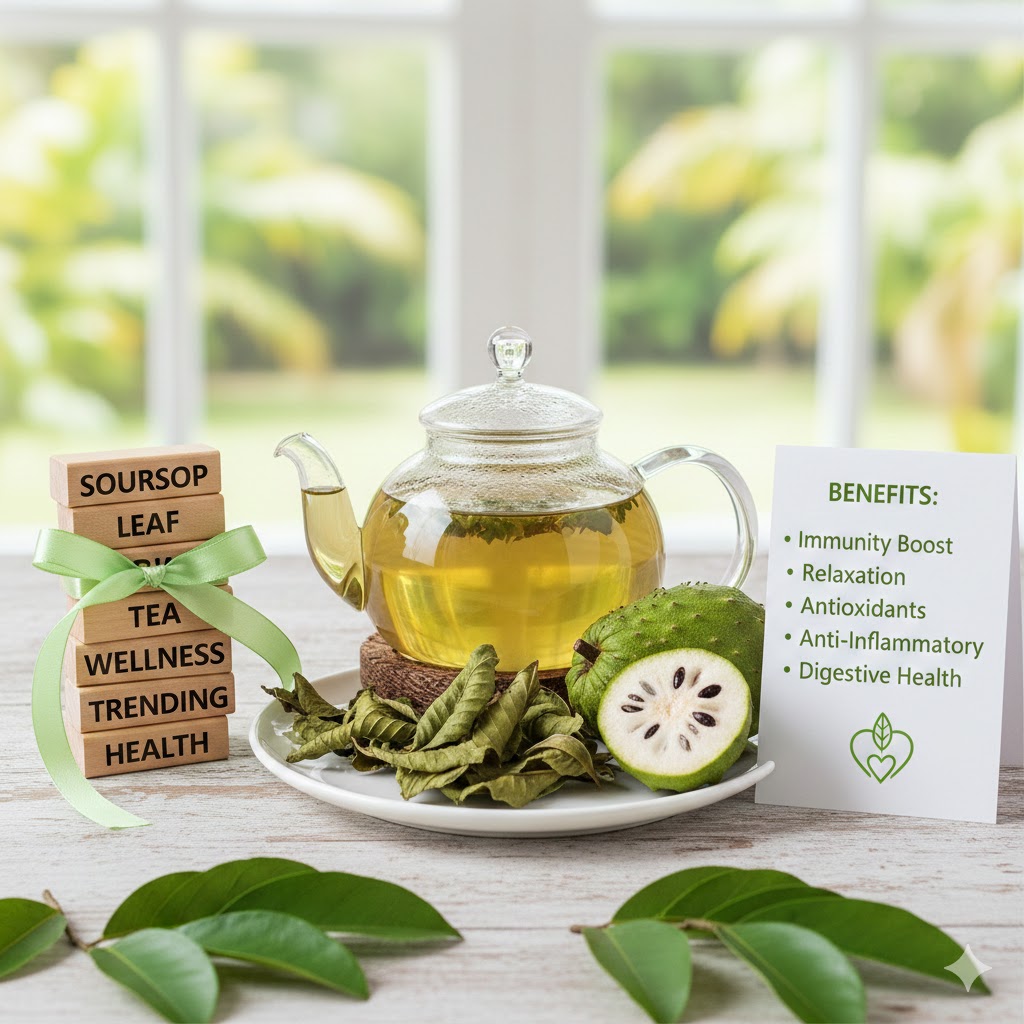
Soursop Leaf Tea Benefits Wellness trends often cycle through expensive supplements and complex protocols—but every so often, something simple and traditional captures attention again. One such revival is soursop leaf tea, a herbal infusion long used in tropical cultures and now gaining interest among modern wellness communities.
The renewed curiosity around Soursop Leaf Tea Benefits isn’t about hype alone. It reflects a broader shift toward plant-based, low-intervention wellness practices that focus on balance rather than extremes.
This article explores why soursop leaf tea is trending, what makes it unique, and how people are incorporating it into everyday wellness routines—without exaggerated claims or medical promises.
1. What Is Soursop Leaf Tea?
Soursop leaf tea is made by steeping the leaves of the soursop tree (also known as graviola), native to tropical regions.
1.1 Traditional Use
- Common in parts of the Caribbean, Central America, and Southeast Asia
- Traditionally consumed as a calming herbal drink
- Often used as part of evening or rest-focused routines
1.2 Why Leaves, Not the Fruit?
While the soursop fruit is known for its flavor, the leaves contain different plant compounds, which is why they’re used separately for tea.
2. Why Soursop Leaf Tea Is Suddenly Trending
The rise isn’t random—it aligns with wellness shifts.
2.1 Modern Wellness Preferences
- Increased interest in herbal teas
- Desire for caffeine-free beverages
- Focus on gut-friendly and calming rituals
2.2 Social Media & Natural Wellness
- Wellness creators highlight traditional teas
- “Slow wellness” content is gaining traction
- Interest in tropical and indigenous plants is rising
This cultural momentum is driving curiosity around Soursop Leaf Tea Benefits.
3. Nutrient and Plant Compound Profile
Soursop leaves contain a range of natural plant compounds.

3.1 Naturally Occurring Components
- Plant polyphenols
- Natural antioxidants
- Bioactive compounds found in many leafy plants
3.2 Why This Matters
These compounds are commonly studied for their role in:
- Supporting cellular balance
- Helping the body manage oxidative stress
- Complementing overall wellness routines
This explains why Soursop Leaf Tea Benefits are often discussed in antioxidant and lifestyle contexts.
4. Calm-Supporting Properties
One of the most common reasons people drink this tea is for relaxation.
4.1 How People Use It
- As an evening tea
- During stress-reduction routines
- Paired with mindfulness or wind-down habits
4.2 Why Herbal Teas Matter
The ritual itself—warm liquid, slow sipping, no caffeine—plays a big role. Soursop leaf tea fits perfectly into calming routines, which is a major reason for its popularity.
5. Digestive Comfort & Gentle Support
Herbal teas are often chosen for digestive ease.
5.1 Traditional Context
In some cultures, soursop leaf tea is used after meals or during digestive discomfort—not as treatment, but as a soothing beverage.
5.2 Modern Wellness View
- Warm teas may support digestion by relaxation
- Leaf-based infusions are typically gentle
- Caffeine-free nature reduces irritation
This digestive comfort angle contributes to interest in Soursop Leaf Tea Benefits.
6. Antioxidant Interest Without Extreme Claims
Antioxidants are often misunderstood.

6.1 What Antioxidants Actually Do
- Help neutralize free radicals
- Support normal cellular processes
- Work best as part of a varied diet
6.2 Why Soursop Leaf Tea Fits
It offers mild antioxidant exposure without high doses or stimulation, aligning with gentle, daily wellness habits rather than aggressive supplementation.
7. Why People Prefer It Over Trendy Supplements
There’s growing supplement fatigue.
7.1 Simplicity Wins
- No capsules
- No synthetic blends
- No complicated dosing
7.2 Lifestyle-Friendly
Soursop leaf tea feels accessible, natural, and ritual-based, which explains why people exploring Soursop Leaf Tea Benefits often prefer it to pills.
8. How People Commonly Incorporate It
Usage patterns are simple.
8.1 Common Routines
- 1 cup in the evening
- A few times per week
- Paired with journaling, reading, or screen-free time
8.2 What It’s Not Used For
- Not a replacement for medical care
- Not a cure or treatment
- Not a quick-fix solution
Understanding this context keeps expectations realistic.
9. Who Is Most Interested in Soursop Leaf Tea
The audience is surprisingly broad.
9.1 Common Interest Groups
- Wellness minimalists
- Herbal tea enthusiasts
- People reducing caffeine
- Gut-health and calm-focused lifestyles
These groups are fueling the steady rise in searches for Soursop Leaf Tea Benefits.
10. Why This Tea Fits the Future of Wellness
Wellness trends are evolving.
10.1 Where Wellness Is Headed
- Fewer extremes
- More tradition-based practices
- Slower, sustainable routines
10.2 Why Soursop Leaf Tea Fits
It’s simple, non-stimulating, culturally rooted, and easy to integrate—qualities that modern wellness increasingly values.
FAQs: Soursop Leaf Tea Benefits
Is soursop leaf tea caffeinated?
No, it’s naturally caffeine-free.
Is soursop leaf tea a medicine?
No. It’s traditionally consumed as a herbal beverage, not a medical treatment.
Can it be consumed daily?
Many people use it occasionally or in moderation as part of a balanced routine.
Does it replace supplements?
No. It complements a healthy lifestyle but doesn’t replace nutrition or medical care.
Why is it trending now?
Because of renewed interest in traditional, plant-based wellness rituals.
Final Thoughts
Wellness doesn’t always need reinvention. Sometimes, it returns to quiet traditions that supported balance long before modern trends existed. The growing interest in Soursop Leaf Tea Benefits reflects this shift—away from extremes and toward gentle, sustainable habits.
It’s not about promises.
It’s about rituals.
And it’s about reconnecting with simple practices that help people slow down.
In today’s fast wellness world, that simplicity is exactly why soursop leaf tea is trending again.
More Related Topics:
Pu-erh Tea Weight Loss Benefits Backed by Gut Health Science
Sitting Compression Health: How Chairs Damage Hips and Spine