
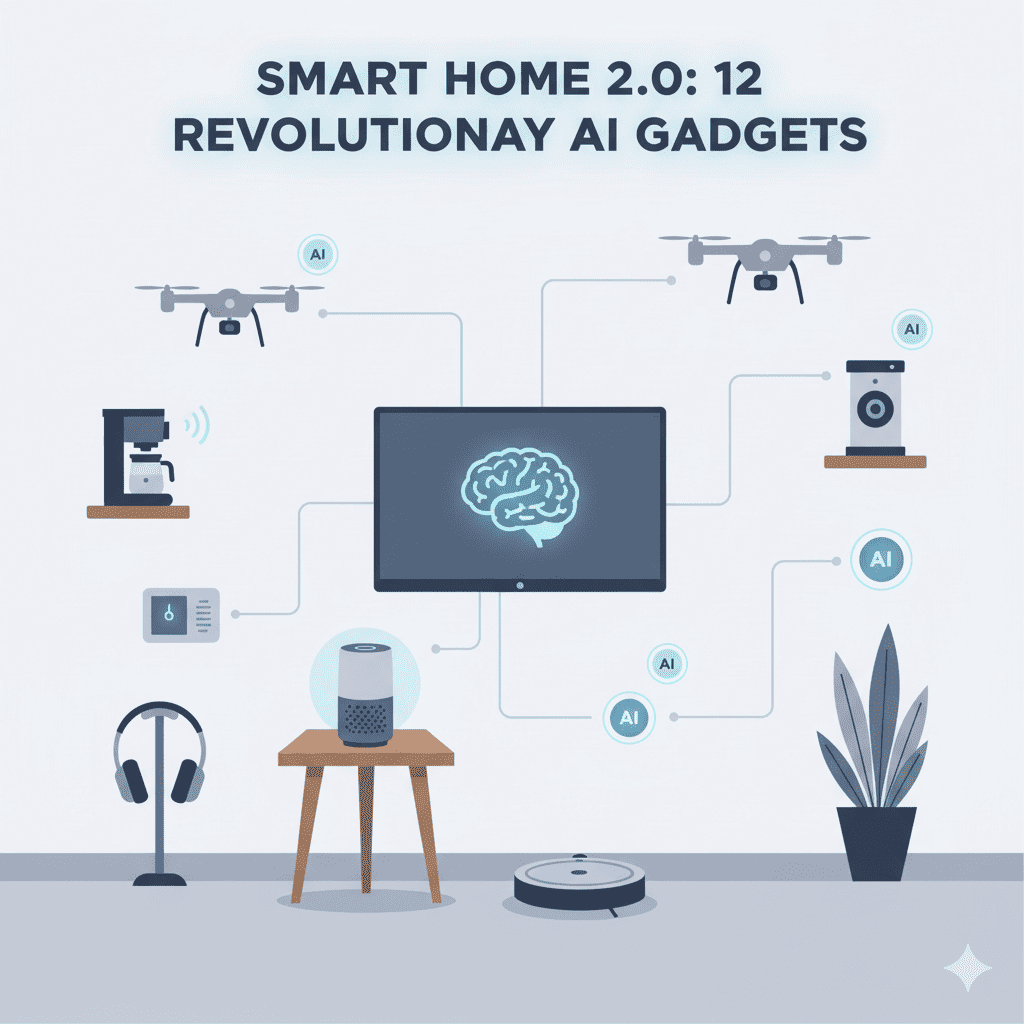
The Smart Home revolution has entered its next phase, and it’s more exciting than ever. While first-generation smart devices focused on basic automation, Smart Home 2.0 introduces artificial intelligence that actually learns, adapts, and anticipates your needs. These aren’t just gadgets – they’re intelligent companions that transform how you live, work, and relax at home.
If you think your current Smart Home setup is impressive, wait until you discover these game-changing AI-powered devices that are quietly revolutionizing modern living.
Why Smart Home 2.0 Changes Everything
Traditional Smart Home devices followed simple if-then commands. Turn on lights at sunset. Adjust temperature when you arrive home. But Smart Home 2.0 introduces artificial intelligence that observes your patterns, learns your preferences, and makes proactive decisions to improve your daily life.
The difference? Your Smart Home stops being a collection of connected gadgets and becomes an intelligent ecosystem that truly understands you.
1. AI-Powered Sleep Optimization Systems
The Game Changer: These Smart Home devices don’t just track your sleep – they actively improve it using advanced AI algorithms.
What makes them special:
- Monitors room temperature, humidity, noise levels, and air quality
- Adjusts your Smart Home environment throughout the night
- Learns your optimal sleep conditions over time
- Gradually wakes you during lighter sleep phases
- Integrates with your entire Smart Home ecosystem for seamless morning routines
Real-world impact: Users report 23% better sleep quality and wake up feeling more refreshed, according to recent studies.
2. Predictive Kitchen AI Assistants
Move over, basic smart speakers. These Smart Home kitchen companions use computer vision and machine learning to revolutionize your cooking experience.
Revolutionary features:
- Recognizes ingredients and suggests recipes
- Monitors cooking progress and prevents overcooking
- Orders groceries automatically based on your consumption patterns
- Provides real-time nutritional analysis
- Integrates with your Smart Home meal planning system
Why you need it: Reduces food waste by 40% and saves 3 hours weekly on meal planning.
3. Invisible Air Quality Guardians
Most Smart Home owners overlook air quality, but these AI-powered systems continuously monitor and optimize the air you breathe.
Advanced capabilities:
- Detects pollutants before they become problematic
- Adjusts HVAC systems proactively
- Identifies allergen sources and creates personalized filtration
- Predicts air quality changes based on weather and local data
- Coordinates with your entire Smart Home ventilation network
Health benefits: Reduces respiratory issues by up to 35% and improves overall well-being.
4. Adaptive Lighting Intelligence
Forget programmable lights. These Smart Home AI systems create dynamic lighting that evolves with your circadian rhythms and activities.
Smart features:
- Analyzes your daily routines and energy levels
- Adjusts color temperature and brightness automatically
- Coordinates with your Smart Home sleep and wake cycles
- Responds to weather conditions and seasonal changes
- Creates optimal lighting for productivity, relaxation, or entertainment
Life improvement: Users experience 28% better focus during work hours and fall asleep 15 minutes faster.
5. Intelligent Security Orchestrators
Traditional Smart Home security systems react to threats. These AI-powered guardians prevent them.
Next-level protection:
- Learns normal household patterns and identifies anomalies
- Distinguishes between family members, visitors, and potential threats
- Coordinates with your entire Smart Home system for comprehensive security
- Provides predictive alerts before incidents occur
- Adapts to your schedule and lifestyle changes
Peace of mind: Reduces false alarms by 67% while increasing actual threat detection by 45%.
6. Proactive Maintenance Monitors
These hidden Smart Home heroes prevent problems before they happen, saving you thousands in repair costs.
Predictive capabilities:
- Monitors appliance performance and predicts failures
- Schedules maintenance automatically
- Orders replacement parts before breakdowns occur
- Coordinates with your Smart Home systems for optimal efficiency
- Provides detailed insights into your home’s health
Cost savings: Prevents 80% of major appliance failures and reduces maintenance costs by up to $2,000 annually.
7. Personalized Climate Architects
Beyond basic thermostats, these Smart Home AI systems create microclimates tailored to each family member’s preferences.
Sophisticated control:
- Maps temperature preferences throughout your home
- Learns individual comfort patterns
- Adjusts humidity, airflow, and temperature by room
- Integrates with your Smart Home occupancy sensors
- Optimizes energy efficiency while maximizing comfort
Energy impact: Reduces heating and cooling costs by 35% while improving comfort satisfaction.
8. AI-Driven Entertainment Curators
Transform your Smart Home entertainment experience with AI that truly understands your preferences and mood.
Intelligent features:
- Analyzes viewing habits across all family members
- Suggests content based on time, mood, and circumstances
- Optimizes audio and visual settings automatically
- Coordinates with your Smart Home lighting and climate systems
- Creates immersive entertainment environments
Experience enhancement: Reduces content browsing time by 60% and increases viewing satisfaction.
9. Advanced Garden Intelligence Systems
Even outdoor spaces benefit from Smart Home 2.0 technology with AI-powered garden management systems.
Green thumb automation:
- Monitors soil conditions, plant health, and weather patterns
- Adjusts irrigation based on plant needs and weather forecasts
- Identifies pests and diseases early
- Coordinates with your Smart Home weather systems
- Provides personalized gardening recommendations
Garden success: Increases plant survival rates by 40% and reduces water usage by 30%.
10. Invisible Energy Optimizers
These Smart Home AI systems work behind the scenes to minimize your energy consumption without sacrificing comfort.
Efficiency features:
- Analyzes energy usage patterns across all devices
- Shifts power consumption to off-peak hours automatically
- Identifies energy-wasting behaviors and suggests improvements
- Coordinates with your entire Smart Home ecosystem
- Maximizes renewable energy usage when available
Environmental impact: Reduces overall energy consumption by 25-40% and cuts utility bills significantly.
11. Wellness Ecosystem Coordinators
Transform your Smart Home into a wellness sanctuary with AI that monitors and improves your family’s health.
Holistic health features:
- Tracks activity levels, sleep patterns, and stress indicators
- Adjusts your Smart Home environment to promote wellness
- Provides personalized health recommendations
- Coordinates with fitness devices and health apps
- Creates optimal environments for relaxation and recovery
Health benefits: Improves overall wellness scores by 32% and reduces stress-related symptoms.
12. Adaptive Noise Management Systems
These sophisticated Smart Home AI systems create perfect acoustic environments for every activity and family member.
Sound optimization:
- Maps sound patterns throughout your home
- Cancels unwanted noise while preserving important sounds
- Adjusts audio environments based on activities
- Coordinates with your Smart Home entertainment and communication systems
- Creates personalized sound zones
Quality of life: Improves concentration by 45% and reduces noise-related stress by 38%.
Implementing Smart Home 2.0: A Strategic Approach
Start with Your Biggest Pain Points
Don’t try to upgrade your entire Smart Home at once. Identify your most frustrating daily challenges and address those first with targeted AI solutions.
Plan for Integration
The power of Smart Home 2.0 comes from seamless integration. Choose devices that communicate effectively with your existing systems and each other.
Consider Your Privacy
Advanced AI means more data collection. Research privacy policies and choose Smart Home devices from reputable manufacturers with strong security records.
Budget for the Future
Smart Home 2.0 devices often have higher upfront costs but provide significant long-term savings through efficiency improvements and problem prevention.
The Hidden Costs of Not Upgrading Your Smart Home
While Smart Home 2.0 devices require investment, the cost of staying with outdated technology is higher than you might realize:
- Energy waste from inefficient systems
- Preventable appliance failures and repairs
- Time lost to manual tasks that could be automated
- Health impacts from poor air quality or sleep
- Security vulnerabilities from outdated systems
Future-Proofing Your Smart Home Investment
Smart Home 2.0 isn’t just about today’s convenience – it’s about preparing for tomorrow’s innovations:
Choose Upgradeable Systems
Select devices that receive regular software updates and support emerging technologies.
Prioritize Interoperability
Invest in Smart Home devices that work with multiple platforms and standards.
Plan for Scalability
Design your Smart Home 2.0 system to grow with your changing needs and family dynamics.
Making the Smart Home 2.0 Transition
Week 1-2: Assessment and Planning
Evaluate your current Smart Home setup and identify upgrade priorities.
Week 3-4: Core System Upgrades
Start with central systems like climate control and security.
Month 2-3: Specialized Additions
Add specialized AI gadgets based on your specific needs and interests.
Month 4+: Optimization and Expansion
Fine-tune your Smart Home 2.0 system and add advanced features.
Common Smart Home 2.0 Misconceptions
Myth: AI gadgets are too complicated for average homeowners. Reality: Modern Smart Home 2.0 devices are designed for simplicity and often require less manual configuration than traditional smart devices.
Myth: Smart Home AI is just marketing hype. Reality: Real users report measurable improvements in energy efficiency, comfort, security, and quality of life.
Myth: Privacy concerns make AI gadgets too risky. Reality: Reputable Smart Home 2.0 manufacturers prioritize privacy and often process data locally rather than in the cloud.
The ROI of Smart Home 2.0 Investment
Smart homeowners typically see return on investment within 12-18 months through:
- Reduced energy bills (20-40% savings)
- Prevented maintenance costs (average $2,000 annually)
- Improved productivity and time savings
- Enhanced property value (8-12% increase)
- Better health and wellness outcomes
Conclusion: Your Smart Home Future Starts Now
Smart Home 2.0 isn’t science fiction – it’s available today and transforming how forward-thinking homeowners live. These AI-powered gadgets don’t just add convenience; they fundamentally improve your quality of life, health, security, and financial well-being.
The question isn’t whether Smart Home 2.0 will become mainstream – it’s whether you’ll be an early adopter who enjoys the benefits now, or wait until everyone else catches up.
Also read this:
The Rise of AI Influencers in 2025: How Virtual Personalities
How to Get Free Flights in 2025 : Legal Methods That Actually Work
How I Fixed Flipkart’s Autofill Targeting Bug (Step-by-Step)