
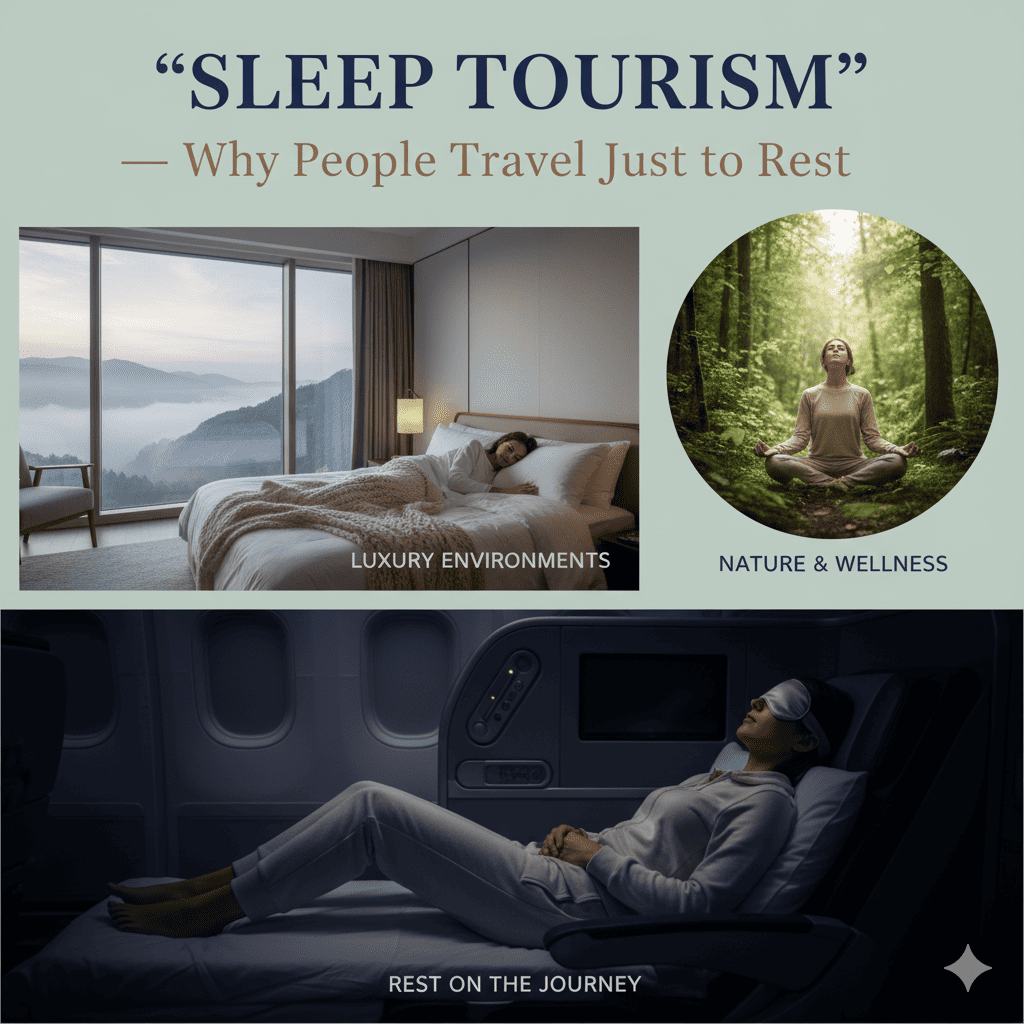
Picture this: You book a luxurious vacation, pack your bags, fly thousands of miles… and then proceed to sleep for three days straight. Not because you’re sick or jet-lagged, but because that’s literally the entire point of your trip.
Welcome to sleep tourism—the travel trend that’s flipping the entire vacation industry on its head. While everyone else is cramming their itineraries with sunrise hikes and museum marathons, a growing movement of exhausted travelers is saying “no thanks” and booking trips with one singular goal: finally getting some decent rest.
And honestly? It’s the most relatable travel trend we’ve ever seen.
What Exactly Is Sleep Tourism?
Sleep tourism is the practice of traveling specifically to rest, recover, and prioritize sleep quality above all other vacation activities. It’s not about sightseeing, adventure, or cultural immersion—it’s about finally addressing our collective sleep deficit in environments specifically designed for optimal rest.
Think of sleep tourism as the anti-vacation vacation. No packed schedules. No FOMO about missing attractions. No coming home more exhausted than when you left. Just pure, unapologetic, deeply intentional rest.
Hotels, resorts, and wellness retreats are catching on fast, creating entire experiences around the science of sleep. We’re talking specialized mattresses, circadian rhythm lighting, sleep-inducing menus, and soundproofed rooms engineered for the deepest slumber of your life.
Why Sleep Tourism Is Exploding Right Now
The Global Sleep Crisis
Let’s start with the uncomfortable truth: we’re all desperately tired. Studies show that one-third of adults aren’t getting enough sleep, and sleep deprivation is being called a public health epidemic. The rise of sleep tourism isn’t random—it’s our collective nervous system screaming for help.
We’ve normalized being exhausted. We wear our burnout like badges of honor. And sleep tourism is the inevitable correction—people finally prioritizing rest as a legitimate wellness need, not a weakness.
Burnout Culture Has Reached Its Breaking Point
After years of hustle culture, always-on connectivity, and the blurred boundaries between work and life, people are done. Sleep tourism represents a radical act of self-preservation in a world that demands constant productivity.
Traditional vacations often mean more planning, more packing, more activities—essentially, more work. Sleep tourism offers something revolutionary: permission to do absolutely nothing and call it exactly what you need.
The Pandemic Changed How We Value Rest
COVID-19 forced many people to confront their exhaustion directly. As the world slowed down, we realized just how tired we’d been. Sleep tourism emerged from this collective awakening, with people refusing to return to pre-pandemic levels of burnout.
Science Is Finally Taking Sleep Seriously
Research continues to reveal that sleep isn’t just downtime—it’s when our bodies heal, our memories consolidate, and our mental health stabilizes. As sleep science goes mainstream, sleep tourism gains credibility as legitimate health investment, not indulgence.
What Sleep Tourism Actually Looks Like
Sleep Retreat Hotels
The pioneers of sleep tourism are hotels that build their entire brand around rest:
Park Hyatt New York offers a “Bryte Restorative Sleep Suite” with AI-powered mattresses that adjust throughout the night based on your sleep patterns. The experience includes sleep consultations, specialized lighting, and complete sensory optimization.
Zedwell Hotels in London are designed as sleep sanctuaries—no windows, no clocks, no distractions. Just temperature-controlled, soundproofed cocoons engineered for deep sleep. This is sleep tourism stripped to its essential purpose.
Cadogan Hotel in London created “A Night at Harrods Wellness Clinic” package, including sleep assessments, personalized supplements, and post-checkout sleep plans. Sleep tourism meets scientific rigor.
Sleep-Focused Wellness Retreats
Beyond hotels, entire retreat centers now specialize in sleep tourism:
SHA Wellness Clinic in Spain offers week-long programs focused exclusively on sleep optimization through diet, supplements, light therapy, and stress management. Guests leave with personalized sleep protocols.
VIVAMAYR Resorts combine sleep medicine with traditional wellness, using altitude therapy, specialized nutrition, and sleep diagnostics as core components of their sleep tourism offerings.
Kamalaya in Thailand designs custom sleep recovery programs incorporating circadian rhythm reset, meditation, and sleep-inducing bodywork—making sleep tourism a holistic healing experience.
Sleep Concierge Services
The ultimate evolution of sleep tourism? Hotels now employ sleep concierges—actual experts who:
- Customize your pillow menu (firmness, material, height)
- Adjust room temperature to your ideal sleep range
- Create personalized bedtime routines
- Provide sleep-tracking wearables
- Offer guided sleep meditations
- Schedule wake-up times based on your sleep cycles
The Science Behind Sleep Tourism (It’s Not Just Indulgent)
Environment Dramatically Impacts Sleep Quality
Sleep tourism works because unfamiliar environments—when properly optimized—can actually improve sleep:
- Novel settings reduce stress associations tied to your bedroom at home
- Controlled environments eliminate sleep disruptions you’ve normalized (street noise, light pollution, temperature fluctuations)
- Intentional design triggers relaxation responses your cluttered home can’t match
Circadian Rhythm Reset
Many sleep tourism destinations are chosen specifically for their circadian benefits:
- High-altitude locations with different light exposure
- Tropical environments with natural light-dark cycles
- Remote locations with zero light pollution for melatonin optimization
Sleep Debt Recovery
You can’t fully repay sleep debt overnight, but sleep tourism provides extended periods for recovery that weekend catch-up sleep never achieves. Week-long sleep retreats allow your body to genuinely restore baseline function.
Stress Removal
The single biggest sleep disruptor? Stress and anxiety. Sleep tourism creates physical and psychological distance from stressors, allowing your nervous system to finally downregulate.
Different Types of Sleep Tourism Experiences
The Pure Rest Retreat
For the seriously exhausted, some sleep tourism experiences are literally just sleeping:
- No activities scheduled
- Meals brought to your room
- Environment optimized for 10-12 hours of nightly sleep
- Nap-friendly schedules
- Zero expectations or guilt
The Sleep Science Experience
For the data-driven, sleep tourism can include:
- Comprehensive sleep studies
- Overnight sleep monitoring
- Personalized supplement protocols
- Light therapy sessions
- Sleep coaching consultations
The Wellness Hybrid
Combining sleep with complementary wellness practices, this sleep tourism style includes:
- Gentle yoga designed to improve sleep
- Sleep-inducing massage therapies
- Nutrition focused on sleep quality
- Meditation and breathwork for insomnia
- Forest bathing and nature therapy
The Digital Detox Sleep
Recognizing that screens destroy sleep, some sleep tourism experiences enforce complete digital disconnection:
- No WiFi access
- Phone lock boxes
- Screen-free rooms
- Pre-digital evening activities
- Sunrise wake-ups without alarms
Who’s Embracing Sleep Tourism?
Burned-Out Professionals
The core sleep tourism demographic? High-achieving professionals who’ve ignored their exhaustion for years. They’re finally recognizing that productivity requires recovery.
New Parents
Parents of young children are discovering sleep tourism as legitimate self-care. Some resorts now offer “sleep recovery weekends” specifically for sleep-deprived parents.
Insomnia Sufferers
For people with chronic sleep issues, sleep tourism isn’t luxury—it’s medical intervention. Specialized programs help retrain sleep patterns in controlled environments.
Wellness Enthusiasts
As sleep recognition grows within the wellness community, sleep tourism is becoming as mainstream as yoga retreats or detox programs.
Preventative Health Seekers
Increasingly, people aren’t waiting for burnout. They’re using sleep tourism proactively as regular health maintenance—annual sleep retreats like dental check-ups.
How to Plan Your Own Sleep Tourism Experience
Step 1: Identify Your Sleep Needs
Before booking sleep tourism experiences:
- Are you recovering from acute exhaustion?
- Do you have chronic sleep issues needing professional intervention?
- Are you seeking preventative rest and optimization?
- Do you want data and science or just pure rest?
Step 2: Research Sleep-Focused Destinations
Look for sleep tourism accommodations advertising:
- Sleep specialists or sleep concierges
- Scientific sleep optimization
- Soundproofing and environmental controls
- Sleep-focused programs, not just nice beds
- Testimonials about actual sleep improvement
Step 3: Set Realistic Expectations
Sleep tourism isn’t magic. One trip won’t cure chronic sleep problems, but it can:
- Provide immediate rest and recovery
- Help identify what optimal sleep feels like
- Create new sleep habits you can continue home
- Give you tools and knowledge for better sleep
Step 4: Commit to the Experience
The hardest part of sleep tourism? Giving yourself permission to rest without guilt. Commit to:
- Turning off your phone
- Skipping FOMO-inducing activities
- Sleeping when tired, not by schedule
- Accepting rest as the vacation purpose
Step 5: Extend the Benefits
The best sleep tourism experiences include:
- Post-trip sleep protocols you can maintain
- Environmental recommendations for your bedroom
- Supplement or routine suggestions
- Follow-up consultations or resources
Sleep Tourism on a Budget
Can’t afford luxury sleep retreats? Budget-friendly sleep tourism options:
Camping in Low-Light Pollution Areas: Natural circadian rhythm reset without expensive resorts. Just you, darkness, and your natural sleep-wake cycle.
Staycation Sleep Retreat: Transform your home into a sleep sanctuary for a weekend. New blackout curtains, white noise machine, phone in another room—DIY sleep tourism.
Off-Season Sleep Retreats: Many sleep-focused hotels offer significant discounts during low seasons. Sleep tourism doesn’t require peak travel times.
Regional Sleep Spas: Look for day-use sleep rooms at local spas or wellness centers. Hours of uninterrupted rest without accommodation costs.
Friend’s Empty Home: Arrange to stay somewhere different but comfortable—sometimes environmental change alone enables sleep tourism benefits.
The Future of Sleep Tourism
Where is sleep tourism heading? Here are the emerging trends:
Sleep Airlines
Some airlines are developing sleep-optimized flights with lie-flat economy, circadian lighting, and sleep-inducing services—sleep tourism beginning mid-flight.
Corporate Sleep Retreats
Forward-thinking companies are booking sleep tourism experiences for burned-out teams, recognizing that rested employees are productive employees.
Sleep Cruises
Cruise lines are launching sleep-focused voyages with sleep specialists, programs, and the natural sleep benefits of ocean rhythm—sleep tourism meets the sea.
Sleep Tech Integration
Future sleep tourism will integrate advanced technology—AI sleep optimization, VR relaxation experiences, biometric monitoring, and personalized environmental adjustments in real-time.
Medical Sleep Tourism
We’re seeing the convergence of sleep medicine and travel, with sleep tourism destinations offering legitimate medical-grade sleep disorder treatment in resort settings.
The Cultural Shift Behind Sleep Tourism
Here’s what’s really happening: sleep tourism represents a fundamental cultural revaluation of rest. For generations, we’ve celebrated busyness and stigmatized rest. Sleep tourism is the countermovement—unapologetically prioritizing recovery.
It’s permission to be tired. It’s validation that rest is productive. It’s recognition that sleep isn’t weakness—it’s foundation.
Sleep tourism is travelers saying: “I’m not lazy for wanting to sleep. I’m self-aware enough to know I need it, brave enough to prioritize it, and wise enough to invest in it.”
That’s revolutionary.
The Bottom Line on Sleep Tourism
In a world obsessed with experiences, adventures, and productivity, sleep tourism offers something radically different: the experience of finally, deeply, genuinely resting.
Is it indulgent? Maybe. But so is running yourself into the ground until you can’t function. Sleep tourism is choosing a different kind of indulgence—one that actually heals instead of depletes.
The rise of sleep tourism tells us something important: we’re collectively exhausted, and we’re finally ready to do something about it. We’re done pretending that vacation means activity overload. We’re done apologizing for needing rest.
So if you find yourself fantasizing about doing absolutely nothing on your next trip—just sleeping in impossibly comfortable beds, napping without guilt, and waking up whenever your body naturally wants to—congratulations. You’re not unmotivated.
You’re just ready for sleep tourism.
Also read this:
2026 Job Trends: What AI Can’t Replace – Your Career Safety Net in the Age of Automation
AI Room Makeovers: Design Your Space in Seconds – Transform Any Room Without Breaking a Sweat