
Skin Cycling Trend Explained Skincare trends evolve quickly, but only a few manage to change how people actually treat their skin. One such approach gaining widespread attention is skin cycling. Backed by dermatologists and embraced by skincare enthusiasts, this method promises healthier skin by doing less, not more.
In this blog, Skin Cycling Trend Explained in detail, we’ll break down what skin cycling really is, why it became popular, how it works, and whether it genuinely improves skin health or is just another short-lived trend.
1. What Is Skin Cycling?
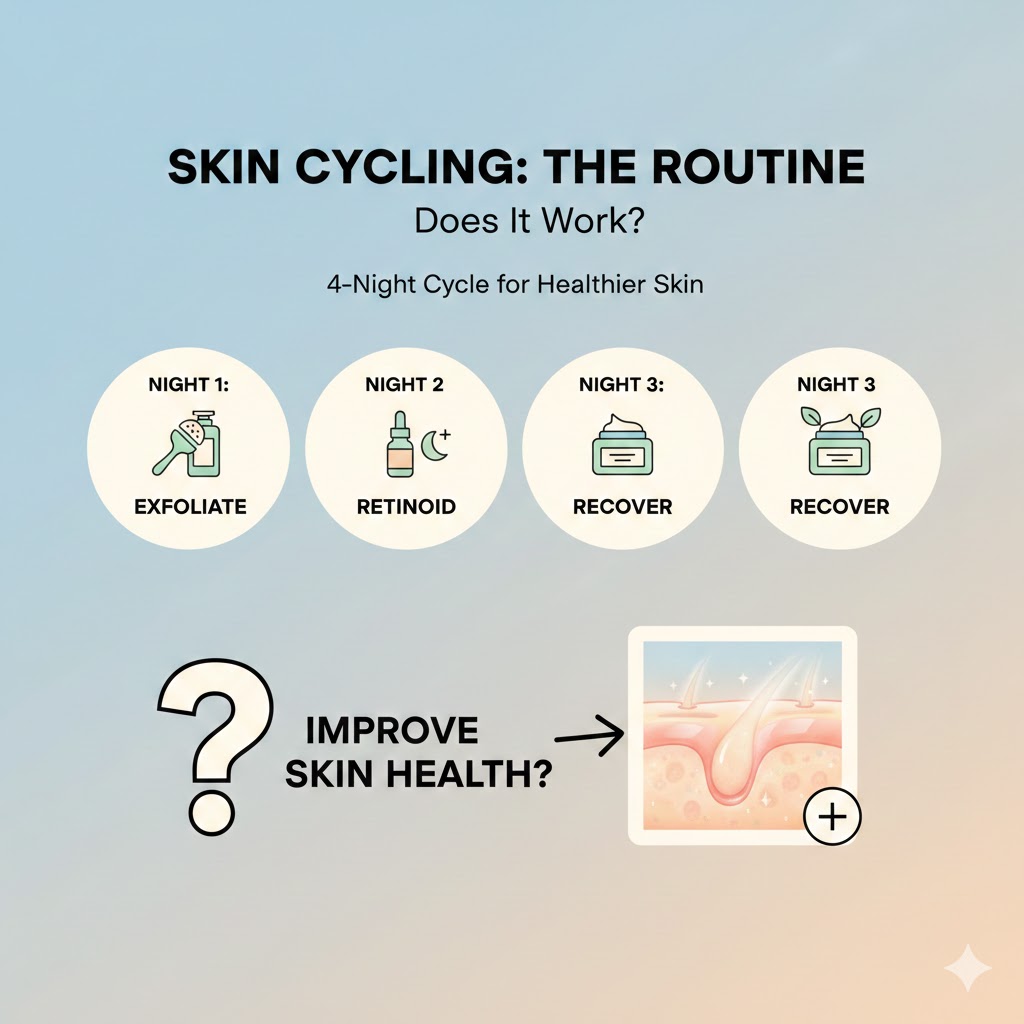
Skin cycling is a structured skincare routine that rotates active ingredients across different nights instead of using them daily. The goal is to maximize benefits while minimizing irritation.
Rather than applying exfoliants, retinoids, and treatments every night, skin cycling spaces them out and includes dedicated recovery days focused on hydration and barrier repair. When Skin Cycling Trend Explained properly, it’s not about restriction but about balance.
2. Why the Skin Cycling Trend Became Popular
The rise of skin cycling is closely linked to increasing cases of skin sensitivity and barrier damage. Many people overused strong actives in search of fast results and ended up with redness, breakouts, and dehydration.
Dermatologists began emphasizing the importance of recovery days, and skin cycling provided a clear, easy-to-follow structure. Social media amplified the trend, but its foundation lies in skin science rather than hype.
3. How a Skin Cycling Routine Works
A typical skin cycling routine follows a repeating multi-night pattern.
One night focuses on exfoliation to remove dead skin cells. Another night is reserved for retinoids or treatment actives. The following nights prioritize recovery using hydrating and soothing products.
This rotation allows the skin to benefit from actives while still having time to heal, making the Skin Cycling Trend Explained approach both effective and sustainable.
4. The Science Behind Skin Cycling
Skin naturally repairs itself, especially overnight. Active ingredients accelerate cell turnover, but excessive use can weaken the skin barrier.
Skin cycling works because it aligns with the skin’s natural repair cycle. Recovery nights restore moisture, lipids, and resilience, helping prevent inflammation and sensitivity.
From a dermatological perspective, this balance is key to long-term skin health.
5. Benefits of Following the Skin Cycling Trend
When followed correctly, skin cycling offers multiple benefits.
It reduces irritation by limiting overuse of strong ingredients. It improves tolerance to actives over time, especially for beginners. It also promotes smoother texture, fewer breakouts, and more stable skin overall.
For many users, consistency and barrier health improve significantly after adopting this method.

6. Who Should Try Skin Cycling?
Skin cycling is especially helpful for people with sensitive, acne-prone, or combination skin. Beginners using retinoids often tolerate treatments better with a cycling approach.
Those with dry skin benefit from built-in recovery days, while oily skin types can adjust the cycle to reduce recovery nights if needed.
Customization plays a major role in making skin cycling effective.
7. Common Mistakes People Make With Skin Cycling
One common mistake is using multiple strong actives on exfoliation nights. Another is skipping recovery days, which defeats the purpose of the routine.
Some people also expect instant results. Skin cycling focuses on gradual improvement and long-term skin health, not overnight transformation.
Understanding the philosophy behind the routine is essential when Skin Cycling Trend Explained realistically.
8. Does Skin Cycling Work for All Skin Types?
Skin cycling can be adapted for most skin types, but it’s not mandatory for everyone.
Resilient skin types may already tolerate daily actives well. However, those experiencing irritation, redness, or inconsistent results often see improvements after switching to a cycling approach.
The key lies in adjusting the routine rather than following a rigid formula.
9. Skin Cycling vs Daily Active Use
Daily active use can work, but it carries a higher risk of barrier damage if not managed carefully.
Skin cycling offers a safer alternative by reducing cumulative stress on the skin. Instead of pushing the skin constantly, it emphasizes recovery alongside treatment.
This is why many professionals believe skin cycling supports long-term skin health more effectively.
10. Final Verdict: Does Skin Cycling Actually Improve Skin Health?
When Skin Cycling Trend Explained honestly, it becomes clear that this approach is more than just a viral concept.
Skin cycling improves skin health for many people by promoting balance, consistency, and barrier protection. While it may not be necessary for everyone, it offers a smarter, more sustainable way to use active ingredients.
For those struggling with irritation, sensitivity, or overcomplicated routines, skin cycling can be a meaningful step toward healthier skin.
FAQs
What is skin cycling in simple terms?
Skin cycling is a skincare routine that rotates active ingredients with recovery days to protect and repair the skin barrier.
How long does it take to see results from skin cycling?
Most people notice improvements in irritation, texture, and balance within 4 to 6 weeks.
Is skin cycling suitable for beginners?
Yes, it is especially beginner-friendly because it prevents overuse of strong active ingredients.
Can sensitive skin follow the skin cycling trend?
Yes, the built-in recovery days make skin cycling ideal for sensitive and reactive skin types.
Do dermatologists recommend skin cycling?
Many dermatologists support skin cycling because it prioritizes skin barrier health and long-term results.
More Related Topics:
Laneige Cream Skin Toner: Why Hybrid Skincare Products Are Redefining Modern Beauty
Laneige Lip Sleeping Mask Review: Does It Really Repair Lips Overnight?