
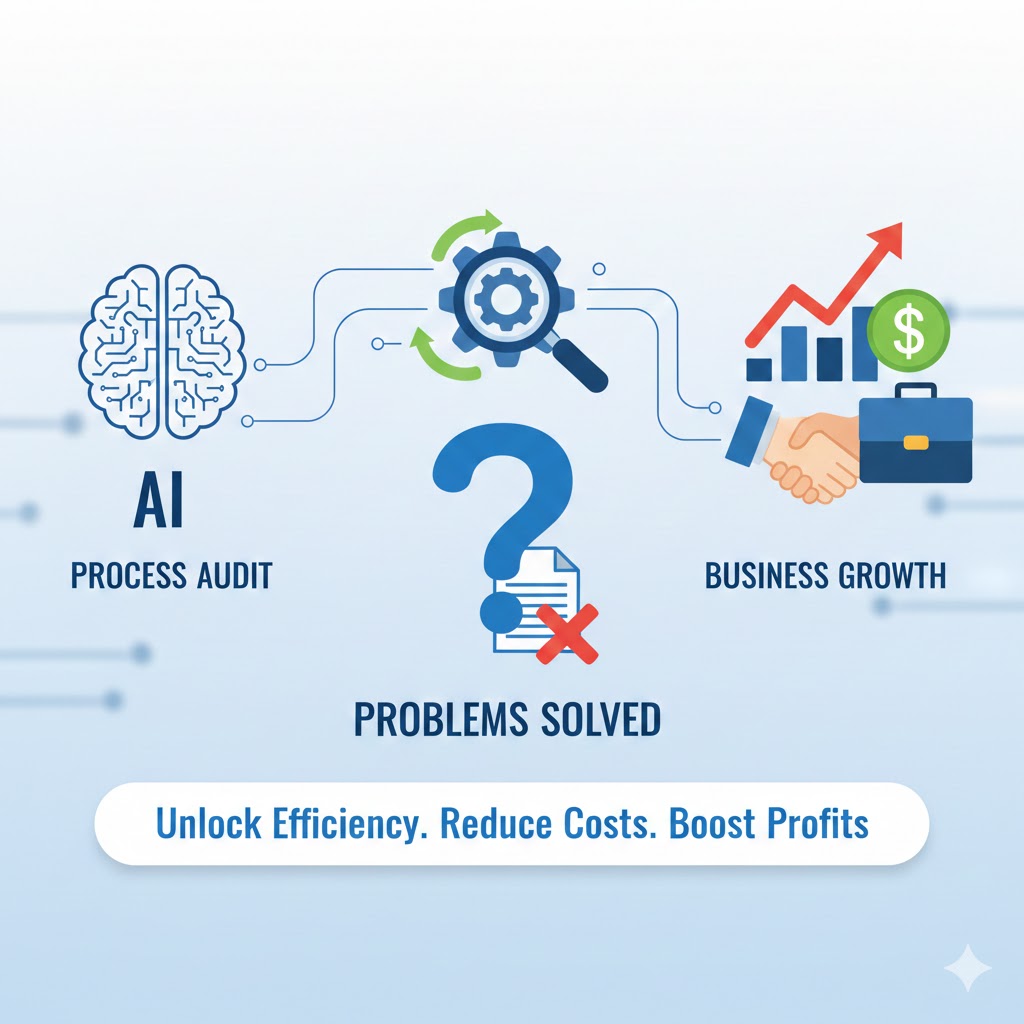
Traditional businesses operating outside the technology sector face a persistent challenge: their processes often contain hidden inefficiencies, bottlenecks, and compliance risks that remain invisible until they cause serious problems. Manual auditing approaches are expensive, disruptive, and provide only periodic snapshots rather than continuous insight. This reality creates exceptional opportunities for vendors who understand how to position and deliver AI-powered process analysis to companies that may be skeptical of technology they don’t fully understand.
Selling AI-Driven Process Audits to non-tech businesses requires a fundamentally different approach than selling to technology companies. These prospects don’t necessarily understand artificial intelligence, may be suspicious of automation, and often have deeply ingrained ways of doing things. However, they absolutely understand operational efficiency, cost reduction, risk management, and competitive advantage. The key to success lies in translating AI capabilities into business outcomes that resonate with traditional industries.
This comprehensive guide explores proven strategies for successfully positioning, presenting, and selling AI-driven process audit solutions to businesses across manufacturing, healthcare, retail, hospitality, professional services, and other non-tech sectors. Whether you’re offering comprehensive operational analysis platforms or specialized audit solutions for specific industries, these principles will accelerate your market penetration and sales success.
1. Understanding the Non-Tech Business Mindset
Before you can effectively sell AI-driven process audits, you must understand how non-tech businesses think about technology, change, and improvement initiatives. Their perspectives differ significantly from technology companies and require adapted sales approaches.
Technology Skepticism and Risk Aversion
Non-tech businesses often approach new technology cautiously, having experienced failed implementations that promised transformation but delivered disruption without commensurate value. They’ve seen software that required extensive training, consultants who left them with systems nobody could maintain, and “game-changing” solutions that sat unused after expensive rollouts.
This skepticism isn’t unreasonable; it’s learned caution from painful experience. When Selling AI-Driven Process Audits, acknowledge this history rather than dismissing it. Position your solution as fundamentally different by emphasizing non-disruptive implementation, minimal training requirements, and rapid value demonstration. Show that you understand their concerns and have specifically designed your approach to address them.
Focus on Tangible Business Outcomes
Non-tech businesses evaluate solutions based on concrete business impact rather than technological sophistication. They don’t care whether your system uses machine learning, neural networks, or advanced algorithms unless those technologies deliver measurable improvements in metrics they track: cost reduction, throughput increase, quality improvement, compliance assurance, or customer satisfaction enhancement.
Frame every capability in terms of business outcomes. Don’t lead with “our AI uses advanced pattern recognition algorithms.” Instead say “we identify bottlenecks in your production processes that are costing you thousands of dollars daily.” Technology is the means; business improvement is the end.
Preference for Proven Solutions
Technology companies often embrace cutting-edge innovations despite implementation risks. Non-tech businesses strongly prefer proven solutions with track records demonstrating success in similar environments. They want evidence that your AI-driven process audits work for companies like theirs, not just theoretical promises or examples from unrelated industries.
Develop extensive case studies, references, and proof points from non-tech businesses in relevant industries. If selling to manufacturers, showcase manufacturing success stories. If targeting healthcare providers, demonstrate healthcare implementations. Industry-specific proof significantly accelerates trust-building with skeptical prospects.
Limited Technical Resources
Many non-tech businesses lack sophisticated IT departments or technical staff capable of implementing and maintaining complex systems. They need solutions that don’t require extensive technical expertise to deploy, operate, or benefit from. Systems requiring coding, complex configurations, or ongoing technical management create adoption barriers.
Position your AI-driven process audit solution as turnkey and managed, requiring minimal technical involvement from the customer. Emphasize that your team handles technical complexity, allowing their staff to focus on acting on insights rather than managing systems.
2. Identifying High-Value Target Segments
Not all non-tech businesses have equal need for AI-driven process audits. Successful sales strategies focus on segments where process inefficiencies create significant pain and where audit solutions deliver maximum value.
Manufacturing and Industrial Operations
Manufacturers operate complex production processes where small inefficiencies compound into substantial costs. They’re excellent prospects because process optimization directly impacts profitability through reduced waste, increased throughput, improved quality, and better resource utilization. Manufacturing leaders understand process improvement’s value and often actively seek better approaches.
Target manufacturers struggling with quality issues, experiencing capacity constraints, facing increasing competition from lower-cost producers, or attempting to modernize legacy operations. These situations create urgency for solutions that identify improvement opportunities.
Healthcare Providers and Medical Facilities
Healthcare organizations operate under tremendous pressure to improve efficiency while maintaining quality and compliance. They face complex workflows involving numerous handoffs, documentation requirements, and regulatory obligations. Process inefficiencies in healthcare don’t just cost money; they potentially harm patients and create liability.
Focus on healthcare providers experiencing operational challenges: emergency departments with long wait times, surgical centers with capacity constraints, clinics with patient satisfaction issues, or facilities facing regulatory scrutiny. These situations create receptivity to systematic process analysis.
Retail and Hospitality Operations
Retail and hospitality businesses succeed or fail based on customer experience quality and operational efficiency. They operate numerous locations with varying performance, struggle with consistency across sites, and constantly seek ways to improve customer satisfaction while controlling costs. Process audits revealing operational variations and improvement opportunities have clear value.
Target retail chains experiencing inconsistent performance across locations, hospitality groups with customer satisfaction challenges, or operations expanding rapidly and struggling to maintain standards. Growth and consistency challenges create natural demand for process insight.
Professional Services Firms
Law firms, accounting practices, consulting firms, and other professional services businesses face unique process challenges. They must deliver consistent quality across varied client engagements, efficiently leverage senior expertise, maintain compliance with professional standards, and optimize utilization of expensive professional time.
When Selling AI-Driven Process Audits to professional services firms, emphasize how process analysis identifies inefficiencies in client service delivery, reveals underutilized capabilities, ensures methodology consistency, and improves project profitability through better resource allocation.
3. Translating AI Capabilities Into Business Language
The terminology and framing you use when selling to non-tech businesses dramatically impacts receptivity. Technical language creates barriers; business language opens doors.
Avoiding Technical Jargon
Terms like “machine learning algorithms,” “neural networks,” “natural language processing,” and “computer vision” mean little to non-technical audiences and can trigger skepticism about complexity. Instead, describe what these technologies do in plain language: “our system automatically identifies patterns in your data that indicate inefficiencies,” “we analyze your workflows to find bottlenecks,” or “we spot quality issues before they reach customers.”
Reserve technical explanations for when prospects specifically ask about underlying technology. Even then, use analogies and metaphors that connect to their business experience rather than technical tutorials.
Emphasizing Familiar Concepts
Non-tech businesses understand traditional concepts like time-and-motion studies, quality audits, compliance reviews, and process mapping. Position AI-driven process audits as modern, more powerful versions of familiar practices rather than entirely new concepts. This framing reduces perceived risk by connecting to known, trusted approaches.
Explain that your AI system does what traditional auditors do—observing processes, identifying issues, recommending improvements—but does so continuously, comprehensively, and at scale impossible for human auditors.
Quantifying Financial Impact
Non-tech businesses respond powerfully to financial projections showing how process improvements translate to bottom-line results. Develop detailed ROI models for each target industry showing typical cost savings, revenue enhancements, and risk reductions from implementing your AI-driven process audits.
Use industry-specific examples with concrete numbers: “Manufacturers typically find fifteen to twenty-five percent cost reduction opportunities in their first ninety days,” or “Healthcare providers usually identify process changes that reduce patient wait times by thirty percent while improving throughput.”
Addressing Specific Pain Points
Every industry has characteristic pain points where process inefficiencies create problems. Manufacturers worry about waste and downtime. Healthcare providers stress about patient flow and compliance. Retailers focus on customer experience and shrinkage. Professional services firms obsess about utilization and profitability.
Customize your messaging to address the specific pain points most acute in each prospect’s industry. Show deep understanding of their challenges by discussing problems in their language using their terminology.
4. Demonstrating Value Through Pilot Programs
Non-tech businesses rarely commit to significant investments without concrete proof of value in their specific environment. Well-designed pilot programs provide that proof while minimizing perceived risk.
Structuring Effective Pilot Engagements
Design pilot programs that deliver meaningful value in short timeframes while requiring minimal customer commitment. Ideal pilots run thirty to sixty days—long enough to demonstrate real value but short enough to maintain urgency and focus. Select pilot scopes that address high-visibility problems where success will be obvious to multiple stakeholders.
Clearly define success criteria upfront so everyone understands what constitutes a successful pilot. Identify specific metrics you’ll improve and by how much. This clarity focuses effort and creates objective evaluation standards that facilitate buying decisions after pilot completion.
Selecting High-Impact Pilot Processes
Choose pilot processes strategically to maximize impact and demonstration value. Ideal pilot processes have several characteristics: they’re important enough that improvements matter, they’re problematic enough that issues are recognized, they’re bounded enough to analyze thoroughly in limited time, and they’re representative enough that success indicates broader applicability.
Involve prospects in pilot process selection to ensure alignment with their priorities. However, guide selection toward processes where your AI-driven audits will shine. Avoid processes that are already highly optimized or too complex to show clear results quickly.
Providing Hands-On Support
During pilots, provide intensive support ensuring success. Non-tech businesses may struggle with new approaches without guidance. Assign dedicated resources who help with implementation, answer questions immediately, interpret results, and guide action planning based on audit findings.
This support isn’t just helpful; it’s strategic. Successful pilots lead to full implementations and references. Failed pilots create obstacles you’ll struggle to overcome. Invest heavily in pilot success because it directly determines sales success.
Converting Pilots to Full Implementations
Plan pilot-to-implementation conversion explicitly from the start. As pilots conclude, schedule formal review meetings presenting results, quantifying value delivered, and proposing full implementation plans. Come prepared with detailed proposals, pricing, timelines, and success projections based on pilot learnings.
The momentum from successful pilots creates optimal conditions for closing full deals. Strike while conviction is high and value is fresh in prospect minds. Delays between pilot completion and implementation decisions allow enthusiasm to wane and competing priorities to emerge.
5. Building Credibility Through Social Proof
Non-tech businesses trust peer experiences more than vendor claims. Strategic use of social proof accelerates trust-building and overcomes skepticism about unfamiliar technology.
Industry-Specific Case Studies
Develop comprehensive case studies from each target industry showing how similar businesses benefited from your AI-driven process audits. Effective case studies include detailed context about the company and their challenges, specific description of what your audit revealed, actions taken based on findings, and quantified results achieved.
The most powerful case studies include direct quotes from customer executives discussing their experience and results. Video case studies where customers speak authentically about their experience provide even stronger credibility than written materials.
Customer Reference Programs
Willing references who’ll speak with prospects about their experiences provide invaluable social proof. Build formal reference programs with customers who’ve achieved strong results and are comfortable sharing their stories. Compensate references appropriately through discounts, service credits, or other benefits acknowledging their contribution to your sales efforts.
Use references strategically in sales processes when prospects need additional conviction. Match references to prospects by industry, company size, and use case for maximum relevance. Prepare references with context about prospects they’ll speak with so conversations are maximally helpful.
Third-Party Validation
Independent validation from industry analysts, trade publications, professional associations, or certification bodies adds objectivity that vendor claims lack. Pursue recognition from respected sources in your target industries: manufacturing journals, healthcare associations, retail industry groups, or professional services organizations.
Display awards, certifications, and endorsements prominently in sales materials. When Selling AI-Driven Process Audits, third-party validation particularly matters because prospects are evaluating unfamiliar technology where they lack internal expertise to assess capabilities independently.
Quantified Success Metrics
Aggregate data across your customer base showing typical results: average cost savings, common efficiency improvements, typical payback periods, and standard ROI figures. Present these statistics as industry benchmarks that prospects can reasonably expect rather than exceptional outlier results.
Realistic, achievable projections build more trust than exaggerated claims. Non-tech businesses appreciate conservative estimates they can believe over optimistic promises that trigger skepticism.
6. Addressing Common Objections and Concerns
Non-tech businesses have predictable concerns about AI-driven process audits. Addressing these objections proactively demonstrates understanding and builds confidence.
“Our Processes Are Too Unique for Automated Analysis”
Many non-tech businesses believe their operations are too specialized, complex, or unique for generic solutions. They’ve encountered software that required extensive customization or never quite fit their specific needs. Address this by explaining how your AI learns their specific processes rather than imposing predetermined templates.
Demonstrate flexibility by showing how the system adapts to different operational environments, learns industry-specific terminology and workflows, and provides customized analysis relevant to their unique situation. Use examples from varied customers showing successful application across different operational models.
“This Will Eliminate Jobs and Create Employee Resistance”
Process optimization initiatives often trigger workforce concerns about automation eliminating positions. Address this fear directly by positioning AI-driven audits as augmenting rather than replacing human expertise. Emphasize that the system identifies improvement opportunities but humans make decisions and implement changes.
Frame process improvement as making employees’ jobs easier and more effective rather than making them obsolete. Show examples where process optimization created better working conditions, reduced frustrating inefficiencies, and allowed focus on more valuable activities.
“We Don’t Have Technical Expertise to Implement or Use This”
Non-tech businesses worry about solutions requiring technical expertise they don’t possess. Counter by emphasizing your managed service approach where your team handles technical complexity. Describe your implementation methodology, ongoing support, and how you ensure success without requiring significant technical capability from customers.
Demonstrate interface simplicity through live examples showing how non-technical users interact with the system and benefit from insights without needing to understand underlying technology.
“The Cost Doesn’t Justify the Benefit”
Price objections require understanding whether prospects don’t see sufficient value or genuinely face budget constraints. If value perception is the issue, revisit ROI calculations with more specific, conservative projections. If budget is truly constrained, explore phased implementations, narrower initial scopes, or flexible payment terms that fit available budgets.
Always frame cost discussions in terms of ROI and payback period rather than absolute price. Position your solution as an investment that pays for itself quickly rather than an expense.
7. Creating Compelling Demonstrations and Presentations
How you present AI-driven process audits significantly impacts whether non-tech businesses understand value and feel confident moving forward.
Using Real Customer Data When Possible
Generic demonstrations with sample data have limited impact. Whenever possible, use actual data from the prospect’s operations in demonstrations. Even preliminary analysis of limited data shows concrete, relevant findings that generic examples cannot match. Prospects seeing their own processes analyzed by your AI creates conviction generic demonstrations never achieve.
If access to real data isn’t possible during initial meetings, use data from similar businesses in their industry. Industry-specific demonstrations resonate far more than generic examples.
Visualizing Process Findings Clearly
Non-tech audiences need visual, intuitive presentations of audit findings. Use process flow diagrams highlighting bottlenecks, heat maps showing where issues concentrate, before-and-after comparisons illustrating potential improvements, and dashboard visualizations presenting key metrics clearly.
Avoid complex technical visualizations that require interpretation. Your audience should immediately understand what they’re seeing without explanation. Clarity and simplicity beat comprehensiveness and complexity.
Telling Stories Through Examples
Abstract capability descriptions don’t resonate with non-tech audiences. Instead, tell stories about specific situations where your AI-driven audits identified important issues and enabled meaningful improvements. Walk through the narrative: what problem existed, what your audit revealed, what actions resulted, and what outcomes were achieved.
Stories make capabilities concrete and memorable. They help prospects envision similar situations in their operations where your solution would provide comparable value.
Linking Findings to Action Plans
Don’t just show what your audits discover; demonstrate how findings translate to actionable improvement plans. Non-tech businesses want solutions, not just analysis. Show how your system prioritizes findings by impact, recommends specific actions addressing issues, and tracks implementation progress.
The journey from audit findings to realized improvements must be clear and practical. Prospects need confidence they’ll know what to do with insights your system provides.
8. Structuring Service Delivery for Non-Tech Success
How you deliver AI-driven process audit services significantly impacts customer success, satisfaction, and long-term retention with non-tech businesses.
Providing Expert Interpretation and Guidance
While your AI system generates findings, non-tech businesses often need expert guidance interpreting results and developing action plans. Include expert advisory services as part of your offering, providing regular review sessions where specialists help customers understand findings, prioritize improvements, and plan implementations.
This human element is particularly important for non-tech businesses who lack internal expertise in process optimization or data analysis. They’re buying insights and guidance, not just software.
Minimizing Disruption During Implementation
Non-tech businesses operate on thin margins and tight schedules where operational disruptions directly impact profitability. Design implementation approaches that minimize disruption through passive data collection, phased rollouts, and operation during off-peak periods when possible.
Emphasize your implementation methodology’s non-disruptive nature during sales conversations. Assure prospects that they won’t experience significant operational interruption during deployment.
Delivering Quick Wins Early
Generate visible results quickly to build momentum and justify continued investment. Structure analysis to identify and address high-impact, easily implemented improvements in the first thirty days. These quick wins build credibility and enthusiasm for longer-term, more complex optimization initiatives.
Quick wins are particularly important with skeptical non-tech businesses who need proof of value before fully embracing your approach.
Providing Ongoing Support and Education
Selling AI-Driven Process Audits doesn’t end when contracts are signed. Provide comprehensive, ongoing support helping customers maximize value from your solution. Offer regular training reinforcing best practices, share insights about how similar businesses use your solution effectively, and proactively suggest new applications as customers mature in their usage.
Non-tech businesses appreciate vendors who function as partners committed to their success rather than merely software suppliers.
9. Developing Industry-Specific Expertise and Positioning
Generic process audit solutions face more sales resistance than offerings demonstrating deep industry expertise and addressing sector-specific challenges.
Building Industry-Specialized Offerings
While core AI technology may be industry-agnostic, develop industry-specialized versions of your offering that incorporate domain knowledge, terminology, and best practices specific to target sectors. Manufacturing versions should understand production methodologies and industry-specific metrics. Healthcare versions need to reflect clinical workflows and compliance requirements.
Industry specialization dramatically increases credibility and relevance. Prospects immediately recognize solutions designed specifically for their sector versus generic tools they’d need to adapt.
Establishing Industry Thought Leadership
Position your company and key personnel as industry experts through speaking engagements at sector conferences, publishing articles in trade publications, participating in industry associations, and sharing insights through webinars and white papers addressing sector-specific challenges.
Thought leadership establishes credibility before sales conversations begin. Prospects approach vendors recognized as industry experts with greater trust and receptivity than unknown technology companies.
Partnering with Industry Consultants
Many non-tech businesses work with traditional consulting firms for operational improvement, compliance advisory, and strategic guidance. Develop partnerships with consultants serving your target industries, enabling them to incorporate your AI-driven process audits into their service offerings.
These partnerships provide distribution channels into non-tech businesses while leveraging consultant credibility and relationships. Consultants benefit from enhanced capabilities; you benefit from trusted introductions to potential customers.
Creating Industry Advisory Boards
Recruit customers and industry experts to advisory boards providing guidance on product development, market positioning, and sales strategies. Advisory boards ensure your offerings remain relevant to evolving industry needs while creating advocates who promote your solution within their professional networks.
Advisory board participation gives members ownership in your success, creating strong motivation to help you succeed.
10. Measuring and Communicating Ongoing Value
Retaining non-tech business customers and generating expansion opportunities requires systematically demonstrating continued value realization.
Establishing Baseline Metrics
At engagement start, document baseline performance across key metrics your audits will improve. Establish clear, agreed-upon measurements so progress is objectively quantifiable. Without solid baselines, proving improvement becomes subjective and disputable.
Work with customers to identify the metrics most meaningful to their business: cost per unit, cycle time, defect rates, compliance scores, customer satisfaction, or other relevant measures. Focus measurement on their priorities.
Regular Performance Reporting
Provide regular reports showing ongoing value delivered through your AI-driven process audits. Monthly or quarterly reviews should document improvements achieved, cumulative benefits realized, new opportunities identified, and progress toward strategic goals.
Quantify value in financial terms whenever possible. Show dollars saved, revenue enhanced, or costs avoided as a result of process improvements enabled by your audits. Financial quantification makes value concrete and memorable.
Identifying Expansion Opportunities
As customers experience success in initial areas, systematically identify additional processes, departments, or locations where your AI-driven audits could provide similar value. Expansion conversations are easier than new customer acquisition because you’re selling to satisfied customers who’ve already experienced your value.
Proactively suggest expansion opportunities rather than waiting for customers to request them. Frame expansion as natural progression maximizing their investment and organizational improvement.
Facilitating Peer Knowledge Sharing
Create opportunities for customers to share experiences and best practices with each other through user conferences, online communities, or facilitated discussion groups. Peer learning enhances customer success while strengthening community bonds that increase retention.
These communities also provide ongoing feedback informing product development and revealing market opportunities you might otherwise miss.
Conclusion
Selling AI-Driven Process Audits to non-tech businesses represents significant opportunity for vendors who understand how to position sophisticated technology in terms traditional industries appreciate and value. These businesses desperately need the insights AI-powered analysis provides, but they won’t buy based on technical sophistication or trendy terminology. They buy solutions to concrete problems, proven approaches with demonstrated results, and partnerships with vendors committed to their success.
The most successful vendors combine powerful AI technology with deep understanding of target industries, translate capabilities into business outcomes rather than technical features, provide proof through pilot programs and references, and deliver services that ensure customer success despite limited technical sophistication. They recognize that non-tech businesses evaluate solutions differently than technology companies and adapt their approaches accordingly.
This market segment is vast, growing, and largely underserved by technology vendors who focus primarily on tech-savvy customers. Non-tech businesses across manufacturing, healthcare, retail, hospitality, professional services, and countless other sectors operate with process inefficiencies costing them millions of dollars while creating competitive disadvantages. They need better visibility into their operations and guidance optimizing performance.
Vendors who master the art of Selling AI-Driven Process Audits to these businesses position themselves for sustained success in an enormous market opportunity. Success requires patience with longer sales cycles, investment in education and proof points, and genuine commitment to customer success. However, the rewards—substantial recurring revenue from loyal customers across diverse industries—make these investments worthwhile.
The future belongs to vendors who can bridge the gap between advanced AI capabilities and traditional business needs, translating technological sophistication into practical business value that non-tech companies understand, trust, and embrace.
Also read this:
Selling Internal AI Advisors to Growing Companies
Selling AI Quality-Control Systems to Digital Businesses
Mistake-Prevention AI Systems Businesses Are Willing to Pay for Monthly