
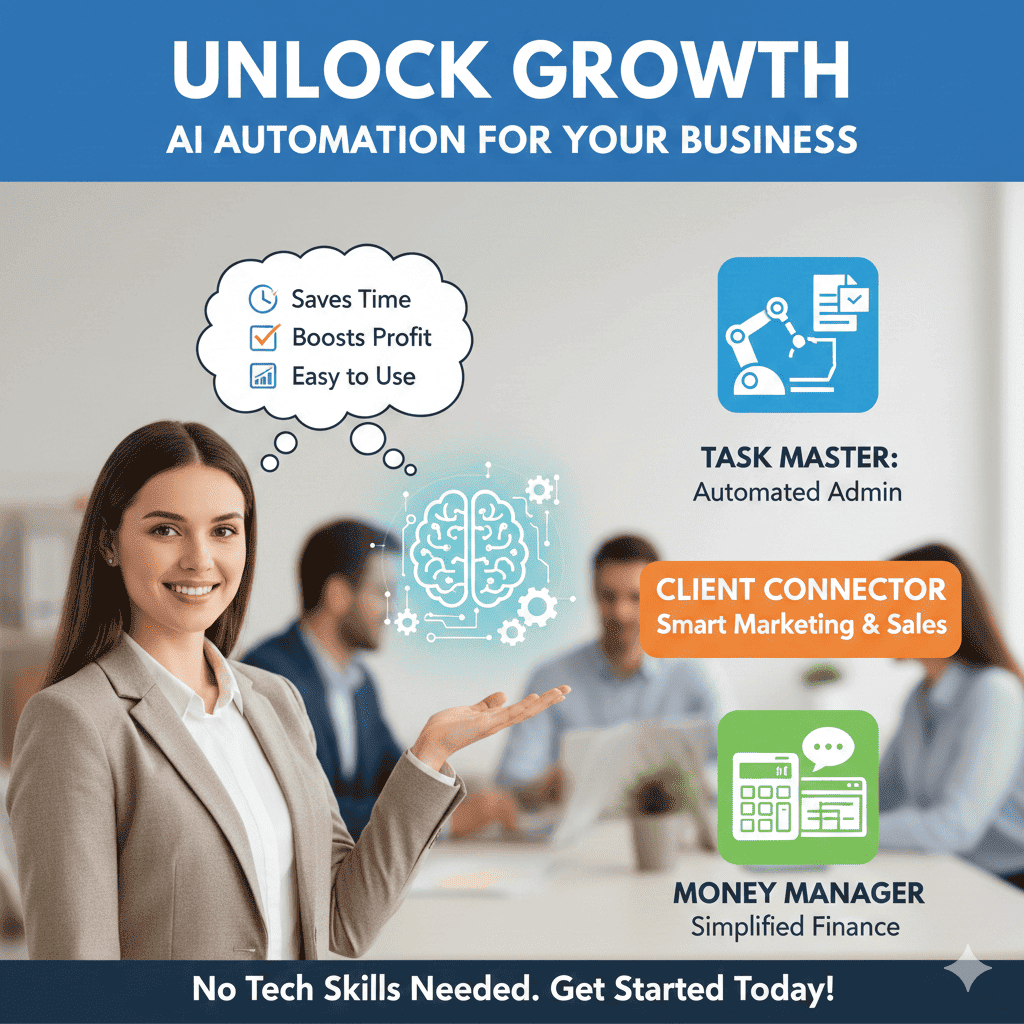
The artificial intelligence revolution isn’t just for tech giants anymore. Small businesses across every industry are desperately seeking ways to streamline operations, reduce costs, and compete more effectively. This creates an unprecedented opportunity for entrepreneurs who want to sell AI automation packages to this underserved market. The best part? You don’t need a computer science degree or years of coding experience to build a profitable AI automation business.
This comprehensive guide will show you exactly how to sell AI automation packages to small businesses, even if you’re starting from scratch with minimal technical knowledge.
1. Understanding the AI Automation Opportunity for Small Businesses
Small businesses operate differently than enterprises. They have limited budgets, smaller teams, and less time to waste on complicated implementations. This is precisely why the opportunity to sell AI automation packages tailored to their needs is so valuable.
Why small businesses need AI automation now:
The average small business owner wears multiple hats, handling everything from customer service to bookkeeping. They’re drowning in repetitive tasks that consume valuable time better spent on growth and strategy. AI automation solves this problem by handling routine work automatically, freeing up human resources for high-value activities.
The gap in the market:
Large consulting firms charge astronomical fees that small businesses simply cannot afford. Meanwhile, DIY AI tools are too complex for non-technical business owners to implement effectively. This creates a perfect middle ground where you can sell AI automation packages that are affordable, accessible, and implementation-ready.
Common pain points you’ll solve:
Small businesses struggle with responding to customer inquiries promptly, managing appointment scheduling, following up with leads consistently, processing invoices and paperwork, maintaining social media presence, and analyzing business data for insights. Each of these challenges represents a specific automation package you can create and sell.
2. Building Your Knowledge Foundation Without Becoming a Developer
You don’t need to learn Python or understand machine learning algorithms to successfully sell AI automation packages. What you need is strategic knowledge about what’s possible and how to connect the dots between business problems and existing solutions.
Focus on no-code and low-code platforms:
Modern AI tools are designed for accessibility. Platforms like Zapier, Make, Airtable, and various AI API services allow you to build sophisticated automations through visual interfaces. Your job is to become proficient at using these tools, not building them from scratch.
Learn business process mapping:
The most valuable skill you can develop is understanding how businesses operate. Study common workflows in different industries. When you can identify inefficiencies and map out improved processes, you’ve mastered the most important aspect of selling automation.
Understand AI capabilities and limitations:
Spend time learning what AI can realistically accomplish today. Chatbots can handle customer service inquiries but shouldn’t make complex business decisions alone. AI can generate content but needs human oversight for quality. Knowing these boundaries prevents overselling and ensures client satisfaction.
Study successful implementations:
Research case studies of businesses using AI automation. Understand what worked, what didn’t, and why. This knowledge base becomes your credibility when speaking with potential clients.
3. Identifying Your Ideal Client and Niche
Trying to sell AI automation packages to everyone is a recipe for failure. Specialization creates expertise, builds reputation faster, and allows you to charge premium prices.
Choose industries with clear automation needs:
Real estate agencies spend countless hours scheduling showings and following up with leads. Legal practices drown in document processing and client intake. Healthcare providers struggle with appointment management and patient communication. E-commerce businesses need inventory tracking and customer service automation. Service-based businesses require scheduling, invoicing, and client communication systems.
Assess business size and budget:
Target businesses with 5-50 employees and annual revenues between $500,000 and $5 million. They’re large enough to afford your services but small enough to benefit significantly from automation without enterprise-level complexity.
Evaluate technical readiness:
Look for businesses already using basic digital tools like email marketing platforms, CRM systems, or scheduling software. They understand technology’s value but lack the expertise to implement advanced solutions. These clients are perfect candidates when you sell AI automation packages.
Consider geographic and demographic factors:
Start locally where you can meet clients face-to-face and build relationships. As your reputation grows, expand regionally and eventually nationally through referrals and online marketing.
4. Creating Your Starter AI Automation Packages
When you’re ready to sell AI automation packages, begin with three core offerings that address universal business needs. This simplifies your sales process and allows you to refine your delivery before expanding.
Package One: Customer Communication Automation
Create an AI-powered system that handles initial customer inquiries through chatbots on websites and social media. Include automated email responses, FAQ handling, and lead qualification. Route complex questions to human staff automatically. This package typically saves businesses 15-20 hours per week in communication management.
Package Two: Appointment and Scheduling Automation
Build a system that allows customers to book appointments automatically based on real-time availability. Include automated reminders via email and SMS, rescheduling capabilities, and calendar integration. Add automated follow-up sequences after appointments. This eliminates scheduling phone tag and reduces no-shows significantly.
Package Three: Lead Management and Follow-Up Automation
Develop an automation that captures leads from multiple sources, scores them based on engagement and criteria, sends personalized follow-up sequences automatically, and alerts sales staff when leads are ready for human contact. This ensures no potential customer falls through the cracks.
Pricing strategy for packages:
Start with monthly retainer pricing rather than one-time fees. Charge between $500-$2,000 per month depending on complexity and your market. Include setup, training, and ongoing support. This creates predictable revenue and positions you as a long-term partner rather than a vendor.
Customization options:
Offer add-ons like additional integrations, advanced reporting, custom AI training, and premium support. This allows clients to start small and expand their investment as they see results.
5. Mastering the Sales Process for Non-Technical Buyers
Successfully sell AI automation packages requires speaking the language of business outcomes, not technical specifications. Small business owners care about saving time, making money, and reducing stress.
Lead with problems, not solutions:
Begin conversations by discussing the challenges your prospect faces daily. Ask about bottlenecks, frustrations, and missed opportunities. Only after understanding their pain points should you introduce automation as the solution.
Use before-and-after scenarios:
Paint a vivid picture of their current situation versus life with automation. “Right now, you spend two hours every morning responding to the same questions from potential clients. With our system, those questions get answered instantly, 24/7, and you only handle the conversations that require your expertise.”
Demonstrate with concrete examples:
Show them exactly what the automation looks like in action. Use screen recordings, live demos, or case studies from similar businesses. Make it tangible and easy to visualize in their own operation.
Address concerns proactively:
Sell AI Automation Packages Small business owners worry about cost, complexity, and reliability. Acknowledge these concerns directly. Explain your implementation process, training approach, and support system. Share guarantees or trial periods that reduce their risk.
Quantify the return on investment:
Calculate the time savings in dollar terms. If automation saves 20 hours per week and their time is worth $50 per hour, that’s $4,000 monthly in value. When your package costs $1,500 per month, the ROI becomes obvious and compelling.
Offer proof through pilots:
Consider offering a 30-day trial or pilot program for qualified prospects. This removes barriers and builds confidence. Many clients who experience the benefits firsthand become long-term customers and referral sources.
6. Implementing AI Automation Without Technical Expertise
The ability to sell AI automation packages depends on your capacity to deliver results reliably. With the right approach and tools, implementation becomes straightforward even for non-technical professionals.
Use proven automation templates:
Don’t reinvent the wheel for every client. Develop standardized workflows for common use cases, then customize them for specific business needs. This dramatically reduces implementation time and ensures consistency.
Partner with technical resources when needed:
Build relationships with freelance developers or agencies who can handle complex customizations. This allows you to sell AI automation packages beyond your current technical capabilities while learning from experts.
Create detailed process documentation:
Document every step of your implementation process. This serves as both a training tool for team members and a quality control checklist. Consistency in delivery builds reputation and reduces errors.
Implement in phases:
Break complex automations into stages. Launch core functionality first, gather feedback, optimize, then add advanced features. This approach reduces overwhelm for clients and allows them to see value quickly.
Train clients effectively:
Provide hands-on training sessions, video tutorials, and written guides. Ensure clients understand how to use the automation, when to intervene, and how to interpret results. Well-trained clients become successful clients who provide testimonials and referrals.
Monitor and optimize continuously:
Set up reporting systems that track automation performance. Review metrics monthly with clients. Identify opportunities for improvement and implement enhancements. This demonstrates ongoing value and justifies your monthly retainer.
7. Building Credibility and Trust as a Non-Technical Seller
When you sell AI automation packages without a technical background, establishing credibility becomes essential. Small business owners need to trust that you can deliver on your promises.
Develop case studies from early clients:
Offer discounted or free services to a few initial clients in exchange for detailed case studies. Document their challenges, your solution, implementation process, and measurable results. These become your most powerful sales tools.
Create educational content:
Write blog posts, create videos, or host webinars explaining AI automation concepts in plain language. Position yourself as an educator who simplifies complex topics. This builds authority and attracts potential clients organically.
Leverage certifications and partnerships:
Complete certification programs from platforms you use regularly. Become a certified partner of major automation tools. These credentials signal expertise and provide access to additional resources and support.
Showcase your process:
Share behind-the-scenes content showing how you analyze business processes, design automation workflows, and implement solutions. Transparency builds trust and differentiates you from competitors who maintain mysterious black boxes.
Collect and display testimonials prominently:
Video testimonials from satisfied clients carry tremendous weight. Feature them on your website, social media, and sales presentations. Focus on testimonials that emphasize business outcomes rather than technical features.
Join relevant business communities:
Participate in local chambers of commerce, industry associations, and small business networking groups. Your presence in these communities positions you as a trusted resource and generates consistent referral opportunities.
8. Scaling Your AI Automation Business Systematically
As demand grows for your services, scaling becomes the next challenge. The goal is to sell AI automation packages to more clients without proportionally increasing your workload.
Standardize your offerings:
Resist the temptation to create completely custom solutions for every client. Refine your core packages based on what works consistently. Customization should be the exception, not the rule.
Build a team strategically:
Your first hire should handle client communication and project management, freeing you to focus on sales and high-level implementation. Next, bring on someone to handle routine setup and training. Finally, add specialized talent for complex technical challenges.
Create comprehensive training materials:
Develop a knowledge base that allows team members to deliver your services consistently. Include video walkthroughs, troubleshooting guides, and client communication templates.
Implement systems for everything:
Use project management tools to track implementations. Create CRM workflows for sales pipeline management. Automate your own business operations using the same tools you sell to clients. Practice what you preach.
Develop strategic partnerships:
Collaborate with complementary service providers like marketing agencies, business consultants, and IT support companies. They can refer clients to you and vice versa, creating a network that expands your reach without increasing marketing costs.
Consider productization:
As you gain experience, explore creating software-as-a-service products based on your most popular automations. This shifts your business model from services to products, enabling exponential scaling.
9. Pricing and Packaging for Maximum Value
How you price your offerings significantly impacts your ability to sell AI automation packages profitably while remaining accessible to small businesses.
Value-based pricing over hourly rates:
Never price based on time invested. Price based on the value delivered to the client. An automation that saves $5,000 monthly in labor costs justifies a $2,000 monthly fee regardless of whether it took you 10 or 40 hours to implement.
Tiered package structure:
Offer Starter, Professional, and Premium tiers. The middle option should be your target sale, with the starter creating an accessible entry point and premium providing an aspirational upgrade path.
Include ongoing support and optimization:
Monthly retainers should cover not just the automation itself but continued monitoring, updates, and improvements. This creates recurring revenue and ensures long-term client relationships.
Offer implementation plus maintenance:
Structure pricing with an upfront implementation fee covering setup and initial training, plus a monthly maintenance fee for support, optimization, and hosting costs. This balances immediate revenue with predictable recurring income.
Create bundle incentives:
Encourage clients to purchase multiple packages by offering discounts on bundled services. A business that implements all three of your core packages should receive better pricing than purchasing them individually.
Transparent pricing builds trust:
Display starting prices publicly while noting that final cost depends on specific requirements. This filters serious prospects and eliminates price shoppers while maintaining credibility.
10. Overcoming Common Objections and Closing Deals
Even with a compelling offer, you’ll encounter resistance when you sell AI automation packages. Preparing responses to common objections increases your close rate significantly.
“It’s too expensive for our budget”:
Reframe cost as investment. Calculate their current cost of the problem in time, missed opportunities, and errors. Show how automation pays for itself within 30-60 days. Offer payment plans or starter packages with lower price points.
“We’re not ready for AI yet”:
Challenge this perception by showing how they already use basic automation like email autoresponders or scheduling tools. Position AI as the next logical step, not a giant leap. Emphasize that waiting means competitors gain advantages while they fall behind.
“It sounds too complicated to implement”:
Walk them through your proven process step-by-step. Share timelines showing implementation happens over weeks, not months. Highlight the training and support included. Show examples of other non-technical business owners successfully using your automations.
“What if it breaks or stops working”:
Explain your monitoring systems and support response times. Provide examples of your track record maintaining automations reliably. Offer service level agreements guaranteeing uptime and response times.
“We need to think about it”:
Respect their decision-making process while creating urgency appropriately. Offer to address specific concerns holding them back. Provide additional resources or arrange calls with existing clients. Set a specific follow-up date rather than leaving it open-ended.
“Can we just do it ourselves”:
Acknowledge they probably could, given enough time and learning. Ask them to honestly assess whether taking that time away from running their business makes sense. Position yourself as saving them the trial-and-error period and providing expertise gained from multiple implementations.
Start Selling AI Automation Packages Today
The opportunity to sell AI automation packages to small businesses has never been more accessible or profitable. These businesses desperately need what you can provide, and the tools required to deliver are readily available without deep technical expertise.
Begin by selecting one industry you understand well. Create a single, focused automation package addressing their most pressing problem. Offer it to three businesses at a discounted rate in exchange for case studies and testimonials. Use those success stories to market your services to similar businesses at full price.
As you gain experience and confidence, expand your offerings, refine your processes, and scale your operations. The business owners you help will save countless hours, serve customers better, and grow more profitably. Meanwhile, you’ll build a valuable business requiring neither inventory nor significant overhead.
Also read this:
10 Profitable AI Services You Can Offer With Just Basic AI Knowledge
How to Earn Money by Building AI Chatbots for Clients
I Built an AI-Controlled Smart Room That Responds to Voice Commands