
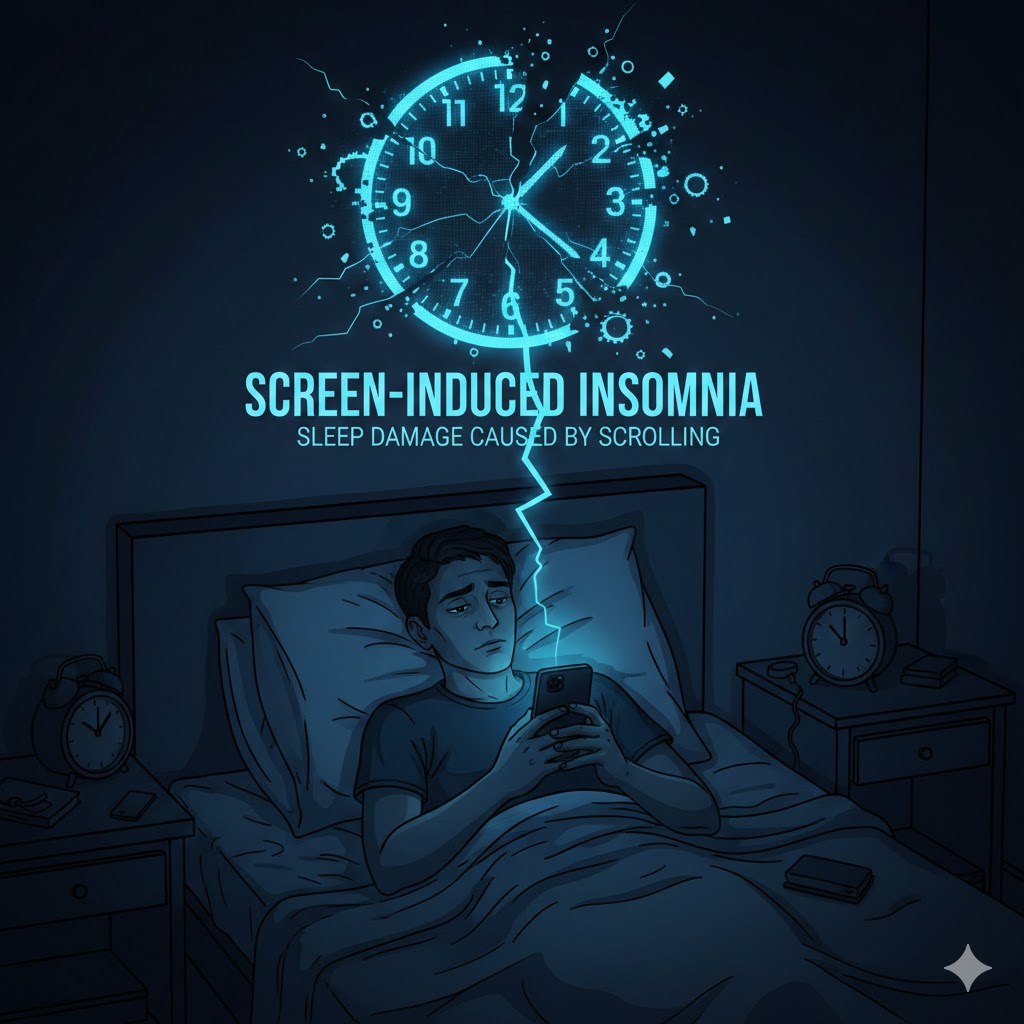
Screen-Induced Insomnia You put your phone down tired—but your brain stays awake. Minutes turn into hours. Sleep doesn’t arrive, or it comes lightly and breaks easily. The next day starts with fog, irritability, and low energy. Night after night, the pattern repeats.
This increasingly common experience is often described as Screen-Induced Insomnia—a form of sleep disruption linked not to stress alone, but to constant exposure to screens before bed. It’s not just about blue light anymore. It’s about how scrolling rewires attention, arousal, and the body’s ability to shut down.
This article explores what screen-induced insomnia really is, how scrolling damages sleep, and why modern screen habits are quietly reshaping our nights.
1. What Is Screen-Induced Insomnia?
Screen-induced insomnia isn’t a formal diagnosis—it’s a behavior-driven sleep disruption.
1.1 What the Term Describes
- Difficulty falling asleep after screen use
- Light, fragmented sleep
- Racing thoughts at bedtime
- Waking unrefreshed
1.2 Why It’s Different From “Normal” Insomnia
- Triggered by device habits
- Worsens with late-night scrolling
- Improves when screen exposure is reduced
People experiencing Screen-Induced Insomnia often sleep better on nights without screens—even when stress levels are similar.
2. Why Scrolling Is Worse Than Watching TV
Not all screens affect sleep equally.
2.1 Passive vs Interactive Screens
- TV is passive and predictable
- Phones are interactive and endless
- Social feeds trigger constant novelty
2.2 The Attention Trap
- Every scroll delivers new stimuli
- The brain stays in “seeking mode”
- There’s no natural stopping point
This constant engagement makes it harder for the nervous system to shift into sleep mode.
3. Blue Light Is Only Part of the Problem
Light matters—but it’s not the whole story.
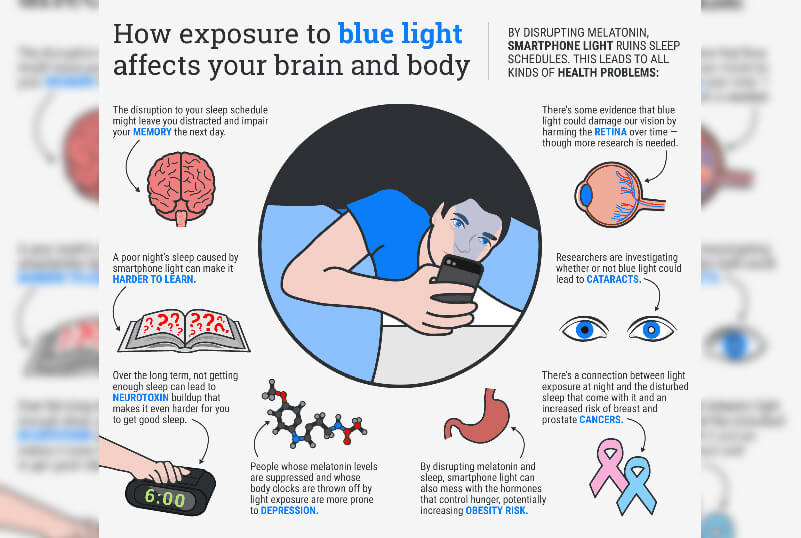
3.1 What Blue Light Does
- Delays melatonin release
- Shifts circadian timing
- Signals “daytime” to the brain
3.2 What It Doesn’t Explain
- Why sleep stays poor even with night mode
- Why mental alertness remains high
- Why dreams feel restless
That’s where cognitive stimulation comes in.
4. Scrolling Keeps the Brain in Alert Mode
Sleep requires mental quiet.
4.1 How Scrolling Affects the Brain
- Dopamine spikes from novelty
- Emotional reactions (comparison, outrage, curiosity)
- Rapid context switching
4.2 The Result
- Thoughts keep looping
- Mental decompression never happens
- Bed becomes an extension of stimulation
This mental activation is a core driver of Screen-Induced Insomnia.
5. Emotional Arousal Disrupts Sleep Onset
Content matters as much as light.
5.1 Common Emotional Triggers
- News and conflict
- Social comparison
- Work messages
- Notifications
5.2 Why This Affects Sleep
- Emotions activate stress pathways
- Cortisol competes with melatonin
- The body delays rest
Even “harmless” scrolling can quietly elevate arousal.
6. Micro-Awakenings and Fragmented Sleep
Screens don’t just delay sleep—they damage its quality.
6.1 What Happens During the Night
- Lighter sleep stages dominate
- More micro-awakenings
- Reduced deep sleep recovery
6.2 Why People Feel Tired Despite “Enough Hours”
- Sleep architecture is disrupted
- Recovery is incomplete
- The brain stays semi-alert
This explains why Screen-Induced Insomnia often shows up as fatigue rather than full sleeplessness.
7. The Habit Loop That Keeps Insomnia Alive
Screen use and insomnia reinforce each other.

7.1 The Loop
- Can’t sleep → scroll phone
- Scroll phone → more alert
- More alert → less sleep
7.2 Why This Is Hard to Break
- Scrolling feels relaxing short-term
- It distracts from discomfort
- The cost appears later
This loop is one of the most common drivers of chronic screen-related sleep issues.
8. Why Night Mode and Blue-Light Glasses Aren’t Enough
Tools help—but habits matter more.
8.1 What These Tools Improve
- Reduce light intensity
- Lower melatonin suppression
8.2 What They Don’t Fix
- Dopamine-driven engagement
- Emotional stimulation
- Attention fragmentation
For Screen-Induced Insomnia, content and timing matter as much as light exposure.
9. Early Signs of Screen-Induced Insomnia
The problem often starts subtly.
9.1 Common Early Signals
- Needing the phone to “wind down”
- Falling asleep slower than before
- Waking mentally tired
- Dreaming more vividly or restlessly
9.2 Why People Miss It
- Blame stress or caffeine
- Normalize tiredness
- Underestimate screen impact
Recognizing these early signs makes change easier.
10. Why This Problem Is Growing Rapidly
Modern life is optimized for screens.
10.1 Cultural Shifts
- Work follows us into bed
- Entertainment is infinite
- Silence feels uncomfortable
10.2 Biological Mismatch
- Brains evolved for darkness and stillness
- Screens deliver light and stimulation
- Sleep systems struggle to adapt
This mismatch explains why Screen-Induced Insomnia is becoming one of the most common sleep complaints.
FAQs: Screen-Induced Insomnia
Is screen-induced insomnia a real condition?
It’s not a formal diagnosis, but it describes a well-recognized pattern of sleep disruption linked to screen use.
Is blue light the main cause?
Blue light contributes, but mental and emotional stimulation play a major role.
Does scrolling earlier in the evening matter?
Yes. The closer screen use is to bedtime, the greater the impact on sleep.
Can reducing screen time improve sleep quickly?
Many people notice improvements within days to weeks.
Is this the same as general insomnia?
No. Screen-induced insomnia is behavior-linked and often improves when habits change.
Final Thoughts
Sleep isn’t just about being tired—it’s about being ready to rest. Endless scrolling keeps the brain alert in a world that never powers down. Screen-Induced Insomnia isn’t a failure of willpower; it’s a predictable response to constant stimulation at the wrong time.
The body hasn’t forgotten how to sleep.
It’s simply waiting for the signal that night has truly arrived.
And sometimes, that signal begins with putting the screen away.
More Related Topics:
Comfort Deprivation Health: Why Easy Living Is Making Bodies Weak
Silent Fatigue Disorder: When Blood Tests Look Normal but Energy Is Gone
Breathwork Therapy for Anxiety: Why It Works Faster Than Mindfulness