
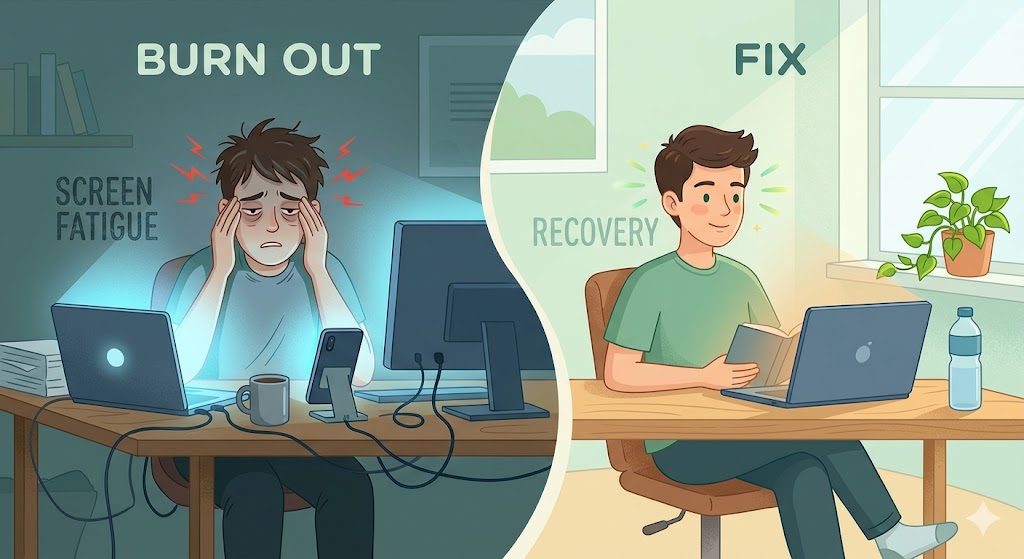
In 2026, screens dominate almost every part of life—work, entertainment, social media, and even relaxation. But this constant exposure has created a growing issue known as Screen Fatigue Syndrome.
If you often feel tired eyes, headaches, lack of focus, or mental burnout after using your phone or laptop, you’re likely experiencing Screen Fatigue Syndrome.
This SEO-optimized guide will help you understand what it is, why it happens, and most importantly—how to fix Screen Fatigue Syndrome effectively.
1. What is Screen Fatigue Syndrome?

Screen Fatigue Syndrome refers to physical and mental exhaustion caused by prolonged screen exposure.
Common Symptoms:
- Eye strain
- Headaches
- Blurred vision
- Dry eyes
- Mental fatigue
- Poor concentration
👉 It affects both your eyes and brain.
2. Why Screen Fatigue Syndrome Happens
2.1 Blue Light Exposure
- Disrupts sleep cycle
2.2 Reduced Blinking
- Causes dry eyes
2.3 Continuous Focus
- Strains eye muscles
2.4 Mental Overload
- Too much information processing
👉 These factors contribute to Screen Fatigue Syndrome.
3. Effects of Screen Fatigue Syndrome on Your Body
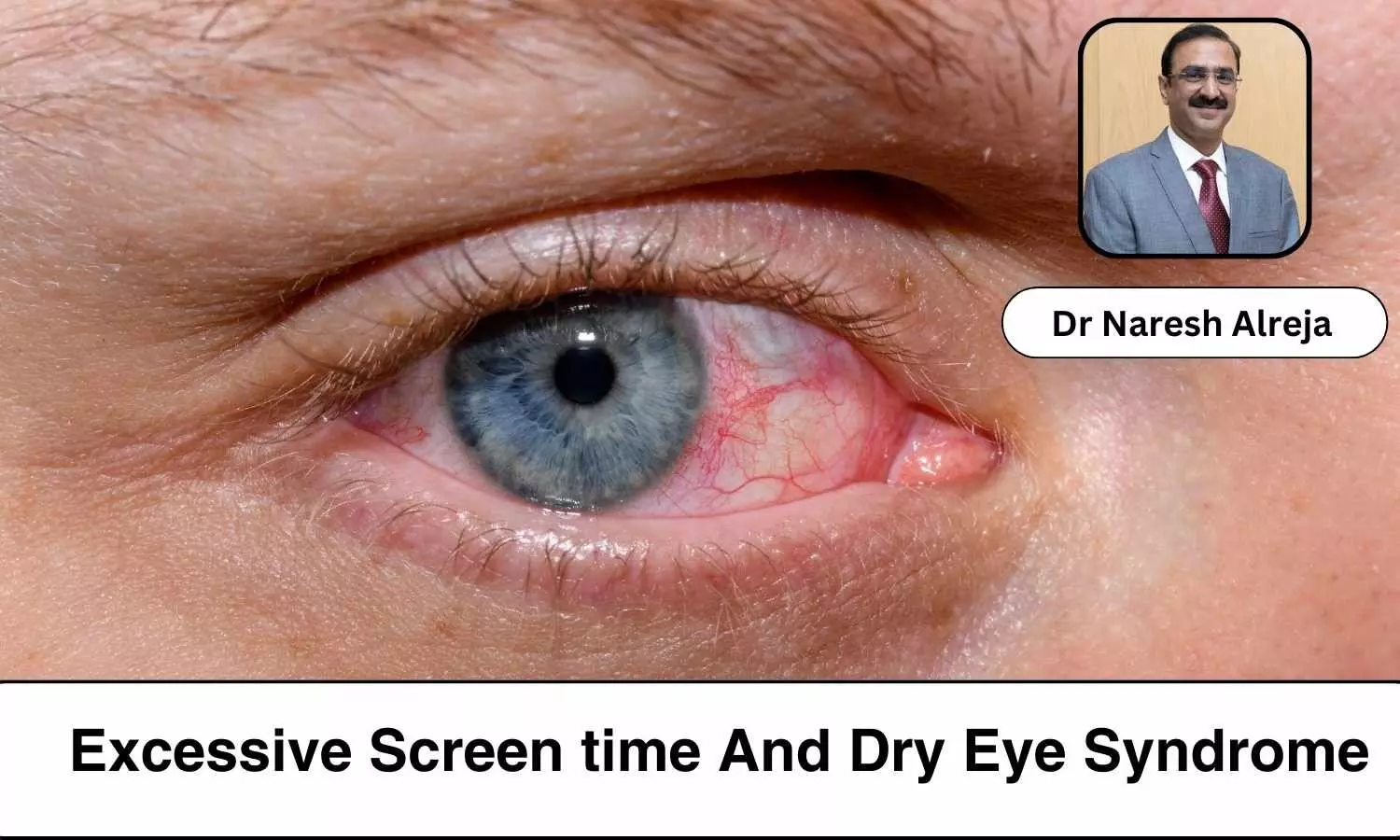
3.1 Eyes
- Dryness
- Irritation
3.2 Brain
- Reduced focus
- Mental burnout
3.3 Sleep
- Insomnia
3.4 Body
- Neck and shoulder pain
👉 Ignoring Screen Fatigue Syndrome can lead to long-term issues.
4. How to Fix Screen Fatigue Syndrome
4.1 Follow the 20-20-20 Rule
- Every 20 minutes
- Look 20 feet away
- For 20 seconds
👉 One of the best ways to reduce Screen Fatigue Syndrome.
4.2 Reduce Screen Time
Tips:
- Set daily limits
- Take regular breaks
4.3 Use Blue Light Filters

Options:
- Night mode
- Blue light glasses
- Screen filters
👉 Helps protect eyes from Screen Fatigue Syndrome.
4.4 Improve Lighting Conditions
- Avoid using screens in dark rooms
- Use soft ambient lighting
4.5 Blink More Often
- Keeps eyes hydrated
- Prevents dryness
4.6 Adjust Screen Position

Ideal Setup:
- Screen at eye level
- Proper distance (16–20 inches)
4.7 Do Eye Exercises
Simple Exercises:
- Eye rotation
- Focus near → far
- Palming technique
👉 These reduce Screen Fatigue Syndrome.
4.8 Take Mental Breaks
- Step away from screens
- Go outside
- Relax your mind
5. Daily Routine to Prevent Screen Fatigue Syndrome
Morning:
- Avoid immediate screen use
Work Hours:
- Follow 20-20-20 rule
- Take breaks
Night:
- Limit screen time before sleep
👉 Consistency is key.
6. Foods That Help Reduce Screen Fatigue

Include:
- Carrots
- Spinach
- Nuts
- Fish (omega-3)
👉 Nutrition supports recovery from Screen Fatigue Syndrome.
7. Common Mistakes to Avoid
7.1 Using Screens in Darkness
7.2 Ignoring Eye Pain
7.3 No Breaks
7.4 Overusing Phones Before Sleep
👉 Avoiding these helps prevent Screen Fatigue Syndrome.
8. When to See a Doctor
Seek Help If:
- Persistent headaches
- Severe eye pain
- Vision problems
Conclusion
Screen Fatigue Syndrome is one of the biggest hidden health issues in the digital age.
The good news? It’s completely manageable with simple habits like taking breaks, adjusting your setup, and reducing screen time.
Start applying these strategies today—and you’ll notice a big improvement in your energy, focus, and eye comfort.
FAQ (Frequently Asked Questions)
1. What is Screen Fatigue Syndrome?
It’s eye and mental fatigue caused by excessive screen use.
2. How can I fix it quickly?
Follow the 20-20-20 rule and take breaks.
3. Are blue light glasses effective?
Yes, they help reduce eye strain.
4. Can it affect sleep?
Yes, it disrupts your sleep cycle.
5. Is Screen Fatigue Syndrome serious?
If ignored, it can lead to long-term issues.
More Related Topics:
DNA-Based Diet Plans: The Future of Health in 2026 (Complete Guide)