
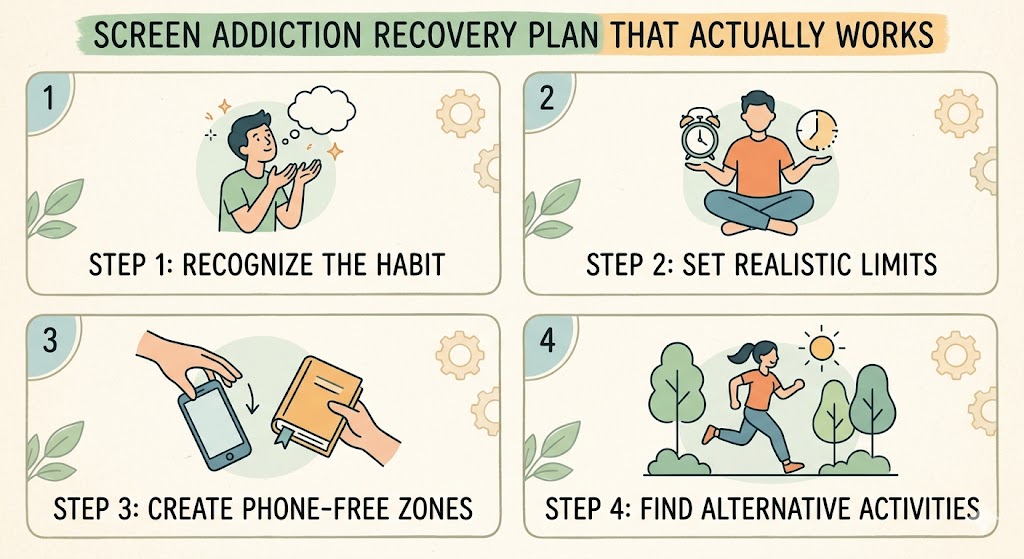
In today’s digital world, screens are everywhere—phones, laptops, tablets, and TVs. While technology has made life easier, it has also created a silent problem: screen addiction. If you find yourself endlessly scrolling, procrastinating, or feeling mentally drained, you’re not alone.
This guide will give you a practical and proven Screen Addiction Recovery Plan that actually works—helping you regain control of your time, focus, and mental health.
1. Understanding Screen Addiction and Its Impact
Before applying any Screen Addiction Recovery Plan, you need to understand the problem.
Screen addiction is the compulsive use of digital devices, often without purpose or control.
Sub Points:
- Excessive social media usage
- Constant checking of notifications
- Binge-watching content
- Gaming for long hours
Effects:
- Reduced productivity
- Poor sleep quality
- Increased anxiety and stress
- Lack of focus
Recognizing these patterns is the first step toward an effective Screen Addiction Recovery Plan.
2. Signs You Need a Screen Addiction Recovery Plan
Many people don’t realize how deeply they are affected.
Common Signs:
Sub Points:
- Checking your phone immediately after waking up
- Spending hours scrolling without purpose
- Difficulty focusing on tasks
- Feeling restless without your device
- Ignoring real-life responsibilities
If these sound familiar, it’s time to follow a structured Screen Addiction Recovery Plan.
3. The Core Principle: Control, Not Elimination
A realistic Screen Addiction Recovery Plan doesn’t mean quitting screens completely.
Sub Points:
- Use technology intentionally
- Set boundaries, not bans
- Replace habits instead of removing them
The goal is balance—not extreme restriction.
4. Step-by-Step Screen Addiction Recovery Plan
Here’s a practical system you can start today.
Step 1: Track Your Screen Time
You can’t fix what you don’t measure.
Sub Points:
- Use screen time tracking apps
- Identify peak usage hours
- Note which apps consume most time
Awareness is the foundation of any Screen Addiction Recovery Plan.
Step 2: Set Clear Limits
Define how much screen time is acceptable.
Sub Points:
- Limit social media to specific hours
- Use app timers
- Block distracting apps during work
Boundaries create discipline.
Step 3: Remove Triggers
Make it harder to access distractions.
Sub Points:
- Turn off non-essential notifications
- Remove addictive apps from home screen
- Log out after use
Small changes make a big difference.
Step 4: Create No-Screen Zones
Design environments where screens are not allowed.
Sub Points:
- No phones in bed
- No screens during meals
- No devices during deep work
This strengthens your Screen Addiction Recovery Plan.
Step 5: Replace Screen Time with Better Habits
You can’t just remove a habit—you must replace it.
Sub Points:
- Reading books
- Exercising
- Learning new skills
- Spending time outdoors
Replacement is key to long-term success.
Step 6: Follow a Digital Detox Routine
Take breaks from screens regularly.
Sub Points:
- 1-hour daily detox
- Half-day weekly detox
- Full-day monthly detox
This resets your brain and reduces dependency.
Step 7: Use Technology to Fight Technology
Ironically, tools can help.
Sub Points:
- App blockers
- Focus timers
- Productivity apps
These support your Screen Addiction Recovery Plan.
5. Daily Habits to Maintain Control
Consistency builds discipline.
Sub Points:
- Start your day without screens
- Plan your day before using your phone
- Set a fixed sleep schedule
- Keep your phone away while working
These habits reinforce your recovery.
6. The Psychology Behind Screen Addiction
Understanding why it happens helps you control it.
Key Factors:
Sub Points:
- Dopamine rewards from notifications
- Fear of missing out (FOMO)
- Endless scrolling design
- Instant gratification
A strong Screen Addiction Recovery Plan works by breaking these cycles.
7. Common Mistakes to Avoid
Avoid these pitfalls.
Sub Points:
- Trying to quit suddenly
- Setting unrealistic limits
- Not replacing habits
- Ignoring triggers
Sustainable change is gradual.
8. How Long Does Recovery Take
Progress depends on consistency.
Timeline:
Sub Points:
- 1 week: Awareness improves
- 2–3 weeks: Habits begin to change
- 1–2 months: Significant control
Stick to your Screen Addiction Recovery Plan for lasting results.
9. Benefits of Following a Screen Addiction Recovery Plan
The results are powerful.
Sub Points:
- Improved focus and productivity
- Better sleep quality
- Reduced stress and anxiety
- More time for meaningful activities
Your life becomes more intentional.
10. Long-Term Strategy for Digital Balance
Recovery is not a one-time effort.
Sub Points:
- Regularly review your screen habits
- Adjust limits as needed
- Stay mindful of usage
- Keep real-life priorities first
This ensures your Screen Addiction Recovery Plan continues to work.
Conclusion
Screen addiction is one of the biggest challenges of modern life—but it’s also one of the easiest to fix with the right approach. A structured Screen Addiction Recovery Plan helps you regain control, improve focus, and live more intentionally.
Start small, stay consistent, and replace bad habits with better ones. Over time, you’ll notice a dramatic improvement in your productivity, mental clarity, and overall well-being.
FAQs
1. What is the best Screen Addiction Recovery Plan?
A plan that focuses on awareness, limits, and habit replacement works best.
2. Can I completely quit screen addiction?
You don’t need to quit—just control and balance usage.
3. How many hours of screen time is healthy?
It depends, but limiting non-essential use is key.
4. Does screen addiction affect mental health?
Yes, it can increase stress, anxiety, and reduce focus.
5. Is digital detox necessary?
Yes, regular detox helps reset your brain.
6. Can apps help reduce screen time?
Yes, app blockers and trackers are very effective.
7. How do I stay consistent?
Start small, track progress, and build habits gradually.
More Related Topics:
Overthinking Cure: Proven Techniques That Actually Work