
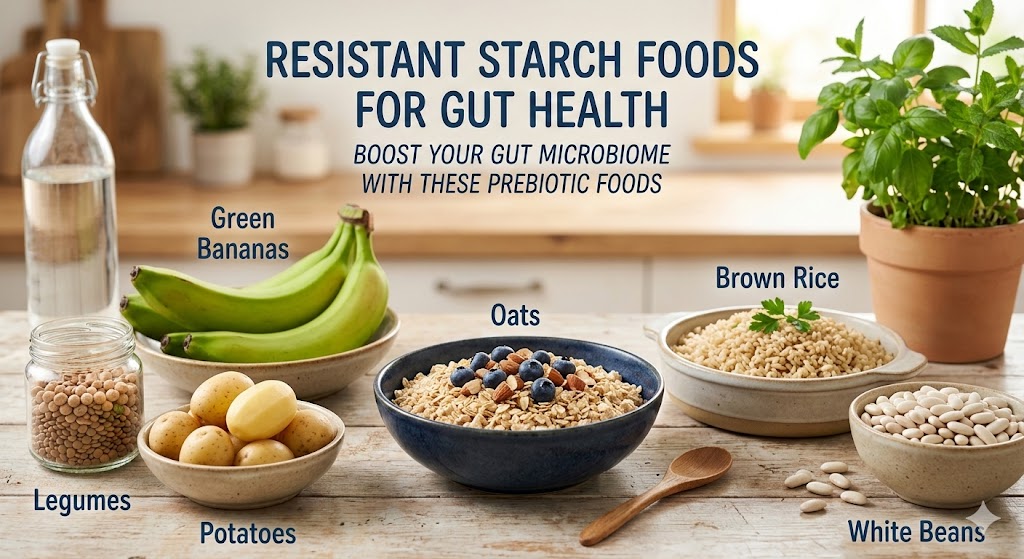
Gut health has become one of the most important topics in modern nutrition. Among the many nutrients that support a healthy digestive system, Resistant Starch Foods have gained significant attention from researchers and nutrition experts.
Unlike regular starch, resistant starch passes through the small intestine without being digested. Instead, it reaches the large intestine where it acts as food for beneficial gut bacteria. This unique property makes Resistant Starch Foods extremely valuable for improving gut health, supporting metabolism, and promoting overall wellness.
In this guide, we’ll explore what resistant starch is, why it matters, and the best Resistant Starch Foods you can include in your diet.
1. What Is Resistant Starch?
Resistant starch is a type of carbohydrate that resists digestion in the small intestine.
Instead of being broken down into glucose immediately, it travels to the colon where gut bacteria ferment it.
This fermentation process produces beneficial compounds called short-chain fatty acids, particularly butyrate.
Because of this, Resistant Starch Foods function similarly to dietary fiber and play a crucial role in gut health.
2. Why Resistant Starch Foods Are Important
Including Resistant Starch Foods in your diet can support several aspects of health.
Potential benefits include:
- Improved gut microbiome balance
- Enhanced digestion
- Better blood sugar control
- Increased satiety
- Support for metabolic health
Resistant starch acts as a prebiotic, feeding beneficial bacteria that maintain a healthy digestive environment.
3. Types of Resistant Starch
Scientists classify resistant starch into several categories.
3.1 Naturally Resistant Starch
Found in foods that naturally resist digestion.
Examples include:
- Green bananas
- Raw potatoes
- Certain legumes
These are common sources of Resistant Starch Foods.
3.2 Retrograded Starch
This form develops when starchy foods are cooked and then cooled.
Examples include:
- Cooled rice
- Cooled potatoes
- Pasta salad
Cooling changes the starch structure, increasing resistant starch levels.
3.3 Chemically Modified Starch
Sometimes used in processed foods.
However, whole-food Resistant Starch Foods are generally preferred for health benefits.
4. Best Resistant Starch Foods to Eat
Here are some of the most effective Resistant Starch Foods you can add to your diet.
5. Green Bananas
Green bananas are one of the richest natural sources of resistant starch.
Benefits include:
- Prebiotic support
- Improved digestion
- Support for gut microbiome diversity
As bananas ripen, their resistant starch content decreases.
6. Cooked and Cooled Potatoes
When potatoes are cooked and then cooled, they develop retrograded starch.
Examples include:
- Potato salad
- Chilled roasted potatoes
These dishes can provide a significant amount of resistant starch.
7. Legumes
Legumes are excellent Resistant Starch Foods.
Examples include:
- Lentils
- Chickpeas
- Black beans
- Kidney beans
They also provide protein, fiber, and important micronutrients.
8. Cooked and Cooled Rice
Similar to potatoes, rice develops resistant starch after cooling.
This can be found in dishes such as:
- Sushi rice
- Rice salads
- Refrigerated leftover rice
Cooling increases resistant starch levels.
9. Oats
Oats contain a mixture of soluble fiber and resistant starch.
They support:
- gut microbiome health
- stable blood sugar levels
- improved digestion
Overnight oats are a popular way to consume Resistant Starch Foods.
10. Barley
Barley is another whole grain that contains resistant starch.
Benefits include:
- improved gut bacteria diversity
- sustained energy release
- high fiber content
Barley can be used in soups, salads, and grain bowls.
11. Benefits of Resistant Starch Foods for Gut Health
11.1 Improved Gut Microbiome
Resistant starch feeds beneficial bacteria such as Bifidobacteria, helping maintain microbial balance.
11.2 Production of Butyrate
Fermentation of resistant starch produces butyrate, a fatty acid that supports colon health and reduces inflammation.
11.3 Better Digestive Function
Many people experience improved digestion when regularly consuming Resistant Starch Foods.
11.4 Blood Sugar Stability
Resistant starch slows carbohydrate digestion, helping stabilize blood glucose levels.
12. How to Add Resistant Starch Foods to Your Diet
Here are simple ways to include Resistant Starch Foods in daily meals.
Breakfast:
- Overnight oats
- Green banana smoothies
Lunch:
- Lentil salad
- Chickpea bowls
Dinner:
- Cooled rice dishes
- Potato salad
Snacks:
- Roasted chickpeas
- Banana-based snacks
Gradually increasing intake helps the digestive system adjust.
13. Potential Side Effects
While Resistant Starch Foods are beneficial, increasing intake too quickly may cause:
- gas
- bloating
- digestive discomfort
To minimize these effects:
- introduce resistant starch slowly
- drink adequate water
- combine with a balanced diet
Over time, the gut microbiome adapts.
Frequently Asked Questions (FAQ)
Q1: Are Resistant Starch Foods the same as fiber?
They are similar but not identical. Resistant starch behaves like fiber during digestion.
Q2: Can Resistant Starch Foods help with weight management?
They may increase satiety and help regulate appetite.
Q3: How much resistant starch should you eat daily?
Research suggests around 15–30 grams per day may provide benefits.
Q4: Are cooked foods lower in resistant starch?
Cooking reduces resistant starch, but cooling the food afterward can increase it again.
Q5: Are Resistant Starch Foods safe for everyone?
Most people tolerate them well, but individuals with digestive conditions should consult healthcare professionals.
Final Thoughts
Resistant starch is a powerful but often overlooked nutrient that supports digestive health and metabolic balance. Including Resistant Starch Foods in your diet can help nourish beneficial gut bacteria and promote a healthier microbiome.
By incorporating foods such as legumes, cooled potatoes, oats, and green bananas, you can naturally increase resistant starch intake and support long-term gut health.
Small dietary changes can lead to meaningful improvements in digestive wellness over time.
More Related Topics:
Mushroom Complex Supplements Ranked: The Best Functional Mushroom Blends in 2026
Attention Span Recovery Strategy: How to Rebuild Focus
Protein Water Trend Explained 2026: Why This Fitness Drink Is Taking Over the Market