
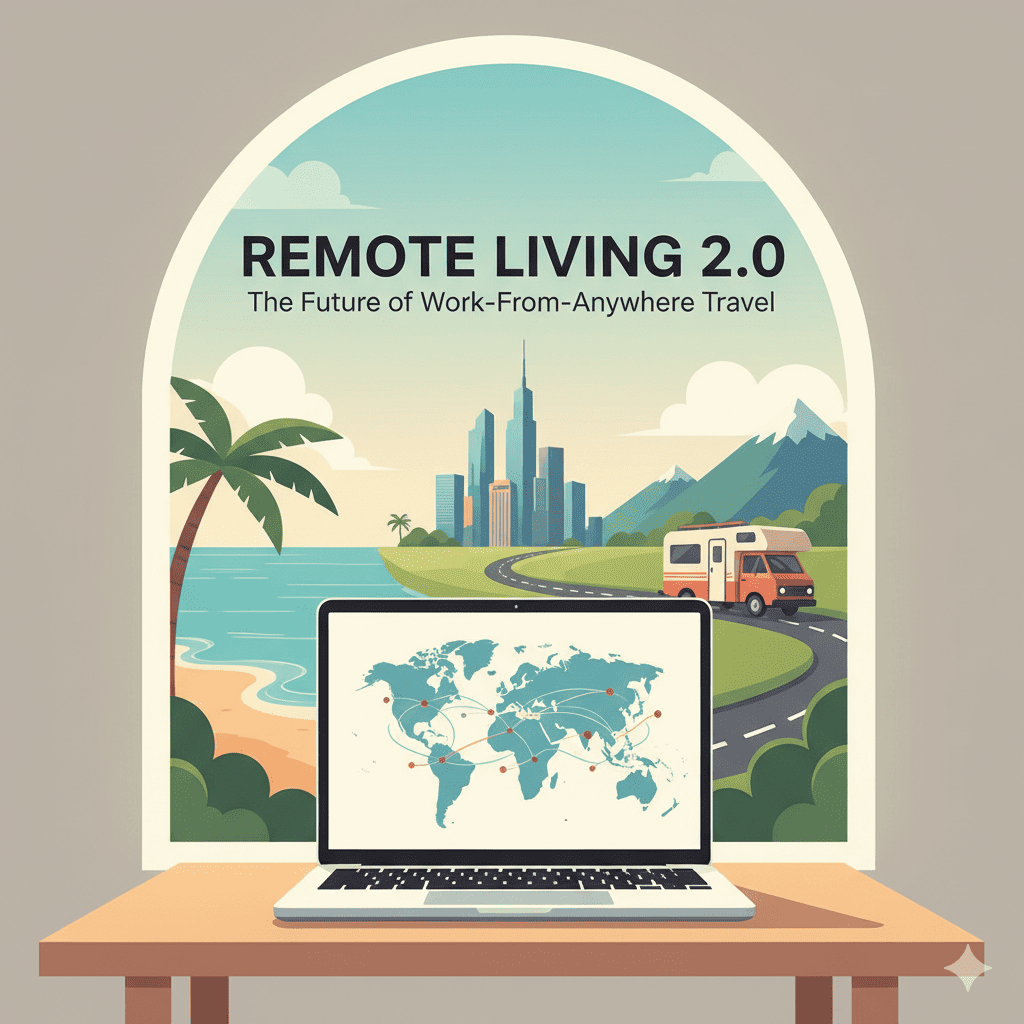
The world of work has changed forever, and with it comes an incredible opportunity: the chance to live anywhere while earning a living. Welcome to the era of remote living—where your office can be a beach in Bali, a café in Paris, or a mountain cabin in Colorado.
What Is Remote Living?
Remote living isn’t just about working from home anymore. It’s about designing a lifestyle where location independence meets career ambition. This revolutionary approach allows professionals to blend work with wanderlust, creating experiences that were once impossible for traditional office workers.
The remote living movement has exploded since 2020, with millions of people discovering they can be just as productive (if not more so) while exploring the world. But this isn’t just a trend—it’s the future of how we live and work.
Why Remote Living Is Taking Over
Freedom Like Never Before
Imagine waking up to ocean waves instead of alarm clocks. With remote living, you’re not tied to one city or country. You have the freedom to chase endless summers, experience new cultures, or simply find that perfect place that feels like home—even if just for a few months.
The beauty of this lifestyle is that you’re no longer spending your best years dreaming about retirement travel. You’re living those dreams now, in your prime, while building your career simultaneously.
Cost of Living Advantages
Here’s something exciting: many remote workers are actually saving money. By choosing destinations with lower costs of living, your salary stretches further. That apartment in San Francisco? You could trade it for a villa in Portugal, a modern condo in Mexico City, or a cozy flat in Thailand—all while spending less.
Many remote workers report saving 30-50% on living expenses while actually upgrading their quality of life. Imagine having a personal chef for the cost of cooking at home, or living in a spacious apartment with a pool instead of a cramped studio.
Personal Growth on Steroids
Remote living forces you out of your comfort zone in the best possible way. You’ll develop adaptability, cultural intelligence, and problem-solving skills that no office environment could teach. Every new destination is a classroom, and life becomes your greatest teacher.
You’ll learn to navigate foreign healthcare systems, make friends across language barriers, and discover resilience you never knew you had when your flight gets canceled or your laptop dies in a foreign country.
Better Work-Life Balance
Traditional office life often means sacrificing personal wellness for professional success. But remote living flips this script entirely. You can take that yoga class at 10 AM, go surfing during your lunch break, or explore a new hiking trail after finishing your tasks.
The flexibility to structure your day around both productivity and personal fulfillment creates a harmony that’s nearly impossible to achieve in conventional work environments.
Environmental Benefits
Here’s an often-overlooked advantage: remote living can significantly reduce your carbon footprint. No daily commute means fewer emissions. Many remote workers choose to stay in locations for months at a time rather than taking frequent flights, creating a more sustainable travel pattern than traditional tourism.
Plus, experiencing different environments firsthand often cultivates a deeper appreciation for environmental conservation and local sustainability efforts.
The Essential Toolkit for Remote Living Success
Rock-Solid Internet Connection
Let’s be real—your internet connection is your lifeline. Before committing to any location, test the Wi-Fi speeds, have backup options (mobile hotspots are lifesavers), and always know where the nearest co-working space is. Some remote workers even carry portable Wi-Fi devices for ultimate peace of mind.
Aim for at least 25 Mbps download and 10 Mbps upload speeds for video calls and file transfers. Test connections at different times of day, as speeds can fluctuate during peak hours.
Time Zone Mastery
Working across time zones can feel like a juggling act at first, but it becomes second nature. The trick? Use tools like World Time Buddy, set clear boundaries with your team about your availability, and block off “focus time” when you need to get deep work done without 3 AM meetings.
Some remote workers strategically choose locations within 3-4 hours of their team’s timezone to make collaboration easier. Others embrace the timezone difference, using off-hours to focus deeply without distractions.
Your Digital Nomad Essentials
Pack light, but pack smart. Noise-canceling headphones, a reliable laptop stand, a good webcam for video calls, universal adapters, and a portable power bank are non-negotiables. Your workspace might change, but your tools shouldn’t let you down.
Consider investing in a quality VPN for security, a portable external monitor to boost productivity, and cloud storage solutions to keep your files accessible from anywhere. A good travel insurance policy that covers electronics is also worth its weight in gold.
Financial Management Tools
Managing money across borders requires organization. Use apps like Wise (formerly TransferWise) for international transfers, budgeting apps like Trail Wallet to track expenses in multiple currencies, and credit cards with no foreign transaction fees.
Many successful remote workers also maintain accounts in multiple countries to avoid unnecessary currency conversion fees and have backup options if one card gets compromised.
Top Destinations for Remote Living in 2025
Lisbon, Portugal
This European gem has become the unofficial capital of remote living. With its stunning architecture, thriving expat community, vibrant café culture, and the D7 visa for remote workers, Lisbon offers the perfect blend of old-world charm and modern infrastructure.
The city boasts over 250 days of sunshine annually, incredible pastel de nata pastries, and a startup ecosystem that’s attracting talent from around the globe. Weekly costs average $1,200-2,000 for a comfortable lifestyle including accommodation.
Medellín, Colombia
Known as the “City of Eternal Spring,” Medellín boasts perfect weather year-round, incredibly affordable living costs, and a rapidly growing digital nomad scene. The transformation of this city is nothing short of remarkable, and the welcoming locals make integration easy.
With a monthly budget of $1,000-1,500, you can live very comfortably here. The city’s innovative metro system, beautiful surrounding mountains, and thriving coffee culture make it ideal for remote living enthusiasts seeking Latin American adventures.
Chiang Mai, Thailand
A longtime favorite for remote living enthusiasts, Chiang Mai combines Buddhist temples, incredible street food, jungle adventures, and one of the most affordable costs of living in Asia. Plus, the co-working scene here is world-class.
You can live well on $800-1,200 per month, including accommodation, food, and entertainment. The city’s numerous digital nomad meetups, weekend markets, and proximity to Southeast Asian travel hotspots make it a perfect base for Asian exploration.
Tulum, Mexico
If Caribbean vibes meet Mayan mystique sounds like your dream, Tulum delivers. Yes, it’s pricier than other Mexican destinations, but the lifestyle—beach mornings, cenote afternoons, and sunset work sessions—is incomparable.
The town has excellent internet infrastructure thanks to the influx of remote workers, plus an incredible wellness scene with yoga studios, healthy restaurants, and holistic retreats. Budget around $2,000-3,000 monthly for a comfortable beachside lifestyle.
Tallinn, Estonia
Tech-forward and breathtakingly beautiful, Estonia launched the world’s first e-Residency program and offers a dedicated Digital Nomad Visa. The medieval old town, cutting-edge infrastructure, and emerging startup scene make Tallinn an exciting European option.
The city perfectly balances historic charm with digital innovation. With blazing-fast internet, a compact walkable center, and access to the rest of Europe, Tallinn appeals to remote workers seeking a European base. Monthly costs range from $1,500-2,500.
Bali, Indonesia
No remote living list is complete without Bali. Ubud offers lush rice terraces and a wellness-focused community, while Canggu provides beach vibes and surfing culture. Bali’s co-working spaces like Dojo and Hubud are legendary in the remote work community.
The island offers incredible value, with many remote workers living comfortably on $1,000-1,800 per month. The spiritual atmosphere, healthy food scene, and beautiful landscapes create an inspiring environment for creativity and productivity.
Buenos Aires, Argentina
This sophisticated South American capital offers European elegance at Latin American prices. The tango capital of the world combines stunning architecture, world-class steaks and wine, and a vibrant arts scene that rivals any major city.
Buenos Aires is especially appealing for remote workers with irregular schedules, as the city comes alive at night with restaurants serving dinner past 10 PM and cultural events happening until dawn. Monthly budgets typically run $1,200-2,000.
Dubai, UAE
For those seeking luxury remote living, Dubai offers tax-free income, world-class infrastructure, and a multicultural environment where English is widely spoken. The city’s new virtual working program makes it easy for remote professionals to establish residency.
While more expensive than other destinations ($2,500-4,000 monthly), Dubai provides unmatched safety, convenience, and connectivity to Asia, Europe, and Africa. The year-round sunshine and futuristic skyline don’t hurt either.
Building Community While Living Remotely
One of the biggest challenges of remote living is loneliness. But here’s the secret: the global remote community is incredibly welcoming. Join co-working spaces, attend meetup events, use apps like Meetup or Nomad List, and don’t be shy about introducing yourself. Some of your best friends might be waiting at the next coffee shop.
Co-working spaces are more than just desks and Wi-Fi—they’re community hubs. Spaces like Selina, WeWork, and local independent co-working spots organize networking events, skill-sharing workshops, and social activities that make meeting people natural and easy.
Many remote workers also maintain relationships back home through regular video calls, virtual game nights, or planning visits during slower work periods. The key is being intentional about connection—both with your traveling community and loved ones back home.
Consider staying in coliving spaces designed specifically for remote workers. These accommodations combine private living quarters with shared common areas and built-in social opportunities, eliminating much of the isolation that can come with remote living.
Maintaining Productivity Across Different Environments
Creating Portable Routines
The most successful remote workers develop routines that work anywhere. Maybe it’s your morning coffee ritual, a specific playlist for focus time, or a sunset walk to signal the end of your workday. These anchors keep you grounded no matter how much your external environment changes.
Designing Your Ideal Workspace
Not every Airbnb has an ergonomic desk setup. Learn to create productive workspaces anywhere—whether that’s investing in a lightweight laptop stand, finding the perfect café with the right noise level, or joining a local co-working space for those days when home just isn’t cutting it.
Managing Energy, Not Just Time
Remote living teaches you that productivity isn’t about hours logged—it’s about energy management. Notice when you do your best work. Are you a morning person who crushes it before noon? Or do you hit your stride in the evening? Structure your day around your natural rhythms rather than arbitrary 9-to-5 expectations.
The Legal Stuff You Can’t Ignore
Before embracing remote living, get your paperwork sorted. Research visa requirements for your destinations (many countries now offer specific digital nomad visas), understand your tax obligations (both in your home country and abroad), ensure your health insurance covers international travel, and consider working with an accountant who specializes in remote workers.
Popular digital nomad visas include Portugal’s D7, Estonia’s Digital Nomad Visa, Croatia’s Digital Nomad Residence Permit, and Barbados’s Welcome Stamp. Each has different requirements regarding minimum income, duration of stay, and application processes.
Tax implications vary dramatically depending on your citizenship and where you’re working from. US citizens remain subject to US taxes regardless of location, while many other nationalities may establish tax residency in their current location after a certain period. Professional advice here is invaluable.
Health and Wellness on the Road
International Health Insurance
Don’t skimp on health coverage. Companies like SafetyWing, World Nomads, and Cigna Global offer policies designed specifically for remote living professionals. Look for coverage that includes emergency evacuation, dental care, and mental health support.
Staying Fit While Traveling
Maintaining fitness routines while constantly moving takes creativity. Many remote workers embrace bodyweight workouts, yoga, or running—activities requiring minimal equipment. Apps like Nike Training Club or FitOn offer guided workouts you can do anywhere.
Some destinations have incredible fitness communities. Bali offers yoga everywhere, Medellín has fantastic outdoor gyms, and many European cities have affordable gym memberships that rival what you’d pay back home.
Mental Health Matters
The constant stimulation of remote living can be thrilling, but it can also be exhausting. Prioritize mental health through regular check-ins with a therapist (many now offer virtual sessions), meditation practices, journaling, and giving yourself permission to have slow days.
Making Remote Living Sustainable Long-Term
The first few months of remote living feel like an extended vacation. But to make it sustainable, you need routines. Create a consistent morning routine, designate specific work hours, find your regular spots (a favorite café, a trusted co-working space), and schedule downtime to prevent burnout.
Remember: just because you can work from anywhere doesn’t mean you should work from everywhere all the time. Give yourself permission to stay put when a place feels right.
Many experienced remote workers adopt a “slow travel” approach, spending 2-3 months in each location rather than constantly hopping around. This creates stability, allows for deeper cultural immersion, and prevents the exhaustion that comes from perpetual movement.
Planning for the Future
Consider how remote living fits into your long-term plans. Are you saving for a home base someday? Building retirement savings? Planning to eventually settle down? Having a financial plan ensures your nomadic years support rather than derail your future goals.
Many remote workers set up automatic investments, maximize retirement contributions, and build emergency funds covering 6-12 months of expenses—providing security even in uncertain times.
Overcoming Common Remote Living Challenges
Dealing with Loneliness
Even extroverts experience loneliness while traveling. Combat this by prioritizing social connections, scheduling regular video calls with friends and family, joining group activities, and remembering that feeling lonely sometimes is normal—not a sign you’re doing something wrong.
Handling Technical Difficulties
Your laptop will crash at the worst possible moment. Your Wi-Fi will fail during an important presentation. Accept this now and prepare accordingly. Keep everything backed up, have backup devices or plans, and maintain a sense of humor about the inevitable tech disasters.
Managing Client Expectations
Some clients or employers may not understand the remote living lifestyle. Set clear expectations about your availability, over-communicate about your schedule, deliver consistent high-quality work, and prove that your location has zero impact on your performance.
The Future Is Already Here
Remote living isn’t a compromise—it’s an upgrade. It’s proof that we can design lives around our values instead of sacrificing our dreams for our careers. Whether you’re planning a few months abroad or a permanent nomadic lifestyle, the world has never been more accessible to remote workers.
The infrastructure supporting remote living continues to improve. More countries are launching digital nomad visas, co-working spaces are popping up in unexpected corners of the globe, and international banking is becoming seamlessly borderless.
This isn’t just about geography—it’s about autonomy. The freedom to choose where you live based on what makes you happiest, healthiest, and most fulfilled. It’s about designing a life that doesn’t require you to wait for retirement to see the world or prioritize experiences over possessions.
The question isn’t whether remote living will continue to grow. It’s whether you’re ready to join the movement and discover what life looks like when the whole world becomes your home office.
Also read this:
AI Income Streams: The New Age of Effortless Earnings
From Reels to Riches: How AI Is Revolutionizing Viral Content Creation
Prompt Traders: The People Selling ChatGPT Prompts for Profit