
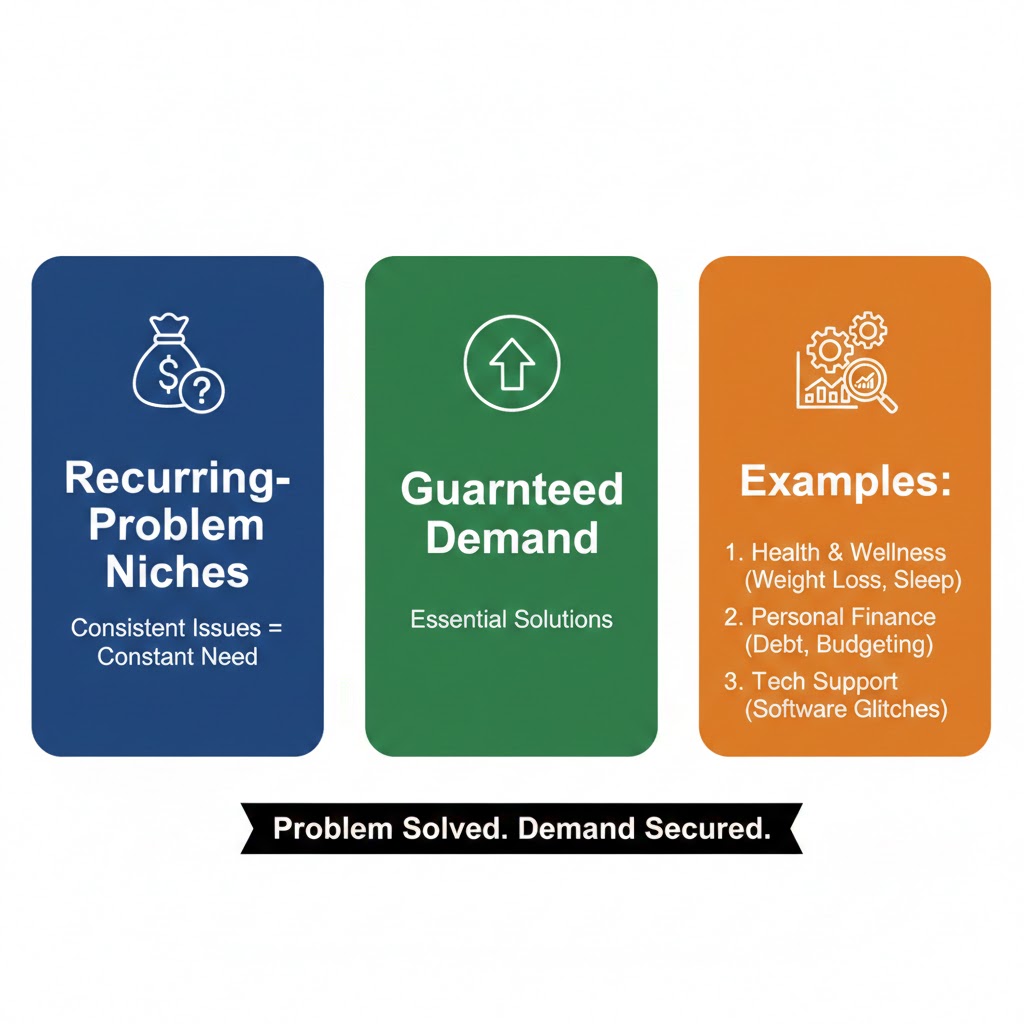
Recurring-Problem Niches Online businesses fail most often for one simple reason: they solve problems people don’t consistently have. Trends fade, interests change, and once-off needs disappear. In contrast, Recurring-Problem Niches are built around issues people face repeatedly—weekly, monthly, or lifelong.
This is why Recurring-Problem Niches have guaranteed demand. They don’t rely on hype. They rely on reality. Whether you’re building a blog, newsletter, service, SaaS, or AI-powered system, choosing the right niche determines how predictable and scalable your income can be.
In this blog, we’ll break down what Recurring-Problem Niches are, why they outperform trend-based niches, and which categories consistently generate demand year after year.
1. What Are Recurring-Problem Niches?
Recurring-Problem Niches focus on problems that never fully go away. They return again and again, regardless of trends, seasons, or technology changes.
These problems are often tied to:
- Human behavior
- Health and maintenance
- Money management
- Ongoing responsibilities
Because the problem repeats, people keep searching for solutions—and keep paying for them.
2. Why Recurring Problems Guarantee Demand
One-time problems create one-time customers. Recurring problems create long-term markets.
People don’t stop needing:
- Better sleep
- Stress management
- Productivity help
- Financial planning
- Health maintenance
This is why Recurring-Problem Niches are more stable than trend-driven ideas. Even when platforms change, the demand stays.
3. Health and Wellness as a Recurring-Problem Niche
Health problems rarely have permanent fixes. They require ongoing management.
Recurring issues include:
- Weight control
- Digestion
- Mental health
- Sleep quality
- Skin conditions
Because people continuously seek improvement, this niche supports subscriptions, coaching, content, and digital products.
Health-focused Recurring-Problem Niches consistently outperform short-term wellness trends.
4. Money and Financial Stress Niches
Money problems don’t end after one solution.
People repeatedly struggle with:
- Budgeting
- Debt management
- Saving habits
- Investing confidence
- Expense tracking
As income changes and life evolves, financial challenges return. This makes finance one of the strongest Recurring-Problem Niches for tools, newsletters, and services.
5. Productivity and Time Management Problems
No one ever “finishes” productivity.
Even high performers constantly seek better systems for:
- Focus
- Time blocking
- Habit building
- Burnout prevention
This niche works especially well for digital products, AI tools, planners, and recurring content models.
6. Maintenance-Based Niches With Endless Demand
Maintenance is unavoidable.
Examples include:
- Home maintenance
- Vehicle care
- Device optimization
- Software upkeep
These niches thrive because neglect brings consequences. People pay repeatedly to avoid problems getting worse, making them ideal Recurring-Problem Niches.
7. Relationship and Communication Challenges
Relationships evolve, and so do their problems.
Recurring challenges include:
- Communication breakdowns
- Conflict resolution
- Dating struggles
- Emotional regulation
Because human relationships are never static, solutions in this space remain in constant demand.
8. Learning and Skill Improvement Niches
Skills decay without practice.
People repeatedly need help with:
- Language learning
- Career advancement
- Technical skills
- Confidence building
This makes education-based Recurring-Problem Niches perfect for memberships, courses, and newsletters.
9. Why Businesses Built on Recurring Problems Scale Faster
Recurring problems support:
- Repeat customers
- Subscription models
- Long-term engagement
- Predictable revenue
Instead of constantly chasing new audiences, businesses grow by serving the same users better over time. This efficiency is why experienced entrepreneurs prioritize Recurring-Problem Niches.
10. Final Thoughts: Choosing Stability Over Trends
Trends may bring fast traffic, but recurring problems build lasting businesses.
If your goal is consistent income, predictable demand, and scalable systems, Recurring-Problem Niches offer a clear advantage. They align with human behavior, not platform algorithms.
The smartest businesses don’t ask, “What’s trending?”
They ask, “What problem never goes away?”
FAQs
What are recurring-problem niches?
Recurring-problem niches focus on issues people face repeatedly, such as health, money, productivity, or maintenance.
Why do recurring-problem niches have guaranteed demand?
Because the problems don’t disappear, people continuously search for solutions and are willing to pay repeatedly.
Are recurring-problem niches better than trend niches?
Yes, they are more stable, predictable, and suitable for long-term income models.
Can beginners build businesses in recurring-problem niches?
Absolutely. These niches are ideal for beginners because demand already exists.
What business models work best with recurring-problem niches?
Recurring-Problem Niches Subscriptions, newsletters, coaching, digital tools, and memberships perform especially well.
Also read this:
AI Is Creating More Micro-Businesses Than Startups