
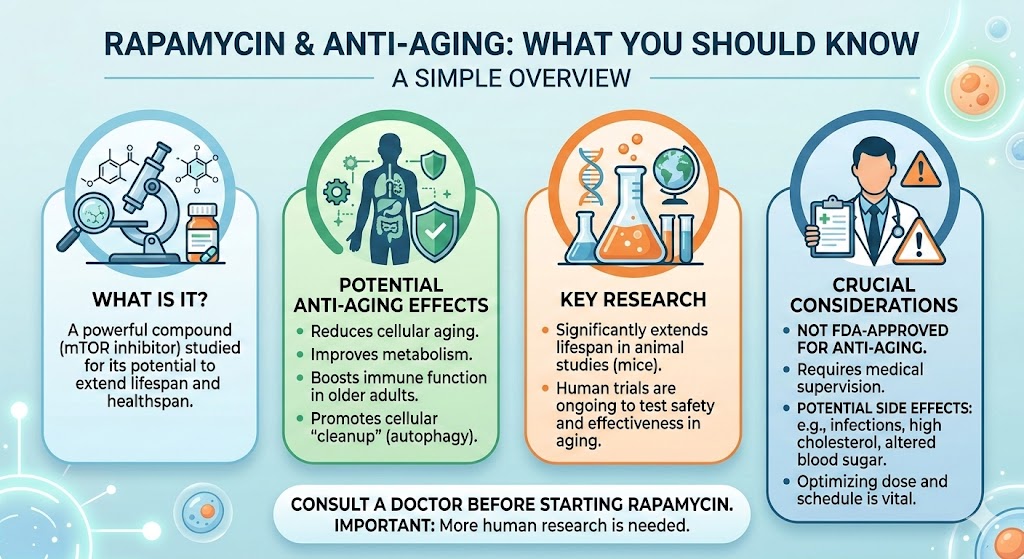
Longevity science has moved far beyond basic diet and exercise advice. One drug that frequently appears in anti-aging discussions is rapamycin — originally developed as an immunosuppressant.
In recent years, researchers and biohackers have explored Rapamycin for Anti Aging due to its influence on a key cellular pathway called mTOR, which plays a role in growth, aging, and cellular repair.
But is it safe? Does it work? And should healthy individuals consider it?
This guide explains the science, potential benefits, risks, and current research surrounding Rapamycin for Anti Aging.

1. What Is Rapamycin?
Rapamycin (also known as sirolimus) was originally approved to prevent organ transplant rejection.
It works by inhibiting a protein complex called mTOR (mechanistic Target of Rapamycin).
mTOR regulates:
- Cell growth
- Protein synthesis
- Nutrient sensing
- Aging pathways
Because mTOR is deeply involved in aging biology, scientists began exploring Rapamycin for Anti Aging in animal models.
2. Why mTOR Matters in Aging
The mTOR pathway controls cellular growth and metabolism.
Overactivation of mTOR is associated with:
- Accelerated aging
- Increased inflammation
- Reduced cellular repair
- Age-related diseases
Inhibiting mTOR may activate protective mechanisms such as autophagy (cellular cleanup).
This is the core theory behind Rapamycin for Anti Aging.
3. Evidence from Animal Studies
Research in mice has shown that rapamycin can:
- Extend lifespan
- Improve heart function
- Reduce age-related decline
- Enhance immune resilience
These findings generated major interest in longevity research.
However, animal studies do not automatically translate to humans.
4. Potential Benefits of Rapamycin for Anti Aging
While human data is still limited, proposed benefits include:
1. Increased Lifespan (Theoretical in Humans)
Animal data suggests lifespan extension, but human confirmation is ongoing.
2. Enhanced Autophagy
Autophagy helps remove damaged cells and proteins.
3. Reduced Inflammation
Chronic inflammation accelerates aging.
4. Improved Immune Function (Low Doses)
Some studies suggest low-dose rapamycin may improve immune response in older adults.
5. Rapamycin and Autophagy
Autophagy declines with age.
Rapamycin may:
- Activate cellular recycling
- Reduce accumulation of damaged proteins
- Support cellular longevity
This mechanism is often cited when discussing Rapamycin for Anti Aging.
6. Human Research: What We Know So Far
Human data remains limited and mixed.
Some small studies indicate:
- Possible immune benefits in older adults
- Improvements in certain age-related biomarkers
However, long-term safety and optimal dosing for healthy individuals remain unclear.
7. Risks and Side Effects
Rapamycin is a prescription drug with known side effects.
Potential risks include:
- Suppressed immune function
- Mouth ulcers
- Elevated cholesterol
- Delayed wound healing
- Increased infection risk
Using Rapamycin for Anti Aging without medical supervision is not recommended.
8. Dosing Controversy
In transplant patients, rapamycin is used at high doses.
In longevity communities, some experiment with:
- Low-dose protocols
- Intermittent dosing
However, there is no universally accepted anti-aging protocol.
Medical guidance is essential.
9. Who Should Not Consider Rapamycin
Avoid or consult a physician if you:
- Have weakened immune function
- Are recovering from surgery
- Have uncontrolled infections
- Are pregnant
- Have underlying chronic illnesses
Rapamycin is not a supplement — it is a powerful medication.
10. Is Rapamycin Approved for Anti Aging?
No.
Regulatory agencies have not approved rapamycin specifically for anti-aging use.
Research is ongoing, but its use for longevity remains experimental.
11. Alternatives That Influence mTOR Naturally
Certain lifestyle practices may influence similar pathways:
- Intermittent fasting
- Calorie restriction
- Strength training
- Adequate sleep
- Balanced nutrition
These methods may activate autophagy without pharmaceutical intervention.
12. Rapamycin for Anti Aging vs Lifestyle Optimization
Rapamycin targets aging pathways pharmacologically.
Lifestyle habits:
- Influence multiple biological systems
- Improve cardiovascular health
- Support metabolic balance
- Reduce inflammation
Drugs may complement healthy habits — but cannot replace them.
13. Longevity Experts’ Perspective
Many longevity researchers emphasize:
- More human trials are needed
- Long-term safety is unclear
- Individual risk tolerance varies
Caution and medical supervision are critical.
14. Ethical and Medical Considerations
Using prescription drugs for longevity raises questions about:
- Risk vs reward
- Accessibility
- Medical supervision
- Long-term unknowns
Any decision involving Rapamycin for Anti Aging should involve a qualified healthcare professional.
15. Cost and Accessibility
Rapamycin requires a prescription in most countries.
Costs vary depending on dosage and location.
Longevity clinics may offer supervised protocols, often at higher cost.
16. Final Verdict: Should You Consider Rapamycin for Anti Aging?
Rapamycin for Anti Aging is one of the most intriguing areas in longevity science. Animal data suggests potential lifespan extension, and early human research shows some promising biological effects.
However:
- It is not approved for anti-aging
- Long-term safety in healthy individuals is unknown
- It carries real medical risks
For now, it remains experimental outside of medical indications.
Longevity is best approached through proven pillars:
- Strength training
- Balanced diet
- Quality sleep
- Stress management
- Regular medical checkups
Pharmaceutical longevity tools should only be explored under medical supervision.
Frequently Asked Questions (FAQ)
Q1. Does rapamycin extend human lifespan?
Animal studies suggest lifespan extension, but human evidence is still limited.
Q2. Is rapamycin safe for healthy individuals?
It carries potential risks and should only be used under medical supervision.
Q3. Can rapamycin activate autophagy?
Yes, it inhibits mTOR, which may increase autophagy.
Q4. Is rapamycin approved for anti-aging?
No, it is not officially approved for longevity purposes.
Q5. Are there safer alternatives?
Lifestyle interventions like fasting and exercise influence similar biological pathways.
Conclusion
The conversation around Rapamycin for Anti Aging highlights how rapidly longevity science is evolving. While promising in theory and animal research, human applications require caution.
Before considering any pharmaceutical intervention for aging, prioritize evidence-based habits that support long-term health and resilience.
Longevity is a marathon — not a shortcut.
More Related Topics:
NAD Plus Therapy Benefits Explained (Longevity, Energy & Cellular Health)
Walking Pad Workout Benefits at Home (Low-Impact Fitness That Actually Works)
Adaptogen Coffee Benefits Explained (Energy Without the Crash?)