
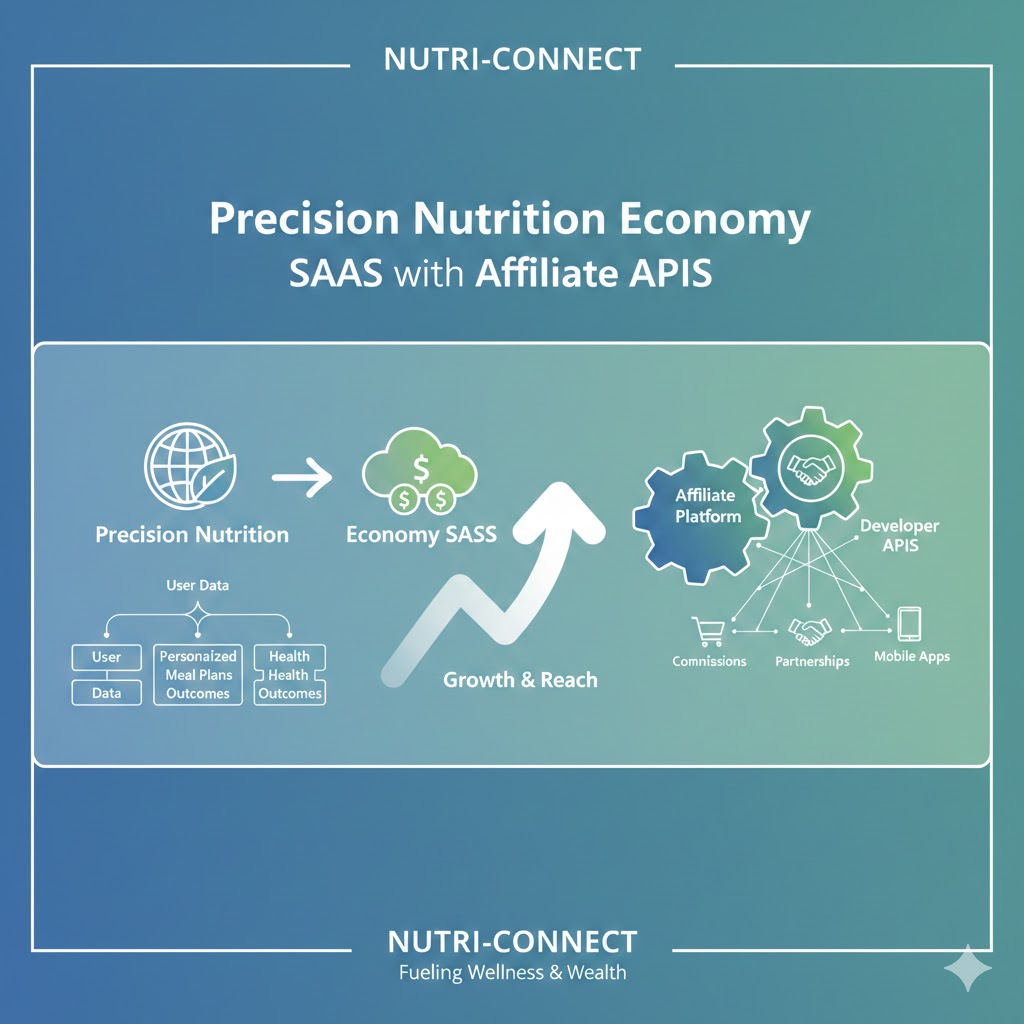
Precision Nutrition Economy SaaS Nutrition is no longer about eating “healthy.” It’s about eating right for you. Calories, macros, and generic meal plans are rapidly losing relevance as users demand nutrition guidance tailored to their body, lifestyle, and goals.
This shift has given rise to a powerful new category: Precision Nutrition Economy SaaS.
These platforms don’t just offer advice—they deliver data-driven, personalized nutrition insights at scale. When combined with affiliate APIs, they unlock a new monetization layer where creators, apps, and platforms earn recurring revenue by embedding personalized nutrition into their ecosystems.
This article breaks down how precision nutrition economy SaaS works, why affiliate APIs are the growth engine behind it, and why this model is set to dominate the next phase of digital health.
1. Why the Precision Nutrition Economy Is Exploding
Generic nutrition advice failed for one simple reason: bodies are not averages.
1.1 Consumers Want Personal Relevance
- Different metabolic responses
- Different food tolerances
- Different goals (fat loss, energy, gut health)
People no longer trust static plans—they want adaptive systems.
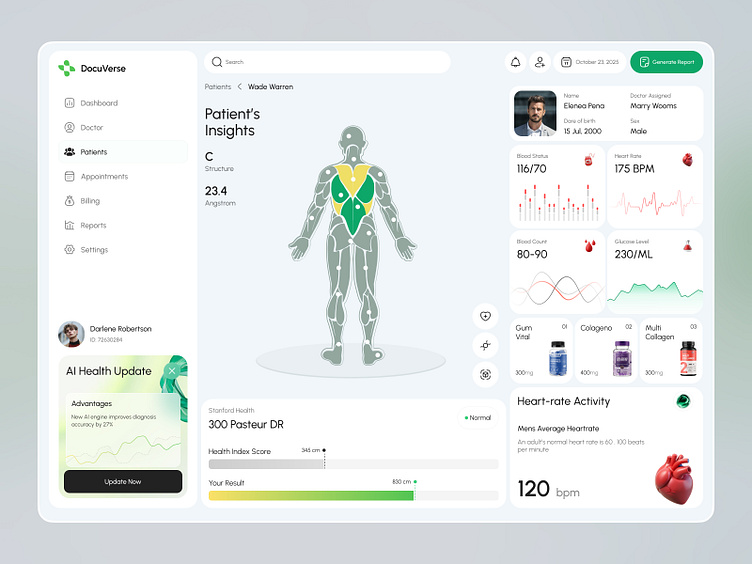
1.2 Data Made Nutrition Actionable
- Wearables track activity and sleep
- Apps log food and habits
- At-home tests provide biological context
The Precision Nutrition Economy SaaS model converts this raw data into usable daily guidance.
2. What Precision Nutrition Economy SaaS Actually Is
This isn’t another meal-planning app.
2.1 Core Definition
Precision Nutrition Economy SaaS platforms provide:
- Personalized nutrition logic engines
- Adaptive recommendations based on inputs
- Ongoing feedback loops
- API access for third-party integration
2.2 What Makes It “Economy-Driven”
- Multiple businesses build on the same engine
- APIs distribute nutrition logic everywhere
- Monetization happens across platforms
This turns nutrition from a product into infrastructure.
3. Why SaaS Beats Coaching and Courses
Personalization doesn’t scale with humans alone.

3.1 Limits of Traditional Models
- 1-on-1 coaching doesn’t scale
- Courses are static
- PDFs don’t adapt
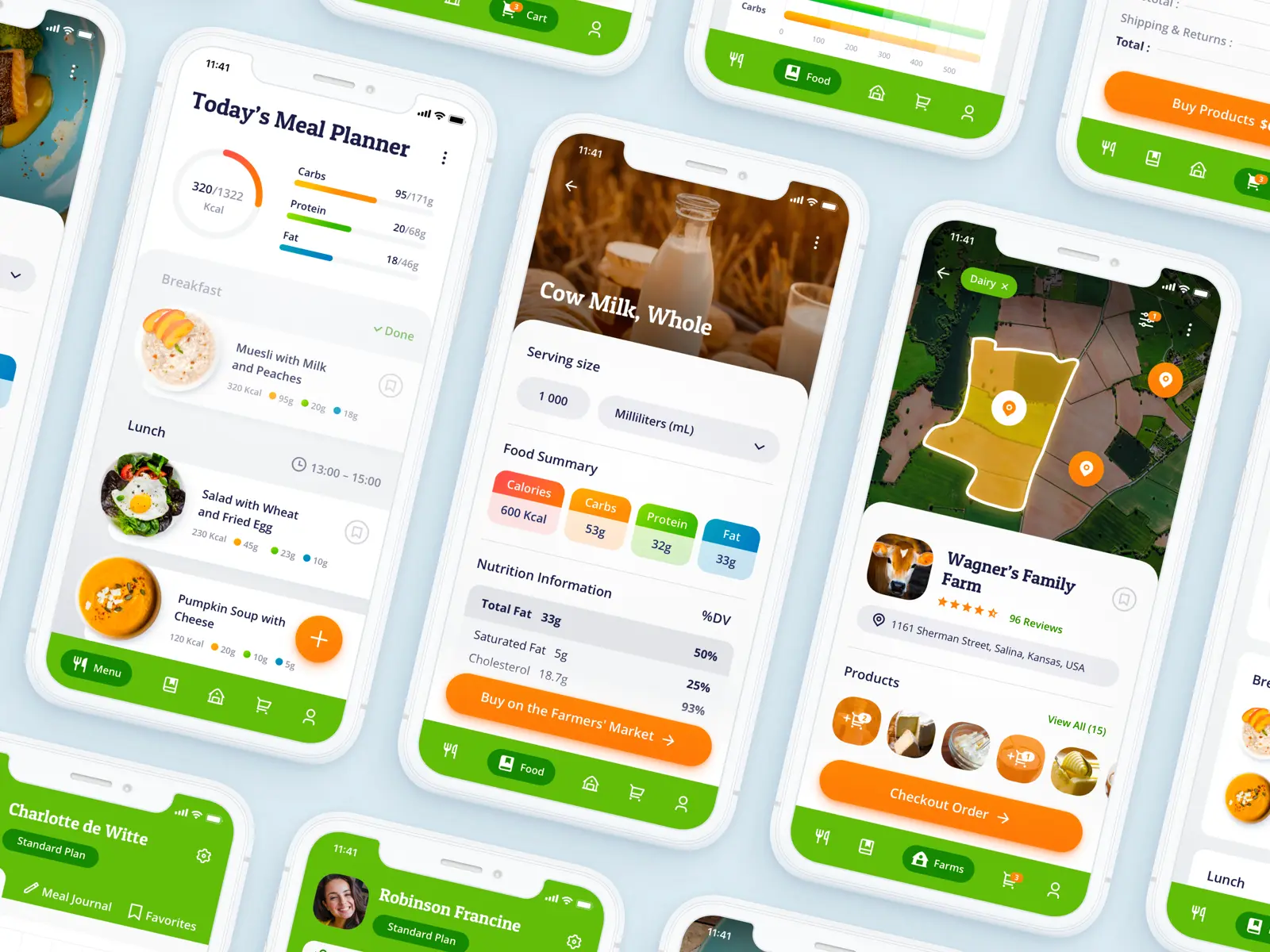
3.2 SaaS Advantages
- Real-time personalization
- Infinite users
- Continuous optimization
- Lower marginal cost
That scalability is the backbone of the Precision Nutrition Economy SaaS movement.
4. The Role of Affiliate APIs in This Ecosystem
Affiliate APIs are the distribution layer.
4.1 What Affiliate APIs Do
- Allow partners to embed nutrition tools
- Track user attribution automatically
- Enable recurring commissions
4.2 Who Uses Them
- Fitness apps
- Wellness bloggers
- Health influencers
- Wearable platforms
- Coaching dashboards
Affiliate APIs turn traffic into infrastructure-level revenue.
5. How Precision Nutrition SaaS Monetizes
This model supports multiple revenue streams.
5.1 SaaS Subscriptions
- Monthly or annual access
- Tiered personalization levels
- B2C and B2B pricing
5.2 Affiliate Revenue
- Supplement recommendations
- Meal services
- Testing kits
- Food delivery integrations
The Precision Nutrition Economy SaaS thrives because monetization is layered, not singular.
6. Why Affiliates Love Precision Nutrition APIs
This isn’t old-school affiliate marketing.
6.1 Higher Conversion Rates
- Personalized recommendations outperform generic ones
- Users trust “for you” guidance
- Less price resistance
6.2 Long-Term Earnings
- Recurring subscriptions
- Retesting and re-optimization cycles
- Ongoing data-driven upsells
Affiliates become system partners, not just link placers.
7. Compliance: Why This Model Works Legally
Nutrition is a safer entry point than medicine.
7.1 What These Platforms Avoid
- Diagnoses
- Disease treatment claims
- Medical prescriptions
7.2 What They Offer Instead
- Educational insights
- Habit-based guidance
- General wellness support
This positioning allows Precision Nutrition Economy SaaS companies to scale globally with fewer regulatory barriers.
8. Who Is Building on Precision Nutrition SaaS Today
The adoption curve is accelerating.
8.1 Early Adopters
- Fitness platforms
- Corporate wellness programs
- Creator-led wellness brands
8.2 Emerging Use Cases
- Personalized grocery recommendations
- Nutrition-based habit coaching
- AI meal adaptation engines
This ecosystem effect strengthens the Precision Nutrition Economy SaaS flywheel.
9. Why Generic Nutrition Content Is Dying
Static advice can’t compete with adaptive systems.
9.1 Content Fatigue
- “Eat more protein” isn’t enough
- Users want contextual guidance
- Engagement drops with repetition
9.2 Personalized Engines Win
- Advice changes with behavior
- Results feel measurable
- Users stay longer
Personalization keeps users—and revenue—inside the system.
10. Why This Model Will Dominate the Next Decade
This is infrastructure, not a trend.
10.1 Macro Forces Supporting Growth
- Preventive health demand
- AI-driven personalization
- Creator-led distribution
- Subscription-first economies
10.2 Why SaaS + Affiliate APIs Is Unstoppable
- Scalable personalization
- Distributed growth
- Low CAC through partnerships
The Precision Nutrition Economy SaaS model isn’t replacing nutritionists—it’s powering the entire wellness stack beneath them.
FAQs: Precision Nutrition Economy SaaS
What is Precision Nutrition Economy SaaS?
It’s a SaaS model that delivers personalized nutrition insights at scale, often via APIs that other platforms and affiliates integrate.
How do affiliate APIs fit into nutrition SaaS?
They allow third parties to embed nutrition tools and earn recurring commissions from users they refer.
Is this model legally safe?
Yes, when positioned as wellness guidance and education—not medical advice.
Who can use these APIs?
Creators, app developers, wellness platforms, and businesses with health-focused audiences.
Is this market saturated?
No. Infrastructure-level nutrition SaaS is still early, especially in affiliate-driven distribution.
Final Thoughts
Nutrition is moving from advice to systems. As personalization becomes the baseline expectation, Precision Nutrition Economy SaaS platforms—powered by affiliate APIs—are emerging as the backbone of the next wellness economy.
This isn’t about meal plans. It’s about adaptive nutrition intelligence, distributed everywhere users already are.
And the platforms building this layer now won’t just win customers—they’ll own the ecosystem.
Also read this:
Non-Pharma Wellness Market: Selling Relief Without Prescriptions
Personalized Wellness Market: Why Generic Health Advice Is Dying
AI Health Monetization: How Creators Sell Personalized Wellness Without Doctors