
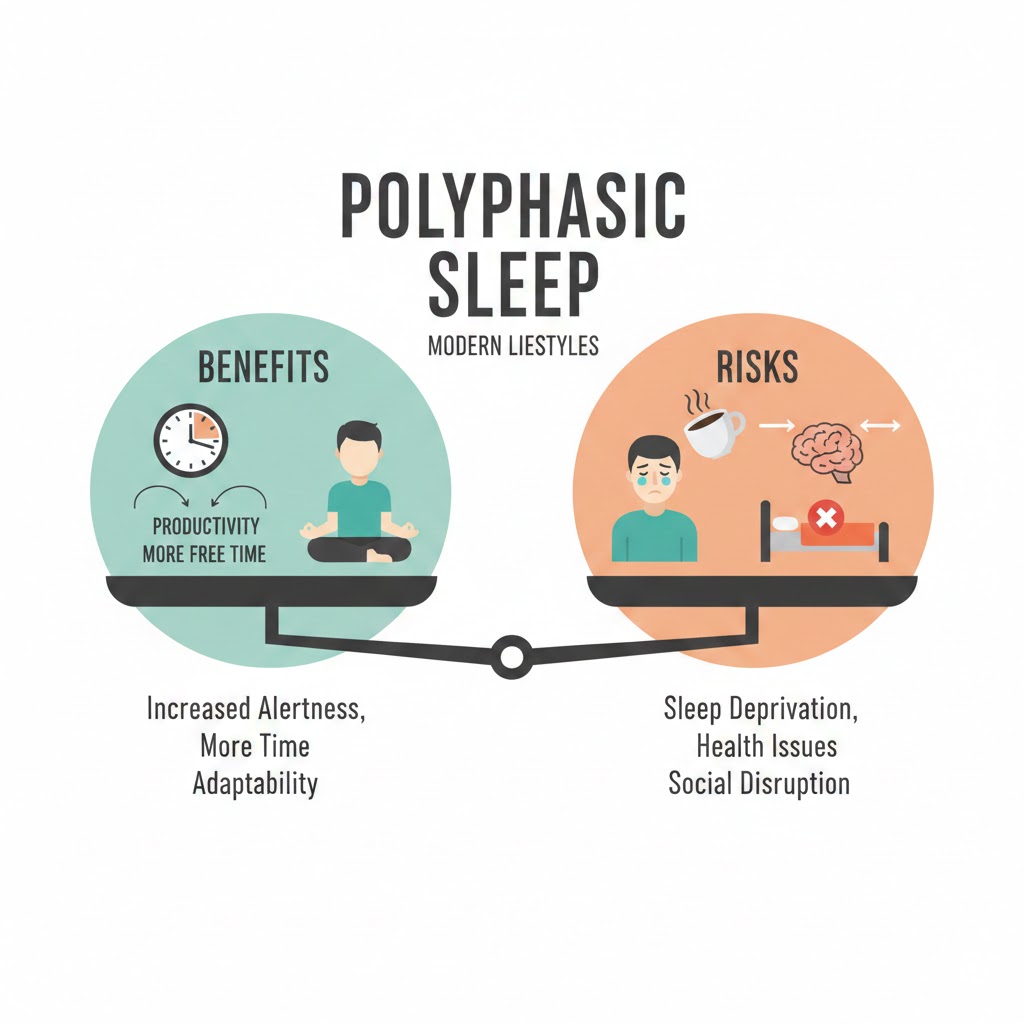
Polyphasic Sleep Benefits Sleep has traditionally been viewed as a single, uninterrupted block of rest each night. However, modern lifestyles—remote work, flexible schedules, global time zones, and productivity culture—have challenged this idea. As a result, alternative sleep patterns are gaining attention, especially polyphasic sleep.
Polyphasic sleep involves breaking sleep into multiple shorter periods across a 24-hour day rather than sleeping once at night. Advocates claim improved productivity and time efficiency, while critics point to health and sustainability concerns. This is why Polyphasic Sleep Benefits are often discussed alongside potential risks.
This article explores how polyphasic sleep works, its potential advantages, and the realistic downsides in today’s modern lifestyle.
1. What Polyphasic Sleep Actually Means
Before evaluating Polyphasic Sleep Benefits, it’s important to understand what the pattern involves.
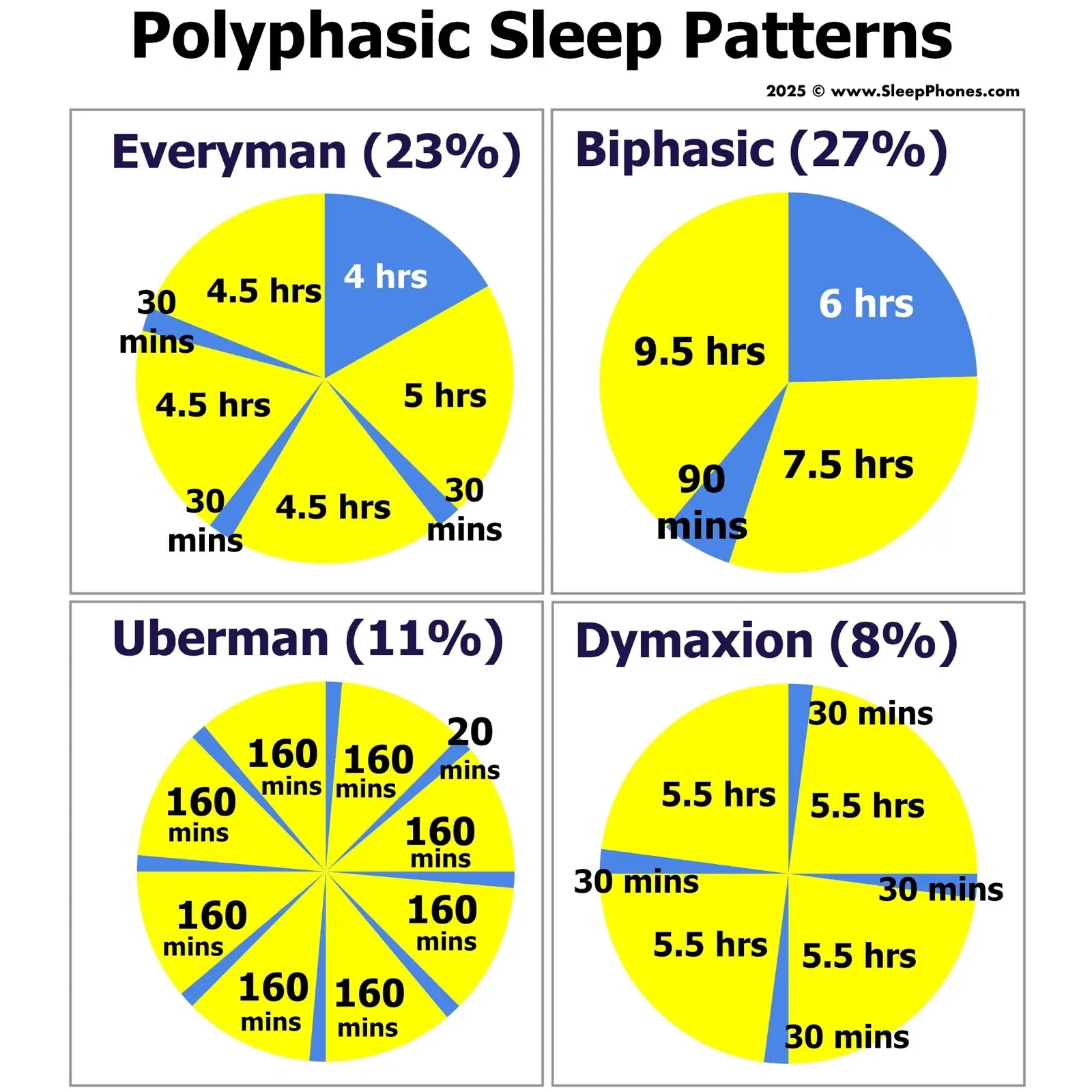
Common Polyphasic Sleep Types
- Biphasic sleep: One main sleep + one nap
- Everyman sleep: Core sleep + multiple short naps
- Uberman sleep: Multiple short naps, no core sleep
How It Differs From Monophasic Sleep
- Sleep is spread across the day
- Relies heavily on naps
- Requires strict scheduling
While biphasic sleep is relatively common, more extreme versions require significant adaptation.
2. Potential Productivity and Time-Saving Benefits
One of the most cited Polyphasic Sleep Benefits is increased waking time.
Productivity-Related Benefits
- More usable hours in a day
- Short naps may improve alertness
- Reduced afternoon energy crashes
Who Finds This Appealing
- Entrepreneurs and freelancers
- Remote workers with flexible schedules
- People working across time zones
In theory, polyphasic sleep allows people to reclaim time without feeling constantly exhausted—though results vary widely.
3. May Improve Daytime Alertness for Some Individuals
Short naps can temporarily boost focus.
Alertness Benefits
- Power naps improve reaction time
- Reduced mid-day sleepiness
- Better short-term cognitive performance
This is why some Polyphasic Sleep Benefits overlap with well-established nap research—especially when naps are limited and intentional.

4. Risks to Circadian Rhythm and Hormonal Balance
Modern sleep science strongly emphasizes circadian rhythm stability.
Major Risks
- Disrupted melatonin production
- Irregular cortisol patterns
- Difficulty syncing with daylight cycles
Why This Matters
Circadian misalignment is linked to:
- Poor sleep quality
- Mood instability
- Reduced immune function
This is one of the biggest concerns when evaluating Polyphasic Sleep Benefits realistically.
5. Potential Cognitive and Emotional Downsides
While short-term alertness may improve, long-term effects can differ.
Cognitive Risks
- Reduced memory consolidation
- Slower learning over time
- Mental fog if naps are missed
Emotional Impact
- Increased irritability
- Lower stress tolerance
- Emotional instability
Sleep fragmentation can interfere with deep sleep stages essential for brain health.
6. Social and Lifestyle Compatibility Challenges
Sleep patterns don’t exist in isolation.
Practical Challenges
- Difficult to maintain social life
- Conflicts with work schedules
- Hard to sustain travel or family routines
For most people, strict polyphasic schedules are incompatible with real-world obligations, limiting long-term feasibility.
7. Who Might Benefit and Who Should Avoid It
Polyphasic sleep is not universally suitable.
Who May Benefit
- People using biphasic sleep
- Short-term schedule adjustments
- Individuals with flexible routines
Who Should Avoid It
- People with anxiety or mood disorders
- Those with demanding physical jobs
- Anyone with existing sleep disorders
Understanding these limits is essential when weighing Polyphasic Sleep Benefits against risks.
Frequently Asked Questions
What are the main Polyphasic Sleep Benefits?
Potential benefits include time efficiency, improved alertness from naps, and flexible sleep scheduling.
Is polyphasic sleep healthy long-term?
Evidence is limited. Long-term strict polyphasic sleep may carry health risks for many people.
Is biphasic sleep safer than other polyphasic types?
Yes. Biphasic sleep aligns more closely with natural human sleep patterns.
Can polyphasic sleep improve productivity?
Short-term productivity may increase, but long-term cognitive performance can suffer.
Is polyphasic sleep suitable for modern lifestyles?
Only mildly (like biphasic sleep). Extreme schedules are difficult to sustain socially and biologically.
Final Thoughts
Polyphasic sleep reflects modern society’s desire to optimize time—but sleep isn’t just downtime, it’s biological maintenance. While some Polyphasic Sleep Benefits exist, especially with controlled napping, the risks increase as sleep becomes more fragmented.
For most people in modern lifestyles, flexible monophasic or gentle biphasic sleep offers a better balance between productivity, health, and sustainability.
More Related Topics:
Continuous Glucose Monitoring Benefits for Non-Diabetics