
Walk through any Indian supermarket in 2025, and you’ll notice something remarkable: entire aisles dedicated to almond milk, oat yogurt, and mock meats. Restaurants from Mumbai to Bangalore proudly display “100% Plant-Based” on their menus. Instagram explodes with vibrant bowls of quinoa, chickpeas, and colorful vegetables.
Plant-Based Eating has arrived in India—and it’s not just another imported Western trend. It’s a renaissance, a return to roots with a modern twist, a health revolution backed by ancient wisdom and cutting-edge science.
Here’s the beautiful irony: India, with its rich vegetarian heritage spanning millennia, is now rediscovering Plant-Based Eating as if it’s something new. Except this time, it’s different. It’s intentional. It’s optimized. It’s transforming lives.
Whether you’re curious about improving your health, concerned about the environment, or simply wanting to feel more energetic and alive, Plant-Based Eating in India has never been more accessible, affordable, or exciting.
Why Plant-Based Eating Is Exploding in India Right Now
The Health Wake-Up Call
India faces a health crisis: Diabetes, heart disease, obesity, and lifestyle disorders are skyrocketing. We’ve become the diabetes capital of the world, with over 77 million Indians living with the disease.
The connection is undeniable: Our traditional plant-heavy diet has been corrupted by processed foods, excessive dairy, refined oils, and meat consumption increasing among younger generations. Plant-Based Eating offers a science-backed solution rooted in our own culinary wisdom.
The research is compelling: Studies show Plant-Based Eating reduces diabetes risk by 23%, heart disease by 32%, and certain cancers by up to 15%. Indians are paying attention.
The Environmental Awakening
Climate consciousness is rising: Young Indians understand that food choices have environmental consequences. Animal agriculture contributes 14.5% of global greenhouse gas emissions—more than all transportation combined.
Water scarcity hits home: Producing 1kg of beef requires 15,000 liters of water. In water-stressed India, Plant-Based Eating is increasingly seen as ecological responsibility, not just dietary preference.
The sustainability factor: Growing dal requires 43 times less water than producing chicken. These numbers resonate in a country where water shortages affect millions annually.
The Celebrity and Influencer Effect
Bollywood goes plant-based: Virat Kohli, Aamir Khan, Sonam Kapoor, and Anushka Sharma openly embrace Plant-Based Eating, making it aspirational rather than restrictive.
Social media amplification: Instagram food bloggers showcase stunning plant-based versions of traditional dishes—butter chicken made with cashew cream, paneer replaced with tofu, chole bhature that’s completely vegan.
The FOMO factor: When your feed fills with glowing skin, weight loss transformations, and energy testimonials from Plant-Based Eating, curiosity becomes irresistible.
The Convenience Revolution
Products everywhere: What seemed impossible five years ago is now easy. Plant-based milk, yogurt, cheese, butter, ice cream, and ready-to-eat meals fill shelves at Big Bazaar, Nature’s Basket, and online grocers.
Restaurant evolution: Dedicated plant-based restaurants open monthly in major cities. Traditional restaurants add extensive vegan menus. Even McDonald’s India offers plant-based burgers.
Delivery integration: Swiggy and Zomato feature plant-based filters. Cloud kitchens specializing in Plant-Based Eating deliver nationwide. Accessibility breeds adoption.
Understanding Plant-Based Eating: What It Really Means
Plant-Based vs. Vegetarian vs. Vegan
The confusion is real, so let’s clarify:
Vegetarian (Traditional Indian): No meat, fish, or eggs, but includes dairy—milk, paneer, ghee, curd. Most Indians default to this.
Vegan: No animal products whatsoever—no meat, fish, eggs, dairy, honey. Strict elimination of all animal-derived ingredients.
Plant-Based: Focuses on whole plant foods—vegetables, fruits, legumes, whole grains, nuts, seeds. May occasionally include small amounts of animal products, but plants dominate 90%+ of the plate.
The key distinction: Plant-Based Eating emphasizes what you eat (whole plants), not just what you avoid. You can be vegetarian eating only processed foods and dairy—that’s not plant-based.
The flexibility: Plant-Based Eating in India often means reducing or eliminating dairy while maximizing vegetables, legumes, and whole grains. It’s a spectrum, not dogma.
Why Indians Should Consider Plant-Based Eating
We’re already halfway there: Our traditional diet is naturally plant-rich with dal, sabzi, roti, and rice forming the foundation. We’re not starting from zero like Western countries transitioning from meat-heavy diets.
Our cuisine is optimized for it: Indian cooking techniques—tadka, masalas, slow cooking—make vegetables absolutely delicious. We don’t need to “suffer through” bland salads.
Cultural acceptance: Being vegetarian carries no social stigma. Going fully plant-based is a small step, not a radical lifestyle overhaul requiring you to alienate family and friends.
Economic accessibility: Plant-Based Eating in India can be incredibly affordable. Dal, rice, seasonal vegetables, and fruits cost far less than meat, fish, or even excessive dairy.
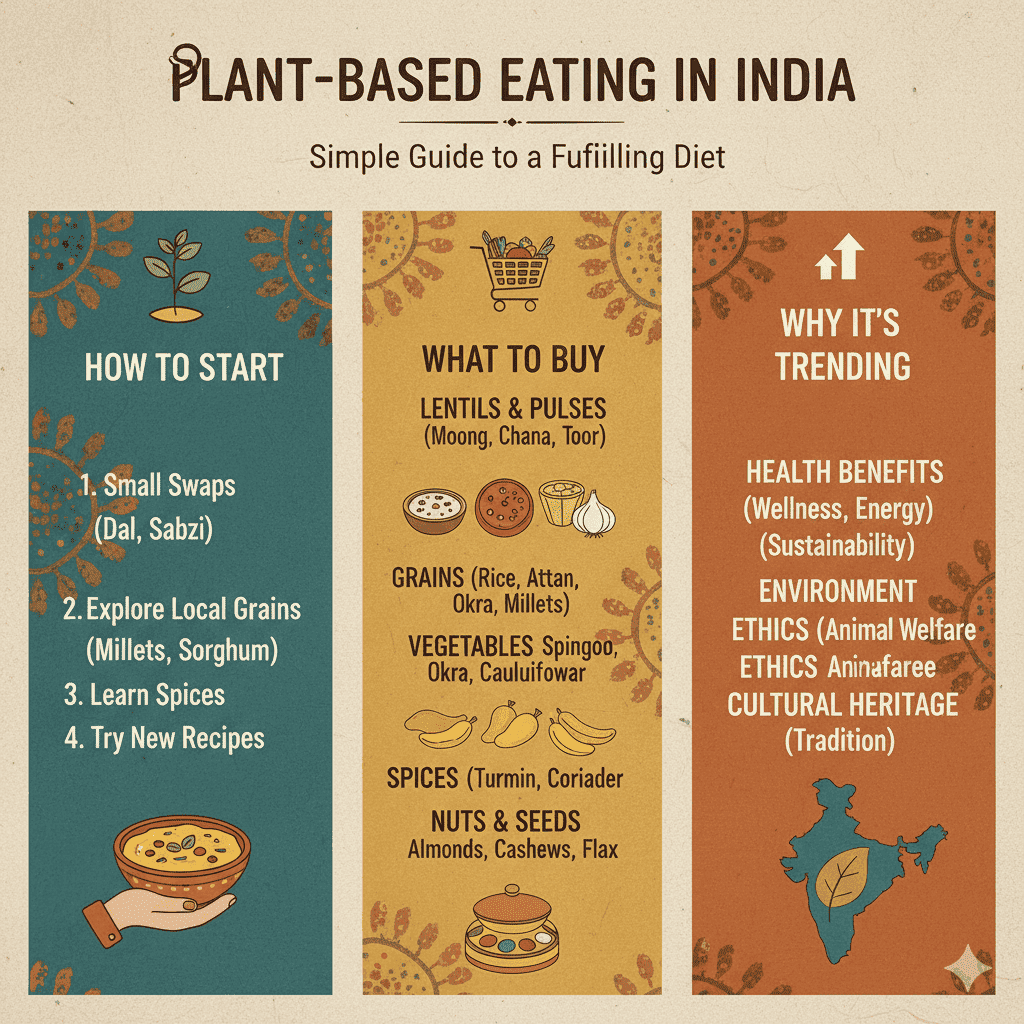
🌱 How to Start Plant-Based Eating in India: The Practical Guide
Phase 1: The Gradual Transition (Weeks 1-2)
Don’t go cold turkey (pun intended). Sudden dramatic changes usually fail. Build sustainable habits incrementally.
Start with one meal: Make breakfast fully plant-based. Replace milk tea with black tea or herbal infusions. Swap regular dahi with coconut yogurt. Choose poha, upma, or smoothies over parathas with butter.
The crowding-out strategy: Rather than eliminating foods, add more plants. When your plate fills with rajma, aloo gobi, and chapati, there’s naturally less room for paneer and curd.
Explore what you already eat: Chole, dal tadka, baingan bharta, aloo palak, bhindi masala, vegetable biryani—dozens of traditional Indian dishes are already perfectly plant-based. Start recognizing them.
The dairy observation: Notice how you feel after dairy-heavy meals. Many Indians are lactose intolerant without realizing it. Bloating, gas, and sluggishness after milk or paneer might be signals worth heeding.
Phase 2: The Kitchen Transformation (Weeks 3-4)
Stock your pantry strategically:
Proteins:
- Dals and legumes—masoor, moong, chana, rajma, kabuli chana
- Soy chunks and tofu
- Peanuts, almonds, cashews, walnuts
- Seeds—pumpkin, sunflower, chia, flax
Grains:
- Brown rice, red rice, black rice
- Whole wheat, millet (jowar, bajra, ragi)
- Quinoa, oats
- Whole grain breads and rotis
Vegetables (prioritize these):
- Leafy greens—palak, methi, amaranth
- Cruciferous—cauliflower, cabbage, broccoli
- Root vegetables—sweet potato, beetroot, carrots
- Seasonal local vegetables always
Flavor builders:
- Spices—your existing masala collection is perfect
- Fresh herbs—coriander, mint, curry leaves
- Garlic, ginger, green chilies
- Lemon, tamarind, kokum
- Nutritional yeast (new addition—gives cheesy flavor)
Plant-based dairy alternatives:
- Almond milk, oat milk, soy milk, coconut milk
- Coconut yogurt or soy yogurt
- Cashew cream (blend soaked cashews)
- Coconut oil or cold-pressed oils instead of ghee
Replace gradually: As you finish regular milk, buy plant milk next time. When paneer runs out, try tofu. Incremental replacement feels less overwhelming than kitchen purge.
Phase 3: Mastering Plant-Based Eating Versions of Favorites (Month 2)
The game-changer: Learning to recreate beloved dishes plant-based removes any sense of deprivation.
Paneer dishes become tofu or cashew-based:
- Press extra-firm tofu, cube it, and use exactly like paneer
- Make “paneer” from soaked, blended cashews for rich curries
- Palak tofu, tofu tikka masala, tofu bhurji—all delicious
Butter chicken transforms:
- Replace chicken with soy chunks, mushrooms, or cauliflower
- Cashew cream substitutes heavy cream perfectly
- Coconut oil or vegan butter instead of dairy butter
- Result: incredibly rich, completely plant-based
Biryani evolves:
- Keep the aromatic rice, spices, and vegetables
- Add soy chunks or chickpeas for protein
- Use plant-based yogurt for marination
- Nobody will miss the chicken
Chai gets an upgrade:
- Experiment with oat milk (froths beautifully)
- Try almond milk with cardamom
- Discover masala chai tastes incredible with coconut milk
Desserts remain decadent:
- Coconut milk makes amazing kheer
- Cashew-based “cream” for fruit salads
- Date and nut-based laddoos
- Aquafaba (chickpea water) whips like egg whites for mousses
The revelation: Plant-Based Eating doesn’t mean sacrificing flavor, satisfaction, or cultural connection. It means evolving recipes while honoring tradition.
🛒 What to Buy: The Plant-Based Eating Shopping List for India
Plant Milks (₹50-200 per liter)
Available everywhere now:
- Goodmylk: Coconut, almond, cashew options
- Sofit: Soy milk, affordable and protein-rich
- Raw Pressery: Almond milk in modern grocery stores
- Epigamia: Almond milk widely distributed
- Paper Boat: Recently launched plant milks
DIY option: Make your own—blend soaked almonds or cashews with water, strain. Costs ₹30-40 per liter versus ₹150-200 for packaged.
Usage tips: Use in chai, coffee, smoothies, cooking, anywhere you’d use regular milk.
Plant-Based Yogurt (₹60-150 per pack)
Brands to try:
- Epigamia: Coconut-based yogurt, various flavors
- Goodmylk: Coconut curd, perfect for raita
- Oatly: Oat-based yogurt (premium pricing)
DIY alternative: Culture coconut milk with probiotic capsules or leftover yogurt culture. Works surprisingly well.
Tofu and Soy Products (₹40-100 per pack)
Where to find:
- Morinaga: Silken tofu, available online and premium stores
- Savoria: Affordable firm tofu
- Vezlay: Soy chunks and mock meats, widely available
- Nutrela: Soy chunks in every grocery store (₹40-60 per pack)
Storage tip: Tofu lasts weeks refrigerated in water (change water daily). Soy chunks last months in pantry.
Mock Meats (₹150-400 per pack)
Growing category in India:
- GoodDot: Plant-based chicken, keema, seekh kebabs
- Wakao: Jackfruit-based “meat” products
- Blue Tribe: Plant-based burger patties, sausages
- ITC’s Veeba: Recently entered plant-based segment
- Vezlay: Affordable soy-based meat alternatives
Reality check: Mock meats are convenient but processed. Whole food Plant-Based Eating minimizes these. Use occasionally, not daily.
Plant-Based Cheese (₹200-500 per pack)
Limited but growing:
- Nush Foods: Almond-based cheese
- Goodmylk: Cashew cheese
- Imported options: Violife, Follow Your Heart (expensive, ₹400-600)
DIY approach: Nutritional yeast mixed with cashew cream creates surprisingly cheesy flavor. Blend soaked cashews with nutritional yeast, lemon juice, garlic, salt—instant cheese sauce.
Nutritional Yeast (₹300-600 per pack)
The secret weapon of Plant-Based Eating:
- Cheesy, nutty flavor
- Complete protein with B-vitamins
- Sprinkle on popcorn, pasta, vegetables
- Essential ingredient nobody tells you about
Where to buy: Amazon, health food stores, or Nature’s Basket
Protein Powders (₹800-2500 per kg)
If supplementing protein:
- Oziva: Plant-based protein powders
- Raw Pressery: Pea protein
- MyProtein: Vegan protein blends
- Nutiva: Organic hemp protein
Reality: If eating varied Plant-Based Eating diet with dal, legumes, nuts, and whole grains, you likely don’t need protein powder. Indians have thrived on plant protein for millennia.
Superfoods and Supplements (₹200-1500)
Consider adding:
- Chia seeds: Omega-3s, fiber (₹150-300 per pack)
- Flaxseeds: Grind fresh for omega-3s (₹50-100 per pack)
- Spirulina: Protein and nutrients (₹400-800)
- Vitamin B12: Only supplement truly necessary for Plant-Based Eating (₹200-500 for 3-month supply)
- Vitamin D: Often deficient in India despite sunshine (₹300-600)
B12 is non-negotiable: Only reliable source is supplementation or fortified foods. Take 1000-2000 mcg weekly or fortified nutritional yeast daily.
🍽️ Plant-Based Eating: Sample Meal Plans for Indians
Budget-Friendly Plan (₹100-150 per day)
Breakfast: Upma with vegetables, peanuts, and lemon | Masala chai with homemade almond milk
Lunch: Dal-chawal with mixed vegetable sabzi | Cucumber raita made with coconut yogurt
Snack: Roasted chana or handful of peanuts | Seasonal fruit
Dinner: Rajma with whole wheat roti | Green salad with lemon dressing
Why it works: Traditional, affordable, nutritionally complete. This is Plant-Based Eating accessible to every Indian household.
Balanced Variety Plan (₹200-300 per day)
Breakfast: Smoothie bowl—banana, spinach, almond milk, topped with nuts and seeds | Black coffee
Lunch: Chole with quinoa | Baingan bharta | Mixed green salad
Snack: Hummus with vegetable sticks | Green tea
Dinner: Palak tofu | Brown rice | Tomato cucumber salad
Why it works: Introduces modern Plant-Based Eating elements while maintaining Indian flavors. Varied nutrition, satisfying.
Premium Wellness Plan (₹400-600 per day)
Breakfast: Chia pudding with coconut milk, berries, almond butter | Matcha latte with oat milk
Lunch: Buddha bowl—quinoa, roasted vegetables, chickpeas, tahini dressing, avocado
Snack: Plant-based protein smoothie | Handful of walnuts
Dinner: Mock meat curry with cauliflower rice | Miso soup | Leafy green salad with nutritional yeast
Why it works: Maximum variety, premium ingredients, restaurant-quality Plant-Based Eating at home. Occasional indulgence worth it.
💪 Nutrition Concerns: Getting Everything You Need
Protein (Target: 0.8-1g per kg body weight)
The myth: “Where do you get protein?” Indians have survived on plant protein for thousands of years.
The reality: Combining dal with rice, roti with rajma, or chickpeas with quinoa creates complete proteins with all essential amino acids.
Top sources:
- Dal and legumes: 15-25g protein per cooked cup
- Soy chunks: 52g protein per 100g (more than chicken!)
- Tofu: 10-15g protein per 100g
- Peanuts: 25g protein per 100g
- Quinoa: 8g protein per cooked cup
Daily example: 2 cups dal (30g) + handful nuts (8g) + soy chunks curry (20g) + whole grains (10g) = 68g protein. Sufficient for 60-70kg person practicing Plant-Based Eating.
Iron (Target: 18mg for women, 8mg for men)
Plant sources are abundant:
- Palak and leafy greens
- Dal and legumes
- Pumpkin seeds and sesame seeds
- Dried apricots and raisins
- Jaggery and dark chocolate
The absorption hack: Combine iron-rich foods with Vitamin C. Lemon on dal, tomatoes in palak, or oranges after meals dramatically increase iron absorption from Plant-Based Eating.
Monitor levels: Get blood work annually. If deficient, supplement under doctor’s guidance.
Calcium (Target: 1000mg daily)
Beyond dairy:
- Sesame seeds (til): 975mg per 100g
- Ragi (finger millet): 344mg per 100g
- Amaranth leaves: 215mg per 100g
- Fortified plant milks: 300mg per cup
- Tofu (calcium-set): 350mg per 100g
- Figs and oranges
The realization: Dairy isn’t necessary for calcium. Plant-Based Eating provides plenty when you know where to look.
Omega-3 Fatty Acids (Target: 250-500mg DHA/EPA daily)
Plant sources provide ALA (converts to DHA/EPA):
- Ground flaxseeds: 2-3 tablespoons daily
- Chia seeds: 1-2 tablespoons daily
- Walnuts: 6-8 pieces daily
- Hemp seeds
- Algae-based supplements (direct DHA/EPA)
Consider supplementing: Conversion rates vary. Algae oil supplements provide DHA/EPA directly for optimal Plant-Based Eating nutrition.
Vitamin B12 (Target: 2.4mcg daily)
Non-negotiable supplement: B12 only reliably comes from animal sources or fortification. Every Plant-Based Eating practitioner must supplement.
Options:
- Weekly 1000-2000mcg sublingual tablet
- Daily 250mcg supplement
- Fortified nutritional yeast (check labels)
- Fortified plant milks and cereals
Why it matters: B12 deficiency causes fatigue, nerve damage, and cognitive issues. Don’t skip this.
Vitamin D (Target: 600-800 IU daily)
The Indian paradox: Despite abundant sunshine, 70-80% of Indians are Vitamin D deficient. Pollution, indoor lifestyles, and skin melanin reduce production.
Sources:
- Sunshine: 15-20 minutes midday, skin exposed
- Fortified plant milks
- Mushrooms exposed to UV light
- Supplements: 1000-2000 IU daily (test levels first)
Get tested: Know your baseline before supplementing for optimal Plant-Based Eating health.
🍴 Eating Out: Plant-Based Eating at Indian Restaurants
Always Safe Options
South Indian: Dosa, idli, vada, sambar, coconut chutney, vegetable uttapam—naturally plant-based perfection
North Indian: Chole bhature (skip the curd), aloo paratha (ask for no butter), vegetable pulao, dal tadka
Street food: Pani puri, bhel puri, sev puri, masala corn, roasted peanuts
Chinese-Indian: Vegetable Manchurian, fried rice, hakka noodles (confirm no egg), spring rolls
Questions to Ask
“Is this made with ghee or butter?” (Request oil instead)
“Does the gravy contain cream or curd?” (Ask for tomato-based version)
“Are the rotis brushed with butter?” (Request without)
“Does the biryani contain eggs?” (Some restaurants add eggs)
Don’t be shy: Indian culture understands dietary restrictions. Restaurants happily accommodate Plant-Based Eating requests.
Apps and Resources
HappyCow: Finds vegan and vegetarian restaurants worldwide, including Indian cities
Zomato/Swiggy filters: Select “Vegan” or search “plant-based” in your city
Instagram hashtags: #PlantBasedIndia, #VeganIndia, #PlantBasedMumbai/Delhi/Bangalore finds local options
🌟 Health Transformations: What to Expect from Plant-Based Eating
Week 1-2: The Adjustment
Possible experiences:
- Increased bowel movements (more fiber—normal!)
- Lighter feeling after meals
- Slight energy dips as body adjusts
- Cravings for familiar dairy foods
Stay hydrated: Increased fiber requires more water. Aim for 8-10 glasses daily.
Week 3-4: The Shift
Common reports:
- Improved digestion and less bloating
- More consistent energy without afternoon crashes
- Better sleep quality
- Skin starts clearing
The mindset: Past the initial adjustment, Plant-Based Eating starts feeling normal, not restrictive.
Month 2-3: The Transformation
Documented benefits:
- Weight loss (if overweight)—5-10kg losses common
- Reduced inflammation and joint pain
- Improved cholesterol and blood pressure
- Enhanced mental clarity
- Reduced need for medications (consult doctors)
The momentum: Results fuel continued commitment. Plant-Based Eating becomes lifestyle, not experiment.
Long-Term (6+ Months)
Research-backed outcomes:
- 23% reduced diabetes risk
- 32% reduced heart disease risk
- Lower cancer risks, especially colorectal
- Better weight management
- Enhanced longevity markers
- Improved athletic performance and recovery
The realization: Plant-Based Eating isn’t sacrifice—it’s investment in your best possible health.
🌍 The Environmental Impact: Why It Matters
Water conservation: Producing 1kg lentils uses 50 liters of water. Producing 1kg paneer uses 5,000 liters. Plant-Based Eating dramatically reduces your water footprint.
Carbon emissions: Animal agriculture produces more greenhouse gases than all transportation. Your food choices matter more than your car choices.
Land use: Growing crops for direct human consumption uses 10 times less land than raising animals. Plant-Based Eating is ecological responsibility.
Indian context: In a country facing water scarcity, pollution, and climate vulnerability, Plant-Based Eating is patriotic act of sustainability.
🚧 Common Challenges (And Solutions)
“My family won’t support this”
Solution: Don’t force it. Lead by example. Cook plant-based versions so delicious nobody notices. Gradually influence rather than dramatically announce. Many Indian families naturally accommodate dietary preferences.
“It’s too expensive”
Solution: Plant-Based Eating can be India’s most affordable diet. Dal, rice, seasonal vegetables, and fruits cost less than meat, fish, or excessive dairy. Skip expensive mock meats and imported products. Eat traditionally.
“I’m always hungry”
Solution: Increase portions initially. Plant foods are less calorie-dense—you need more volume. Add healthy fats like nuts, seeds, and avocado for satiety. Ensure adequate protein from dal and legumes.
“Social situations are awkward”
Solution: Eat before attending events where options are limited. Bring plant-based dish to share. Be casual, not preachy, about your choices. Most Indians respect dietary decisions.
“I miss paneer too much”
Solution: Master tofu preparation. Press it well, marinate it, cook it with same spices. Give yourself 3-4 weeks to adjust. Most people stop missing dairy once taste buds recalibrate for Plant-Based Eating.
Your Plant-Based Eating Journey Starts Today
Here’s the beautiful truth about Plant-Based Eating in India: you’re not abandoning your culture—you’re honoring it at its healthiest expression.
Our ancestors thrived on plant-based diets long before it became trendy. They understood that food is medicine, that eating with the seasons brings harmony, that simple dal-chawal-sabzi sustains life beautifully.
We’re not inventing Plant-Based Eating—we’re rediscovering it with modern knowledge, global influences, and scientific validation.
The invitation: Start small. Replace cow’s milk with almond milk in your morning chai. Try tofu palak this weekend. Add an extra serving of vegetables to lunch. Explore the incredible variety that Plant-Based Eating in India offers.
The promise: Your body will thank you. The planet will thank you. And you’ll discover that eating plants isn’t about restriction—it’s about abundance, vitality, and connection to food that nourishes rather than depletes.
The revolution: Plant-Based Eating in India isn’t just a trend—it’s a return to wisdom, powered by science, made accessible by modern convenience, and embraced by millions choosing health, compassion, and sustainability.
Welcome to the plant-based renaissance. Your transformation awaits. 🌱✨
Also read this:
Why Mental Wellness Is the New Luxury: Self-Care Trends That Are Making Waves
Work From Anywhere: Best Remote Jobs, Tools & Lifestyle Tips for 2025
Content Creation Hacks: How I Scripted 30 Blog Posts in a Weekend