
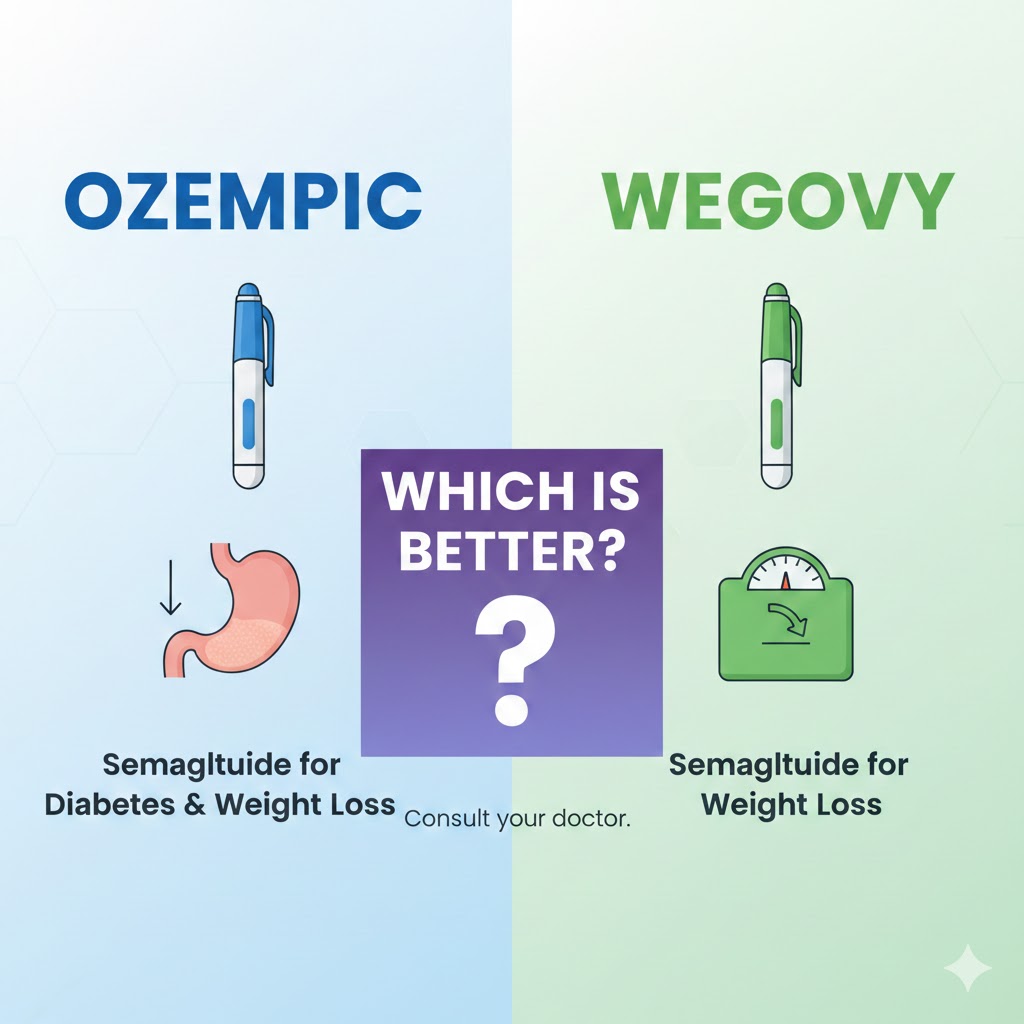
Ozempic vs Wegovy are injectable medications that contain the same active ingredient, semaglutide, and belong to a class of drugs called GLP-1 receptor agonists. These drugs were originally developed to improve blood sugar control but are also highly effective for weight loss. Despite having the same molecule, Ozempic and Wegovy differ in dosing, regulatory approval, and clinical focus, making it important to understand how they compare when the goal is weight management.
Both medications work by mimicking the gut hormone GLP-1, which enhances insulin secretion, slows gastric emptying, and reduces appetite. These effects help individuals feel fuller for longer, eat less, and achieve meaningful weight loss. However, because they were approved for different primary uses, the choice between Ozempic and Wegovy should be informed by treatment goals, dosing strategy, and clinical evidence.
How Semaglutide Works
Semaglutide acts on the GLP-1 (glucagon-like peptide-1) receptors in the brain and gastrointestinal tract. It enhances insulin release in response to meals, reduces glucagon (a hormone that raises blood sugar), slows the movement of food through the stomach, and influences appetite-regulating centers in the brain. These combined effects not only help lower blood glucose but also reduce hunger and caloric intake, leading to weight loss over time.
In clinical studies, semaglutide has consistently produced clinically significant weight reduction in both diabetic and non-diabetic populations, often outperforming older medications in the same class.
What Is Ozempic?
Ozempic is approved by regulatory authorities primarily for the treatment of type 2 diabetes mellitus. It helps patients improve blood sugar control and has the added benefit of weight reduction, which often occurs as a secondary effect of treatment. Ozempic is administered as a once-weekly subcutaneous injection and offers a range of doses depending on clinical needs.
Approved use
- Type 2 diabetes management
While many patients taking Ozempic experience weight loss, it is not approved specifically for weight management by itself in most regions. Weight loss seen with Ozempic is considered an ancillary benefit of its glucose-lowering effect.
What Is Wegovy?
Wegovy contains the same active ingredient as Ozempic but was specifically developed and approved for chronic weight management. Its regulatory approval covers adults with obesity (defined by a body mass index, or BMI, ≥30) or overweight individuals (BMI ≥27) who also have at least one weight-related medical condition such as hypertension, dyslipidemia, or type 2 diabetes.
Approved use
- Long-term weight management
Wegovy has been studied in large clinical trials that focus on weight loss as the primary endpoint. These studies demonstrate that Wegovy can help individuals achieve and maintain significant reductions in body weight when combined with lifestyle changes like diet and exercise.
Key Differences Between Ozempic and Wegovy
Ozempic vs Wegovy Although both medications contain semaglutide, there are important clinical distinctions that affect how they are used.
Primary indication
- Ozempic: Blood sugar control in type 2 diabetes
- Wegovy: Weight loss and obesity management
Dosing differences
- Ozempic is available in doses commonly up to 1 mg or 2 mg per week
- Wegovy is available in higher maintenance doses specifically optimized for weight loss
Because Wegovy is titrated to a higher effective weight-loss dose, it may produce greater reductions in body weight than typical doses of Ozempic.
Insurance coverage
- Ozempic is generally covered under diabetes treatment benefits
- Wegovy coverage depends on weight-management benefits, which may vary by insurer
Weight Loss Effectiveness
Both Ozempic and Wegovy contribute to weight loss, but clinical trial data suggests that Wegovy’s higher maintenance doses lead to greater average weight reduction. In studies focused specifically on weight management, participants treated with Wegovy lost significantly more weight compared to those on lower or diabetic-oriented dosages of semaglutide.
Weight loss with both medications occurs gradually over weeks and months and is generally more pronounced when combined with dietary changes and increased physical activity.
Blood Sugar Impact
Ozempic was designed for improved glycemic control, and it reliably lowers fasting glucose levels and HbA1c in patients with type 2 diabetes. While Wegovy also has favorable effects on blood sugar, its approval and clinical trials emphasize weight loss rather than glycemic outcomes. For individuals with both diabetes and obesity, a prescriber may consider glycemic goals alongside weight management needs.
Side Effects of Ozempic and Wegovy
Ozempic vs Wegovy Because both drugs contain semaglutide, their side effect profiles are similar.
Common Side Effects
Most adverse effects are gastrointestinal and often occur during dose escalation. They usually diminish over time as the body adjusts.
- Nausea
- Vomiting
- Diarrhea or constipation
- Abdominal discomfort
- Decreased appetite
These symptoms may be more pronounced during initial dose increases but typically improve with continued treatment.
Serious Side Effects and Warnings
Although less common, serious side effects may occur.
Gastrointestinal complications
- Severe or persistent vomiting
- Dehydration from prolonged symptoms
Gallbladder issues
- Increased risk of gallstones with rapid weight loss
Pancreatitis
- Severe abdominal pain requiring immediate evaluation
Thyroid tumor risk
- Semaglutide products carry a boxed warning regarding the potential risk of medullary thyroid carcinoma in patients with a personal or family history of the condition, and they are contraindicated in individuals with multiple endocrine neoplasia type 2 (MEN2).
Patients should work closely with their healthcare provider to monitor symptoms and adjust therapy as needed.
Dosing and Administration
Both Ozempic and Wegovy are given as once-weekly subcutaneous injections. Treatment typically begins with a low dose to improve tolerance, followed by gradual dose escalation to the target dose recommended for the individual’s clinical situation:
- Ozempic dosing focuses on diabetes control
- Wegovy dosing is tailored for maximum weight-loss effect
Injection sites include the thigh, abdomen, or upper arm.
Which Is Better for Weight Loss?
When the primary goal is weight loss, Wegovy is generally considered the better choice because it is specifically approved and studied for this purpose. Its dosing regimen is optimized to achieve greater reductions in body weight compared with the doses typically used with Ozempic.
For individuals with type 2 diabetes who also want weight loss, Ozempic may still provide meaningful weight reduction while focusing on glucose control. In such cases, treatment choice should be guided by both blood sugar targets and weight-loss goals.
Conclusion
Ozempic and Wegovy contain the same active ingredient, semaglutide, but they differ in their approved indications and dosing strategies. Ozempic is primarily prescribed for type 2 diabetes mellitus and offers weight loss as a secondary benefit. Wegovy is approved for chronic weight management and is generally more effective for weight reduction due to its higher target dose. Both medications require medical supervision, gradual dose escalation, and ongoing assessment for side effects.
Choosing between Ozempic and Wegovy depends on the individual’s health priorities, whether that is improving glycemic control, reducing weight, or both.
More Related Topics:
Eliquis Uses as a Blood Thinner: Benefits and Risks
Mounjaro vs Zepbound: Key Differences for Diabetes and Weight Loss