
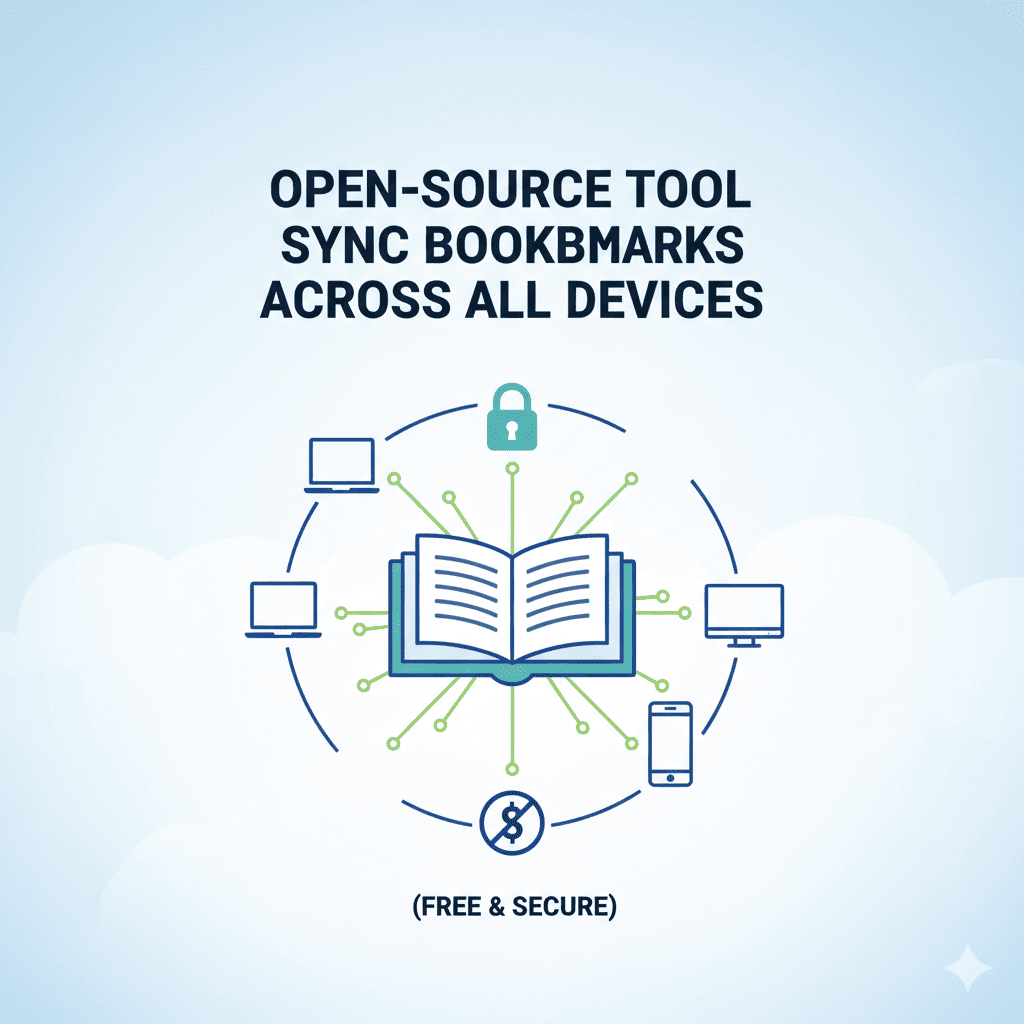
In today’s digital landscape, we use multiple devices throughout our day—smartphones during commutes, laptops at work, tablets at home, and desktops for intensive tasks. Managing bookmarks across all these devices can quickly become a nightmare. While major browsers offer built-in sync features, they come with privacy concerns, vendor lock-in, and limited control over your data.
Enter the world of open-source bookmark synchronization tools—free, secure, and completely under your control. This comprehensive guide explores how these powerful solutions can revolutionize the way you manage your bookmarks while keeping your data private and secure.
What Is an Open-Source Bookmark Sync Tool?
An open-source bookmark sync tool is software whose source code is publicly available for anyone to inspect, modify, and distribute. Unlike proprietary solutions from tech giants, these tools give you complete transparency and control over how your bookmarks are stored, synced, and accessed.
The beauty of open-source solutions lies in their community-driven development, regular security audits by independent developers, and the absence of hidden data collection practices. You’re not the product—you’re the user in control.
1. Why You Need to Sync Bookmarks Across Devices
The Modern Multi-Device Reality
Open-Source Tool Lets You Sync Bookmarks average person now uses 3.64 connected devices daily. You might research a project on your phone during lunch, continue reading articles on your work laptop, and save important resources on your home desktop. Without synchronization, your bookmarks become fragmented across devices, leading to:
- Lost productivity: Spending precious minutes searching for that article you bookmarked yesterday on a different device
- Duplicate bookmarks: Saving the same resource multiple times because you can’t remember which device has it
- Frustration: Missing important links when you need them most
- Disorganization: Different folder structures on different devices creating chaos
The Privacy Problem with Native Solutions
Chrome, Firefox, Safari, and Edge all offer built-in bookmark syncing. However, these solutions require you to:
- Create accounts with tech corporations
- Trust them with your browsing data
- Accept their terms of service that may change without notice
- Allow them to potentially analyze your bookmark patterns
An open-source tool eliminates these concerns by putting you in the driver’s seat.
2. Key Features of the Best Open-Source Bookmark Sync Tools
Complete Cross-Platform Compatibility
The best open-source bookmark sync tools work seamlessly across:
- Windows (7, 10, 11)
- macOS (Intel and Apple Silicon)
- Linux (various distributions)
- Android smartphones and tablets
- iOS and iPadOS devices
- Web browsers (Chrome, Firefox, Safari, Edge, Brave)
End-to-End Encryption
Security should never be an afterthought. Premium open-source tools implement:
- AES-256 encryption: Military-grade encryption that protects your data
- Zero-knowledge architecture: Even the server cannot read your bookmarks
- Encrypted transmission: All data transfer uses HTTPS/TLS protocols
- Local encryption: Bookmarks are encrypted before leaving your device
Self-Hosting Capabilities
One of the most powerful features of open-source solutions is the ability to self-host:
- Host on your own server or NAS device
- Use cloud providers like DigitalOcean, AWS, or Linode
- Keep everything on your local network
- Maintain complete control over your data location
Browser Extensions and Mobile Apps
Quality open-source bookmark sync tools provide:
- Native browser extensions for one-click saving
- Mobile applications with intuitive interfaces
- Quick access to bookmarks from any device
- Offline access when internet isn’t available
3. Top Open-Source Bookmark Synchronization Solutions
Floccus: The Browser-First Solution
Floccus is a lightweight open-source tool that syncs bookmarks using existing infrastructure. It works with:
Key Features:
- WebDAV and Nextcloud integration
- Google Drive sync support
- No central server required
- Works entirely through browser extensions
Perfect For: Users who already have cloud storage or Nextcloud accounts and want a simple, no-fuss solution.
Linkwarden: The Modern Bookmark Manager
Linkwarden is a self-hosted open-source bookmark manager with advanced features:
Key Features:
- Beautiful, modern interface
- Full-text search capabilities
- Automatic screenshot capture
- Tag-based organization
- Collaborative collections
- Archive pages for offline access
- Dark mode support
Perfect For: Power users who want advanced organization and the ability to save complete web pages.
Shiori: Minimalist and Fast
Shiori is a simple yet powerful open-source bookmark manager written in Go:
Key Features:
- Extremely lightweight and fast
- Clean, distraction-free interface
- Automatic content archiving
- Full-text search
- Easy Docker deployment
- Import from popular browsers
Perfect For: Users who prefer minimalism and speed over extensive features.
Nextcloud Bookmarks: The All-in-One Solution
If you’re already using Nextcloud, the built-in Bookmarks app is an excellent open-source choice:
Key Features:
- Integrated with Nextcloud ecosystem
- Mobile apps available
- Browser extensions
- Sharing capabilities
- Folder organization
- RSS feed generation
Perfect For: Existing Nextcloud users who want bookmark management integrated with their self-hosted cloud.
Buku: For Command-Line Enthusiasts
Buku is a powerful open-source command-line bookmark manager:
Key Features:
- Lightning-fast operations
- Powerful search with regex support
- Database encryption
- Auto-import from browsers
- Tag-based organization
- Web interface available (bukuserver)
Perfect For: Developers and power users comfortable with command-line interfaces.
4. How to Choose the Right Open-Source Bookmark Sync Tool
Assess Your Technical Expertise
For Beginners:
- Choose solutions with one-click deployment
- Look for hosted options or simple Docker containers
- Prefer tools with graphical interfaces
- Consider solutions with active community support
For Advanced Users:
- Self-hosting on your own infrastructure
- Custom configurations and modifications
- Command-line tools for automation
- Contributing to the project’s development
Consider Your Device Ecosystem
Different tools excel on different platforms:
- Heavy mobile users: Prioritize tools with excellent Android/iOS apps
- Desktop-focused: Browser extensions might be sufficient
- Mixed usage: Ensure robust cross-platform support
Evaluate Your Privacy Requirements
Maximum Privacy:
- Self-host on your own hardware
- Use end-to-end encryption
- Avoid any cloud dependencies
- Choose tools with minimal telemetry
Balanced Approach:
- Use trusted cloud providers
- Enable encryption
- Regular backup strategies
- Transparent privacy policies
Storage and Backup Needs
Consider:
- Number of bookmarks you need to manage
- Storage space requirements
- Backup automation capabilities
- Export options for data portability
5. Step-by-Step Setup Guide for Open-Source Bookmark Syncing
Setting Up Linkwarden (Docker Method)
Prerequisites:
- Docker and Docker Compose installed
- Basic command-line knowledge
- A server or local machine to host
Step 1: Create Directory Structure
bash
mkdir linkwarden
cd linkwarden
Step 2: Create Docker Compose File Create a docker-compose.yml file with the necessary configuration including database, application, and volume mappings.
Step 3: Start the Service
bash
docker-compose up -dStep 4: Access and Configure
- Open your browser to
http://localhost:3000 - Create your admin account
- Configure your preferences
Step 5: Install Browser Extension
- Visit your Linkwarden instance
- Download the browser extension
- Connect it to your instance
Setting Up Floccus (Simple Method)
Step 1: Choose Your Sync Backend
- WebDAV (most common)
- Nextcloud
- Google Drive
Step 2: Install Browser Extension
- Add Floccus from Chrome Web Store or Firefox Add-ons
- Available for all major browsers
Step 3: Configure Sync
- Enter your WebDAV URL (or other backend)
- Provide authentication credentials
- Select folders to sync
Step 4: Initial Sync
- Let Floccus perform the first synchronization
- Verify bookmarks appear correctly
Step 5: Install on Other Devices
- Repeat installation on each browser
- Use same sync settings
- Bookmarks will synchronize automatically
Setting Up Buku (Command-Line Method)
Installation on Linux/macOS:
bash
pip3 install bukuBasic Usage:
- Add bookmark:
buku -a URL tag1,tag2 - Search:
buku -s keyword - List all:
buku -p - Export:
buku --export bookmarks.html
Setting Up Web Interface:
bash
pip3 install bukuserver
bukuserver run
6. Advanced Features and Customization Options
Automated Backups
Protect your bookmarks with regular automated backups:
For Docker-based solutions:
- Use volume backups
- Schedule cron jobs for database dumps
- Store backups in multiple locations
For file-based solutions:
- Sync to cloud storage (encrypted)
- Git-based versioning
- Scheduled rsync operations
Import from Existing Browsers
Most open-source tools support importing from:
- Chrome/Chromium bookmarks
- Firefox bookmark backups
- Safari reading lists
- Edge favorites
- HTML bookmark files
Import Process:
- Export bookmarks from your current browser
- Use the tool’s import function
- Verify all bookmarks transferred correctly
- Organize into folders if needed
Sharing and Collaboration
Some open-source bookmark sync tools support:
- Shared collections for teams
- Public bookmark lists
- Read-only sharing links
- Collaborative tagging
Browser Extension Customization
Enhance your experience with:
- Custom keyboard shortcuts
- Right-click context menus
- Automatic tagging rules
- Quick-save buttons
7. Security Best Practices for Bookmark Syncing
Strong Authentication
Essential security measures:
- Use strong, unique passwords
- Enable two-factor authentication when available
- Regular password rotation
- Avoid password reuse
Network Security
Protect your sync traffic:
- Always use HTTPS/TLS connections
- Consider VPN for public networks
- Implement firewall rules for self-hosted solutions
- Use reverse proxies with SSL certificates
Data Encryption
Multiple layers of protection:
- Enable end-to-end encryption
- Encrypt backup files
- Use encrypted storage for self-hosted solutions
- Secure your encryption keys properly
Regular Updates
Stay protected:
- Update your open-source tools regularly
- Monitor project security advisories
- Subscribe to security mailing lists
- Apply patches promptly
8. Troubleshooting Common Sync Issues
Sync Conflicts
When bookmarks don’t match across devices:
- Check sync settings are identical
- Verify network connectivity
- Look for conflicting timestamps
- Use manual merge when necessary
Connection Problems
If syncing fails:
- Verify server accessibility
- Check authentication credentials
- Review firewall and network settings
- Test with alternative networks
Missing Bookmarks
Recovery strategies:
- Check trash or archive folders
- Restore from backups
- Review sync logs
- Force a complete re-sync
Performance Issues
Optimize slow syncing:
- Reduce sync frequency
- Clean up unused bookmarks
- Archive old bookmarks
- Upgrade server resources if self-hosting
9. Comparing Open-Source vs. Proprietary Solutions
Privacy and Control
Open-Source Advantages:
- Complete transparency
- No hidden data collection
- Full control over hosting
- Community audits
Proprietary Limitations:
- Closed-source code
- Data mining potential
- Terms of service changes
- Platform dependence
Cost Considerations
Open-Source Benefits:
- Free software
- No subscription fees
- Pay only for hosting (if needed)
- Community support
Proprietary Costs:
- Monthly/annual subscriptions
- Premium feature paywalls
- Potential price increases
- Vendor lock-in costs
Feature Comparison
Open-Source Strengths:
- Customization possibilities
- Community-contributed features
- API access
- Integration options
Proprietary Advantages:
- Polished interfaces (sometimes)
- Professional support
- Guaranteed updates
- Marketing resources
Long-Term Viability
Open-Source Security:
- Project can’t be “discontinued”
- Community can fork and continue
- No dependency on single company
- Transparent development roadmap
Proprietary Risks:
- Service shutdown possibility
- Acquisition by competitors
- Feature removal
- Price changes
10. Real-World Use Cases and Success Stories
For Researchers and Students
Scenario: A graduate student needs to manage hundreds of academic papers across university computers, personal laptop, and mobile devices.
Solution: Using Linkwarden with automatic archiving ensures:
- All research papers saved permanently
- Full-text search across entire library
- Access from any device
- Offline availability during fieldwork
For Development Teams
Scenario: A remote development team needs to share code resources, documentation, and technical references.
Solution: Self-hosted Nextcloud Bookmarks provides:
- Shared collections for different projects
- Team-wide access to resources
- Version-controlled bookmark organization
- Integration with existing Nextcloud workflow
For Privacy-Conscious Users
Scenario: A security professional wants bookmark syncing without trusting third-party services.
Solution: Self-hosted Shiori on home server delivers:
- Complete data ownership
- No external dependencies
- Local network access
- Full encryption control
For Digital Nomads
Scenario: A freelancer travels frequently and needs access to bookmarks offline.
Solution: Floccus with WebDAV on personal cloud:
- Works across international networks
- Offline bookmark access
- Small storage footprint
- Multiple device support
11. Migration Guide: Moving to Open-Source Solutions
Preparation Phase
Before migrating:
- Audit your current bookmarks
- Remove duplicates
- Delete outdated links
- Organize into logical folders
- Add descriptions where helpful
- Choose your new tool
- Test 2-3 options
- Evaluate features needed
- Check device compatibility
- Assess setup complexity
- Plan the transition
- Select migration date
- Prepare backup strategy
- Document current organization
- Test on one device first
Export Process
From Chrome/Edge:
- Click three dots menu → Bookmarks → Bookmark Manager
- Three dots → Export bookmarks
- Save HTML file
From Firefox:
- Library → Bookmarks → Show All Bookmarks
- Import and Backup → Export Bookmarks to HTML
- Save file
From Safari:
- File → Export Bookmarks
- Save HTML file
Import and Verification
Import process:
- Access your open-source tool
- Find import function
- Select your HTML file
- Wait for processing
- Verify bookmark count
Verification checklist:
- Total bookmark count matches
- Folder structure preserved
- Tags transferred correctly
- No broken links
- Descriptions intact
Post-Migration Cleanup
Optimize your new system:
- Remove browser sync on old system
- Update mobile devices
- Test sync across all devices
- Create backup routine
- Document your setup
12. Future of Open-Source Bookmark Management
Emerging Trends
AI-Powered Organization:
- Automatic categorization
- Smart tagging suggestions
- Duplicate detection
- Content summarization
Decentralized Solutions:
- Blockchain-based syncing
- Peer-to-peer networks
- No central servers
- Enhanced privacy
Enhanced Integration:
- Read-it-later services
- Note-taking apps
- Knowledge management tools
- Project management platforms
Community Development
The open-source community continues to innovate:
- Regular feature additions
- Security improvements
- Performance optimizations
- User experience refinements
Standards and Protocols
Movement toward:
- Universal bookmark formats
- Cross-tool compatibility
- Open APIs
- Interoperability standards
Conclusion: Take Control of Your Bookmarks Today
The power of open-source bookmark sync tools lies in their ability to give you complete control over your digital life. Whether you choose a feature-rich solution like Linkwarden, a minimalist option like Shiori, or a flexible tool like Floccus, you’re making a choice for privacy, security, and freedom.
No longer do you need to sacrifice your data privacy for convenience. No longer must you trust corporations with your browsing patterns. Open-source solutions offer the perfect combination of functionality, security, and control.
The transition might seem daunting at first, but thousands of users have successfully migrated to open-source bookmark syncing, and they report:
- Greater peace of mind about privacy
- Better organization and accessibility
- Improved productivity
- Satisfaction from supporting open-source projects
Start small—test one tool on a single device. Experience the difference that true data ownership makes. As you become comfortable, expand to all your devices and enjoy seamless bookmark synchronization that respects your privacy and puts you in control.
Your bookmarks are yours. Your data is yours. It’s time to act like it. Choose an open-source bookmark sync tool today and reclaim your digital independence.
Also read this:
Why ‘Learning to Code’ Might Be the Wrong Move in 2025