
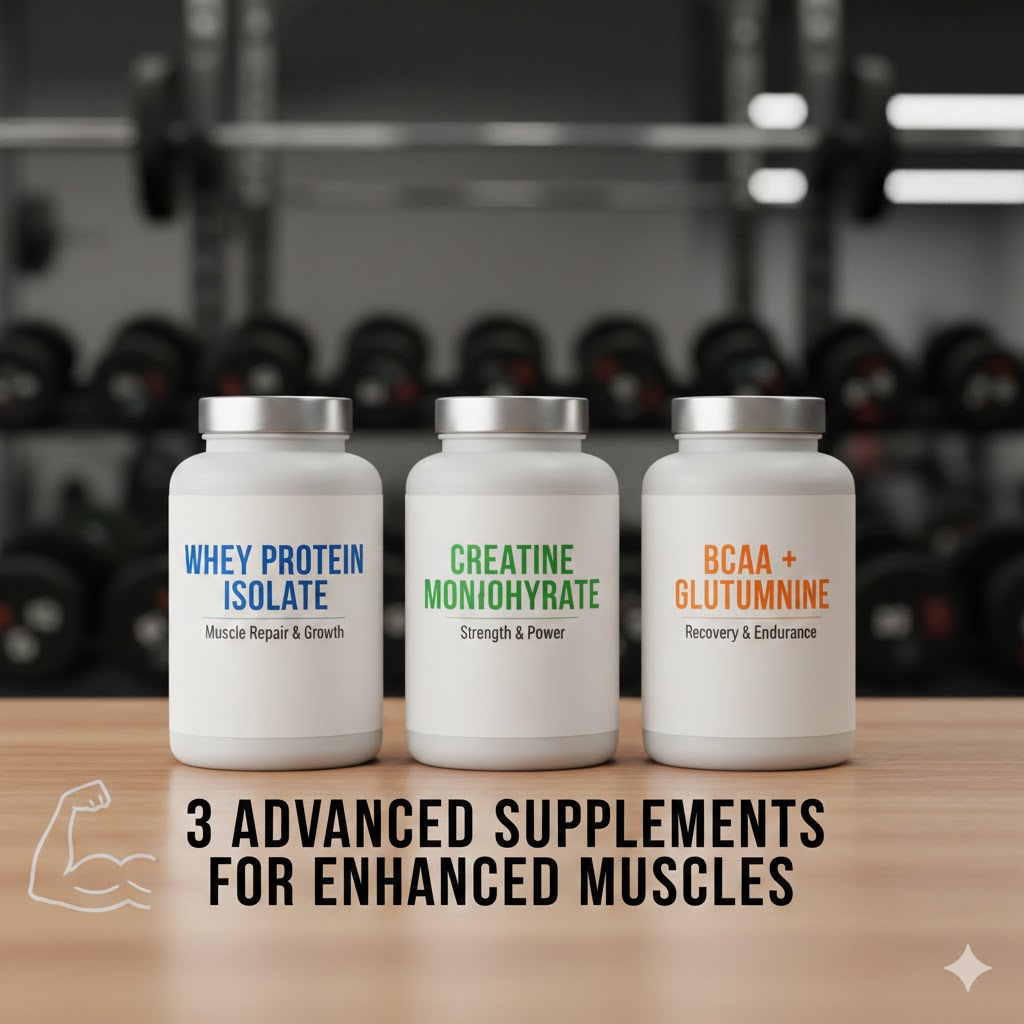
Only 3 Advanced Supplements Walk into any supplement store and you’ll see shelves packed with powders, capsules, and blends promising extreme muscle growth. Testosterone boosters, nitric oxide blends, exotic herbs, and “next-gen” formulas all compete for attention. The truth? Most of them are unnecessary, underdosed, or redundant.
When muscle growth is the goal, science consistently points to a much simpler answer. There are Only 3 Advanced Supplements that genuinely enhance muscle building when training, nutrition, and recovery are already in place. Everything else is optional—or marketing.
This guide explains what those three supplements are, why they work, and how to use them correctly for real results.
Why Most Supplements Don’t Build Muscle
Muscle growth depends on three things:
- Mechanical tension from training
- Sufficient calories and protein
- Recovery and hormonal balance
Supplements can only support these processes—they can’t replace them. That’s why narrowing your focus to the Only 3 Advanced Supplements with strong scientific backing saves money, time, and frustration.
1. Creatine Monohydrate – The Muscle Power Multiplier
If there is one supplement that deserves its reputation, it’s creatine. Decades of research show it improves strength, power output, and lean muscle mass.
Creatine works by:
- Increasing phosphocreatine stores in muscle
- Improving ATP regeneration during intense effort
- Allowing more reps, heavier loads, and better training volume
More quality work equals more muscle over time.
Why creatine belongs in the Only 3 Advanced Supplements:
- Proven in hundreds of studies
- Safe for long-term use in healthy individuals
- Effective for beginners and advanced lifters
- Affordable and simple
How to use it:
- 3–5 grams daily
- Timing doesn’t matter—consistency does
- No loading phase required
Creatine doesn’t magically build muscle. It lets you train harder—and that builds muscle.
2. Protein Supplement (Whey or Plant-Based) – Muscle Repair Support
Protein supplements aren’t advanced because they’re flashy—they’re advanced because they solve a practical problem: consistency.
Muscle growth requires adequate daily protein intake. A protein supplement helps you reach that target reliably without overthinking meals.
Why protein earns its place among the Only 3 Advanced Supplements:
- Supports muscle protein synthesis
- Improves recovery between sessions
- Helps preserve muscle during fat loss
- Convenient, not mandatory
Whey protein is fast-digesting and rich in leucine, making it ideal for muscle repair. High-quality plant-based blends work too if total amino acids are sufficient.
How to use it:
- Use as a tool, not a replacement for food
- One scoop post-workout or between meals
- Focus on total daily intake, not perfect timing
Protein doesn’t build muscle on its own—but without enough of it, muscle growth stalls.
3. Beta-Alanine – The Endurance Edge for Muscle Growth
Beta-alanine is often misunderstood, but it plays a unique role in hypertrophy training.
It increases muscle carnosine levels, which:
- Buffers acid buildup
- Delays fatigue during high-rep sets
- Improves performance in the 30–120 second effort range
That range is where hypertrophy lives.
Why beta-alanine completes the Only 3 Advanced Supplements:
- Enhances training volume
- Supports longer, harder sets
- Complements creatine perfectly
- Especially useful for bodybuilding-style training
How to use it:
- 3–6 grams daily
- Split doses to reduce tingling sensation
- Requires consistent use over weeks
Beta-alanine doesn’t make you stronger—it helps you last longer, which indirectly fuels muscle growth.
Why These 3—and Not the Others
Test boosters, nitric oxide blends, BCAAs, glutamine, and “muscle amplifiers” often:
- Duplicate effects of adequate protein
- Are underdosed
- Show minimal impact in trained individuals
That’s why focusing on the Only 3 Advanced Supplements with strong evidence beats stacking dozens with little return.
How These Supplements Work Together
The real power comes from synergy:
- Creatine increases strength and power
- Protein supports repair and growth
- Beta-alanine extends training capacity
Together, they support better training, not shortcuts.
Who Should Use These Supplements
These supplements are best suited for:
- Lifters training consistently
- People eating enough calories
- Athletes pushing volume and intensity
If training and nutrition aren’t dialed in, supplements won’t compensate.
Common Mistakes to Avoid
- Taking supplements without progressive training
- Expecting rapid results
- Ignoring sleep and recovery
- Using poor-quality products
Supplements amplify good habits—they don’t fix bad ones.
Frequently Asked Questions (FAQ)
Are these really the only supplements I need?
For muscle enhancement, yes. These are the Only 3 Advanced Supplements with consistent scientific support.
Can I build muscle without supplements?
Absolutely. Supplements enhance results but are not required.
Is creatine safe long-term?
Yes, for healthy individuals, creatine is one of the most researched and safest supplements available.
Do I need protein powder if I eat well?
No. It’s a convenience tool, not a necessity.
Is beta-alanine required for beginners?
Not required, but helpful once training volume and intensity increase.
Should women use these supplements too?
Yes. Muscle physiology is the same—dosages remain similar.
Final Thoughts
Muscle growth doesn’t come from complicated stacks—it comes from consistency, effort, and recovery. The supplement industry thrives on confusion, but science keeps the answer simple.
If you want results without wasting money, focus on training hard, eating well, sleeping enough—and use the Only 3 Advanced Supplements that actually enhance muscle growth. Everything else is optional.
More Related Topics:
12 Science Based Tips to Achieve ANY Fitness Goal in 2026
Chronic Stress Is Shrinking Your Brain: The Science Behind Workplace Burnout
Perimenopause at 35? Why It’s Happening Earlier Than You Think