
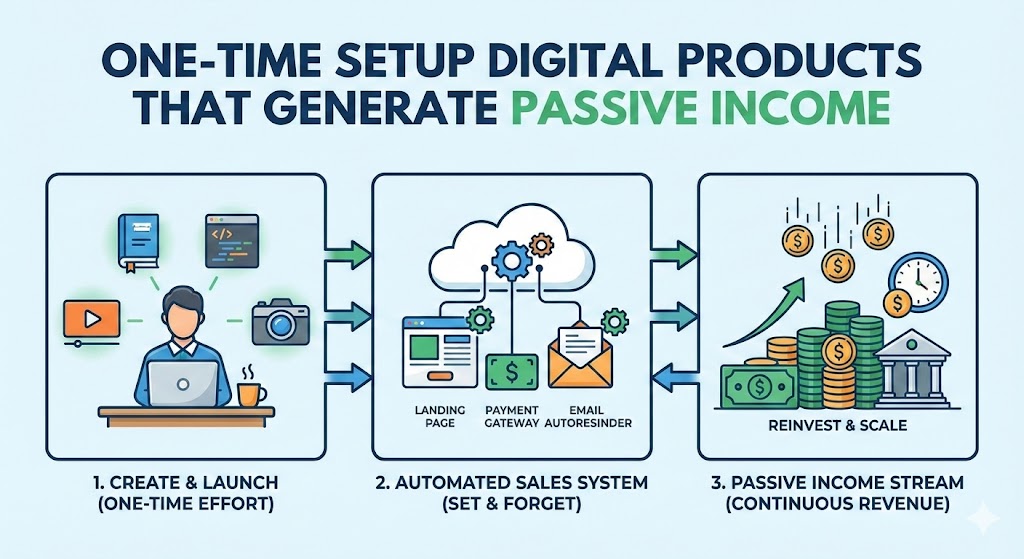
The dream of earning money while you sleep is no longer just a fantasy. With the right digital products, you can create something once and watch it generate revenue for months or even years to come. This comprehensive guide explores the most profitable one-time setup digital products that can transform your financial future through genuine passive income streams.
Understanding the Power of One-Time Setup Digital Products
Before diving into specific products, it’s essential to understand what makes these digital assets so valuable. Unlike traditional businesses that require constant inventory management, physical storage, or ongoing service delivery, digital products exist in the cloud and can be sold infinitely without additional production costs.
The beauty of one-time setup products lies in their scalability. Once you’ve invested the initial time and effort to create a high-quality digital product, it becomes an asset that works for you around the clock. Whether you’re at the beach, spending time with family, or working on your next project, these products continue generating income without your direct involvement.
1. Educational Online Courses and Video Tutorials
Online learning has exploded into a multi-billion dollar industry, and the demand continues to grow exponentially. Creating an educational course is one of the most lucrative ways to establish passive income through digital products.
Why Courses Work as Passive Income
The online education market thrives because people are constantly seeking to upgrade their skills, learn new hobbies, or advance their careers. Once you’ve recorded your lessons, edited the content, and uploaded everything to a platform, the course essentially runs itself. Students can enroll at any time, access the materials, and learn at their own pace without requiring your active participation.
Choosing Your Course Topic
Success in course creation starts with selecting the right topic. Focus on areas where you have genuine expertise and can provide unique value. The most profitable courses typically fall into these categories: business and marketing skills, technology and programming, creative arts and design, health and fitness, personal development, language learning, and financial literacy.
Your course doesn’t need to cover an impossibly broad topic. In fact, niche-specific courses often perform better because they target a specific audience with a particular problem to solve. For example, instead of “Photography for Beginners,” consider “Product Photography for Etsy Sellers” or “Real Estate Photography Masterclass.”
Creating High-Quality Course Content
The one-time setup phase requires dedication, but the payoff is substantial. Start by outlining your curriculum in detail, breaking down complex concepts into digestible modules. Each module should build upon the previous one, creating a logical learning progression.
Recording quality matters significantly. Invest in a decent microphone and screen recording software if you’re creating tutorials. Clear audio is often more important than perfect video quality. Many successful course creators record in simple home offices with good lighting and clean backgrounds.
Include supplementary materials like downloadable worksheets, templates, checklists, and resource guides. These additions increase the perceived value of your course and improve student outcomes, leading to better reviews and more sales.
Platform Selection and Automation
Choose between hosting on established marketplaces like Udemy and Skillshare, or using dedicated course platforms like Teachable and Thinkific. Marketplaces provide built-in audiences but take larger commission cuts. Self-hosted platforms give you more control and higher profit margins but require more marketing effort.
Set up automated email sequences that engage students, encourage course completion, and request reviews. Many platforms include these features, allowing you to nurture student relationships without manual intervention.
2. E-Books and Digital Guides
E-books represent one of the most accessible entry points into digital product creation. With relatively low barriers to entry, you can publish comprehensive guides that solve specific problems for your target audience.
The Enduring Appeal of E-Books
Despite predictions about declining reading habits, e-books continue to thrive because they offer convenient, searchable, and portable knowledge. Readers appreciate the ability to carry entire libraries on their devices and access information exactly when they need it.
The publishing process has become remarkably simple. No longer do you need traditional publishers or printing presses. With self-publishing platforms, you can have your book available worldwide within days of completion.
Crafting E-Books That Sell
Successful e-books address specific pain points or desires. The most profitable topics typically include how-to guides, professional development resources, health and wellness advice, hobby and craft instructions, and financial guidance.
Your e-book should deliver genuine value and actionable advice. Readers can quickly tell the difference between content that’s been thoughtfully researched and written versus something hastily assembled. Take time to organize your information logically, include real examples, and provide step-by-step instructions where appropriate.
Length matters less than value. A focused 50-page guide that solves a specific problem often outsells a rambling 300-page book that lacks clear direction. Focus on being comprehensive about your specific topic rather than trying to cover everything.
Publishing and Distribution Strategy
Amazon Kindle Direct Publishing remains the dominant platform for e-book sales, providing access to millions of potential customers. The platform handles payment processing, delivery, and even offers promotional tools to boost visibility.
Consider creating versions for multiple platforms including Apple Books, Google Play Books, and Kobo to maximize your reach. Many authors also sell PDF versions directly from their websites, keeping 100% of the profits.
Price your e-book strategically. Research similar titles in your niche to understand the market. Many authors find success with competitive pricing that reflects the value provided while remaining accessible to their target audience.
3. Stock Photography and Digital Art
Visual content is in constant demand across the digital landscape. Businesses, bloggers, marketers, and content creators need high-quality images daily, creating an enormous market for stock photography and digital art.
Building a Profitable Visual Content Portfolio
The key to success in stock content lies in building a substantial portfolio over time. While individual images might generate modest income, a collection of hundreds or thousands of high-quality assets can produce significant passive revenue.
Focus on creating content that fills genuine market needs rather than just photographing what you find interesting. Research trending topics, seasonal demands, and underserved niches. Business concepts, technology, lifestyle images, and diverse people in authentic situations consistently perform well.
Technical Requirements and Best Practices
Quality standards for stock platforms are high. Images must be technically excellent with proper focus, exposure, and composition. Study the top sellers in your category to understand what the market wants.
Model and property releases are essential for commercial photography. Ensure you have proper documentation for any recognizable people or private property in your images. Most platforms won’t accept photos without appropriate releases.
Keywords and metadata make your work discoverable. Spend time writing accurate, descriptive titles and tags that potential buyers might search for. This optimization work during the upload phase pays dividends through increased visibility.
Platform Options and Revenue Potential
Major stock photography platforms include Shutterstock, Adobe Stock, iStock, and Getty Images. Each has different commission structures, submission requirements, and audience sizes. Many photographers upload to multiple platforms to maximize exposure.
Consider also selling prints and digital downloads through platforms like Etsy or your own website. This direct-to-consumer approach often yields higher profit margins than traditional stock licensing.
4. Website Templates and Themes
The internet continues expanding, with millions of new websites launching every year. Each of these sites needs a design, creating constant demand for high-quality templates and themes.
Why Templates Generate Excellent Passive Income
Once created, a template can be sold unlimited times without additional production costs. Unlike custom design work that requires ongoing client communication and revisions, templates are completely hands-off after the initial creation and marketing setup.
The market spans multiple platforms and content management systems. WordPress alone powers over 40% of all websites, representing an enormous potential customer base. Shopify, Squarespace, Wix, and other platforms also support third-party themes.
Creating Marketable Templates
Successful templates balance aesthetic appeal with practical functionality. Study current design trends while ensuring your themes remain versatile enough to work across different industries and use cases.
Focus on specific niches when possible. A template designed specifically for restaurants, fitness coaches, or online courses can command higher prices than generic designs because it solves particular business needs.
Include comprehensive documentation, demo content, and customization options. The easier you make implementation, the better your reviews and ratings will be, leading to increased sales through social proof.
Technical Considerations
Ensure your templates are responsive, loading quickly on all devices. Mobile traffic now exceeds desktop for most websites, making mobile optimization critical. Test thoroughly across different browsers and screen sizes.
Code quality matters for both performance and customer satisfaction. Clean, well-commented code makes customization easier for buyers and reduces support requests.
Monetization Platforms
ThemeForest remains the largest marketplace for website templates, offering massive exposure to potential buyers. However, the platform takes a significant commission and requires adherence to strict quality standards.
Alternatively, sell directly through your own website using platforms like Gumroad or SendOwl. This approach provides higher profit margins and direct customer relationships but requires building your own audience.
5. Printable Planners and Organizational Tools
The productivity and organization niche has exploded in recent years, with people seeking tools to manage their increasingly busy lives. Digital printables offer the perfect combination of instant delivery and practical value.
The Printable Product Advantage
Printables are remarkably simple to create yet can generate substantial income. Customers download PDF files, print them at home or at print shops, and use them immediately. There’s no inventory to manage, no shipping logistics, and no production costs beyond the initial design time.
The market for organizational tools spans numerous niches including academic planners for students, business planning worksheets for entrepreneurs, budget trackers for personal finance enthusiasts, meal planning templates for busy families, fitness logs for health-conscious individuals, and wedding planning binders for engaged couples.
Designing Effective Printables
Functionality trumps excessive decoration. While your printables should be visually appealing, they must primarily serve their intended purpose effectively. Test your designs personally or with beta users to ensure they work as intended.
Create cohesive collections rather than individual items. Customers are more likely to purchase bundles that solve multiple related needs. For example, a complete budget planning kit might include monthly budget worksheets, expense trackers, debt payoff planners, and savings goal sheets.
Offer multiple format options when possible. Some customers prefer half-letter sizes, others want full-page layouts. A4 and US Letter are both standard in different regions. Providing options increases your potential customer base.
Marketing and Sales Platforms
Etsy dominates the printable market, with millions of shoppers specifically seeking digital downloads. The platform handles payments and delivery automatically, making it truly passive once listings are created.
Build your own website for maximum control and profit margins. Use email marketing to build a customer base that you can market to repeatedly with new products.
Social media, particularly Pinterest, drives enormous traffic to printable products. Quality images and strategic keyword use can generate consistent organic traffic for years after initial posting.
6. Software and Mobile Applications
For those with programming skills, creating software products or mobile applications represents one of the highest-earning passive income opportunities. While the initial development requires significant expertise, successful apps can generate substantial long-term revenue.
Types of Profitable Software Products
The software product spectrum includes mobile apps for productivity, entertainment, or utilities, browser extensions that enhance functionality, desktop applications for specialized tasks, plugins for popular platforms like WordPress or Shopify, and software-as-a-service tools with subscription models.
The most successful software products solve specific, painful problems efficiently. Identify frustrations in your own workflow or industry that existing solutions don’t adequately address.
Development and Launch Strategy
Start with a minimum viable product that solves the core problem effectively. You can add features based on user feedback after launch. This approach reduces initial development time and helps ensure you’re building something people actually want.
Beta testing is crucial for software products. Recruit users to test thoroughly before public launch. Their feedback helps identify bugs, usability issues, and feature requests that improve your product.
Monetization Models
Choose between one-time purchases, subscription models, or freemium approaches where basic features are free with premium upgrades available. Each model has advantages depending on your product type and target market.
App stores handle payment processing and distribution for mobile apps, though they take significant commission cuts. Web-based software gives you more control but requires managing your own infrastructure.
7. Music, Sound Effects, and Audio Content
Audio content creation offers multiple passive income streams for musicians, sound designers, and voice talent. The demand for quality audio spans across video production, podcasting, gaming, and multimedia content.
Audio Product Categories
Royalty-free music libraries serve content creators who need background music for videos, podcasts, or presentations. Genres like corporate, uplifting, cinematic, and ambient consistently generate sales.
Sound effects libraries are essential for video editors, game developers, and multimedia producers. Everything from door creaks to explosions to ambient nature sounds has commercial value.
Spoken audio products include audiobook narration, meditation guides, affirmations, language learning content, and white noise for sleep and focus.
Creating Marketable Audio Content
Quality is non-negotiable in audio production. Invest in decent recording equipment and learn proper mixing and mastering techniques. Poor audio quality will prevent sales regardless of content quality.
Metadata and categorization determine discoverability. Tag your audio meticulously with accurate descriptions, moods, instruments, tempos, and use cases. This optimization helps potential buyers find exactly what they need.
Distribution Platforms
AudioJungle, Pond5, and Epidemic Sound are major marketplaces for royalty-free music and sound effects. Each platform has different licensing models and commission structures.
For audiobooks, ACX connects narrators with authors and handles distribution through Amazon, Audible, and iTunes. Voice actors can earn royalties from audiobook sales for years after initial recording.
8. Lightroom Presets and Photoshop Actions
Photo editing presets and actions save time for photographers and content creators while ensuring consistent, professional-looking results. These digital products are relatively simple to create yet solve real workflow problems.
Understanding the Preset Market
Professional photographers, Instagram influencers, bloggers, and small business owners constantly seek tools to streamline their editing workflow. Quality presets that deliver consistent, attractive results can become essential parts of their creative process.
Successful presets typically focus on specific aesthetics like moody and dramatic, bright and airy, vintage film looks, black and white conversions, or seasonal styles. Niche specificity helps your products stand out in a crowded market.
Creating Professional Presets
Develop your presets using a diverse range of photos to ensure they work across different lighting conditions, subjects, and composition types. Presets that only work perfectly on certain types of images frustrate customers and generate negative reviews.
Include detailed instructions for installation and use. Not all customers are highly technical, so clear guidance improves satisfaction and reduces support requests.
Create preset packs rather than individual items. Bundles provide better value perception and higher average order values.
Marketing to Photographers
Instagram and Pinterest are ideal platforms for showcasing before-and-after examples of your presets. Visual platforms naturally align with photography products.
Partner with photographers and influencers who can demonstrate your presets to their audiences. This influencer marketing approach can rapidly expand your reach.
Sell through marketplaces like Etsy and Creative Market, or directly through your website. Many preset creators successfully use both approaches simultaneously.
9. Membership Site Content
Creating a membership site involves more initial setup than individual products, but can generate highly predictable recurring revenue. Members pay monthly or annual fees for access to exclusive content, resources, or community.
Membership Site Models
Content libraries provide access to extensive resources like courses, templates, tutorials, or tools. Members value having everything in one place rather than purchasing items individually.
Community-focused memberships emphasize interaction, networking, and collaboration among members. While these require more ongoing involvement, they create strong customer loyalty.
Hybrid models combine content libraries with community features, offering the best of both approaches. Members access valuable resources while connecting with like-minded individuals.
Building Sustainable Membership Content
Create a content bank before launching. Having substantial material available immediately increases perceived value and provides time to develop new content without pressure.
Establish a sustainable content creation schedule. Whether you add new material weekly, biweekly, or monthly, consistency matters more than frequency. Members need to know what to expect.
Evergreen content forms the foundation of your membership. Time-sensitive material can supplement but shouldn’t dominate your offerings. Focus on resources that remain valuable regardless of when members join.
Platform and Payment Processing
Dedicated membership platforms like MemberPress, Kajabi, and Circle handle content delivery, payment processing, and access control. These tools automate most administrative tasks, keeping the membership largely passive.
Price strategically based on the value provided and your target market. Many successful memberships charge between $20 and $100 monthly, though niche expertise can command premium pricing.
10. Spreadsheet Templates and Calculators
Excel spreadsheets and Google Sheets templates might seem simple, but they solve real problems for individuals and businesses. Complex calculators, financial models, and organizational systems can generate steady passive income.
High-Demand Template Categories
Financial templates including budget planners, investment calculators, loan amortization schedules, and retirement planning tools consistently sell well. People need help managing money and appreciate automated calculations.
Business planning templates like cash flow projections, inventory management systems, project timelines, and client management databases serve entrepreneurs and small businesses.
Personal organization tools such as meal planners, fitness trackers, habit trackers, and goal-setting worksheets appeal to productivity-focused individuals.
Creating Valuable Spreadsheet Products
Functionality is paramount. Your templates must work flawlessly and produce accurate results. Test extensively with different data inputs to ensure reliability.
Include clear instructions and examples. Not everyone is spreadsheet-savvy, so detailed guidance helps customers maximize value from their purchase.
Protect your formulas appropriately while allowing customization. Lock cells containing complex formulas to prevent accidental deletion while leaving input cells editable.
Distribution and Marketing
Etsy, Gumroad, and your own website all work well for selling spreadsheet templates. The key is demonstrating value through clear descriptions and screenshots showing the template in action.
Create tutorial videos showing how to use your templates. These videos serve double duty as marketing tools and customer support, reducing questions while attracting buyers.
Setting Up for Long-Term Success
Creating one-time setup digital products is just the beginning. Long-term passive income requires strategic planning, quality focus, and smart marketing.
Quality Over Quantity
Resist the temptation to churn out numerous low-quality products quickly. One excellent digital product that solves a real problem will outperform dozens of mediocre offerings. Focus on creating genuine value that earns positive reviews and word-of-mouth recommendations.
Invest time in proper planning, creation, and polishing. Rush jobs are obvious to customers and damage your reputation. Remember that these products represent your brand indefinitely.
Marketing Automation
Set up automated marketing systems that continue promoting your products without constant attention. Email sequences, social media scheduling, and advertising campaigns can run in the background while generating consistent sales.
Build an email list from the start. Capturing customer emails allows you to market new products to proven buyers, dramatically increasing the lifetime value of each customer relationship.
Continuous Optimization
Monitor your product performance regularly. Track sales data, customer feedback, and review comments to identify improvement opportunities. Small optimizations to product descriptions, pricing, or features can significantly impact revenue.
Update products periodically to maintain relevance and competitiveness. Adding new features or content to existing products provides reasons to re-promote them and can justify price increases.
Scaling Your Passive Income
Once one digital product succeeds, create complementary offerings. Customers who purchased one product are likely to buy related items, especially if the first purchase satisfied their needs.
Expand into new niches carefully. Rather than randomly creating products across completely different markets, look for adjacent opportunities where you can leverage existing expertise and audiences.
Legal and Financial Considerations
Protect your digital products with appropriate licensing terms. Clearly specify what customers can and cannot do with their purchases to prevent misuse or unauthorized redistribution.
Understand tax implications of digital product sales, especially if selling internationally. Many countries have specific rules for digital goods that differ from physical products.
Consider forming a business entity as your passive income grows. Proper business structure provides liability protection and potential tax advantages.
Conclusion: Your Path to Passive Income
One-time setup digital products offer a realistic path to generating passive income that can supplement or even replace traditional employment. The key lies in choosing products that align with your skills, creating genuine value for customers, and implementing systems that automate sales and delivery.
Success won’t happen overnight. The initial setup phase requires significant effort, learning, and refinement. However, the long-term rewards of passive income make this investment worthwhile. Each product you create becomes an asset that can generate revenue for years with minimal ongoing effort.
Start with one product category that resonates with your expertise and interests. Master the creation, marketing, and sales process for that product type before expanding into others. This focused approach builds confidence and generates early wins that fuel motivation for larger projects.
The digital product landscape continues evolving, with new opportunities emerging constantly. Stay curious, keep learning, and remain adaptable. Your passive income journey begins with a single product, but the possibilities are limitless for those willing to put in the initial work to build lasting digital assets.
Remember that passive income isn’t entirely effortless. Successful digital product creators periodically update products, respond to customer feedback, and optimize marketing strategies. However, the ratio of income to active effort becomes increasingly favorable over time, allowing you to earn substantially more while working significantly less.
The best time to start creating your one-time setup digital products was yesterday. The second-best time is today. Choose your first product, dedicate time to creating something valuable, and begin building the passive income streams that can transform your financial future.
Also read this:
The best Guide to Selling Demand Forecasting Systems to Local Businesses in 2025