
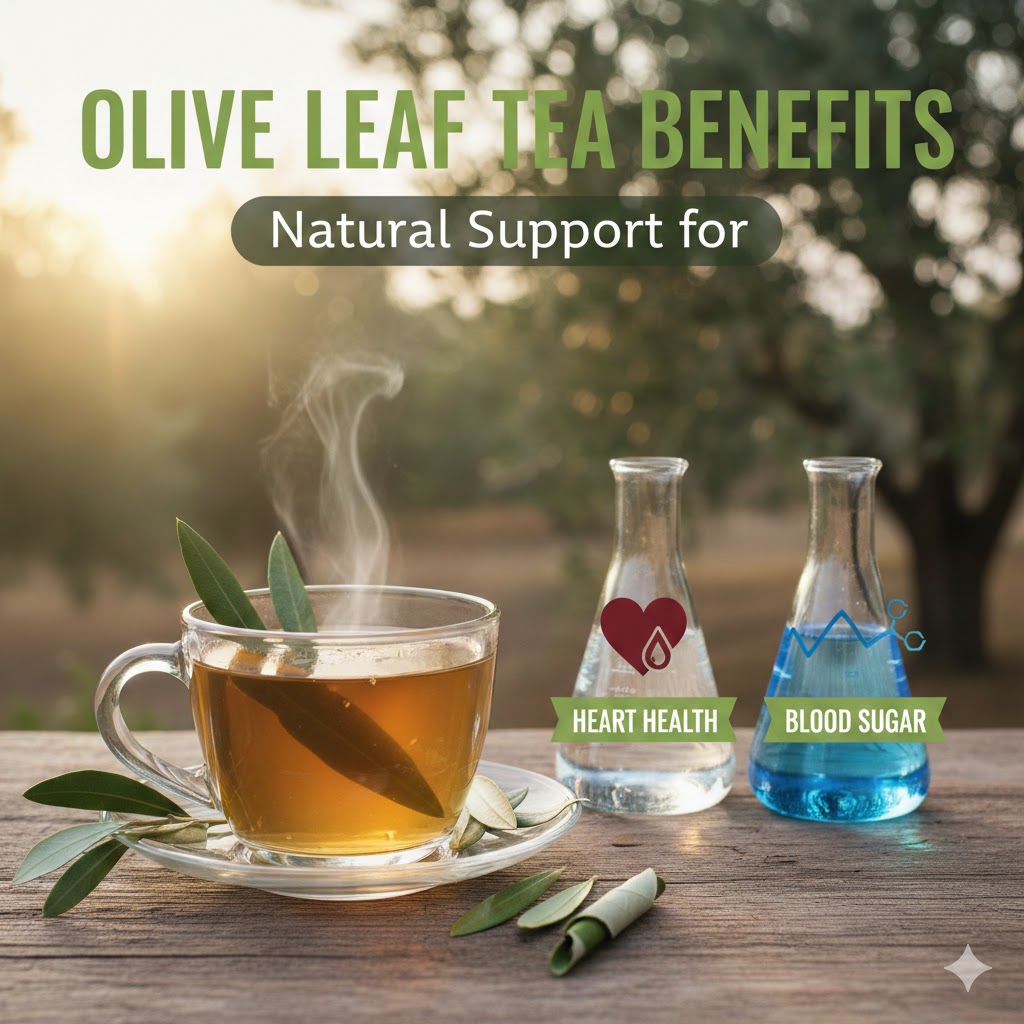
Olive Leaf Tea Benefits Modern wellness is rediscovering an old truth: sometimes the most powerful support comes from parts of plants we’ve overlooked. While olive oil gets most of the attention, olive leaves—long used in Mediterranean traditions—are now gaining recognition in tea form.
The growing interest in Olive Leaf Tea Benefits reflects a shift toward gentle, daily habits that support metabolic balance and cardiovascular wellness without stimulants or extreme protocols.
This article explains why olive leaf tea is trending, how it connects to blood sugar and heart health in a lifestyle context, and why many people are choosing it as part of long-term wellness routines.
1. What Is Olive Leaf Tea?
Olive leaf tea is made by steeping dried leaves from the olive tree in hot water.
1.1 Traditional Use
- Used for centuries in Mediterranean cultures
- Commonly consumed as a bitter herbal infusion
- Valued for balance and resilience, not stimulation
1.2 Why the Leaf Matters
The leaves contain different plant compounds than the fruit or oil. These compounds are central to conversations around Olive Leaf Tea Benefits today.
2. Why Olive Leaf Tea Is Trending Now
This isn’t a random wellness fad.
2.1 Modern Health Priorities
- Rising interest in blood sugar balance
- Focus on heart-friendly lifestyles
- Preference for caffeine-free daily drinks
2.2 Return to Mediterranean Wisdom
The Mediterranean lifestyle consistently ranks high for longevity and heart health. Olive leaf tea fits naturally into this broader pattern.
3. Key Plant Compounds in Olive Leaves
Olive leaves are rich in naturally occurring plant compounds.

3.1 Notable Characteristics (Non-Medical Context)
- Polyphenols commonly studied for antioxidant activity
- Naturally bitter compounds associated with metabolic balance
- Plant compounds linked to cardiovascular support in dietary patterns
3.2 Why These Matter
Antioxidant-rich plants are often explored for their role in:
- Supporting cellular health
- Managing oxidative stress
- Complementing heart-healthy routines
This is a core reason Olive Leaf Tea Benefits are discussed in wellness circles.
4. Olive Leaf Tea and Blood Sugar Balance
Blood sugar health is about consistency, not spikes.
4.1 Lifestyle Context
- Stable blood sugar supports energy and focus
- Large swings increase fatigue and cravings
- Diet and daily habits matter more than single ingredients
4.2 Where Olive Leaf Tea Fits
Many people include olive leaf tea:
- With meals
- As a replacement for sweetened drinks
- As part of low-sugar lifestyle routines
In this context, Olive Leaf Tea Benefits relate to supporting better habits—not acting as a treatment.
5. Heart Health and Circulatory Support
Heart health is cumulative.
5.1 Why Daily Choices Matter
- Cardiovascular wellness responds to long-term habits
- Antioxidant-rich foods are part of heart-smart diets
- Hydration and low-sugar drinks play a role
5.2 Olive Leaf Tea’s Role
Olive leaf tea aligns with heart-focused lifestyles because it is:
- Caffeine-free
- Low-calorie
- Plant-based and simple
These qualities make it an easy addition to heart-conscious routines exploring Olive Leaf Tea Benefits.
6. Antioxidant Support Without Stimulation
Not everyone wants energizing beverages.

6.1 Why Stimulant-Free Matters
- Excess caffeine can affect blood pressure
- Gentle teas suit evening and all-day use
- Calm routines support nervous system balance
6.2 Olive Leaf Tea’s Advantage
It provides plant-based antioxidant exposure without pushing the nervous system—ideal for people seeking steady wellness support.
7. Bitter Taste and Metabolic Awareness
Bitterness has a purpose.
7.1 Why Bitter Teas Are Valued
- Traditionally associated with digestion awareness
- Often chosen before or after meals
- Encourage slower, mindful drinking
7.2 Modern Perspective
People interested in Olive Leaf Tea Benefits often appreciate its bitterness as a signal of functional plant compounds, not flavor alone.
8. Why People Choose Olive Leaf Tea Over Supplements
There’s growing supplement fatigue.
8.1 Tea vs Capsules
- No pills or complex dosing
- Lower psychological pressure
- Easier daily consistency
8.2 Habit-Based Wellness
Tea works best as a ritual, not a remedy. This approach aligns with sustainable blood sugar and heart-focused lifestyles.
9. Who Is Most Interested in Olive Leaf Tea
The audience is broad but intentional.
9.1 Common Interest Groups
- People reducing sugar intake
- Those focusing on heart health
- Caffeine-sensitive individuals
- Wellness minimalists
These groups are driving searches around Olive Leaf Tea Benefits.
10. Why Olive Leaf Tea Fits the Future of Wellness
Wellness trends are slowing down.
10.1 Where Wellness Is Heading
- Fewer extremes
- More daily rituals
- Long-term metabolic health focus
10.2 Why Olive Leaf Tea Fits
It’s simple, traditional, and system-supportive—qualities modern wellness increasingly values.
FAQs: Olive Leaf Tea Benefits
Is olive leaf tea caffeinated?
No, it’s naturally caffeine-free.
Is olive leaf tea a medicine?
No. It’s a traditional herbal tea used as part of a lifestyle, not a medical treatment.
Can it be consumed daily?
Many people use it occasionally or regularly in moderation as part of a balanced routine.
Does olive leaf tea replace heart medication?
No. It does not replace medical care or prescribed treatment.
Why is it associated with blood sugar and heart health?
Because of its traditional use and plant compounds studied in dietary and lifestyle contexts.
Final Thoughts
Blood sugar balance and heart health aren’t built overnight—they’re shaped by small, repeatable choices. The renewed interest in Olive Leaf Tea Benefits reflects a desire for calm, sustainable habits rather than quick fixes.
Olive leaf tea doesn’t promise control.
It supports consistency.
And in long-term wellness, consistency is often the most powerful ingredient of all.
More Related Topics:
White Peony Root Tea Benefits for Hormonal Balance
Bancha Tea Health Benefits: Japan’s Low-Caffeine Tea for Daily Drinking
Soursop Leaf Tea Benefits: Why This Tropical Tea Is Trending in Wellness